


The global AI industry’s “DeepSeek moment” has returned — and once again, it is Chinese. In recent days, the internet has been flooded with new videos generated by the Seedance 2.0 model, and the reaction has been one of astonishment. The video quality, the rich soundtrack and the ability to produce long, continuous scenes are nothing short of phenomenal.
Hollywood, watch your back
The clips circulating online feature action and drama scenes, emotionally charged dialogue and polished fight sequences. In them, everyone seems to be fighting everyone else — Tom Cruise versus Brad Pitt, Batman versus Catwoman, Will Smith versus the Flying Spaghetti Monster and George Costanza versus Jerry Seinfeld.
Behind the spectacle, even more consequential battles are underway. ByteDance, the company that developed Seedance 2.0 — and also the owner of TikTok — is squaring off against global generative video heavyweights: Google with VEO3, OpenAI with Sora and about half a dozen additional Chinese firms, with a lone Israeli representative, Lightricks, also in the mix. All are vying for the favor of Hollywood, which appears unlikely to resist the temptation for long.
On a broader level, the picture is crystal clear: this is a contest between Chinese prestige and American prestige. At the same time, both DeepSeek and Alibaba are planning to launch new models, and the world is watching closely.
So why is everyone so excited?
Seedance 2.0 is a text-to-video AI model that generates cinematic clips from simple prompts. The system supports multimodal input, meaning users can feed it up to 12 types of input: text, up to nine images, up to three audio files and up to three video clips. This allows for precise control over style, character appearance, movement and composition — effectively giving users the tools of a director. By comparison, competing models typically allow three input files or fewer.
The model maintains high character consistency, generates layered audio including dialogue, ambient sounds and sound effects, enables lip-sync and facial expressions, and allows users to specify camera movements and editing style.
It also preserves ID consistency (maintaining character identity) and IP consistency (using prompt images), ensuring that characters’ appearance, geometry, lighting and color palette remain coherent across sequences. Until the release of Google’s Veo3, this had been one of the biggest challenges facing video-generation models. Now it appears to be becoming a standard feature.
For production studios, Seedance 2.0 makes it possible to create clips that integrate directly into editing systems, ready for effects, subtitles, audio mixing and timeline editing — essentially like raw footage shot on a camera.
Users who have tested the model describe significant improvements over earlier video tools. Movements appear more natural, camera motion is smoother and characters display more convincing emotions. But the real revolution, many say, is the ability to produce an entire film.
Tasks that previously required a full production crew — filming, editing, visual effects and sound — can now be accomplished with a handful of prompts, with users claiming the results come closer than ever to professional filmmaking.
And what about copyright?
Has the technology finally arrived that could persuade Hollywood to produce entire films using artificial intelligence — at a fraction of the cost and without human actors, directors or screenwriters? For now, the momentum appears to be moving in the opposite direction.
In recent days, a full-blown clash has emerged between major Hollywood studios and ByteDance. The studios are demanding that the company immediately halt what they describe as widespread copyright infringement in videos generated on its platform, including clips depicting fictional battles such as Tom Cruise versus Brad Pitt.
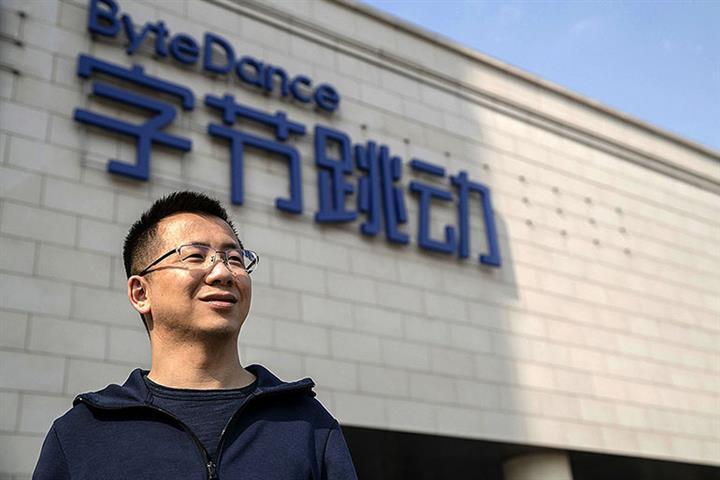
ByteDance CEO Liang Rubo
The Motion Picture Association said in an official statement that the content constitutes “unauthorized use of copyrighted works in the United States on a massive scale. ByteDance is disregarding copyright laws, which protect creators’ rights and support millions of American jobs.”
ByteDance, apparently unsettled by the backlash, quickly responded that it respects intellectual property and copyright protections and has issued an update preventing the use of real people’s likenesses. “The content that appeared was created during pre-launch testing phases,” the company said in a statement.
On that point, the company is correct: although Seedance 2.0 was officially launched on Feb. 6, 2026, it remains in limited testing within China and has not been formally released worldwide. Yet its outputs somehow spread widely online over the past 24 hours in what appeared to be a coordinated wave.
Whoever thought it would stop at advertising was mistaken
The figure behind the new technological leap is Wu Yonghui, a Ph.D. in computer engineering who until recently served as vice president of research at Google DeepMind, where he worked on Gemini. Since joining Seed, ByteDance’s AI division, he has led its rapid rise in global rankings, helped make its Doubao chatbot the market leader in China and founded the Edge group focused on developing artificial general intelligence, or AGI.
The traditional film industry has long been struggling. AI-generated video had already made inroads into advertising, whether for early concept clips or integration into full commercial campaigns.
The new capabilities are likely to attract film producers eager to incorporate AI video into their projects, drawn by high performance and low cost. What may concern audiences more broadly is the anticipated flood of cheap video content across every platform competing for attention — what some critics have dubbed “AI slop.”
A telling example comes from the book platform Tomato Novel, which announced in April 2025 that it was removing so-called “AI novels” — titles published without named authors, bearing names such as “The Billionaire and the Robot’s Secret Love,” featuring characters whose names changed from chapter to chapter and awkward lines such as “She felt a feeling of sensation.”
The timing was not coincidental: the surge began immediately after the launch of DeepSeek’s AI model. Notably, Tomato Novel is owned by TikTok — and therefore controlled by ByteDance, the developer of Seedance 2.0.
Whether the current rollout of Seedance 2.0 marks the threshold of an era defined by AI-generated video glut remains to be seen.