

A Chinese gaming company has sparked public debate after launching an artificial intelligence “employee” based on a former human resources specialist, raising questions about data use and worker rights.
The system is modeled on a former employee known as “Xiao Yu,” who agreed to the use of a digital version of her persona as part of an internal experiment, according to local reports.
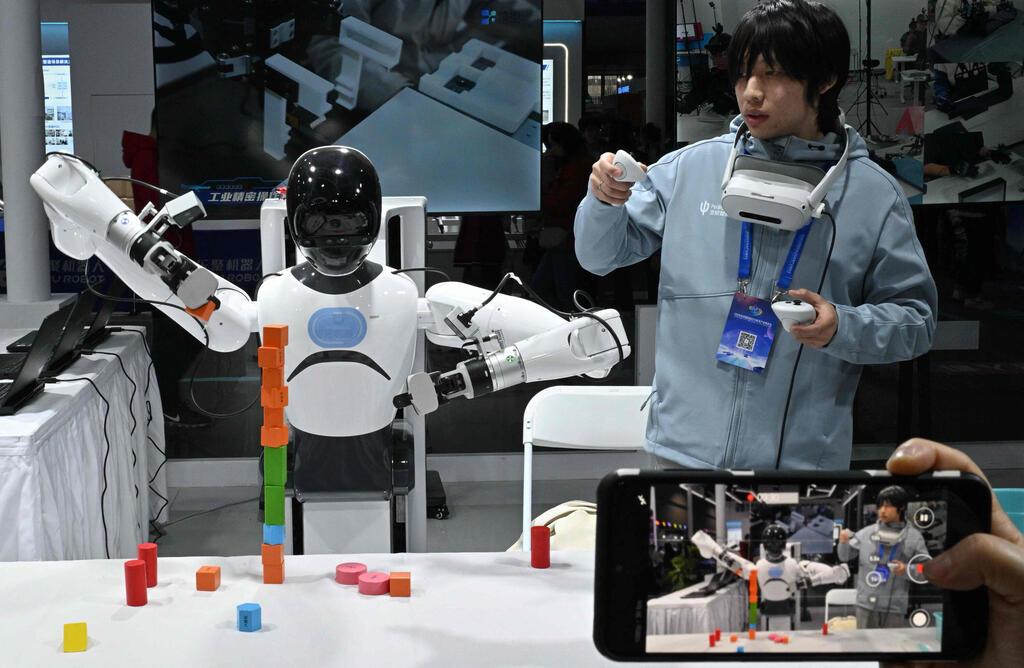
(Photo: AFP/Adek Berry)
The AI “employee” is designed to perform basic workplace tasks, including offering advice, sending invitations and generating simple presentations and spreadsheets. The former employee described the idea as “quite amusing,” while the company said the tool remains limited and not yet practical for real working conditions.
Still, the creation of a digital human triggered a wave of reactions on Chinese social media. Some users said the project blurs the line between people and workplace tools and risks further objectifying employees. Others viewed it as an early example of “cyber immortality,” where a person’s professional traits continue to exist after leaving a job.
The case also raised questions about whether companies should be allowed to profit from employees’ accumulated knowledge and personal data, even with initial consent.
The state-run Securities Times described the project as part of a broader trend in developing AI “workers” aimed at preserving institutional knowledge after employees depart. The system was reportedly trained on professional materials produced during the employee’s tenure, including workplace interactions and internal documents.
Critics said that if AI systems are built on an individual’s work style, communication patterns and outputs, companies should consider royalty or compensation models for ongoing commercial use. Some also warned that allowing digital replicas to be shaped by subjective descriptions from colleagues could reduce workers to “functional modules” that can be copied.
Legal experts said data related to employees’ behavior and communications — including chat messages, emails and work habits — is considered personal information under China’s data protection laws. Using such data to train AI systems without explicit consent could violate those rights.
Even when data is created in the workplace, experts said it does not automatically grant companies the right to replicate a system reflecting an individual’s personality or style without separate, compensated permission.
Labor researchers and worker advocates noted that power dynamics in the workplace can complicate the notion of consent, with employees potentially feeling pressured to participate in such initiatives. They also raised concerns about accountability, warning that errors made by a digital replica linked to a real person could harm that individual’s reputation.
The debate extends beyond the specific case. AI agents capable of operating continuously and performing routine tasks are drawing growing attention in China, where they are seen as having the potential to boost productivity, while also raising concerns about data security and the risk of personal or financial information leaks.
Experts cited in Chinese media have suggested including clauses in employment contracts requiring the deletion of personal data after employment ends or, alternatively, obtaining separate, compensated consent for its future use.