

For much of military history, intelligence operations were built around a fundamental challenge: finding enough information about the enemy. The modern battlefield has created almost the opposite problem.
Sensors are everywhere. They are becoming more precise, more capable and able to collect enormous quantities of information. Alongside the traditional domains of land, sea and air, space and cyberspace have become operational arenas of their own, adding still more layers to an already crowded intelligence picture.
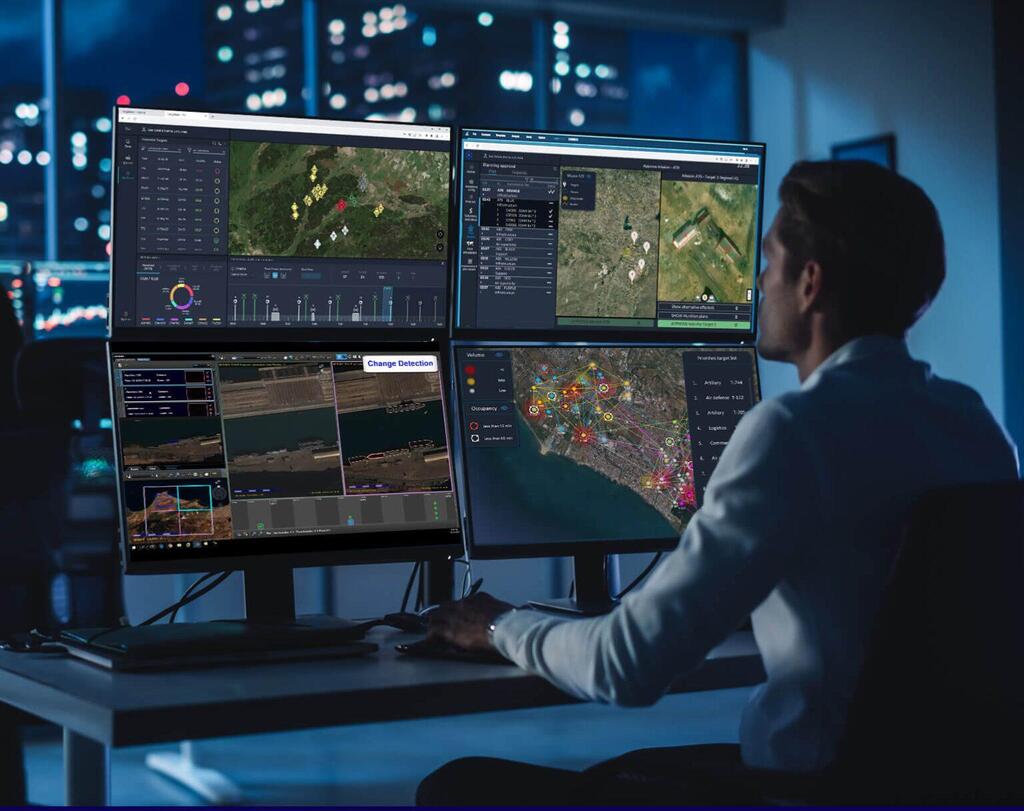
The result is a torrent of data arriving faster than human analysts can realistically process it.
“The main problem on the battlefield is the flood of information,” says Guy Oren, VP Intelligence, Space & Cyber at Rafael Advanced Defense Systems, who has spent roughly two decades at the company. “As the years go by, there are more tools for collecting information, more sensors, and they are developing in terms of accuracy and capacity.”
The challenge is no longer simply collecting intelligence. It is determining what matters — and doing so quickly enough for someone to act on it.
That is the problem Rafael's PUZZLE™ Suite was designed to address.
Putting the pieces together
PUZZLE is an AI-based, multi-domain intelligence suite designed to process enormous quantities of data and fuse information from different intelligence disciplines into an operational picture.
According to Rafael, the modular system can operate at national or regional level and can be deployed from fixed centers, vehicles or combinations of the two. Its open architecture allows it to integrate into existing operational and network environments, while individual applications can also operate independently.
The name itself captures the concept.
Oren explains that PUZZLE consists of multiple components, each addressing a different part of the operational intelligence process. Each piece has value on its own; connected, they are intended to produce a much broader picture.
“Together, it builds a picture that is relevant to the needs of the user,” he says.
Among the technologies within the suite are systems designed to process different intelligence streams. SIGNAL.AI, for example, applies AI to large-scale signals intelligence, where millions of detections may need to be transformed into usable insights. IMILITE integrates imagery and geospatial intelligence from multiple visual sources. Other components address additional parts of the intelligence-to-operations chain.
The underlying challenge is the same: humans cannot manually examine every signal, image, sensor reading and piece of information being generated across a modern battlefield.
PUZZLE is designed to help decide where they should look.
From data to decisions
The difference between data and intelligence becomes particularly important when time is measured in seconds.
“When someone receives this mass of information and wants to turn it into actionable intelligence, you can't simply sit people down to collect and analyze it the way it was once done,” Oren says. “It's impossible because of the time and because of the quantity.”
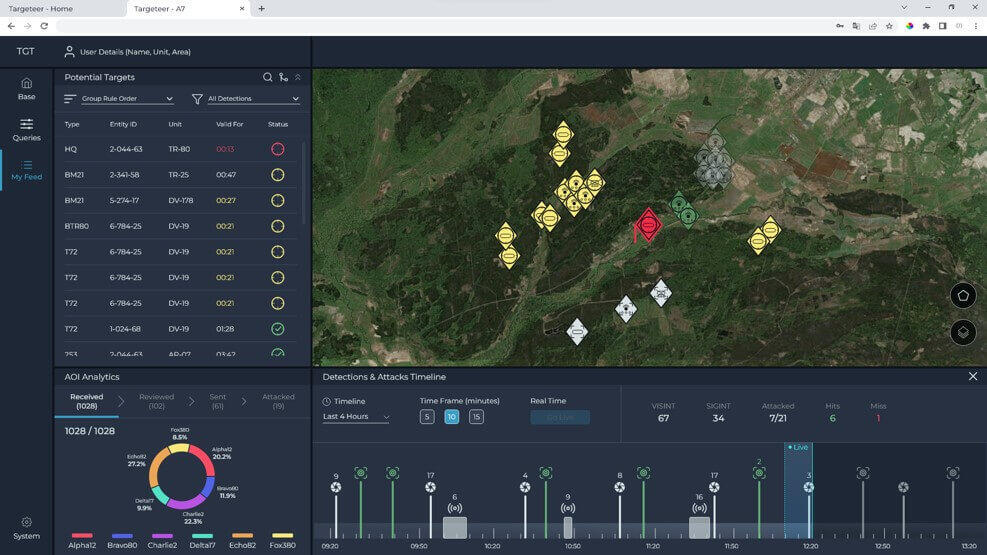
AI makes it possible to filter, prioritize and correlate information on a scale that human analysts alone cannot achieve.
(Photo: Rafael)
But Oren cautions against seeing AI as a solution in itself. “Everyone gets very excited about AI inside systems, but it's something you add. It doesn't stand on its own,” he says, comparing it to adding the finishing touches to a cake whose foundations still have to be good.
The distinction matters because AI can process information remarkably well while still producing conclusions that are irrelevant or wrong. In civilian life, an inaccurate AI answer may be irritating. On a battlefield, the consequences can be dramatically different.
That is why, despite the growing role of automation, Rafael's approach keeps the human operator in the loop. “We don't forget the operational user,” Oren says. “The user remains at the center. That's the person who ultimately has to make the decisions. We don't leave that to the machine.”
Intelligence you can see and verify
Making sense of battlefield information is not only an algorithmic challenge. It is also a question of how information reaches the person who needs it.
An operator may be responsible for a particular geographical area or mission while information continues to arrive from multiple sources.
The system therefore has to reduce complexity rather than simply transfer it from one screen to another.
Relevant intelligence should be presented clearly and visually, Oren says, ideally on a map, rather than through pages of text, so that operators can immediately identify the areas that require their attention.
But there is another important requirement: the ability to go backward. Rather than simply accepting an AI-generated recommendation, the operator needs to be able to examine the intelligence behind it and, when necessary, reach the original source quickly.
The goal is not to replace judgment. It is to give the person making the decision a clearer picture on which to base it.
How missiles led Rafael into intelligence
Rafael remains best known around the world for missiles and air-defense systems, including Iron Dome. But the development of increasingly sophisticated defensive and offensive systems has also expanded the intelligence infrastructure surrounding them.
A weapon system cannot operate effectively without knowing what the threat is, where it is and what is happening around it.
Over the years, Rafael therefore expanded further into intelligence collection, visible and infrared observation, RF and spectrum technologies, communications and information processing.
(Photo: Rafael)
PUZZLE connects another part of that chain.
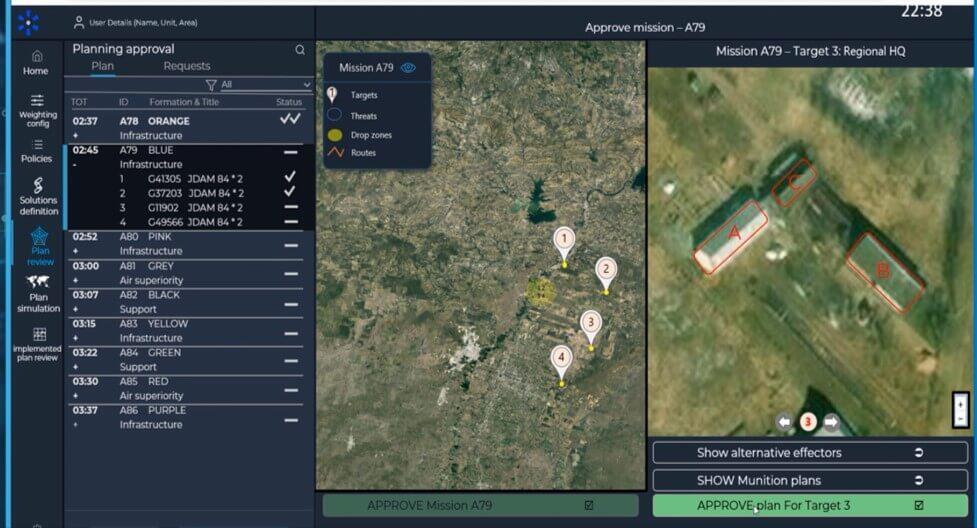
The suite is designed to help transform information generated by multiple sensors and intelligence sources into the insights needed to support operational decisions — including what Rafael describes as shortening the sensor-to-effector cycle.
That evolution has also changed Rafael internally, as intelligence, space, cyber and communications have become increasingly significant parts of the company's technological activity. Recent conflicts have only accelerated that trend.
As part of a broader organizational response to the rapidly changing battlefield, Rafael has established a new Intelligence and Cyber Division, bringing greater focus to intelligence, cyber, space and electronic warfare capabilities. The move reflects the growing importance of connecting advanced technology and information more closely with operational needs, and of ensuring that relevant intelligence can reach users faster and in a form they can act on.
By concentrating these capabilities within a dedicated division, Rafael aims to deepen its expertise in these areas, accelerate the development of new solutions and provide customers with faster, more precise and relevant responses to the evolving demands of the battlefield.
Developing while the battlefield changes
Modern threats do not wait for development cycles. Oren says the pace at which adversaries adopt new technologies and change their methods increasingly requires defense systems to evolve while they are already being used.
That became particularly evident after October 7. Large numbers of Rafael employees were called into reserve duty, while employees who remained at the company worked to respond to urgent operational requirements, adapt systems and provide solutions needed by forces in the field.
“In defense it has always been like this, but the pace of change is increasing,” Oren says.
Some adaptations, he says, were introduced extremely quickly in response to developments during ongoing fighting. The details cannot be discussed publicly, but the broader lesson is significant: future defense systems cannot simply be designed for the threat that existed when development began.
They have to be built to change. And that is where Oren sees AI becoming even more important.
The next step: AI agents
If today's AI revolution has been dominated by large language models and generative AI, Oren believes the next major transformation will come from AI agents — systems capable not only of processing information, but of helping perform complex tasks.
In consumer technology, the transition is already visible. Users increasingly expect AI to find information, organize it and take steps on their behalf rather than simply return search results.
Translating that capability into a military environment is far more complicated.
Puzzle system at work
(Photo: Rafael)
Defense systems may operate without continuous internet connectivity. Some are distributed across networks; others are airborne or functioning in environments where communications can be disrupted.
Building agents capable of operating reliably under those conditions — and ensuring that their actions do not introduce dangerous errors — presents an entirely different technological challenge.
Oren describes AI agents as “wild horses.” They possess extraordinary power, he says, but that power becomes valuable only when it can be controlled. The race now is to learn how to introduce those agents into distributed military networks, allow them to work together and take advantage of their speed without surrendering reliability or human oversight.
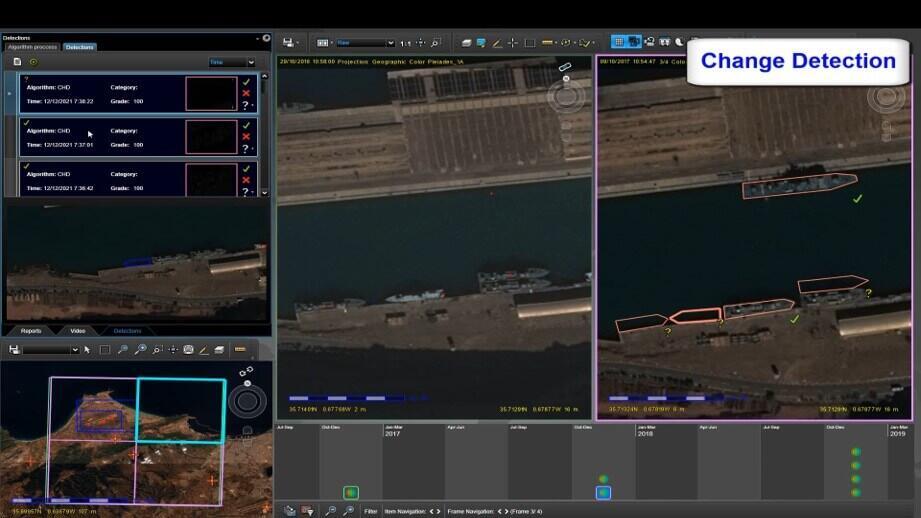
That may also help military systems confront one of their oldest problems: the threat nobody anticipated. AI-based systems can potentially recognize that something appearing in the data is different from what they have previously encountered, helping analysts identify anomalies and adapt faster as threats evolve.
PUZZLE's modular architecture is intended to support that continuously changing environment.
The human remains the final piece
For Oren, the transformation underway in defense technology is not simply about making machines more autonomous. It is about changing what humans spend their time doing.
Rafael describes one of PUZZLE's goals as allowing experts to move away from manually processing huge quantities of information and toward becoming decision-makers. AI can search, correlate, filter and prioritize. The operator can concentrate on understanding what those insights mean.
That balance is likely to become more important as AI agents grow more capable.
For Oren, the past three years have also given that technological work a more personal dimension. “When I look back at what I've done in my life, I can say that I've had an impact,” he says. “I can be satisfied that I didn't simply spend my time on this planet.” It is a sentiment he believes is increasingly shared by engineers entering the defense industry: the desire not simply to work with advanced technology, but to see a direct purpose behind it.
The battlefield of the future will almost certainly contain more sensors, more autonomous systems, more AI and vastly more information than it does today. The question is no longer whether machines will help make sense of it.
It is how to give them enough intelligence to find the important pieces, without forgetting who is ultimately supposed to put the puzzle together.