

It sounds like a classic Bond plot — but the reality is stranger than fiction. A Times of London investigation has revealed that Chinese and Russian intelligence agencies are using women posing as investors, researchers, and even romantic partners to spy on American tech professionals.
James Mulvenon, chief intelligence officer at Pamir Consulting, which provides risk assessments for U.S. companies investing in China, told the paper he recently became a target of these so-called “honeytrap” operations.
Gallery
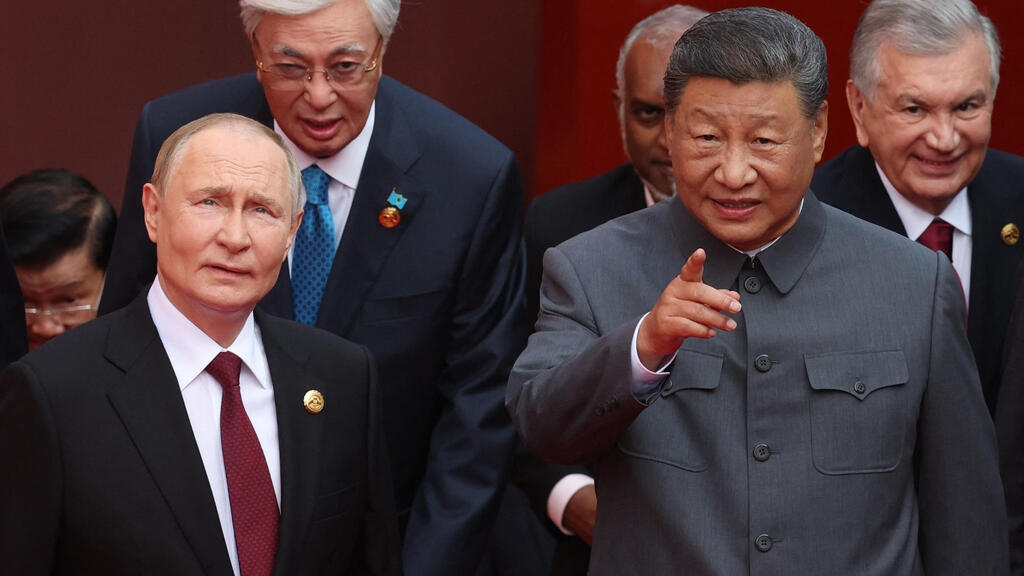
Russian President Vladimir Putin with Chinese President Xi Jinping in Beijing
(Photo: Alexander Kazakov/ AFP)
“Lately I’ve been receiving a huge number of highly sophisticated connection requests on LinkedIn — all from the same type of young, attractive Chinese women,” Mulvenon said. He also recounted an incident at an investment-risk conference in Virginia last week, where two women tried to enter the event armed with detailed information about the participants. “They didn’t get past security, but they knew everything about the conference. It was very strange,” he said.
Mulvenon, who has studied espionage for three decades, described the “honeytrap” tactic as a serious threat. “We Americans, culturally and legally, don’t do this kind of thing,” he said. “That gives the Chinese and Russians an asymmetric advantage in this kind of ‘sex warfare.’”
From spies to 'investors' and academics
According to five U.S. intelligence experts interviewed by The Times, sexual entrapment is just one of several tools used by China and Russia to infiltrate the American tech industry. China, they said, regularly organizes startup competitions in the U.S. to steal sensitive business plans and technological data — and in some cases, to sabotage American companies.
Gone are the days of mysterious KGB agents in trench coats. Modern espionage, they said, uses ordinary citizens — investors, analysts, businesspeople, and academics — to penetrate the world of innovation and technology. “We’re no longer chasing shadowy spies in smoky bars,” one senior intelligence official said. “Our rivals, especially the Chinese, use ‘social espionage’ to infiltrate and exploit Western talent and knowledge.”

LinkedIn
(Photo: Julius Kielaitis/ Shutterstock)
In February, the U.S. House Homeland Security Committee warned that the Chinese Communist Party was responsible for more than 60 major espionage cases in the U.S. over the past four years. Experts believe that number represents only a fraction of the true scale.
A lifetime of espionage
A former senior intelligence officer, who now advises Silicon Valley founders on screening foreign investments, told The Times about a Russian woman who allegedly married an American aerospace engineer while secretly gathering intelligence.
“She was stunning, worked in the aviation industry, and no one suspected a thing,” he said. Investigators later discovered she had trained at a Russian modeling academy in her 20s, then attended a “soft power” school before disappearing for a decade. She later reappeared in the U.S. as a “cryptocurrency expert.”
According to the source, “She soon started pushing into the American aerospace community — and didn’t hesitate to use any means to get close. Her husband had no idea.”
He added: “It’s a real tactic — move to the U.S., marry your target, have children, and conduct a lifelong intelligence mission. It’s unpleasant to think about, but it’s very common.”
The price of a secret
The U.S. Commission on Intellectual Property Theft estimates that trade secret theft costs American taxpayers up to $600 billion a year, with China responsible for most cases.
In 2023, Chinese national Klaus Pflugbeil attempted to sell Tesla trade secrets to undercover agents at a Las Vegas conference for $15 million. He was sentenced to two years in prison last December. His alleged partner, Yilong Shao, remains at large. Both had worked for a Canadian manufacturer acquired by Tesla in 2019 and used stolen data to start a competing company in China.

Tesla factory in California
(Photo: AP/ Noah Berger)
The U.S. government routinely warns startups against participating in international “pitch competitions” organized by Chinese institutions. Founders are often asked to share business strategies, intellectual property, and even personal data before the events. Winners receive prize money and investments — but must agree to establish operations in China and transfer IP rights.
“This is a serious intelligence risk,” one senior U.S. official warned. “The most vulnerable targets are young entrepreneurs and academics dreaming of success. They don’t realize that their ideas can be stolen, patented, and used to destroy their own futures.”
One example cited is China’s Ninth International Innovation and Entrepreneurship Competition, recently held in Boston, London, and Tokyo. A Silicon Valley biotech CEO who took part said Chinese officials recorded every word and gesture during the event. “They had me wear a microphone, and government representatives sat in the back watching the entire time,” he said.
His company won a $50,000 prize — but the money was wired to his personal account, not the firm’s. “That was very strange,” he said. Shortly afterward, U.S. authorities froze his federal funding, forcing him to dissolve his company. “I suspect it’s because we revealed we had Asian investors,” he said.

Silicon Valley
(Photo: Shutterstock)
'The new Chinese playbook'
Mulvenon described this as a deliberate strategy: Chinese venture capital firms, he said, target startups that have received Pentagon funding, investing later to gain control and block further U.S. defense involvement. “Foreign ownership rises above the threshold that allows Defense Department funding,” he explained. “That’s the new Chinese playbook. I call it ‘drafting.’”
In May, a U.S. Senate committee found that six of the 25 largest federal research grantees under the Small Business Innovation Research program had “clear ties to China,” yet collectively received nearly $180 million in Pentagon funding in 2023–2024.
Jeff Stoff, a former U.S. government China analyst, told The Times that much of Beijing’s activity is technically legal. “They’re exploiting the weak points in our system,” he said. “The Chinese understand how our rules work — and operate within them, almost without consequences.”
“It’s the Wild West out there,” Stoff added. “China is targeting our startups, our universities, our innovators, and our Pentagon-funded projects — all as part of its economic warfare strategy. And we haven’t even entered the battlefield yet.”