

For decades, Israel relied on traditional methods to assess global trends and guide strategic planning. But what happens when the goal is to spot those trends before they hit like a tsunami?
We posed that question to Dr. Victor Israel, a senior division head at Horizon Line in the Innovation, Science and Technology Ministry. His team uses advanced technological systems to provide foresight assessments and support government ministries in long-term planning.
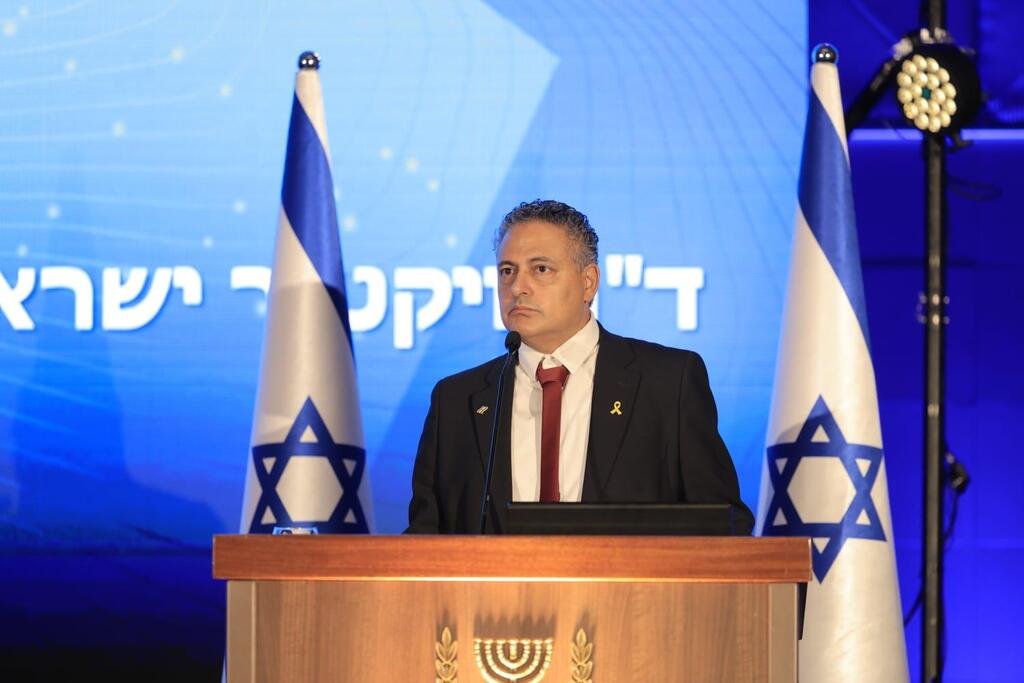
The concept may sound like something out of science fiction — a Deep Thought supercomputer from The Hitchhiker’s Guide to the Galaxy spitting out “42” as the answer to life, or a fortune teller’s crystal ball. In reality, it’s a highly serious system that has already proven itself in multiple cases, from helping manage the COVID-19 crisis to identifying emerging international policy trends.
Scanning and forecasting trends
The effort actually consists of four systems, each built on different technologies and running in parallel. The first, launched four years ago, identifies social and political trends. The second, also four years in operation, focuses on future technologies. The third, which became operational in recent months primarily for the Defense Ministry, analyzes supply chains. The fourth and perhaps the most sophisticated, Horizon Line, remains in development.
The Innovation, Science and Technology Ministry unveiled the systems this week at the Beyond the Horizon 2025 conference. “We’re operating on a budget of just 4 to 5 million shekels,” Dr. Israel told Ynet. The project began in 2018 as a lab within the Intelligence Ministry under then-minister Israel Katz.
It later became one of the ministry’s four core divisions, and after the ministry was dissolved last year, it was transferred at the request of former intelligence minister Gila Gamliel to the Innovation, Science and Technology Ministry, where it now operates.
'It is essentially a laboratory for a changing reality, created to provide strategic alerts to government decision-makers. Our aim is to identify emerging global trends and build a unified picture of what is unfolding'
“The horizon-scanning mechanism reflects Israeli excellence at the technological frontier,” Gamliel said. “It sharpens the use of artificial intelligence tools, strengthens Israel’s scientific and technological independence, and reinforces the country’s scientific security.”
Dr. Israel spoke with us to explain the purpose of the Horizon Line system and how it is meant to help Israel navigate an uncertain future. Horizon scanning mechanisms, as they are often called, already exist in countries such as Britain, Australia and Singapore.
In 2018, the Intelligence Ministry established a lab to harness big data and artificial intelligence in order to detect emerging global trends. The process was designed to support national-level strategic planning and decision-making. Horizon Line is staffed mainly by researchers, many with backgrounds in military or intelligence services such as Military Intelligence and Mossad, alongside technologists who develop, analyze and process data into intelligence products and policy recommendations.
What is Horizon Line and what is its goal?
“It is essentially a laboratory for a changing reality, created to provide strategic alerts to government decision-makers,” Israel said. “Our aim is to identify emerging global trends and build a unified picture of what is unfolding. We believe Israel is not isolated from the world, and therefore it must prepare for the waves that are coming rather than wait for them to crash into us.”
What fields do you cover in your research?
“We divide the world into eight core domains: ideologies, ideas and religions; climate and natural resources; demography; international relations; the global economy; social change; technology; and geopolitics. The key point is the connection and mutual influence among all these domains. You cannot look at one in isolation and expect to understand how the world works.”

A pro-Palestinian rally
(Photo: Artur Widak/GettyImages)
What does the technology look like?
“The system is made up of four separate platforms. One, still in development, focuses on ‘mega-trends.’ It takes the eight domains, breaks them down into roughly 59 trends and collects data to generate forecasts. Another, already operational for several years, deals with technological foresight.
“It includes a database of more than 4,000 technologies expected to have significant future impact. In the past, it relied on machine learning, but today it runs on a model of multi-agent artificial intelligence. Each agent is an expert in its own field — technology, economics, ethics and so on — and they debate each technology in the database. At the end of the process, the system produces a detailed report complete with graphs and references to sources.”
What role do human researchers play in the system?
“Human researchers are involved mainly in defining the query for the machine and in reviewing the output. They make sure the machine isn’t producing nonsense. Our system evolved through a long process of collaboration between the machine and real scientists, until we reached a point where the results can be trusted.”
How does this translate into government work?
“When the system issues an alert, it specifies its implications across the entire government. For example, we identified humanoid robotics as an emerging trend. The alert didn’t just state the trend, it included recommendations for various ministries.
“The Economy Ministry was advised to prepare for production lines run by robots, while the Welfare Ministry was advised to explore robotic care for the elderly. We don’t just issue a warning and walk away — we hold follow-up discussions and try to push the government system to act.”
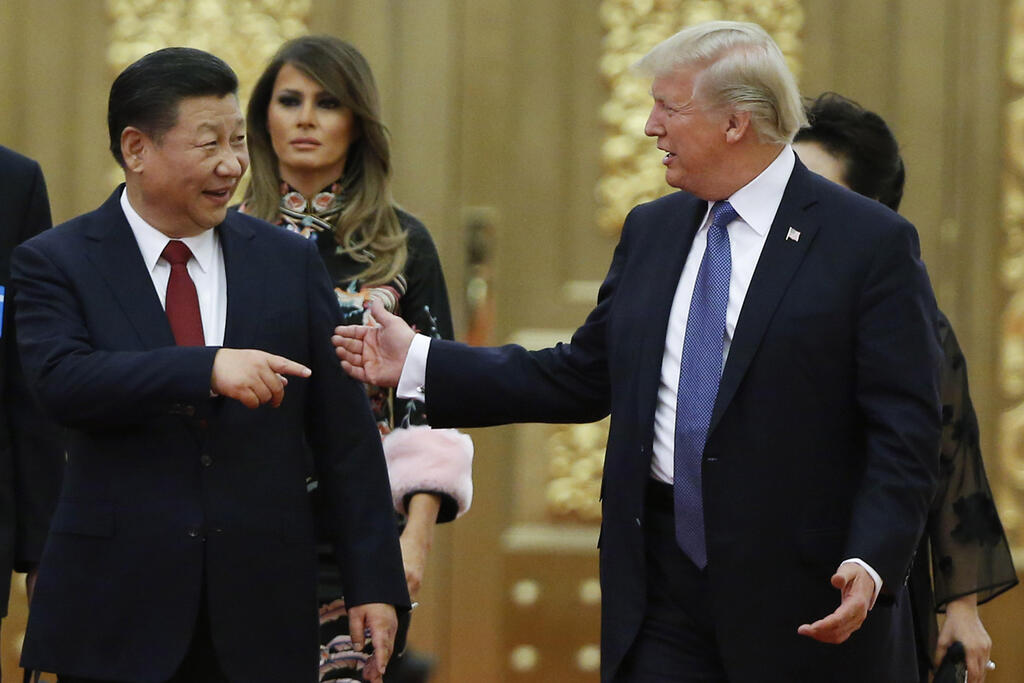
Chinese President Xi Jinping, US President Donald Trump
(Photo: Reuters)
You recently published an assessment. What trends are you identifying for 2035?
“We see a central process of transition from a unipolar world order dominated by the United States to a multipolar one. Existing economic models are weakening, and social inequality is expanding. These trends create intersections of tension and crisis.
“We are returning to an era of state wars, as can be seen in Europe, the Middle East and in China. Many dismissed our view of U.S.-China competition. They said it was just a Trump-era effect, not a structural shift. Today, it’s clear the rivalry is deep and escalating.”
That sounds like the period before World War II. Are we headed toward World War III?
“The real question is what World War III would look like. There’s debate over whether we’re already in it. This is part of a liminal period. Looking at history, shifts from one world order to another are usually accompanied by a major war.
“Take the collapse of the Soviet Union, which created many smaller wars across its remnants. Some argue that World War III may not be a single war, but a sequence of regional conflicts. We’ve already seen the war in Europe, which is ongoing, the war in the Middle East, which continues, and a third conflict — in the China-Taiwan arena — that is still ahead of us.”
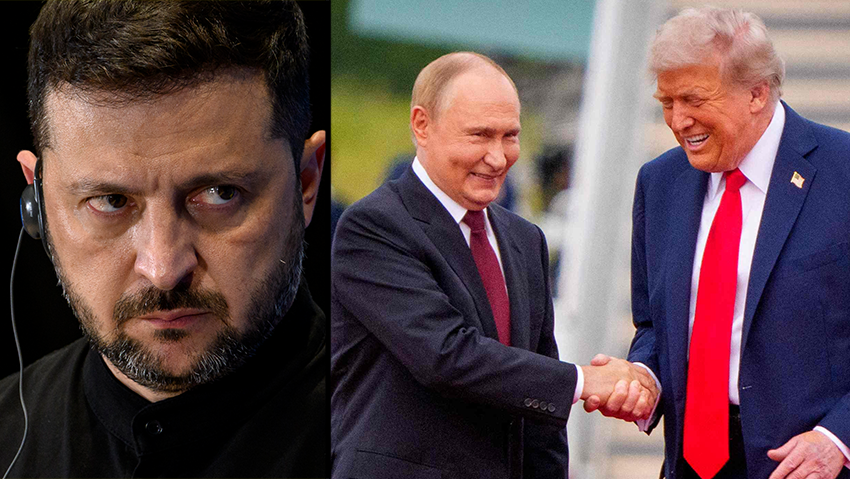
Ukrainian President Volodymyr Zelensky, Russian President Vladimir Putin, US President Donald Trump
(Photo: Andrew Harnik / GETTY IMAGES NORTH AMERICA / AFP, Antonio Masiello/Getty Images)
What does all this mean for Israel?
“It means Israel must prepare for a prolonged period of instability. It should develop strategic ties with countries like India and European states, not rely only on the U.S. We are also working on a strategy for Israel in the Indo-Pacific.
“Engaging with this region — a global economic and technological center of gravity — would make Israel a more significant asset to both Europe and the U.S. We are also trying to spark debate about changing the core subjects taught in schools, to match the age of artificial intelligence.”
How do you deal with mistakes or failed forecasts?
“With big-picture trends, it’s very hard to miss. For example, our forecast from 2017–2018 about U.S.-China rivalry now looks obvious. But with smaller or sub-trends, errors can occur. Take political protest: we first identified a rising wave of protests worldwide, but recently we’ve seen a decline. That suggests ongoing disillusionment with political systems as a whole.”
Could a system like yours have identified an event such as October 7?
“No system can help if, in the end, people ignore the conclusions it produces. There is always a researcher’s review, who may say an alert is wrong or that there are other factors the system doesn’t recognize. In that sense, no system could have warned about October 7. Unfortunately, it’s not something technology can predict.”