
Most of the products around us are still “silent.” A carton of milk, a crate of vegetables, a package of medicine or a pallet of goods can travel thousands of miles through the supply chain without being able to tell us where it is, what temperature it has been kept at or whether the conditions around it have changed. Wiliot is trying to change exactly that with a tiny computer, roughly the size of a postage stamp, that requires no battery and can turn almost any product into an object capable of generating and transmitting information about itself.
Wiliot Chip: How it works
(Video: Wiliot)


Behind the company are Tal Tamir, Yaron Elboim and Alon Yehezkel, all graduates of the Viterbi Faculty of Electrical and Computer Engineering at the Technion – Israel Institute of Technology. The three accumulated years of experience in the semiconductor and communications industries and also worked together at Wilocity, a chip company acquired by Qualcomm in 2014. In 2017, they set out on a new path with a far more ambitious idea: to connect not only phones, computers and cars to the internet, but billions of everyday objects as well.
At the heart of Wiliot’s technology is the IoT Pixel, a thin tag containing a chip, sensors and an antenna. Instead of a battery, the tag “harvests” tiny amounts of energy from radio waves in its surroundings and uses that energy to collect data and transmit it via Bluetooth. Depending on the application, it can provide information about temperature, humidity, movement, location and other conditions. The data is sent to Wiliot’s cloud, where software and artificial intelligence systems turn those signals into a continuous picture of what is happening to a product along its journey. This concept is known as Ambient IoT: connecting everyday objects to a network through tiny sensors that operate in the background and automatically transmit information.
Gallery

Wiliot is trying to change supply chains with a tiny computer, roughly the size of a postage stamp
(Photo: Wiliot)
The difference between this technology and a barcode or RFID—radio-frequency identification—is not simply a matter of size. A barcode requires someone to scan it, while traditional tracking technologies generally provide snapshots at specific points along a product’s journey. Wiliot’s goal is to create an almost continuous stream of information, without manual intervention and without putting batteries into billions of tags.
“We now have a better understanding of how these tiny chips, together with cloud computing, provide the flexibility required to give objects connectivity and sensing capabilities,” Tamir told ynet back in 2020, when the company was still at the stage of conducting trials with customers.
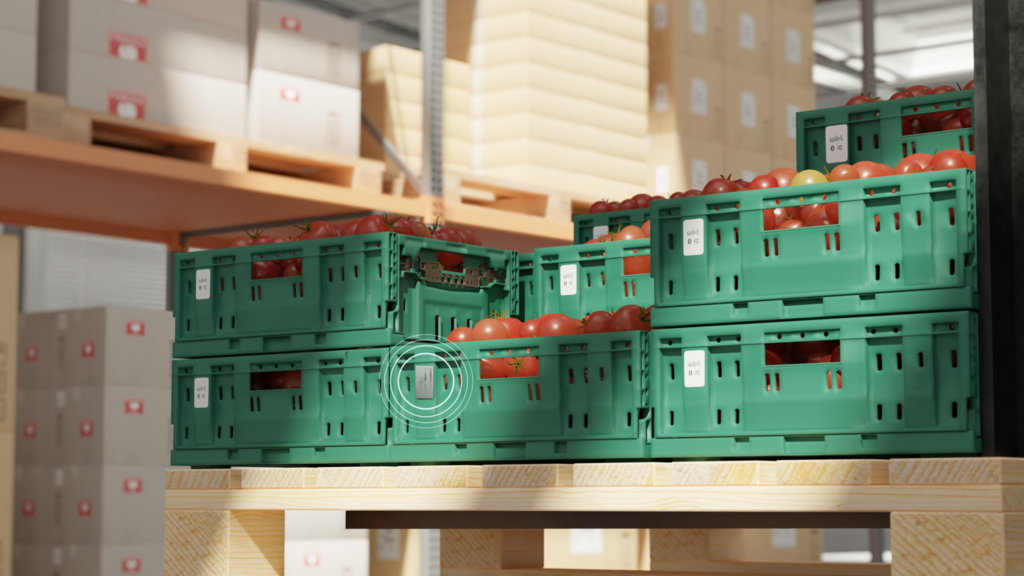
What if every carton, pallet and package could tell you where it is?
(Photo: Wiliot)
The practical implications could extend far beyond tracking packages. A supermarket chain could know whether a sensitive product has been kept at the correct temperature; a pharmaceutical company could receive an alert if storage conditions deviate from requirements; and a warehouse could know where inventory is located without an employee having to scan every item. This kind of information could reduce food waste, errors, excess inventory and manual labor, while at the same time providing AI systems with up-to-date data from the physical world rather than relying solely on existing databases.
Wiliot received a major vote of confidence as early as 2021, when it raised $200 million in a funding round led by SoftBank’s Vision Fund 2. But the bigger test is the transition from development and pilot programs to real-world deployment on a massive scale. In October 2025, the company announced a collaboration with Walmart under which millions of tags are being used to track pallets throughout the supply chain, with a goal of reaching approximately 90 million pallets annually by the end of 2026. In January this year, Wiliot unveiled the third generation of its IoT Pixel, offering improved range and lower costs, and in April, labeling and materials giant Avery Dennison invested another $75 million in the company and became a major manufacturing and marketing partner.
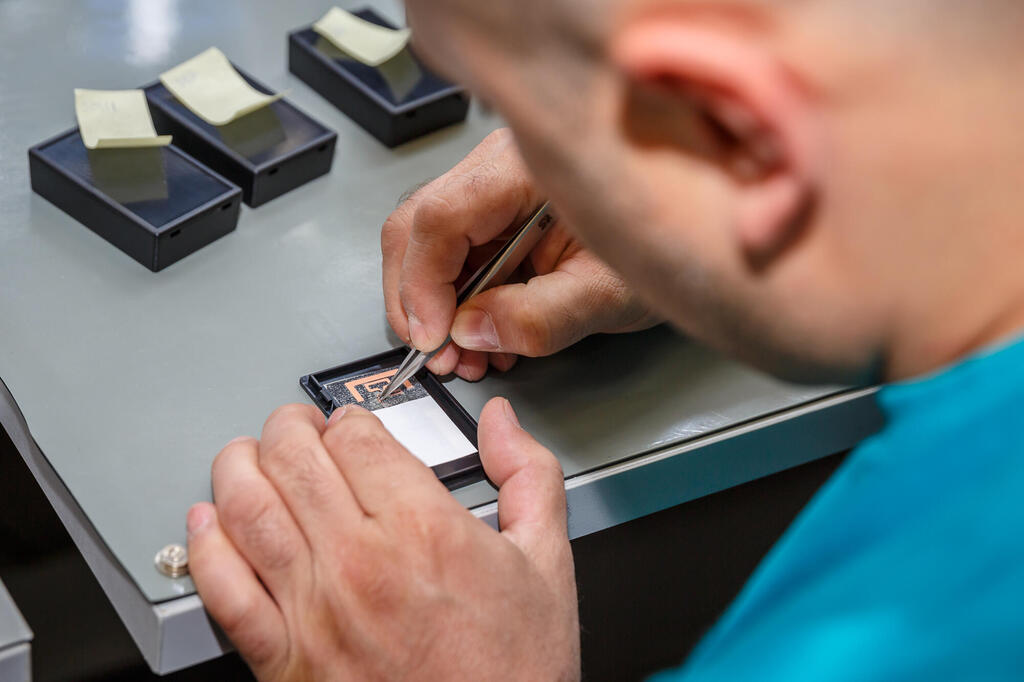
Today, Wiliot presents its technology as a foundation for 'Physical AI'
(Photo: Wiliot)
Today, Wiliot presents its technology as a foundation for “Physical AI”—artificial intelligence that receives a continuous flow of information from objects in the real world. According to company figures released in August, its platform is already tracking more than 100 million assets every day across approximately 20,000 locations.
If that vision continues to expand, the transformation will go far beyond the way goods are tracked. Entire supply chains could shift from systems that react to what has been scanned and recorded to systems that know, in real time, what is happening in the physical world—and can act accordingly.