

'Hakol mebina' (All about AI) has become Israel’s flagship hands-on AI conference for creators, marketers and content professionals, a fast-growing series that has drawn thousands since launching in April 2023. Built around practical training in generative tools, each event blends short talks, live demos and networking, with an emphasis on diverse speakers from across the creative and tech worlds. The series is produced under the Taasiya umbrella, founded by entrepreneur Gali Meiri, and is curated by Meiri together with musician and innovation lecturer Yaki Gani and production partner Stuff.
Hakol Mebina 7- All about AI
(Video: Lior Sharon)


Conference No. 7, held at the Eretz Israel Museum in Tel Aviv, followed the same practical structure, even expanding to two identical half-day sessions to meet demand. But the tone felt noticeably different. Instead of leaning on the adrenaline of “look what these new AI agents can do,” this edition pulled the spotlight inward. The theme, “the magic is in the prompt,” was not framed as a productivity trick so much as a statement about human agency. The tools are arriving with “superpowers,” as the organizers put it, but what matters is still the wish we make of them, and the values behind that wish.
If earlier conferences sometimes felt like a showcase of jaw-dropping capability, this one leaned toward meaning. The most memorable moments were less about AI dazzling the room and more about how humans relate to what AI makes, and what it stirs in us. The program kept circling back to questions of memory, voice, bias, trust and intention. It felt like a conference growing up alongside its audience, shifting from discovery to reckoning.
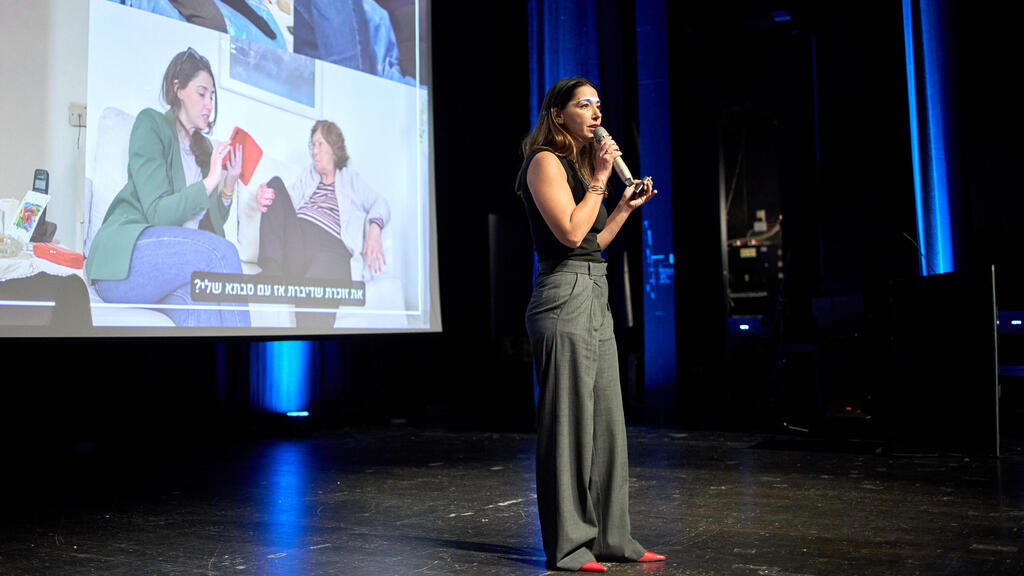
Moran Saar Behar, an AI innovation lecturer and co-founder of the STUFF change-management agency, set that tone early. She began with her widely discussed experiment filming her 94-year-old grandmother’s conversations with an AI system, using it to explore loneliness, memory and the need to be heard. She then shared a project in which a grieving mother uses AI to ask her deceased daughter the questions she never had the chance to ask. It was a moment of heartbreaking magic, that left the audience stunned and teary-eyed.
Renana Raz, a celebrated choreographer and multidisciplinary artist known for weaving memory and movement into her work, continued that tone in her session-performance, ‘VHS, regards from the future.’ She used AI to examine memory itself: what people hold emotionally, what machines store mechanically and the unsettling possibility of “remembering forward.” Rather than treating AI as a shortcut, Raz treated it as a mirror, asking what the technology reveals about human identity.
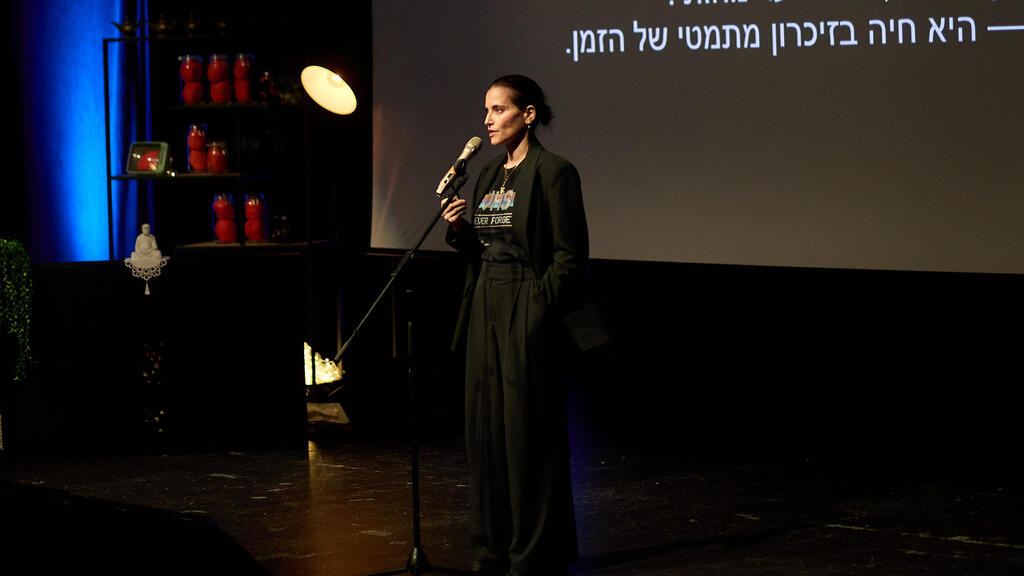
Renana Raz
(Photo: Tarlan Ben Avi)
The conference did not abandon hands-on work, but the other speakers carried that reflective thread into new creative territory. Among them was musician and innovation lecturer Yaki Gani, who delivered one of the day’s most unexpected emotional peaks. Known for blending artistic instinct with tech experimentation, he staged a playful homage to Elton John: an orchestrated sequence of The Lion King characters singing “Rocket Man.” What could have been a novelty instead became a quiet commentary on authorship, nostalgia and the tenderness that can surface when familiar cultural icons are reanimated through AI. In Gani’s hands, it landed not as parody but as a reminder of how deeply AI now reaches into personal memory and collective imagination.
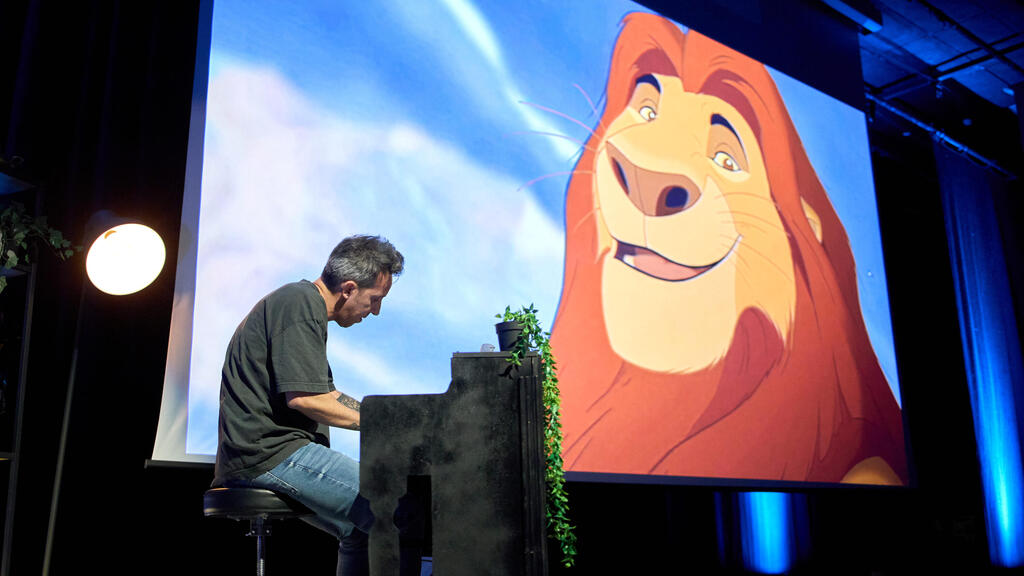
Yaki Gani, the lion King and Elton John
(Photo: Tarlan Ben Avi)
This edition of 'Hakol mebina' stepped away from pure spectacle, less about dazzling the audience with what AI can do, and more about grappling with how humans feel, create and remember within this new landscape. The tools were still present, powerful and evolving fast, but the center of gravity had shifted back to the creators themselves: their biases, their emotions, their sense of meaning, their choices.
This edition asked a quieter, more enduring question: What does creativity become when the machine beside you can do almost anything, except care? In answering it, the conference offered something rare in the AI world: not just acceleration, but reflection. A reminder that the future is not only shaped by the power of our tools, but by the humanity we bring to them.