


Israeli unicorn Hailo unveiled a first-of-its-kind artificial intelligence chip on Tuesday, allowing generative AI (GenAI) tools to run directly on the device without relying on massive cloud-based AI models or expensive GPUs.
The chip is designed for edge devices, including laptops, vehicles, communication equipment and surveillance systems, enabling powerful AI performance while protecting user privacy by eliminating the need to upload data to the cloud.
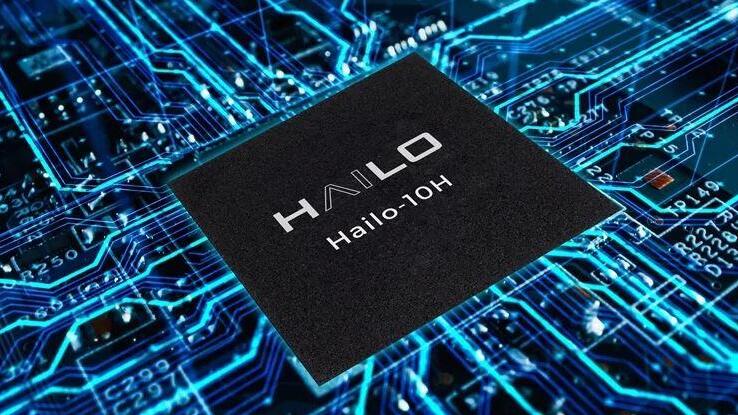
Low power consumption, local AI processing
The newly launched chip, called Hailo-10H, is the second generation of the company’s technology and a significant upgrade from its predecessor, the Hailo-8. According to Hailo, it is the world’s first commercially available AI chip that can run GenAI models locally. It supports running language and vision-based LLMs directly on devices with low power consumption and no latency from cloud communication. An added benefit is its functionality in areas without cellular coverage.
The Hailo-10H integrates seamlessly with Hailo's existing development environment, which is used by over 10,000 developers worldwide each month. These include developers in consumer tech, enterprise sectors, media device manufacturers, and home router companies, who often need devices that can operate independently in case of connectivity loss.
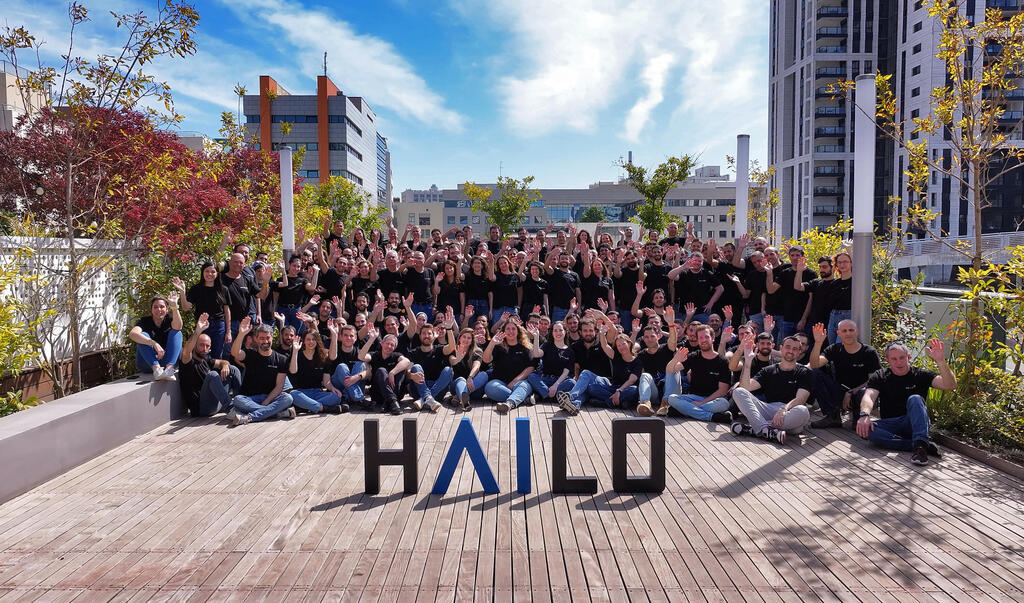
Hailo team
(Photo: Higher Photography)
In the automotive sector, Hailo’s chips are used in Advanced Driver Assistance Systems (ADAS) to enhance driver and passenger monitoring, issue warnings about safety hazards, and personalize multimedia systems—adjusting music, lighting, and navigation according to driver preferences. The chip also supports voice activation, real-time visual processing, and multi-modal capabilities such as simultaneous processing of images, sounds, speech, and text.
Get the Ynetnews app on your smartphone: Google Play: https://bit.ly/4eJ37pE | Apple App Store: https://bit.ly/3ZL7iNv
About a year ago, Hailo announced a collaboration with Raspberry Pi, the popular maker of single-board computers, turning the mini computer into a capable AI processor through the Raspberry Pi AI Kit. At CES earlier this year, Hailo showcased a partnership with Limelight, featuring an AI-powered camera enabling robotic systems with computer vision capabilities.
Hailo has also partnered with HP on retail systems and security cameras for theft prevention, while Dell is currently evaluating Hailo’s chips for similar applications.
A competitive edge over NVIDIA
Co-founder and CEO Orr Danon emphasized that one of Hailo’s target markets is the emerging field of physical AI, including robotics, autonomous drones and vehicles. Competing with GPU giant NVIDIA, which dominates this sector, Hailo offers a cheaper and lighter alternative that can deliver performance on par with GPT-3.5, making it a compelling option for AI in home and edge systems.
“With the commercial availability of the Hailo-10H, we are taking a major step toward realizing our vision of making AI accessible to everyone,” Danon said. “It’s the first dedicated accelerator to offer real GenAI performance at the edge—efficient, affordable, and supported by a robust development environment.”
Founded in February 2017 by veterans of an elite Israeli intelligence technology unit, Hailo has raised a total of $340 million to date—including a $120 million round in April 2024, following $136 million raised in 2021.