

As tensions in the Middle East reach new heights and diplomats around the world bite their nails over conflicting reports, a new Israeli project is attempting to bring order to the chaos using artificial intelligence.
Meet StrikeRadar, an interactive dashboard that calculates in real time the likelihood of a U.S. strike on Iran. Behind the tool is Yonatan Back, a tech product manager by profession, who has demonstrated that in 2026, accessible AI tools can perform strategic analysis once reserved for well-funded intelligence units.
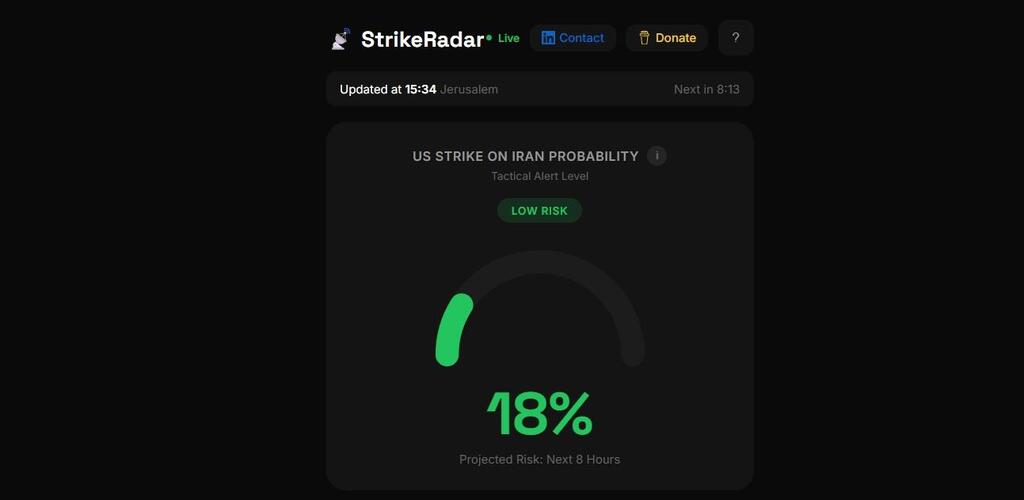
The project was born out of the uncertainty felt by Israelis and people worldwide amid ever-changing headlines. Back, who describes himself as someone with no coding background, told ynet that he used the Claude language model to build the system from scratch. In just six hours, the model designed the architecture, wrote the code and even guided Back through launching the site.
The platform operates by integrating multiple data sources (APIs), delivering both raw and processed inputs, ranging from critical news reports and flight cancellations in Iran to weather data and military refueling aircraft movements. The information is then weighted and translated into a real-time probability score displayed on a live dashboard, offering users a quick indication of the region’s tactical tension level.
AI vs. prediction markets
StrikeRadar enters a space already populated by major players in geopolitical forecasting. While traditional news outlets in the U.S. and Europe continue to rely on military analysts and anonymous sources, modern services increasingly turn to crowdsourcing or algorithmic analysis. One of the best-known platforms is Polymarket, a crypto-based prediction market that has gained significant popularity in the U.S. and China.
On Polymarket, users "bet" on dates for potential attacks, and the resulting probability is derived from market dynamics. In contrast to StrikeRadar, prediction markets are influenced by emotion and financial stakes, whereas Back’s system aims to maintain objectivity through raw data analysis. Another notable player is GeoQuant, a leading U.S. firm that merges political science and AI to provide institutional investors with country risk scores. GeoQuant’s platform is closed and complex, geared toward professional clients.
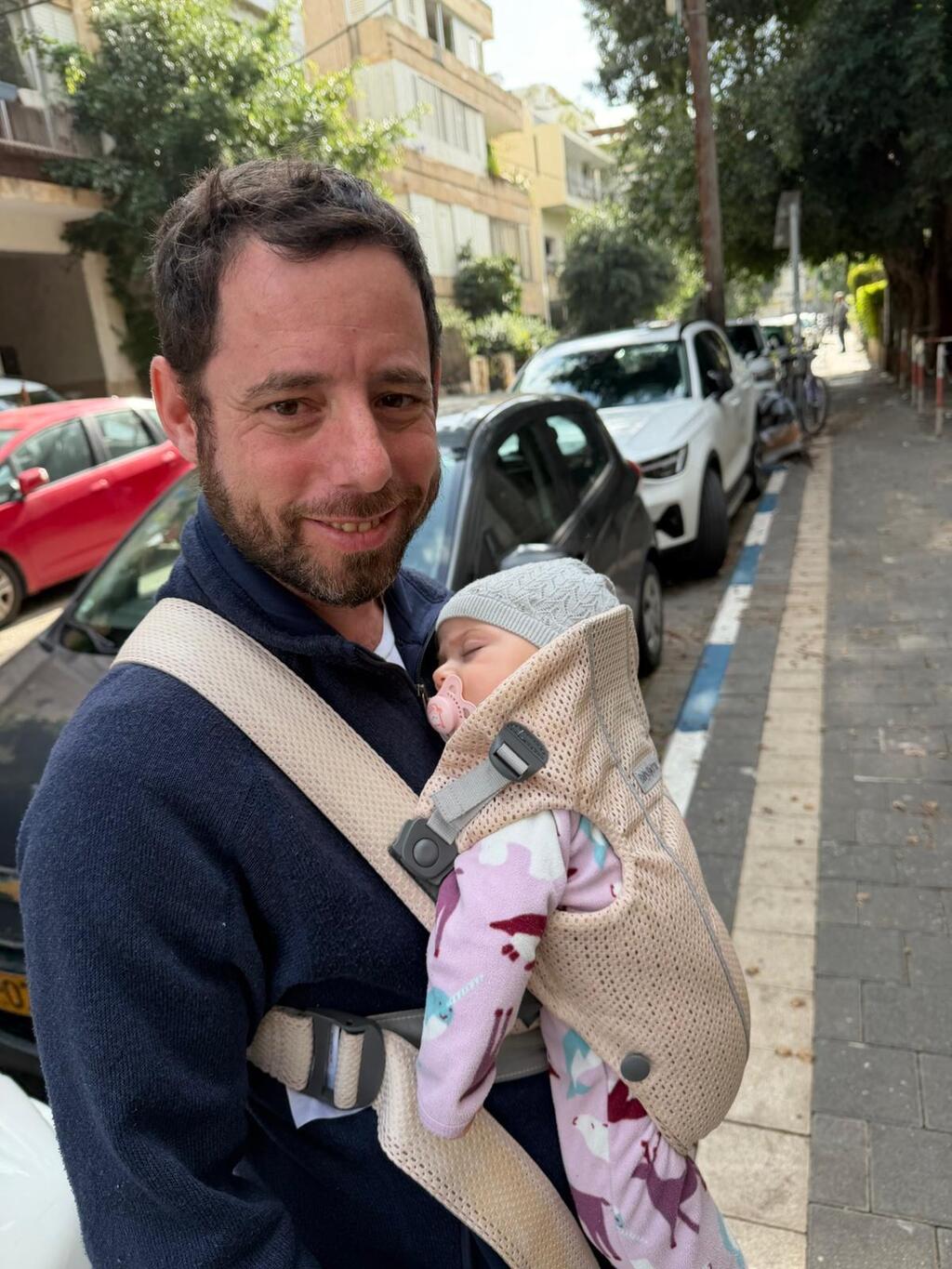
Yonatan Back
(Photo: Courtesy)
The technology behind StrikeRadar represents a sophisticated stage in a process that began decades ago. In the past, conflict forecasting relied on basic statistical models and historical analysis—such as Cold War-era war game simulations. The deep learning revolution of the past decade has shifted forecasting from static models to dynamic systems capable of detecting patterns in continuous data streams.
From history to the future
One of the more intriguing components of Back’s system is its use of "reference data." StrikeRadar "learned" from the patterns that preceded previous strikes, such as U.S. operations against Iran in June 2025, and compares current signals to those historical benchmarks. For example, unusual movement of American refueling planes in the Persian Gulf region is given greater weight in calculating the final probability score.
StrikeRadar reflects a deeper shift in public expectations: people are no longer satisfied with slow or potentially biased human analysis. The ability to set up a personal "monitoring center" within hours marks the end of an era when strategic intelligence was limited to a select few. Still, as Back himself notes, the system is merely a support tool. In a world where a single post on X (formerly Twitter) or a last-minute decision in a situation room can reshape the Middle East, AI can give us the percentages. Still, the final decisions remain in human hands.
As technology evolves, StrikeRadar joins a growing array of tools seeking to "crack" the geopolitical future, ranging from crowdsourced prediction markets to algorithmic analysis platforms. While StrikeRadar is designed as an accessible, fast tool for the general public using large language models (LLMs), institutional tools like GeoQuant rely on closed statistical frameworks and analysis by PhDs. Meanwhile, platforms like Polymarket offer the "wisdom of the crowd," which at times can detect emotional shifts faster than any algorithm.