

Artificial intelligence continues to astonish the world: OpenAI published on Tuesday more than 700 papers at once describing solutions to 377 mathematical problems that had remained unsolved, spanning a wide range of fields including algebra, number theory, computer science, mathematical logic and topology.
According to researchers quoted Wednesday morning by The Wall Street Journal and The New York Times, this represents "obviously the most significant moment in mathematical history."
Among the most significant papers are some related to three of the seven Millennium Prize Problems designated by the Clay Mathematics Institute, which have been considered so difficult and complex that a $1 million prize was offered for the solution to each one.
Among the problems apparently cracked is the Riemann hypothesis, which concerns the distribution of prime numbers. For 10 of the solutions, the company also provided a detailed account of how its artificial intelligence model developed its solution. According to OpenAI, each solution required an average of about three hours of computation.
The mysterious model behind the breakthroughs
The newly released material follows a series of announcements in recent months about breakthroughs on some of mathematics' most difficult problems, stunning mathematicians around the world. Just last month, OpenAI announced that it had succeeded in solving the Navier-Stokes equations, another of the seven Millennium Prize Problems.
As with the Navier-Stokes announcement, the new mathematical solutions unveiled by OpenAI on Tuesday night were produced using a highly advanced artificial intelligence model that has not yet been released to the public.
In recent months, both OpenAI and Anthropic have incorporated efforts to solve complex mathematical problems that have vexed scientists for decades into the marketing campaigns for their new models. According to reports, OpenAI decided to invest millions of dollars in the effort to solve mathematical problems only after learning that Anthropic had already solved at least one of them.
The effort has proved controversial among scientists, some of whom question whether AI systems are already capable of independent creative thought or whether they are simply completing the final stages of proofs after drawing on information and ideas from the work of mathematicians who have devoted their lives to these problems.
For example, after the publication of the solution to the Navier-Stokes problem, an academic who had worked with Anthropic researchers claimed that the model had relied on his unpublished work. OpenAI denied the claim.
Dr. Tristan Buckmaster, a mathematician at New York University who worked on the Navier-Stokes problem, told The New York Times on Tuesday that "there’s likely to be a bunch of results where they take someone’s work and then take it to completion. I don’t think they’ve done their sort of due diligence at all"
Many scientists object in principle to AI companies testing their proprietary models on advanced mathematical problems as a way of evaluating their performance. More than 24 recipients of the prestigious Fields Medal published an angry open letter titled "The Severe Misalignment of AI With Mathematics," warning that the industry's drive to rapidly solve mathematical problems threatens to undermine the purpose of mathematics.
An advisory group of mathematicians
Under pressure from the scientific community, OpenAI recently announced that it is working with an "advisory group" of mathematicians to formulate rules and methods for communicating results published by AI labs to mathematicians in ways that advance the field.
The group operates independently under the auspices of the Institute for Advanced Study in Princeton, New Jersey, and is not affiliated with any AI company. "There are difficult questions ahead about how AI can support mathematical understanding and how the benefits of these capabilities can reach the wider community," the company said last month, "we want mathematicians to be at the center of shaping the answers."
Last week, the council published guidelines for how AI companies should disclose their discoveries, based on feedback from hundreds of mathematicians.

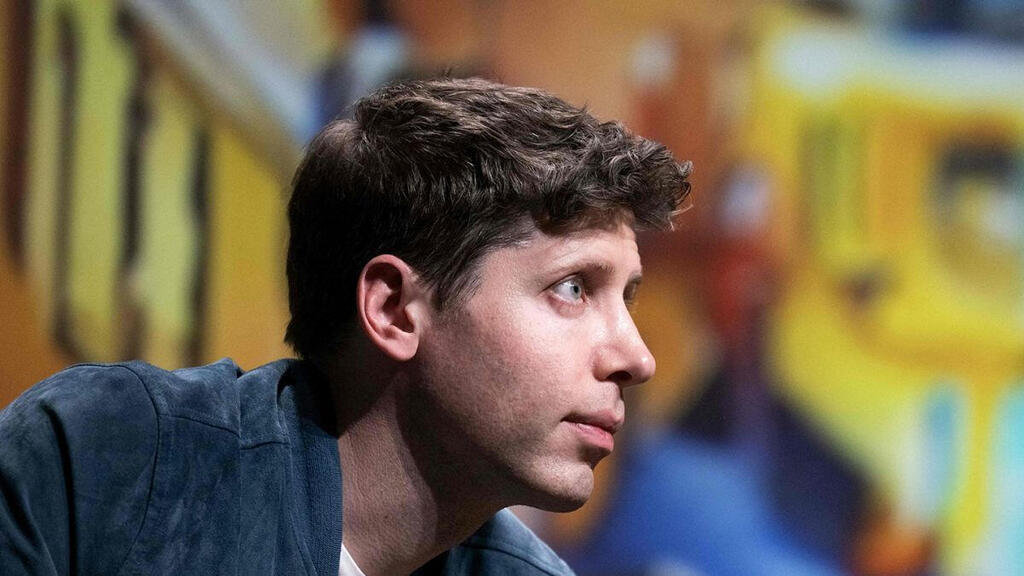
Anthropic CEO Dario Amodei. Anthropic has also set itself the goal of solving mathematical problems
(Photo: Getty Images)
On Tuesday night, the council said the new publication marked the start of a process in which the findings would be examined, understood and incorporated into the broader body of mathematical knowledge. OpenAI, for its part, says it followed the council's recommendations — with one exception.
Alongside OpenAI's announcement, Israeli startup doubleAI, founded by Prof. Amnon Shashua, who also founded Mobileye, announced Tuesday that an AI agent it developed had achieved a breakthrough on one of the central problems in extremal graph theory, on which no progress had been made for 38 years, at a cost of less than $2,000.
Unlike companies seeking to develop artificial general intelligence, or AGI, doubleAI focuses on developing AEI — "artificial expert intelligence" — with the aim of creating systems capable of scientific reasoning and solving complex algorithmic problems at a level of expertise exceeding that of human specialists in fields such as hardware engineering, mathematics and the exact sciences.