

While the IDF is operating with force on the ground, an unprecedented campaign has been unfolding in recent weeks on the digital front. New research reveals a 160% surge in activity by foreign influence networks linked to Iran and Hamas, which have succeeded in injecting polarizing and inciting messages directly into the heart of Israeli public discourse. The goal is clear: to fracture Israel’s social cohesion by cynically exploiting political divisions.
One of the most troubling findings concerns the Isnad network — a pro-Hamas operation run by real users from Arab countries under strict compartmentalization rules and inspired by Muslim Brotherhood ideology.
Gallery
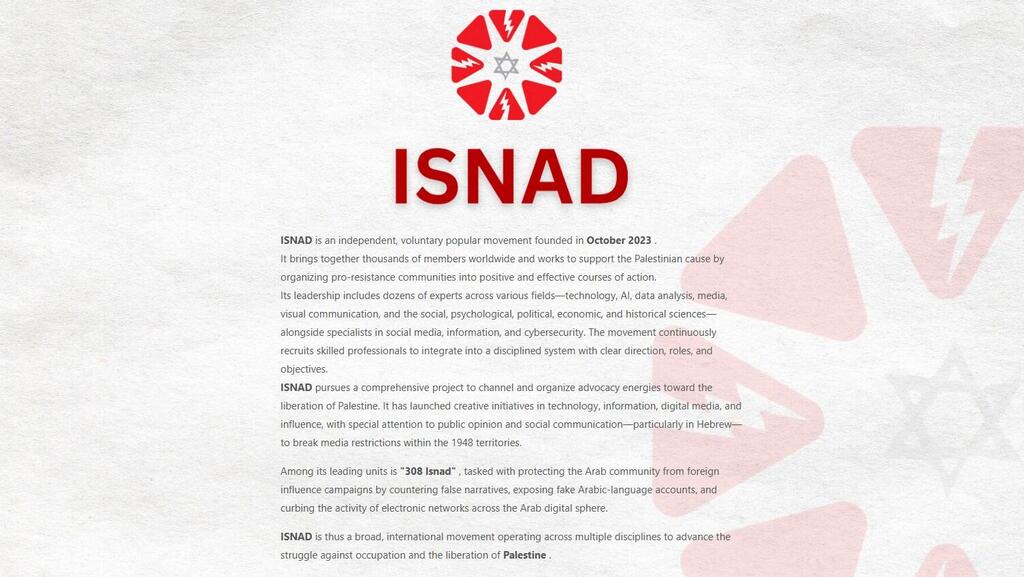
The Isnad network is a pro-Hamas operation run by real users from Arab countries inspired by Muslim Brotherhood ideology
(Photo: Screenshot)
Since the start of the war on February 28, the network has flooded the X social media platform with more than 2,300 posts and comments, generating over 660,000 impressions in just 10 days. The network is less familiar to the public, but its activity has previously been exposed by researchers at the Institute for National Security Studies (INSS).
The network is led by an Egyptian dissident based in Turkey, Ezzeldeen Devidar (the Muslim Brotherhood has been outlawed in Egypt for more than a decade). Its success lies in its ability to “mask” propaganda as authentic Israeli discourse.
In one notable case last week, social media influencer Yoav Eliassi (known as “The Shadow”) shared a post by a user named “Nira Levy” that incited the assassination of the prime minister. Believing it to be a genuine Israeli account, Eliassi attacked government opponents and, without realizing it, amplified enemy propaganda to hundreds of thousands of followers.
A similar case involved the account under the name “Keren Levy,” which posed as a teacher and spread racist comments that reached tens of thousands. Even media figures, including a reporter from Channel 14, were misled and unknowingly shared the propaganda.
Have you heard of 'Iran Today'?
While Isnad relies on impersonation, the Iran Today network represents a different approach: overt propaganda presented as a legitimate media outlet. The network operates a Hebrew-language website, along with YouTube, Telegram, X and Instagram channels, distributing content that glorifies Iran and Hezbollah. Unlike previous failed efforts — such as anti-migrant networks or the “Talia Cohen” account exposed in 2025, this operation is more focused and sophisticated.
Alongside Iran Today, influential profiles such as “Miriam Kozak,” which garners millions of views, are also active. Its core narrative — shared by other networks such as “Following Sara Aviram” — centers on demoralization, fear and framing the war as a political maneuver by Israel’s leadership and former U.S. President Donald Trump.
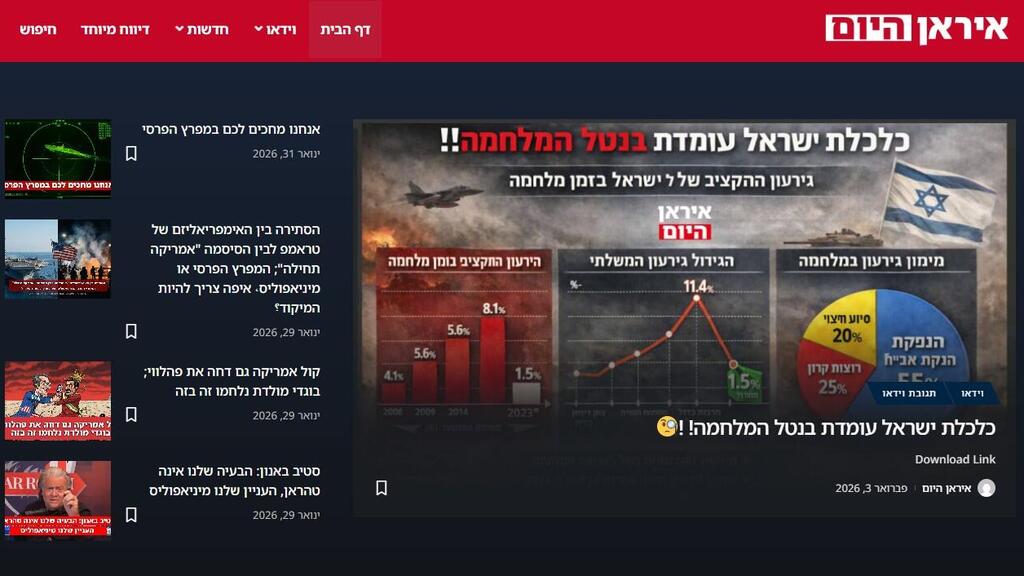
The homepage of Hebrew-language Iran Today website: overt propaganda presented as a legitimate media outlet
(Photo: Screenshot)
Iranian tactics are not new. They draw direct inspiration from major global influence campaigns. For example, Russia’s Doppelgänger campaign used — and continues to use — fake news sites that mimic leading Western media outlets to spread disinformation about the war in Ukraine.
Russia began developing social media influence techniques more than two decades ago and even established dedicated institutions to operate propaganda agents. Researchers say these efforts may have influenced the 2016 U.S. elections.
Similarly, China operates comparable campaigns. One example is Spamouflage, an aggressive Chinese network that uses artificial intelligence to generate deepfake videos of political leaders in an effort to influence elections in the West and fuel social divisions. The use of AI makes these campaigns more convincing, and China has also shared these methods with allies such as North Korea and Iran.
The technology behind these efforts is the modern evolution of psychological warfare (PSYOPS). Its roots date back to leaflets dropped from planes during the world wars, through radio broadcasts such as “Tokyo Rose” and Radio Free Europe, to today’s digital landscape.
A major shift came in the 2010s with the rise of micro-targeting, which allows tailored messages to be injected into specific, vulnerable audiences. Today, AI enables Iranian actors to generate fabricated images of destruction within seconds of a siren, amplifying panic at a speed previously unimaginable.
Nir Rosen, CEO of the Fake Reporter organization, warns that “the battle over public consciousness is a critical front, but the public is left exposed on social media.” According to him, the clear lesson from Operation Roaring Lion is that national resilience begins with digital literacy. In 2026, every careless “share” is a bullet fired in the battle over perception.
First published: 09:50, 03.18.26