

The legacy U.S. media—mainly the major television networks—were cautious on Wednesday in their coverage of the assassination of 31-year-old conservative activist Charlie Kirk, avoiding broadcasts of graphic close-up footage of the shooting. Instead, they aired a clip of him tossing a hat to the crowd moments before the gunfire, followed by scenes of frightened spectators scattering in panic.
In practice, however, the restraint shown by legacy media only highlights how the classic “gatekeepers” of journalism have lost their authority in the age of social media. Detailed, graphic videos of the bullet striking Kirk’s neck appeared almost immediately across all major platforms—X, Facebook, TikTok, Instagram and YouTube—from multiple angles, in both slow motion and real time. Millions of people, including children, watched them without warning.
Gallery
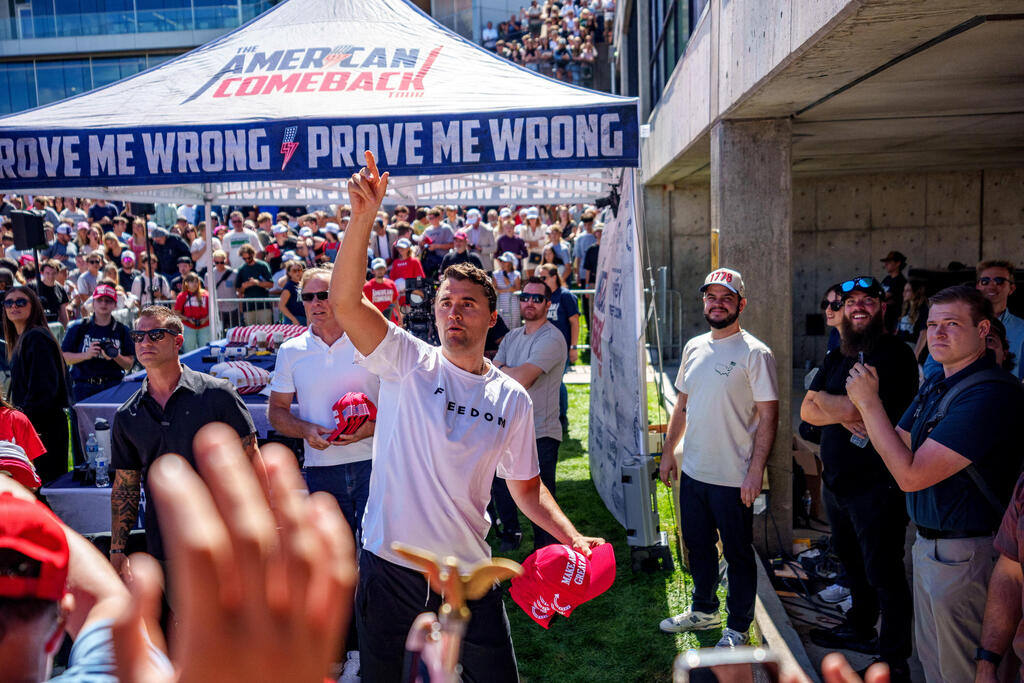
Charlie Kirk at a Utah university speaking event shortly before he was shot
(Photo: Trent Nelson/The Salt Lake Tribune via REUTERS)
Mental health professionals have long warned that even passive exposure to violent imagery can trigger trauma—either immediately or later. In Israel, the dangers are well known: the last time such graphic footage spread so widely online was after the Hamas-led October 7 terrorist attack.
Graphic footage of the shooting was uploaded to Truth Social, the platform linked directly to U.S. President Donald Trump, who nevertheless issued his official condolence message there. Some of the footage even seeped into mainstream media: the popular site TMZ published a video in which the gunshot can be heard and someone exclaims “Oh my God,” though Kirk’s upper body was blurred. The New York Post website also shared a similar blurred clip.
Kirk was shot at a public event on a Utah college campus, in front of hundreds of people—many of them holding phones and accustomed to instantly sharing video online. On X, one video showed a close-up of the exact moment of impact, capturing Kirk’s body recoiling from the bullet and blood gushing from the wound. Another user pleaded “stop the violence” while posting a graphic clip of the shooting. One video replayed the shot in slow motion; another, filmed from Kirk’s left side, included audio suggesting he was speaking about gun violence at the very moment he was hit.
For more than 150 years, major U.S. news outlets—especially newspapers and television networks—have exercised judgment and “gatekeeping” when it comes to broadcasting graphic content, editing violent material to avoid harming viewers and readers. But in the era of smartphones and social media, such editorial decisions have little effect. While the networks were still reporting that Kirk had been “seriously injured,” viewers of the raw footage already understood he had no chance of surviving the assassination.

Frightened spectators scattering in panic after fatal shooting of Charlie Kirk
(Photo: Trent Nelson/The Salt Lake Tribune via REUTERS)
On social media platforms, emotional appeals circulated urging people not to share the images. “For the love of God and for Charlie’s family,” one post read, “just stop.” YouTube later announced—belatedly—that it was removing “some graphic content” related to the shooting if it lacked sufficient context, and was restricting viewing of the murder videos to users over 18. “Our hearts are with Charlie Kirk’s family following his tragic death,” the platform said.
The content policies of Meta—the parent company of Instagram, Facebook and Threads—do not explicitly prohibit posting such videos but do require warning labels for users under the age of 18. Those labels, however, were absent in the hours immediately following the shooting. In response to criticism, social media platforms issued somewhat defensive statements to the media. Meta, YouTube, Bluesky and Discord all released public statements outlining steps to limit the spread of violent, graphic and hateful content related to the incident.
Francis Brennan, a Meta spokesperson, told The Verge that the company’s policies on violent and graphic content applied in this case. “[W]e remove the most graphic content and add warning labels to other types of content so that people are aware it may be sensitive before they click through,” the company said. “We also restrict younger users’ ability to view content that is inappropriate or not age-appropriate. In doing so, we aim to provide a proper user experience while still allowing space for self-expression.”
Jack Malon, a YouTube spokesperson, said the platform is closely monitoring uploaded content and prominently elevating reliable news sources on the homepage, in search, and in recommendations. YouTube will remove “some graphic content” linked to Kirk’s death, particularly when it lacks sufficient context for viewers. Certain videos showing the attack will be restricted to users 18 and older and unavailable to those not signed in. YouTube policy also prohibits content “reveling in or mocking the death or serious injury of an identifiable individual.”

(Photo: Gioele Piccinini / Shutterstock)
Bluesky said that “Glorifying violence or harm violates Bluesky’s Community Guidelines.” In a statement posted on the platform’s official safety account, the company said it was reviewing reports and acting against content celebrating harm to any individual. “Violence has no place in healthy public discourse, and we’re committed to fostering healthy, open conversations,” it stated.
Discord also announced enforcement of its rules. Company spokesperson Jillian Susi said: “Discord’s Community Guidelines prohibit content that glorifies or promotes violence.” She added that the platform is actively removing videos and other materials related to the incident that violate its policies, stressing Discord’s commitment to maintaining a positive and welcoming space.
First published: 15:06, 09.13.25