

Israel’s diverse landscapes offer some of the most breathtaking sunrise experiences in the world—from the golden spires of monasteries rising above morning fog to rugged desert cliffs glowing in first light. Whether you're a seasoned hiker or simply seeking a peaceful moment in nature, these handpicked trails and viewpoints—from the Jordan Valley to the Dead Sea, the Sharon Plain to the Eilat Mountains—highlight the beauty of Israel at dawn. This guide provides everything you need to catch that magical sunrise, complete with directions, trail details and what to expect along the way.
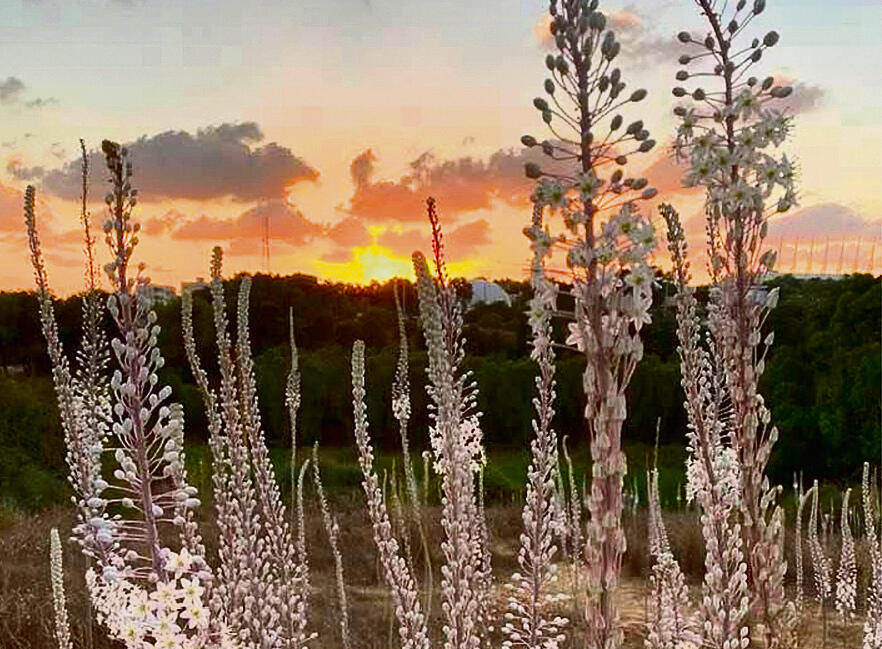
Blooming amaryllis at Udim Nature Reserve
Between Udim and the Poleg Stream in the Sharon region lies one of the most beautiful scenes in Israel, especially in autumn: the sunrise lighting up countless blooming amaryllis on the slopes of the small hill. Early morning is the perfect time to visit Udim Nature Reserve. When planning the trip, it’s recommended to check the sunrise time in advance and allow for about a 15‑minute walk from the parking area to the best viewpoint for sunrise.
What to enter in Waze: Kalanit 21, Udim.
How to get there: Travel on Highway 2 through the Sharon region and turn toward the village of Udim. After about 270 meters you reach a T‑junction; turn right onto HaDagan Street. After a little over 300 meters the road curves left and becomes HaHaruv Street. Drive about 500 meters, turn right, and immediately left onto HaKalanit Street. Drive about 280 meters, and just before the left curve you’ll see a green sign on the right marking the entrance to Udim Nature Reserve. Park on the side of the road. The entrance gate to Udim is closed on Saturdays and holidays, so you must walk approximately 1.1 km each way through the village.
The route: From the parking area, approach the green sign and begin on a narrow trail climbing the hill. From the top you can look northeast toward the Samaria Hills, enjoy views of the fields below, and look west toward the Wingate Institute. Along the trail, especially on the slope to the right, countless amaryllis bloom in autumn, some especially tall. Among them are also small foliage amaryllis and a small shrub with beautiful white flowers. Continue along the narrow trail and soon reach the edge of the cliff. Below runs the channel of the Poleg Stream, and on the hillside across from you there is another hill where more amaryllis bloom. The narrow crossing of the stream is known as the “Poleg Gate.” Sit and rest at the top of the hill and enjoy views of the green stream, the eucalyptus groves, and the open landscape around you at sunrise. Return the way you came; after about one minute, turn left onto a narrow path that descends the hill and runs among the amaryllis in season. After a few minutes’ walk you will reach a wide trail at the base of the hill. Turn right and almost immediately arrive back at the road and parking area.
Duration: 30–45 minutes, about 350 meters, easy walk
Fee: None, no time restrictions
Accessibility: Not accessible
Sunrise From the Summit of Keren (Mount) Sartaba
Sartaba (Mount Alexandrion) rises sharply above the plains of the Jordan Valley, and the view from its summit is especially impressive. Reaching the peak at sunrise — after a long hike that starts in darkness — makes the scene even more extraordinary. Because the drive to the site is long and the climb is steep, it’s recommended to set out early and arrive at least one hour before sunrise to park.
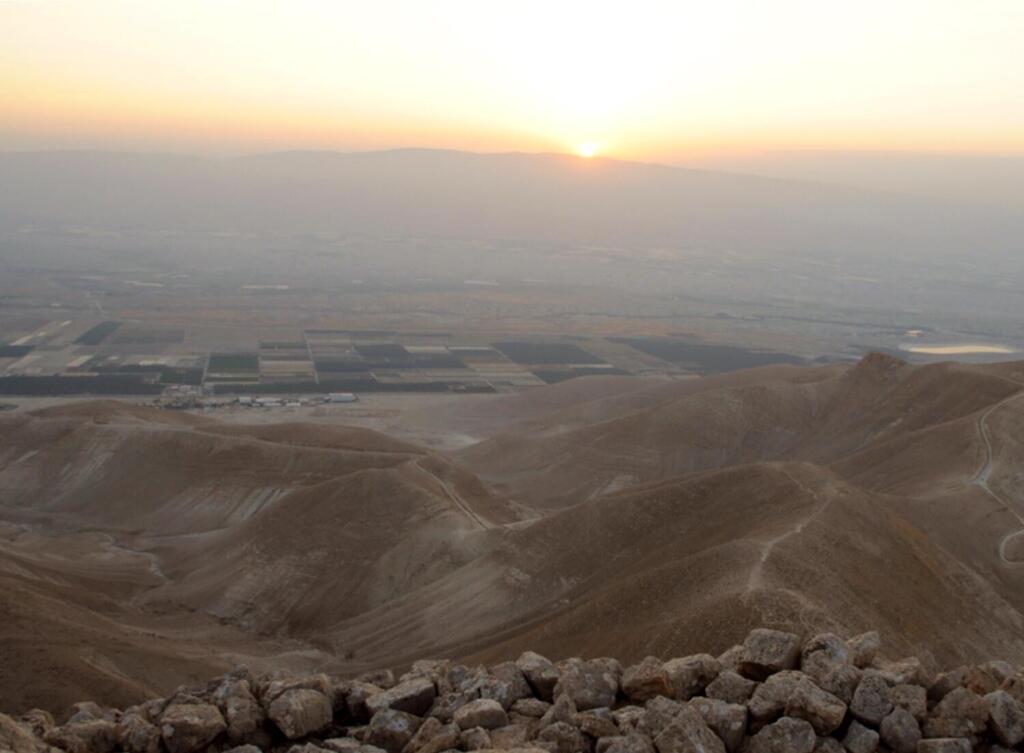
The sun rises over the summit of Sartaba
(Photo: Eran Gal-Or)
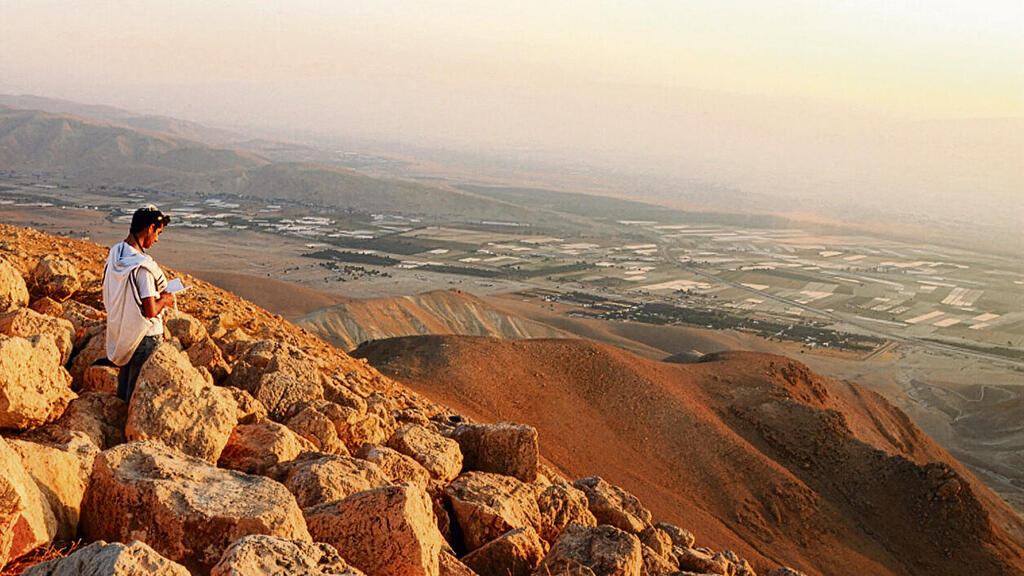
Start the day facing the desert landscape
(Photo: Eran Gal-Or)
What to enter in Waze: Sartaba.
How to get there: Drive on Route 90 in the Jordan Valley and continue to the turnoff for the Jordan Valley Regional Council. Drive north about 310 meters and you’ll see a narrow road on the left that climbs to Sartaba, rising above you. Because there is a solid separation line on the road, continue north about 630 meters to the Masua Junction. Make a U‑turn, go back about 630 meters southward, and turn right onto the narrow, somewhat rough road. After about 800 meters the road begins to climb steeply toward the base of Sartaba. As you ascend, the desert landscape of the Jordan Valley unfolds around you. After about 4 km of steep and winding road, you reach a parking bay on the right side of the road at the start of the “Youth Trail.” Park there.
The route: From the parking area two green‑marked trails begin. The wider trail descends toward the mountain base, and the narrower trail turns right and climbs the ridge to your right. This narrow route — called the “Youth Trail” — is the ascent to the summit. Because it’s still dark at the beginning, it’s recommended to bring flashlights. Ascend the narrow trail over rocky terrain, following the green markings. After about 10 minutes the climb eases briefly, but soon the narrow ascent resumes between rocks. After another 20–35 minutes of climbing, the very steep part of the ascent begins where resting occasionally is advisable. The trail zigzags among stones, and in about 10 more minutes you reach a trail junction. Continue straight, climb steeply for about 15 minutes to the summit, where you’ll be greeted by the ruins of an ancient fortress. At sunrise, the sun rises behind the hills of Transjordan to the east, creating a breathtaking spectacle.
After enjoying the sunrise view and once the sun has fully risen, begin the descent. You can return the same way or continue on the black‑marked trail that descends around the mountain via the large water cisterns. The descent via the cisterns is longer and more gradual. After about 15 minutes you’ll see on the right the openings of the cisterns, which resemble giant holes in the mountainside. When the fortress was active, a system of channels directed rainwater into these cisterns. Continue descending and you’ll arrive at the trail junction you encountered earlier. It’s recommended to turn right and climb a few minutes to a flat level where you’ll encounter surprising remains: among the stones are impressive columns and massive heart‑shaped rocks leaning against each other. From here, descend the way you ascended to the dirt clearing and parking area.
Duration: 2.5–4 hours, about 4.5 km, moderate‑difficult walk
Fee: None, no time restrictions
Accessibility: Not accessible
Fog trail opposite the Gorny Monastery in Ein Kerem
In the early hours of the day, the Ein Kerem neighborhood in Jerusalem can be covered in white fog like a quiet blanket. Against the colors of the sunrise, the golden spires of the Gorny Monastery, located on the hillside above Ein Kerem, appear to float above the clouds, offering a spectacular display of nature, light and gold. Because there is a walk from the parking area to the recommended viewpoint to see the morning fog and sunrise, it’s best to start about 30 minutes before sunrise.
What to enter in Waze: Ora Junction, Jerusalem.
How to get there: Arrive at the traffic circle at the end of the road called Derech Ora, which rises from the Givat Massuah neighborhood in Jerusalem to Ora Junction. The circle connects to Panama Street in Kiryat Menachem. At the roundabout, turn onto the side road to Ora and Amminadav. Drive past the gas station to the T‑junction and turn right. Drive a short distance and turn right into the parking area next to the junction.
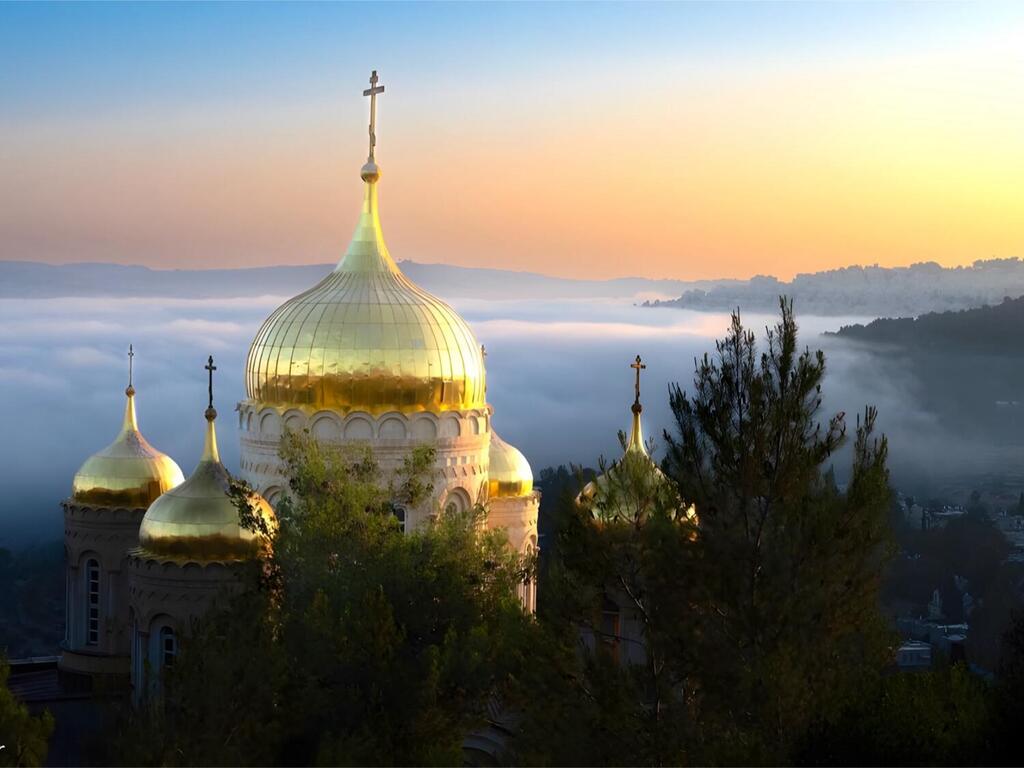
Gorney Monastery at sunrise
(Photo: Ortal Tzabar)
The route: From the parking area, head toward the junction and the road leading to the communities of Ora and Amminadav near Kennedy. Cross the street at the crosswalk and traffic lights, turn right and cross the two lanes that lead left and down toward Hadassah Ein Kerem, Kalman Yaakov Man Road, at the crosswalk and traffic lights. After crossing, turn left and walk on the sidewalk to the bus stop. Just before the road meets the light rail, turn right onto a paved path that descends; after about 20 meters it curves left. From here, the trail descends to the impressive viewpoint of the Gorny Monastery spires. Walk the path and as sunrise approaches feel the cool morning fog of Jerusalem. After about 800 meters — roughly 15 minutes of leisurely walking — the stunning view of the monastery’s central golden spire, “Moscovia,” appears.
Continue to the main viewpoint of the monastery and its five golden spires. You can keep descending a bit further along the path to capture views of the monastery and its spires from different angles. The trail now descends between the original fence of the monastery grounds on your right and the new light‑rail bridge above on your left. You’ll reach a point where the monastery’s fence on the right is low enough to see over it, and through gaps in the rusted metal you can view the monastery spires from a different perspective. As time passes, the morning fog dissipates and the surrounding landscape opens up beautifully. From here, you can descend on the path toward Hadassah Ein Kerem Hospital or return on a moderate climb back uphill, this time with views of the mountains that surround Ein Kerem from the east and south. After about 20 minutes of walking you’ll reach the junction with the road leading down toward Hadassah Hospital. Turn left and return the same way to the parking area at Ora Junction.
Duration: Approximately 1 hour, about 2.3 km, easy walk
Fee: None, no time restrictions
Accessibility: Accessible
Sunrise at the sinkholes line in the cliffs of Dragot
The sight of the rising sun over the Dead Sea is one of the most thrilling in Israel. The trail descends from the main road to the sinkholes on a comfortable path that leads to a sunrise viewpoint over the Dead Sea and the Moab Mountains, just as the sky is painted in magnificent colors. Because the walk from the parking area to the viewpoint takes about 15 minutes, it’s recommended to begin about 15 minutes before sunrise.
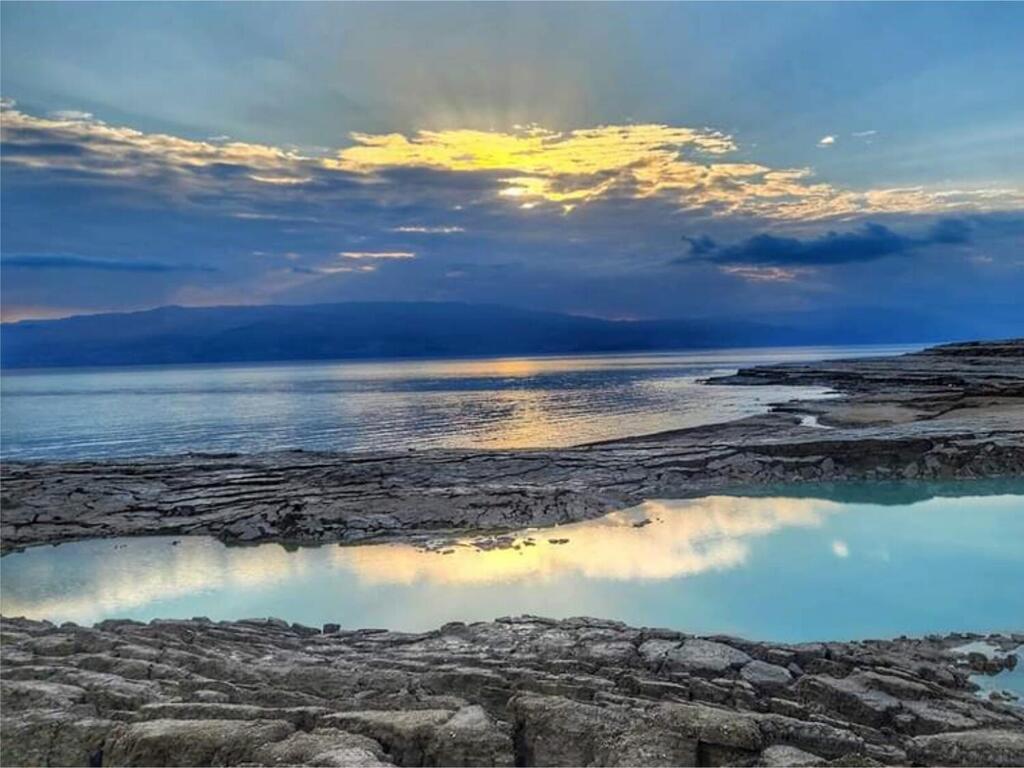
Sunrise over the sinkhole line from the Dragot Cliffs
(Photo: Eran Gal-Or)
What to enter in Waze: Dragot Cliffs Junction.
How to get there: Drive on Route 90 along the Dead Sea coast (north to south) until you reach Dragot Cliffs Junction. At the junction, turn right toward Dragot Cliffs. Pass the military checkpoint heading south and at the first opportunity turn right into a dirt clearing to park.
The route: The path to the sinkhole shore at Dragot Cliffs is relatively easy, but since the area contains sinkholes and ground cracks, walk slowly and with caution. From the parking area, descend to Route 90 and cross it carefully. Pass the safety railing and on the other side you’ll find a wide dirt path leading down toward the Dead Sea. Descend along the path and soon reach a trail junction. Continue straight on the path that goes down toward the sea, curve slightly right, and after about three minutes turn slightly left. After about 350 meters of descent — roughly six minutes — the wide trail ends, and you continue descending toward the shoreline and the cluster of sinkholes ahead. When looking toward the sea you’ll see a yellow‑orange bulldozer stuck in the mud — your destination. It’s important to walk carefully here as more sinkholes and cracks may be in the ground.
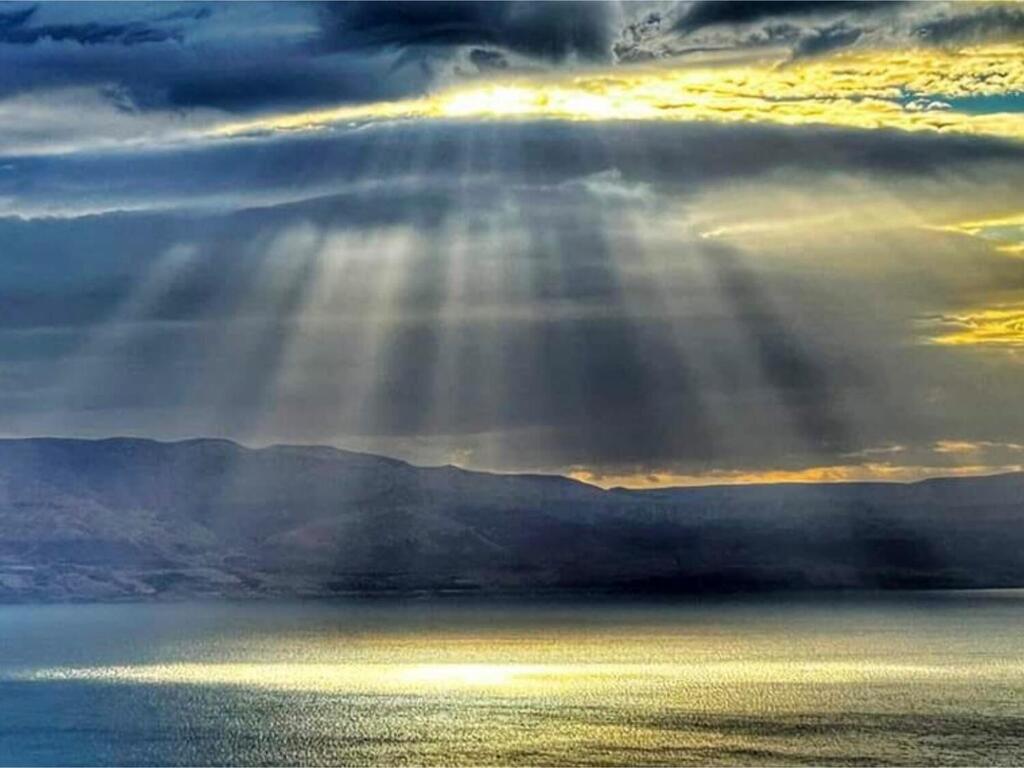
The sun rises over the Dead Sea
(Photo: Eran Gal-Or)
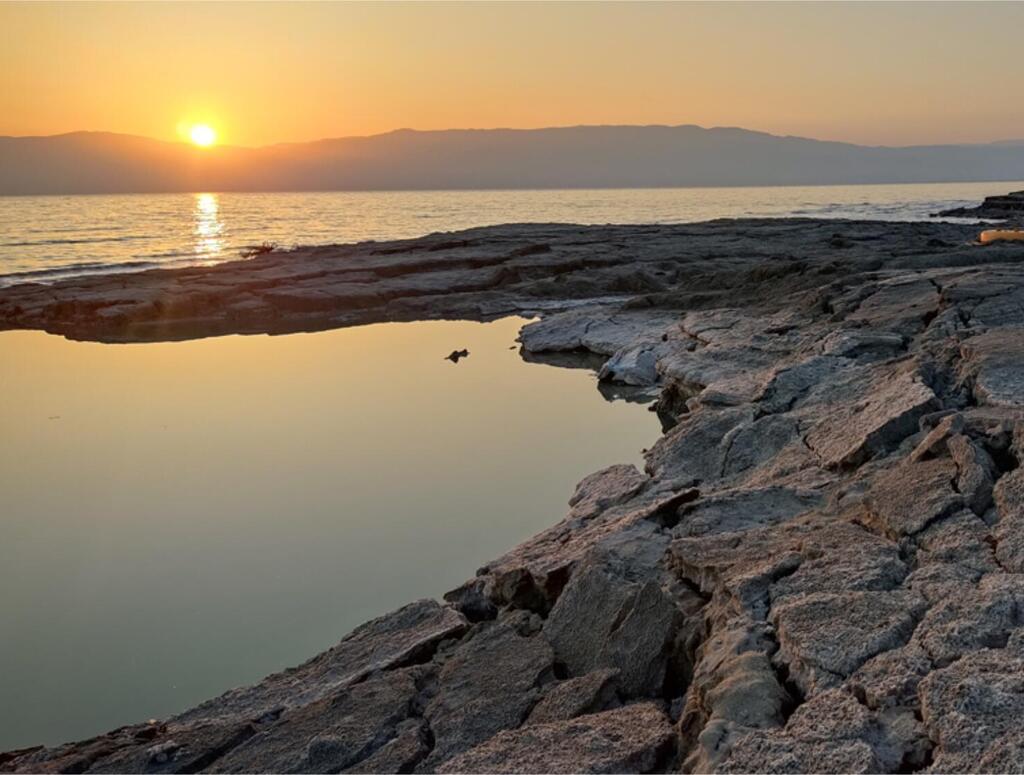
(Photo: Eran Gal-Or)
First head toward the elongated sinkhole on the right. At any point you can sit and wait for the sun to rise behind the Moab Mountains and color the sky, the sea and the sinkhole waters with beautiful hues. It’s very important not to get too close to the sinkholes because the ground around them may collapse. After the sun rises you can cautiously explore the area and enjoy other angles and views. Return the same way to the parking area.
Duration: Approximately 1 hour, about 1.2 km, easy‑moderate walk
Fee: None, no time restrictions
Accessibility: Not accessible
Sunrise From the Mount Berekh Lookout in the Eilat Mountains
The sunrise view from Mount Berekh over the Timna Valley and the Edom Mountains to the east offers a unique experience. Unlike other peaks in the Eilat mountains, you can drive nearly all the way to the Mount Berekh viewpoint. The combination of the stunning desert landscape and the ease of access makes it an excellent sunrise viewing spot. Because it takes about half an hour to reach the site via Route 12 and another half hour of slow driving on dirt roads to the summit, it’s recommended to leave Eilat at least an hour and fifteen minutes before sunrise.

Mount Berekh at sunrise
(Photo: Eran Gal-Or)
What to enter in Waze: Mount Berekh (after descending from the main road).
How to get there: Drive north from Eilat on Route 12. After about 30 km, turn right onto a wide road marked in green. Drive north on the winding path and ignore intersections with blue‑marked (right), red‑marked (left), and black‑marked (right) trails. After about 7 km of bumpy driving, the green‑marked trail curves sharply right. About 0.5 km later it curves sharply left — at that point leave the trail and continue straight on the wide blue‑marked road. Drive about 3.5 km until you meet another wide trail marked in green. Continue on the blue‑marked trail, ascending about 1.2 km on a partially paved road to a dirt clearing near the summit and park. The dirt road to the lookout is suitable for most vehicles, though a high‑clearance vehicle is recommended.
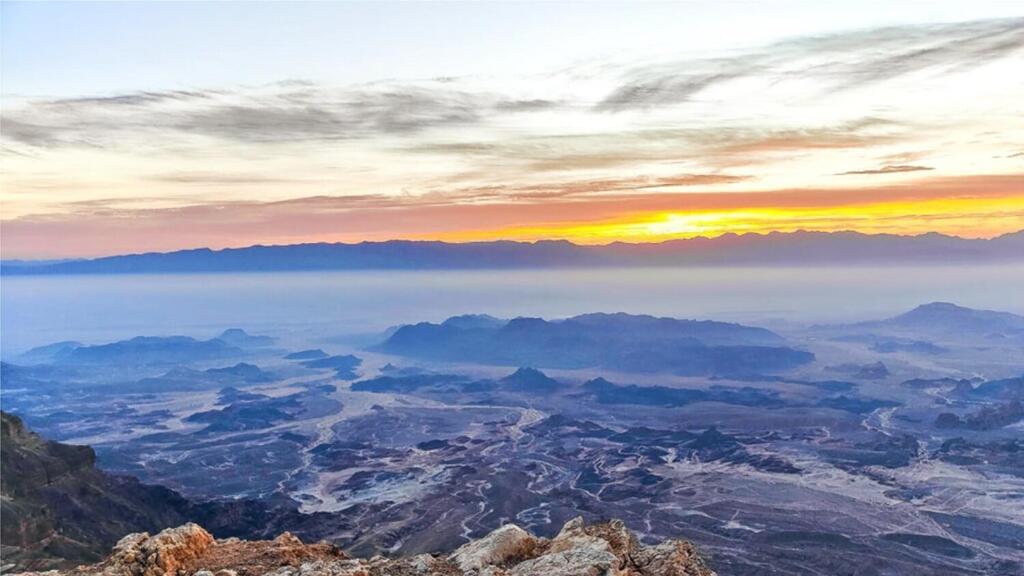
Mount Berekh
(Photo: Itai Berkovich)
The route: From the parking area, cross a metal gate, ascend between antennas and fences of an abandoned military base, and within about four minutes emerge through a wide opening. Descend slightly and arrive at the cliff edge of Mount Berekh. Before you lies a breathtaking desert landscape considered one of the most beautiful in Israel. The entire Timna Valley stretches below with its many stream channels and hills. The valley is painted in many colors, in dark and light shades, and at its center stands Timna Mountain — red and black granite. On either side are steep, rugged cliffs encircling the valley, with the mighty Edom Mountains rising behind them.
Duration: about 10 minutes, about a 400 meter, easy walk
Fee: None, no time restrictions
Accessibility: Not accessible