

The three-hour drive south from central Israel to the iconic Arava Highway ushers the body into the first stage of the spiritual, restorative retreat I hope to experience in the heart of the desert. A few minutes after passing the gas station at Moshav Ein Yahav — a classic stop on the way to Eilat — we turn right onto a dusty dirt road, and the second stage of my wellness getaway begins: my phone jumps an hour forward to Jordan time, and soon after, the signal disappears entirely.
Moa Living is a luxurious desert hospitality complex, thoughtfully designed, with an expansive shared space and large guest rooms styled in pleasant minimalism that blends with the wild landscape stretching in every direction. There is also a compound of large tents. At the center of Moa is a small pond with natural aquatic plants and tiny black snails that, insiders say, signal clean water. A narrow stream flowing from it turns the arid desert soil into a green orchard, and the sound of running water fills the air.
Moa Wellness Desert Experience
(Video: Assaf Kamar)


A beautifully crafted purple welcome cocktail is served in the restaurant as Yair Bitton, CEO of Moa Living, introduces his innovative venture, born from Israel’s charged reality and a desire to offer an alternative. “Welcome to the Arava,” he says. “We officially opened Moa in April 2024 and wanted to bring something different to the desert — a daily schedule connected to the worlds of wellness and quiet.”
He describes it as a renovation and rebranding of an existing property that has become “something very minimalist and precise. It’s not a luxury hotel and not something in between without a statement — it’s precise. To feel luxury in the heart of the desert, with comfortable sheets, quality soap in the shower, a sense of comfort — but not over-the-top.”
Beyond the striking desert views, Moa offers a range of wellness activities throughout the day and night. “There’s morning yoga and guided breathing workshops in ice baths, meditation sessions, sound journeys and various wellness artists who visit each month — and excellent food,” Bitton says. The goal, he adds, is not just “to come lay your head down,” but to “take something small home with you, something beyond a vacation — even if it’s not normally your world.”
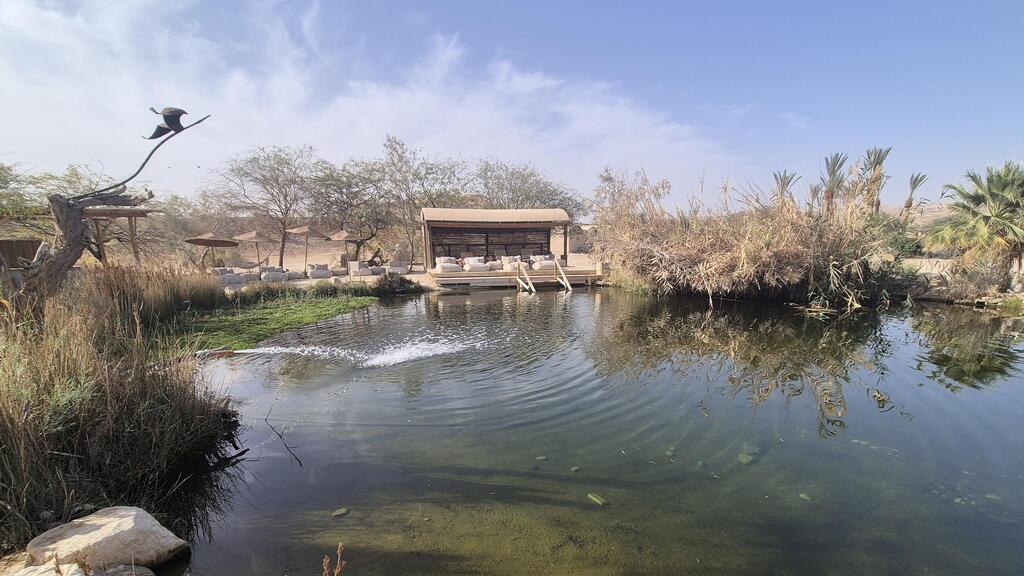
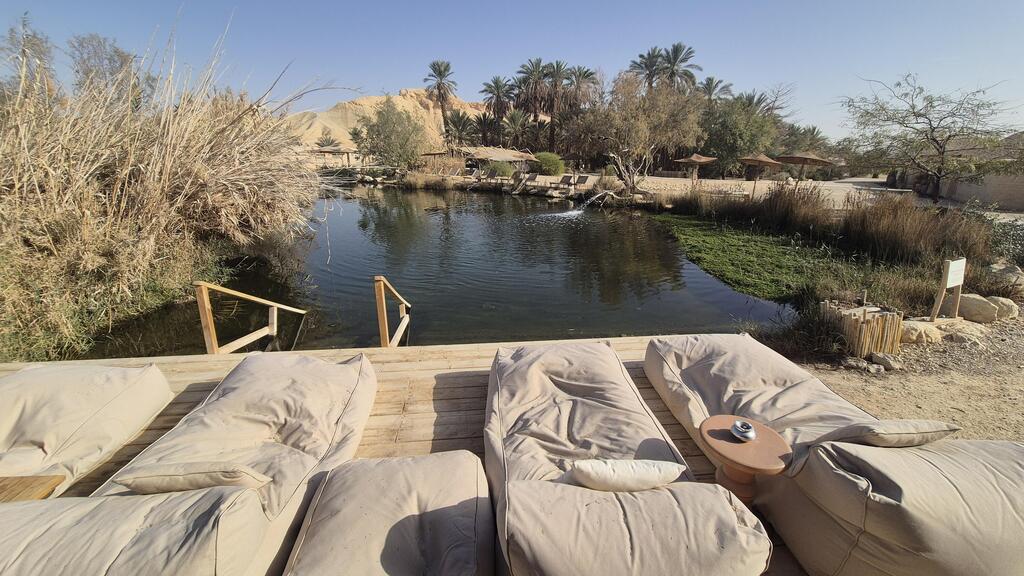
A hammock by the pond
(Photo: Assaf Kamar)
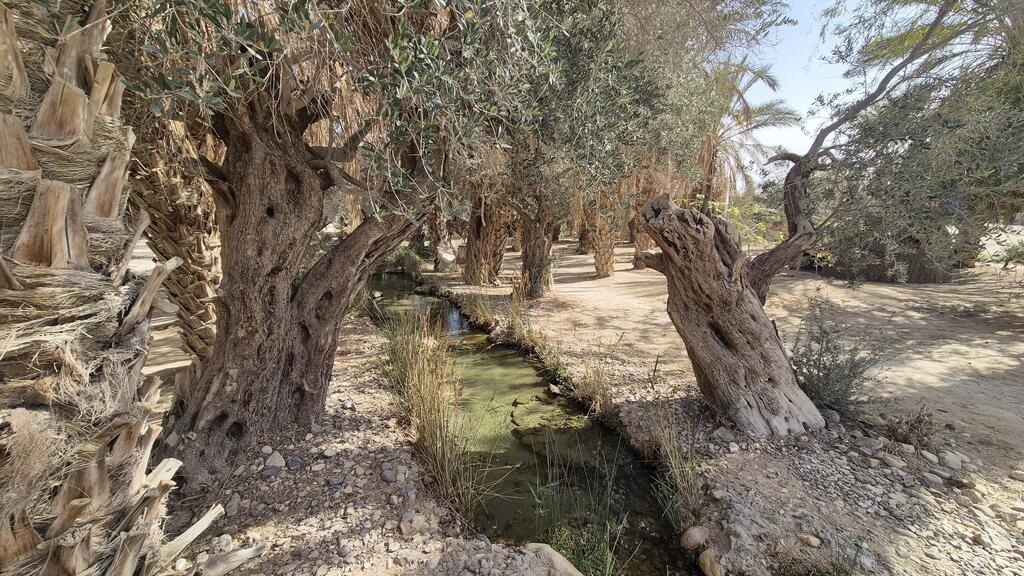
(Photo: Assaf Kamar)
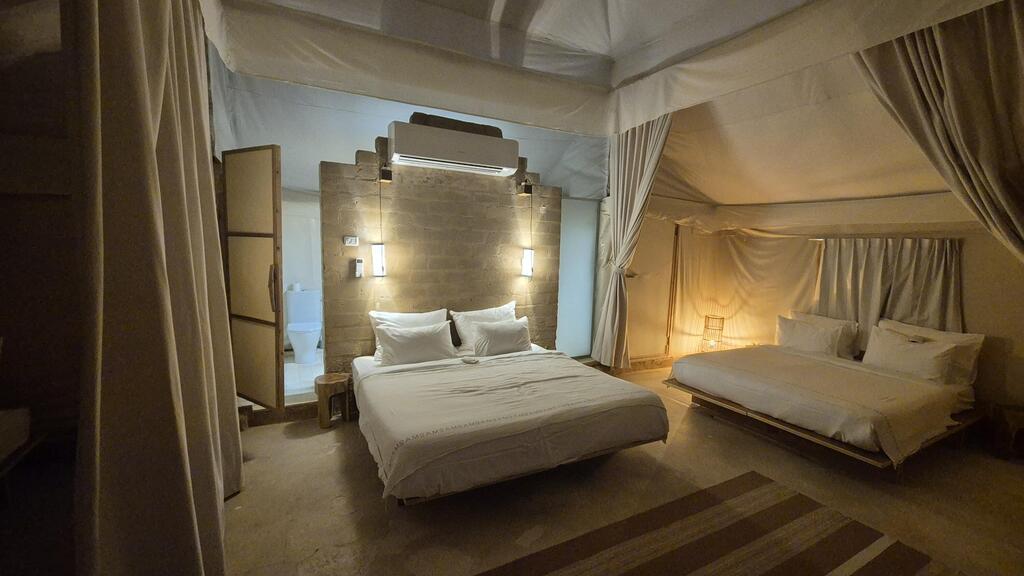
Family tent
(Photo: Assaf Kamar)
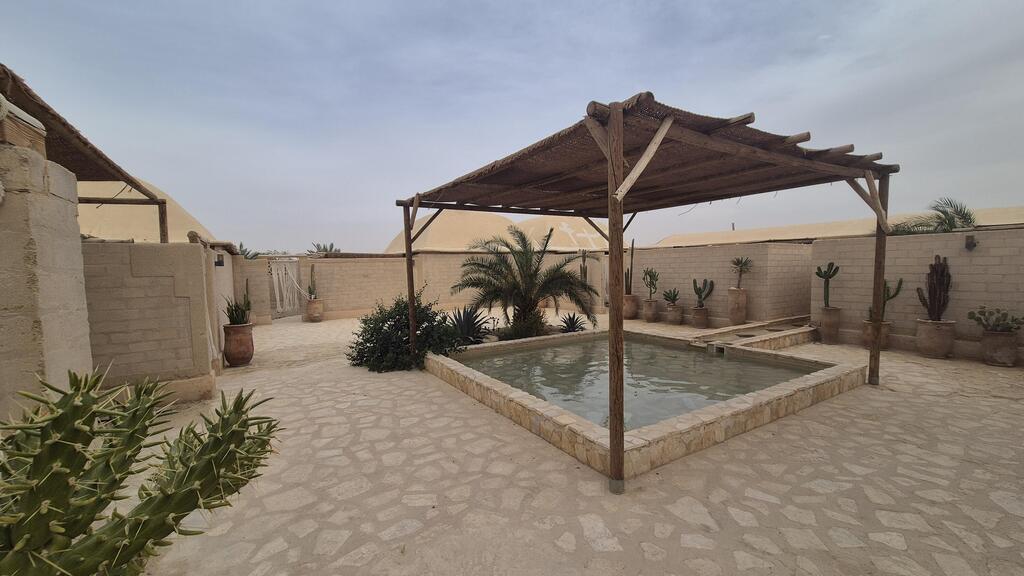
Family room area, with a wading pool
(Photo: Assaf Kamar)
First stop: a writing workshop
In one of the shared spaces, which also serves as a yoga studio, we sit in a circle around Amit Shamir, a local writing instructor from the community of Tzukim. She describes the session as a “writing journey” — an opportunity to slow down in the desert and allow the hands to lead toward inner connection.
“We do guided exercises that ask us to step out of our automatic writing habits,” she explains, “to hold the pencil and take the page into a slightly different physical experience, to understand what intention we arrived with and what we’re asking of this time.”
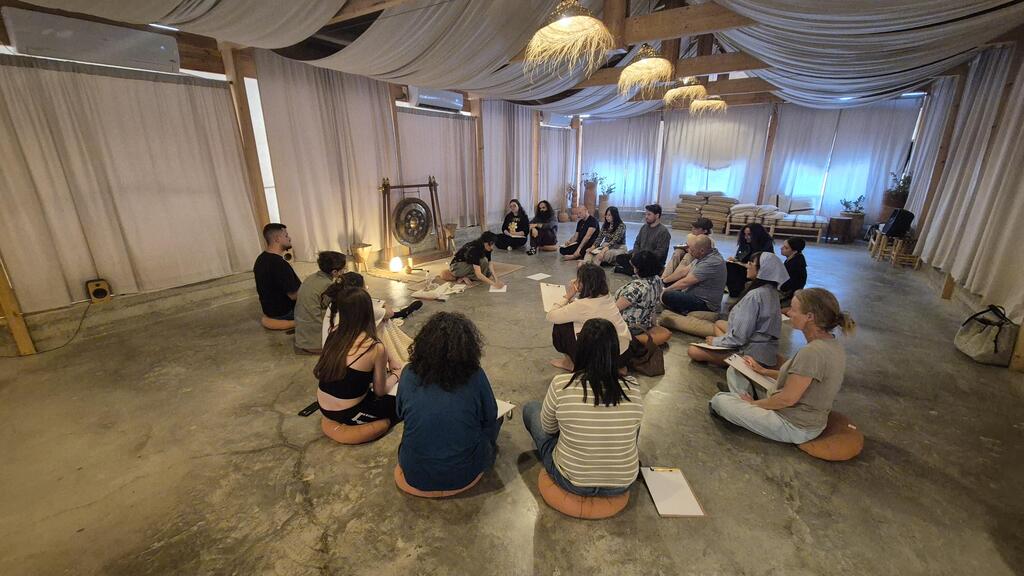
The writing workshop
(Photo: Assaf Kamar)
She says she is continually surprised by participants’ openness. “It’s amazing how willing people are to surrender and connect with themselves, especially after the war, and to see the beauty in very small things here in the desert, like an acacia tree or a mountain.”
Shamir senses a strong desire among Israelis since October 7 to engage in emotional healing processes. “I feel that everyone who comes wants to connect inward and understand, even through words — how can I find quiet? If I want to be in a place of calm?”
As someone who makes a living from writing, I arrived skeptical. To my surprise, I enjoyed it. I wrote heartfelt sentences in pencil that I dared to share with strangers, listened to others who experienced a brief but meaningful process and even kept the page — though I could barely read my own handwriting.
Second stop: sound healing
After a satisfying dinner — fairy-tale salmon in a healthy dairy-vegetarian atmosphere, complete with fresh salads, rich cheeses, butter dishes and alcohol — we walk under a sky filled with stars to the sound-healing session.
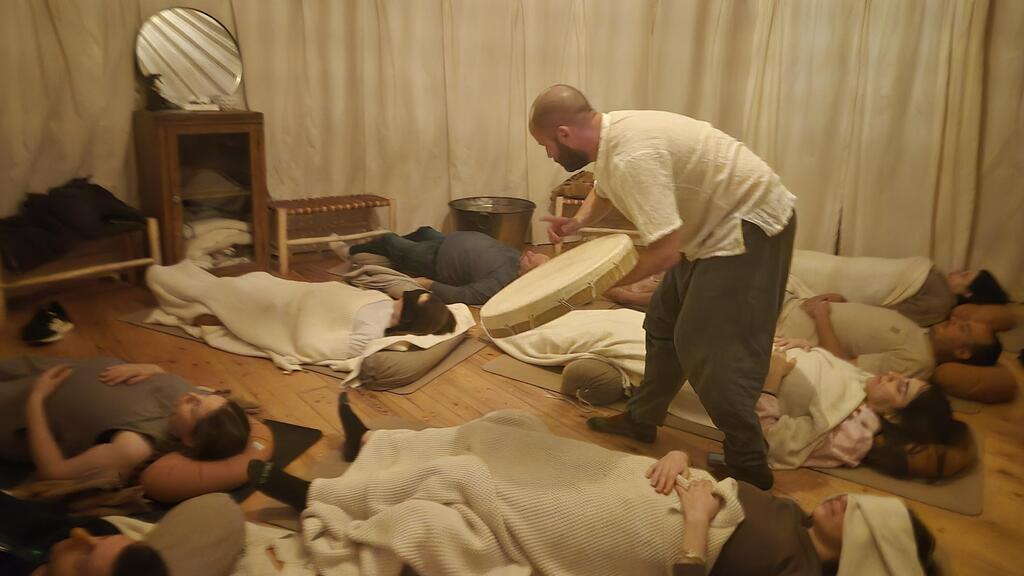
Listening to the calm
(Photo: Assaf Kamar)
Participants lie on mats and pillows as the facilitator plays a range of exotic instruments, from the Far East to the Amazon rainforest, creating resonant vibrations. Tibetan singing bowls, Chinese gongs and other instruments produce sustained tones that slow the breath and draw attention inward. In the desert, where silence is part of the landscape, the experience feels especially meditative.
Third stop: hot tub
Later, with another purple cocktail in hand, we carefully make our way through the darkness to the orchard area, where a large hot tub and saunas operate 24 hours a day.
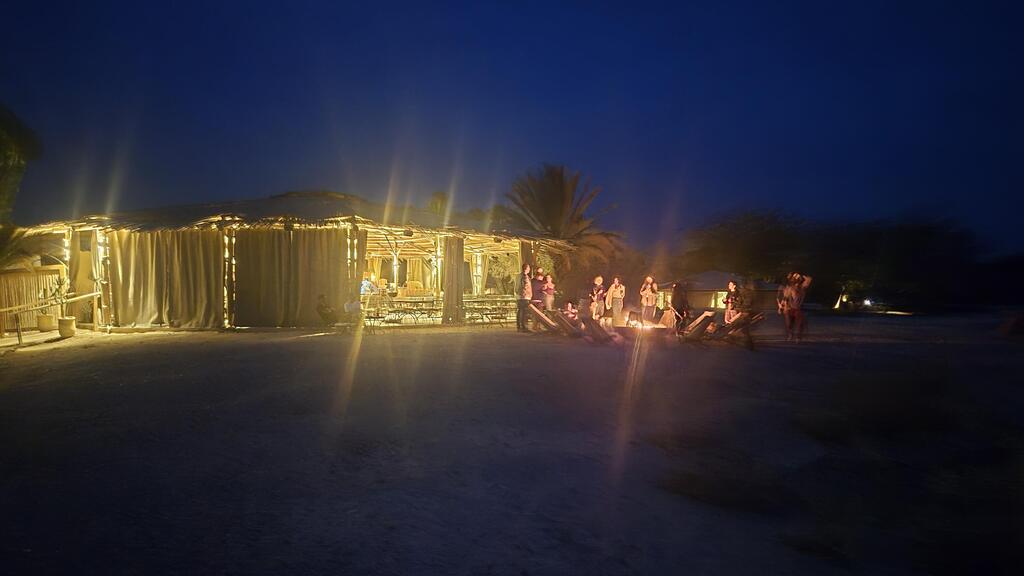
At night, the atmosphere shifts
(Photo: Assaf Kamar)
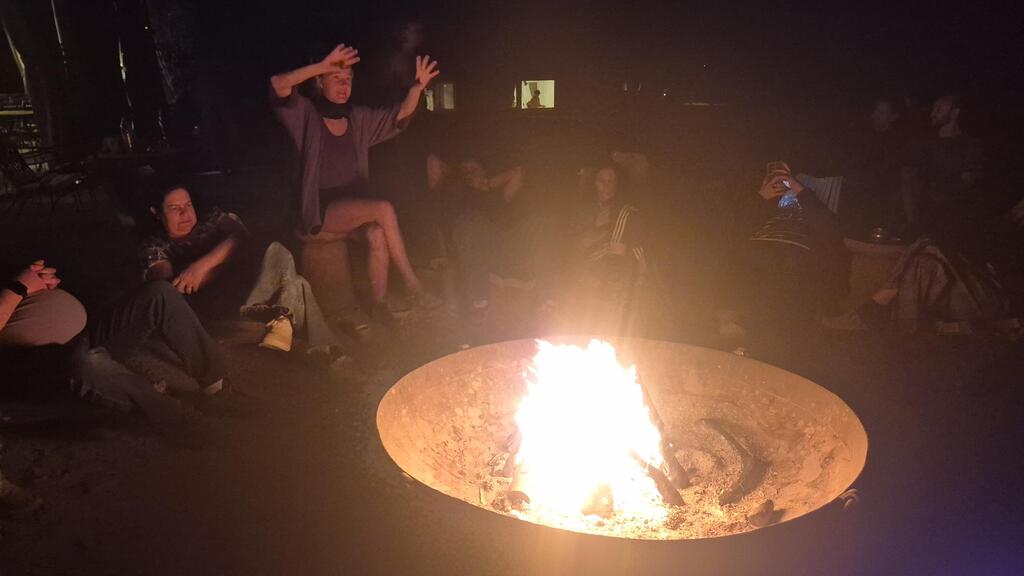
The obligatory campfire
(Photo: Assaf Kamar)
Just two months ago, during coverage of the Midburn festival nearby, I froze in the cold. Now, in February, the air is mild. Soaking in the steaming water under the open sky is deeply pleasurable. I hear jackals howling, exchange a bit of gossip and eventually head to sleep.
Fourth stop: morning yoga
After a restful night, the alarm rings at 8 a.m., and we head to morning yoga. Experienced practitioners and beginners stretch and breathe together.
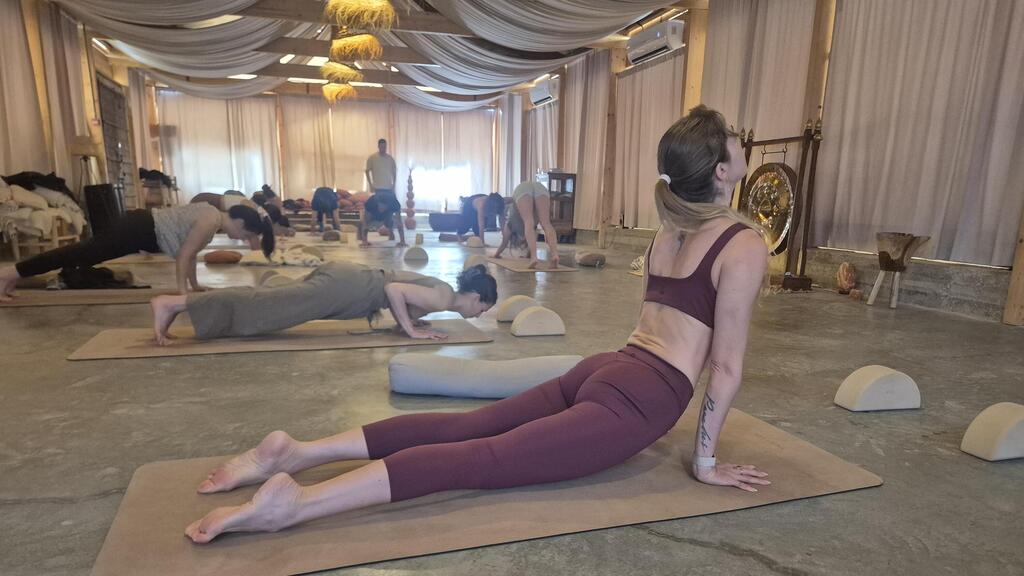
Yoga class
(Photo: Assaf Kamar)
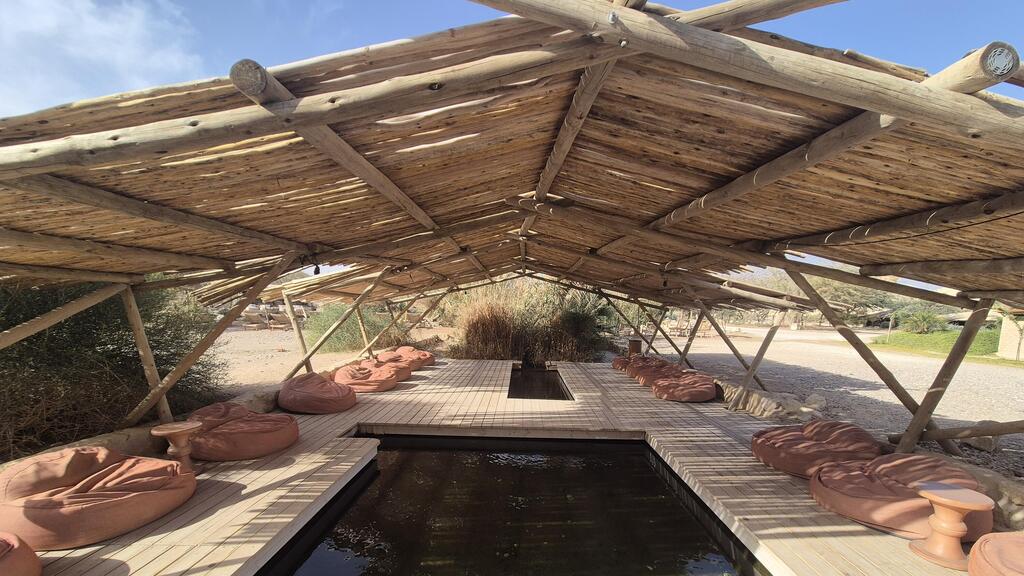
Wading pool
(Photo: Assaf Kamar)
Adjacent to the complex is an active Tibetan Buddhist monastery, whose monks are part of the local landscape. “Our dear neighbors run their monastery right next to us,” Bitton says, noting cooperation that includes spiritual and meditation content. Their presence is not exotic décor but a daily reality that adds another layer to the atmosphere.
Fifth stop: ice bath
After a simple breakfast and strong coffee, we move to the final workshop: an ice bath. Participants gradually enter extremely cold water, guided in controlled breathing and mental focus. “At first the body fights,” one participant says, but after about 30 seconds comes a sharp, almost euphoric sense of renewal. It is less about comfort and more about control and resilience.
Ultimately, three hours from central Israel, Moa Living is more than a desert lodging complex with open views. It is a structured wellness retreat built around a clear schedule, engaging content and a full desert experience. Yoga at dawn, writing workshops, sound healing concerts, ice baths by day and hot tubs by night — all wrapped in comfortable rooms and strong culinary offerings that balance health and indulgence.
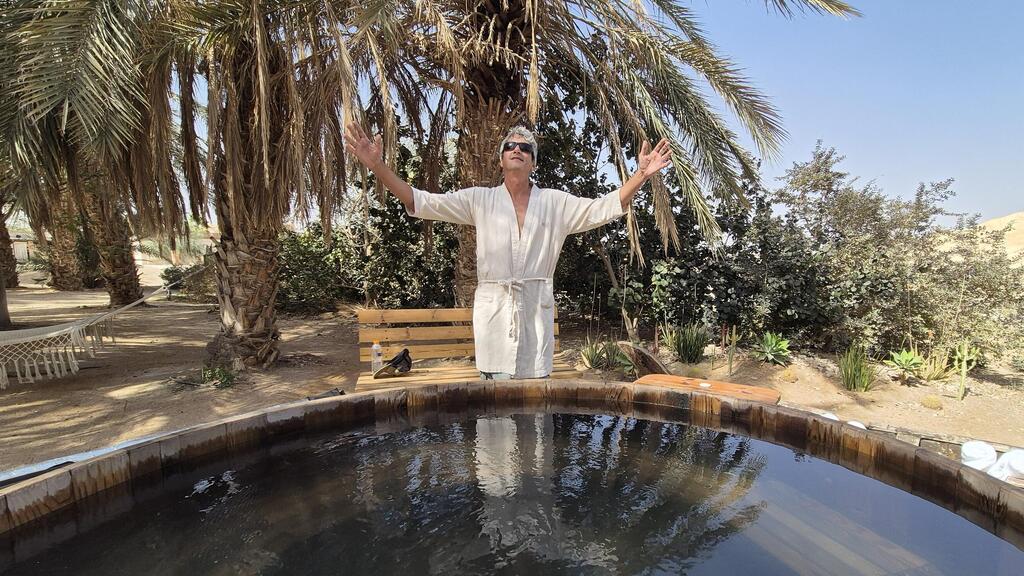
Assaf Kamar gets into the spirit
(Photo: Sapir Peretz Zilberman)
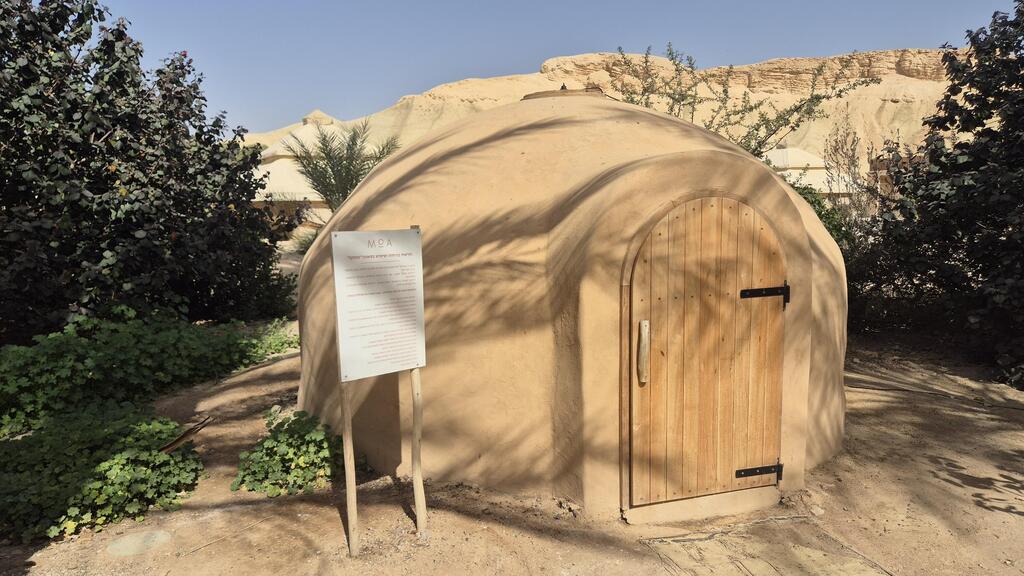
The sauna
(Photo: Assaf Kamar)
This is not a budget destination or a last-minute getaway. It is a deliberate choice for a vacation with structure and a different rhythm. Not everyone will connect to the concept of wellness or plunge into an ice bath, but the warm Arava winter offers nearly ideal conditions for an alternative escape.
Rates are based on bed and breakfast, with workshops included. Midweek, a double room starts at about NIS 1,400 to NIS 1,520, with a double room for two adults and two children from about NIS 1,800. A 20% to 25% midweek discount is currently offered.
On weekends, a two-night “Winter Collection” package starts at about NIS 5,040 per couple and NIS 5,645 for a couple with two children. Most wellness activities are included, while lunch and bar menus are offered at an additional charge.
The writer was a guest of Moa Living.