

Ofri Kark, 30, a landscape architect, tour guide and content creator from Givat Ye’arim, found herself at Ben Gurion Airport on the morning the war broke out, equipped with full snowboarding gear and plans for a ski vacation. When flights were canceled, she refused to give up. Traveling via Eilat, crossing into Sinai and flying out of Sharm el-Sheikh, she eventually reached the French Alps. “It’s 20 hours and three countries, but in the end you’re on powder,” she said with a laugh.
Before proceeding, it is important to note that this article does not recommend or encourage travel through Sinai, which is under a severe travel warning by Israeli security authorities. The route described reflects the interviewee’s personal decision and may not be suitable for everyone. Anyone considering a similar journey should carefully review official guidelines and weigh the risks.

The journey began on the morning the war erupted. One moment, Kark and her family were standing at the check-in counter with snowboarding equipment; the next, they were heading to a shelter inside the airport. “We were at check-in on the day the war started,” she told ynet. “Suddenly, they told us, ‘Flights are closing, go home.’ It was shocking.”
Kark had originally planned a family ski vacation with her partner, Dan, and her younger sister Kalil, 21, for whom it was meant to be a first skiing experience. But the realities of life in Israel intervened. “We came back to Israel for 48 hours just to pick up our snowboarding gear for the end of our trip — and got stuck,” she said.
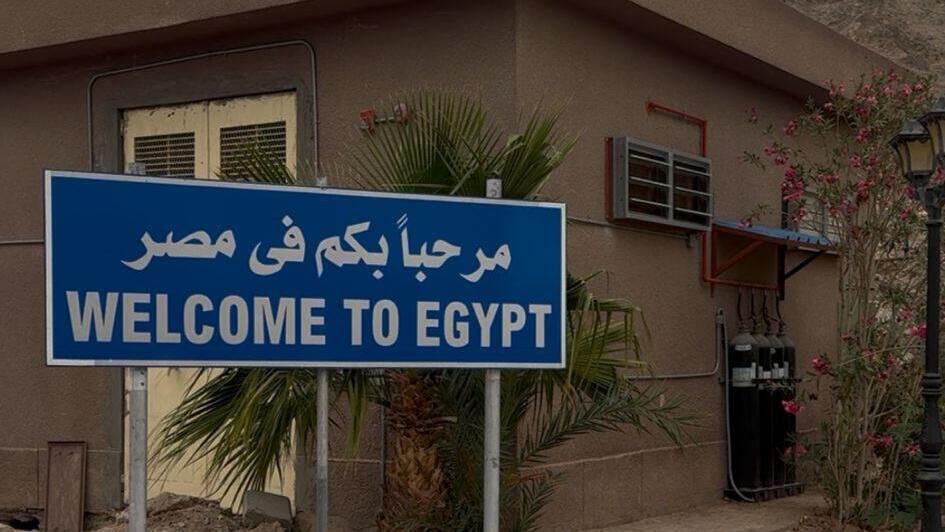
Border crossing
(Photo: Ofri Kark)
She and her partner had already been traveling abroad for nine months. “We left on June 10 and have been away ever since. We came back for just 48 hours to get our gear — and got stuck right when the war started. We felt like suckers. We could have stayed abroad and avoided all of this. I always dreamed of ending this trip with snowboarding.”
Recounting that Saturday morning, she described confusion at the airport. “We went down to the shelter, then came back up to see if flights might still leave. The staff were still there, so we thought maybe it would happen. But after 10 minutes, they announced all flights were canceled until further notice. I was mostly disappointed for my little sister. I was in shock, but also told myself — how greedy can I be? I’d just spent nine months traveling. It was upsetting, but not entirely.”
After a week of missile fire and shelter stays, with flights still not operating normally, Kark decided not to give up on the ski trip. “We knew there was the option of flying from Sharm,” she said, referring to a complicated and costly workaround that became more common during the war. “I used to travel a lot to Sinai before October 7, so I knew the route.”
Her partner was initially hesitant. “He said, ‘Fly via Sharm? Do you have the energy? It’s a long way.’ But then one day he just said, ‘OK, let’s do it.’ We booked tickets on Wednesday, and by Saturday we were on our way.”
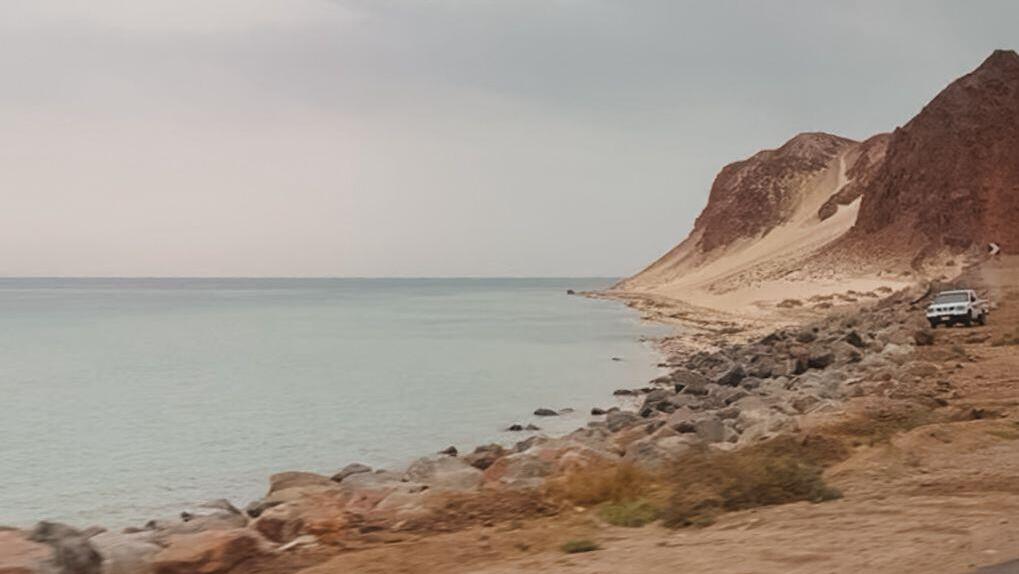
On the way to Sharm el-Sheikh
(Photo: Ofri Kark)
Crossing into Sinai with snowboarding gear felt surreal. “It looked ridiculous — snowboards on the way to Sinai,” she said. “We’re used to kitesurfing trips there, but this was different.”
At the Israeli side of the crossing, she overheard someone say snowboards were not allowed through. “I thought, oh no,” she recalled. Still, the group decided to try. Egyptian officials were polite and tried to help, she said, but ultimately did not allow the boards through. “We showed them we had a flight in four hours to go skiing, but we couldn’t bring the boards. Boots, helmets and other gear were fine — just not the most important thing.”
They were forced to leave the equipment behind, relying on a contact at the crossing to hold it. Others, she noted, improvised even more unusual solutions, including taxi drivers who agreed to store gear until their return.

Moments after arrival
(Photo: Ofri Kark)
The journey continued with a three-hour drive along the Sinai coast, multiple checkpoints, a flight from Sharm, landing in Geneva and another transfer to the Alps. “From the moment we left home to the hotel — 20 hours,” she said. “Three countries. It’s crazy.”
The transition was jarring. “You go from war, sirens and stress to skiing, nature and parties. It messes with your head,” she said. “There’s nothing like a ski vacation.”
Even in the Alps, the war lingered in her mind. “Sometimes I hear a noise and think it’s a siren — then realize it’s just music building before the drop,” she said. “It’s a strange feeling.”
Still, there was relief. “Sleeping without running to a shelter, not having to stay dressed all the time — that’s a good feeling.”
Kark praised Val Thorens, one of Europe’s highest ski resorts. “You can ski in and out directly from the hotel. It’s considered top-tier,” she said. “There are parties, French food — baguettes, cheeses — a snow park, lots of runs and access to other valleys. And because it’s so high, there’s snow almost all season.”
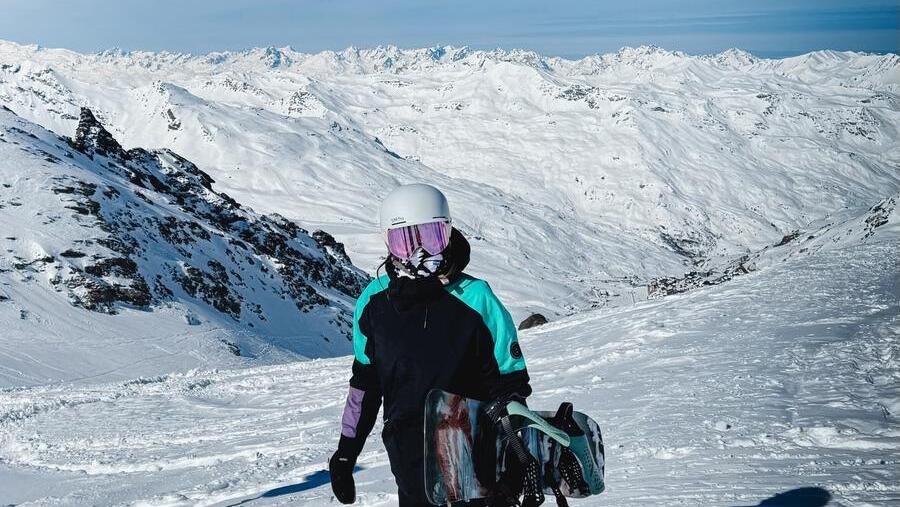
On the snow
(Photo: Ofri Kark)
Despite her enthusiasm, she stressed caution. “I’m not encouraging travel to a place under a travel warning. I took that into account and was concerned myself. There’s a reason I hadn’t been to Sinai since October 10.”
Back on the slopes, under clear skies, she reflected on the contrast. “I’m having the best time,” she said, “but my mind is still partly in Israel. You’re abroad having fun, while your family and friends are in shelters. It’s a difficult balance. Snowboarding is amazing, but it would be even better if everyone back home were living normal, calm lives.”