

Early summer is an excellent time to take a breath and set out on a tour of farms, ranches, coffee carts, farmers and culinary entrepreneurs in the Gaza border communities. Come smell and taste up close the victory of life and hope, also thanks to Tkuma Directorate’s 13 million shekel (about $4.6 million) investment in local businesses, aimed at reviving tourism in agriculture, culinary arts, culture and heritage in the Gaza border area. These are the stories of five of them.
Ofer’s Raspberries, Moshav Netiv HaAsara
After Ofer Baider, a farmer and continuing son on his parents’ farm, died in 2021, his youngest daughter, Mor Baider, decided to continue his business. She brought in her uncle Eran, and together they decided to invest in growing berries and sunflowers.
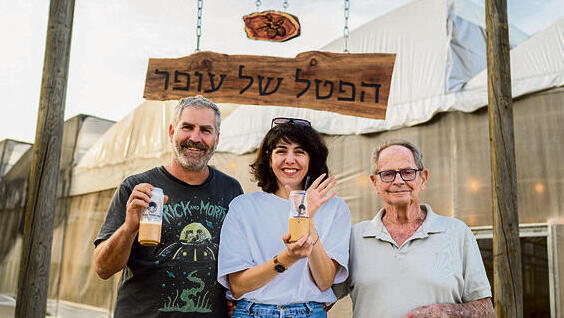
“My father and grandfather established the farm. Like most farmers in Netiv HaAsara, they grew pepper and tomato seeds for export,” Mor says. “It is a very meticulous and demanding crop. My father, in order to do something different and experimental, decided in 2018 to plant the first rows of berries, mainly raspberries, even though this is not a natural growing area for this fruit, which needs cold.”
When the heat takes over and the raspberries ripen too much on the farm, they are used to make various products such as jams, sauces, chocolate liqueur or soap with raspberry seeds — all in cooperation with small local producers and in support of sustainability. The products are sold at the visitors center.
The site also offers raspberry, strawberry, Pakistani mulberry and other fruit-picking experiences for groups and organizations, including a lecture on the farm’s history and a local meal. There are also farm-to-table meals based on vegetables grown in the adjacent field and the family orchards, including seasonal picking.
“People simply come and take nature home with them,” says a Baider family member.
The complex also has a coffee cart called Flora BaPetel. “We returned to Netiv HaAsara after two years of evacuation and wanted a place where people from the area could meet, hug and talk.”
• Waze: Cafe Flora BaPetel.
• Opening hours: Monday to Friday, 9 a.m. to 3 p.m., kosher.
Oz BaNegev, Kibbutz Nahal Oz
Shonit Getz manages the visitors center established six years ago at Kibbutz Nahal Oz, dedicated to preserving the settlement and agricultural heritage of the people of the western Negev. From the center, visitors can observe the area toward the border fence and hear the story of Nahal Oz’s founding, settlement and life alongside Gaza through 2017.
These days, the center is updating its video and adding documentation of life before, during and after October 7. The site also offers “Tzofen (Code) Oz,” a family escape game, as well as a store selling Gaza border products and a cafeteria.
“The dream was for Omri Miran to say the closing sentence in the new video, but as long as the last hostage had not returned, we were still on October 7 too. I believe the filming with Omri will take place soon,” Getz says.
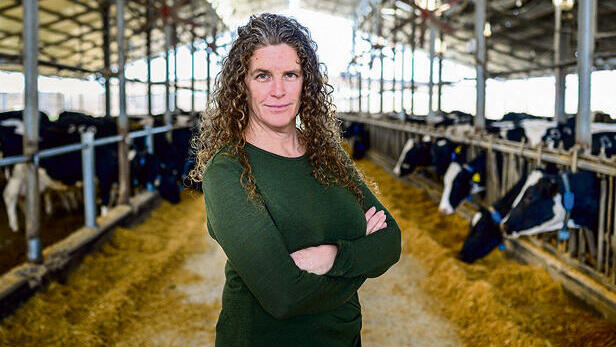
A first-hand story. Oz BaNegev
(Photo: Ron Rahamim )
Asked how Omri is doing, she answers warmly that the former hostage is in the process of returning to life, and notes his father, Dani, who never stopped fighting, “and also Lishai, Omri’s wife, who fought for him.”
Visitors also meet kibbutz members who lived through the horrific experience of October 7 and give firsthand accounts of the terror and inferno.
“That is what people mainly want to hear, again and again — what happened here on October 7, accompanied by personal testimony. They want to connect and understand what really happened and be in contact with the people who experienced it. There are displays of empathy, a desire to embrace those who went through this terrible event that seems so unreal. Visitors simply want to understand that what happened really happened,” she says, echoing the words of poet T. Carmi.
“After all, if we had seen all of October 7 in one film, we would say there is no way this happened. You would ask what delusional mind invented this unreal thing. But contact with the people who went through the event helps visitors understand that it is real, and as part of the healing process, it also helps those telling the story.”
The site also offers a unique lookout over Gaza from the closest civilian point that can be reached.
“You can really see the buildings in the heart of Gaza and the ruins of Shijaiyah. In the plot closest to Gaza, our field crops manager planted sunflowers to show the other side, which mostly sanctifies death, how life should be sanctified. On October 7, Nahal Oz was supposed to celebrate its 70th anniversary at a major event, and it is important to me that people who come to the Gaza border area remember that there were decades of life here before what truly happened to us happened.”
• Waze: Oz BaNegev.
• Opening hours: Sunday to Friday, by advance arrangement at 054-9228715.
Tzemachmad Nursery, Moshav Yated
In Moshav Yated in the Hevel Shalom region, Tzemachmad Nursery has been growing and selling bonsai trees of all kinds for a decade.
“It’s like a pet, only with plants,” says Ronit Orlev, who runs the nursery together with her sister, Michal Katz. Until October 7, the nursery operated alongside a breeding center for therapy dogs.
“Since October 7, the entire nature of the activity here has changed. Because these are soft and gentle dogs, they experienced the explosions, the evacuation and the uprooting, and some suffered heart attacks. Pregnant dogs began miscarrying. At that stage, we gave up. Each dog went to a home that knows how to care for this breed, and the breeding center was left empty,” Orlev says.
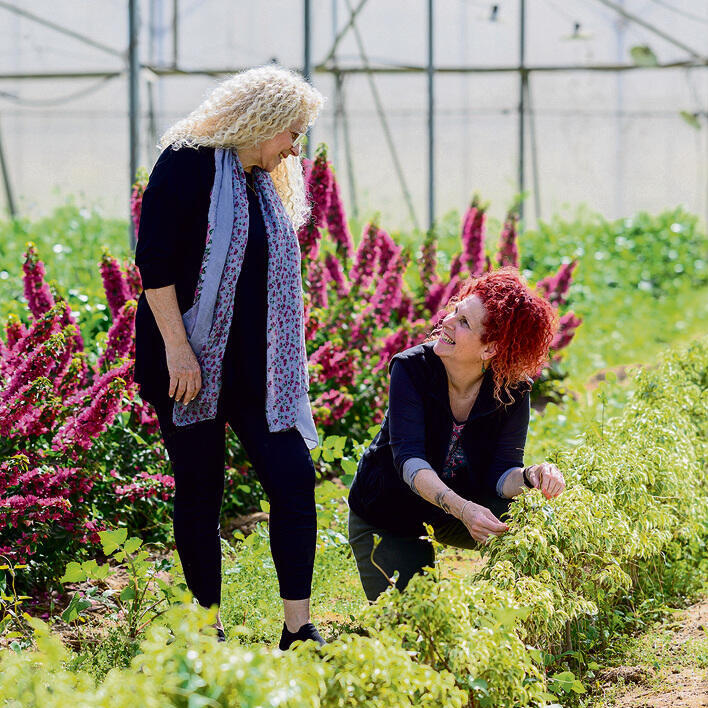
Bonsai trees and tranquility at Tzemachmad Nursery
(Photo: Ron Rahamim )
In the area where the breeding center had been, the two expanded the nursery, which until then had worked mainly online. Today it covers half a dunam and has opened its gates to the public.
“That was after we started getting WhatsApp messages: ‘Hi, is the nursery open? Can we come?’ Dark tourism began,” she says, unafraid to use the chilling term. “People who came to the area wanted to come to us too, and I had nowhere to receive them except the production nursery, where we grow the bonsai trees. So I had to allocate a hospitality area. The people of Israel, who insisted on coming here, are the ones who pulled us out of the crisis,” Orlev says, her voice cracking. “We now also operate a small cafe here.”
Visitors can take tours of the nursery and participate in a workshop on pruning and caring for bonsai trees. They can sit beside the small stream created here, surrounded by coffee corners.
“The place is full of oxygen, the eyes are washed in green, the ears fill with birdsong instead of gunfire, and now a hive of friendly bees is buzzing here too,” according to Orlev.
And the longing for the dogs?
“The longing is great. I have very good memories, and I am happy I found a proper solution for all the dogs and they did not have to keep suffering. I am looking ahead and seeing the amazing present and future at Tzemachmad. What we need more than anything is a flow of visitors.”
• Waze: Tzemachmad Nursery.
• Opening hours: By advance arrangement only at 0509252166.
Cafe BaSivuv, Kibbutz Ruhama
Hagai and Irina Horowitz of Kibbutz Kfar Aza established the Cafe BaSivuv coffee cart in 2021 at the Black Arrow memorial site. Hagai is a third-generation Negev settler. His grandfather was among the founders of Kibbutz Dorot, his parents were part of Kfar Aza’s first founding group, and he and his wife, Irina, established the coffee cart. He grew up in the Negev his entire life, served as a commander in the Maglan unit and has served more than 400 days of reserve duty in the current war.
His coffee cart was the first in the Negev. On October 7, a fierce battle with terrorists took place there, and they burned the cart, which over the years had become a popular meeting place for travelers and residents. The original burned cart stands at Black Arrow as another memorial, and the couple set up their new cart in Ruhama, the kibbutz to which Kfar Aza residents were evacuated.
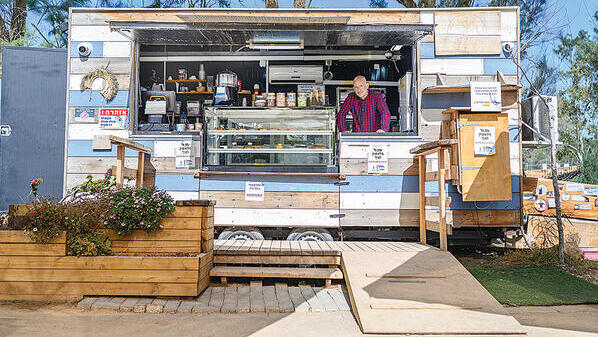
Serving handmade cheeses. Cafe BaSivuv
(Photo: Ron Rahamim )
“We had concerns because it is not such a central route,” Irina admits, “but the place is developing very nicely. The cart is located in the heart of the First Settlers in the Negev site, which includes an old well from 1913, armored vehicles and agricultural tools from the state’s early days. As a heritage site, time stands still here, and when people visit, they absorb the story of settlement in the Negev,” Irina says excitedly, adding an interesting trivia detail: All the young members of the NILI underground were educated right here.
Today, the area’s famous single-track trail passes through here, attracting motorcycle clubs and motorsports enthusiasts from across the country.
And what about returning to the original site?
Irina reveals that another cart will soon open at the new food truck complex being established by the Tkuma Directorate at the Black Arrow memorial, which is set to become a tourism site.
And what do you serve at the cart?
“Like at any classic coffee cart. There are salads, cheeses from a boutique dairy in the Wadi Attir project of the Bedouin community, which is based on ecological sustainability, and these are excellent handmade cheeses served with vegetables and bread. There are sandwiches, of course, desserts, smoothies and pizzas made without preservatives or sugar.”
• Waze: Cafe BaSivuv Ruhama, or First Settlers in the Negev site.
• Opening hours: All week, 8 a.m. to 4 p.m. There is a kosher certificate at an additional cart that opens on Fridays for the religious public.
Geula Coffee Cart, Moshav Tkuma
Behind the cart are brothers David 'Dudu' and Nitzan Boiman, third-generation residents of Moshav Tkuma. Both are reservists and have served alternately since October 7, when Dudu was also the community’s security coordinator. When the two traveled in Australia with their partners, Ruth and Ella, they encountered the coffee cart trend. When they returned to Israel, they decided to turn a shared dream into reality and established the Geula coffee cart in the heart of the moshav in the western part of the northern Negev, among the vineyards on the family farm.
“Nitzan and I had a pest control business in the Tel Aviv area,” Dudu says, “but in winter there is no work in pest control, and we were looking for what to do. Following the trip, we decided we wanted to renovate a cart, and from there it developed. We bought a dismantled secondhand cart and said: 'We’ll do arts and crafts.' We built it together, making every possible mistake that we later fixed. The coffee cart’s trailer was also bought old and used, and was renewed and renovated from the ground up by the whole family.” They reveal that the cart was named after their legendary grandmother.
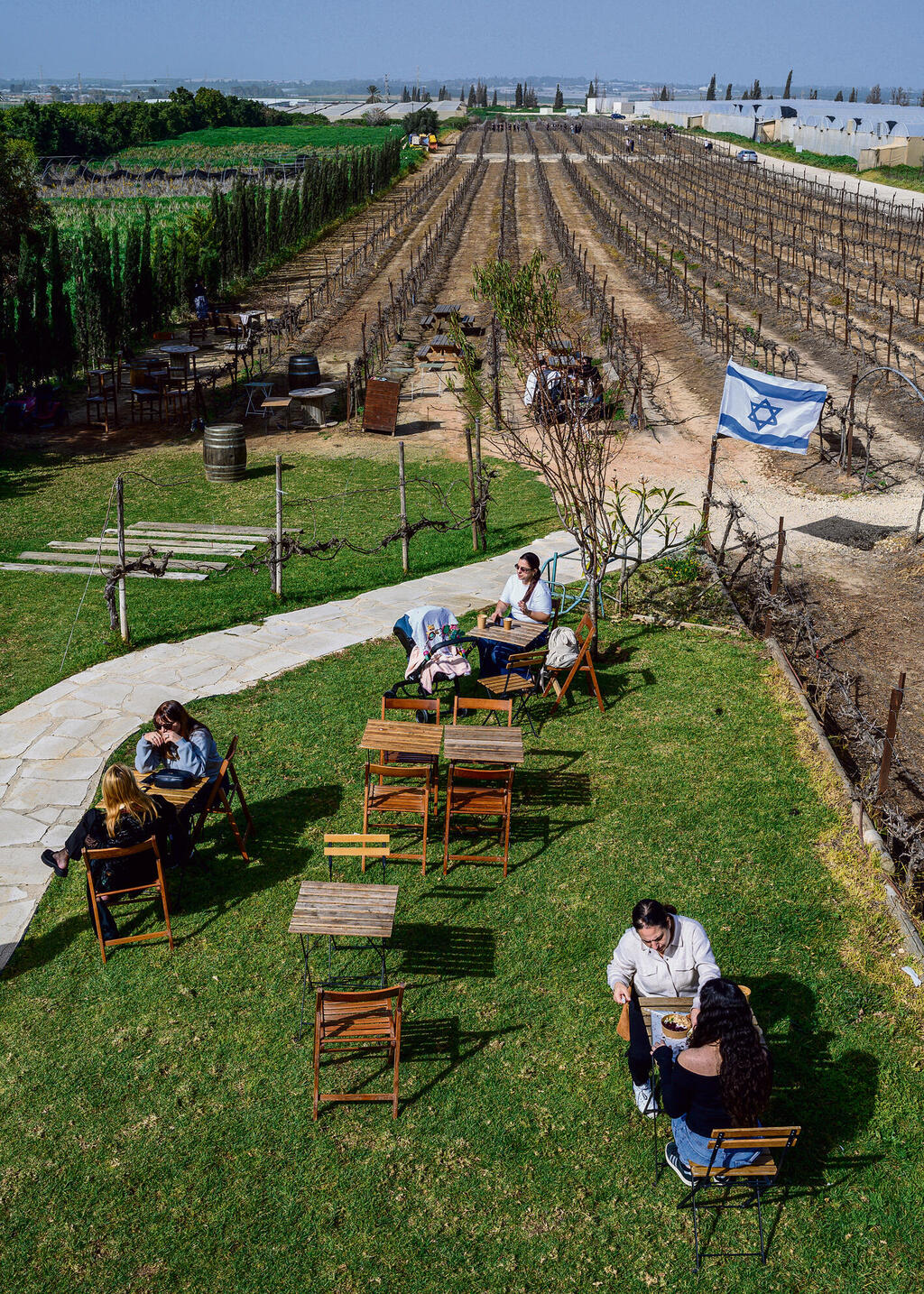
The coffee cart is named after their legendary grandmother. Cafe Geula
(Photo: Ron Rahamim )
“We would work during the week in pest control, and on Fridays operate the cart on the family farm, which grows wine grapes and sells them to several wineries. We ran the cart on Fridays inside the vineyard. Today we have been in the field for more than four years. It was a gradual development process,” he adds.
In October 2024, the brothers decided that the once-a-week idea was not enough and expanded operations to Monday through Friday, with an upgraded cart located in the family vineyard. They say their ambition is to become a cafe with a visitors center.
Who is the audience?
“A diverse crowd from all over the country, Gaza border tourists and, of course, locals who sometimes come for a family lunch, meetings and dates. We serve pastries, sandwiches and salads that we make ourselves on site. We make everything from scratch, and it is suitable for breakfast and lunch. There is an omelet sandwich, a vegetable patty sandwich, focaccias, pizzas and a wide variety of salads. We make a strong effort to use local produce, moving the vegetables from the soil in the moshav to the plate, sometimes in less than 24 hours. We are farmers too and have a lot of contact with local farmers. In addition, we offer a dish of quality cheeses from Be’eri Dairy and wines from the winery to which we sell our grapes — Zion Winery. The idea here is to take a cheese plate and wine, sit facing the beautiful view and enjoy.”
You say enjoy, and the stomach tightens. How is the sense of security now?
“Right now we are living with a kind of sense of security, after a long period that was not simple. Now there is relative quiet that we have not had since October 7, but we have learned from experience and know that quiet is deceptive. We are never truly at ease because we rely only on ourselves and know that the quiet we are enjoying now is not forever.”
And what happened to the pest control business?
“We abandoned it. We are looking ahead in the field of tourism.”
• Waze: Geula Bar.
• Opening hours: Monday to Thursday, 8:30 a.m. to 3 p.m.; Friday, 8 a.m. to 2 p.m.