

Some travelers chase white-sand beaches and perfect sunsets. Benny Waxler, 37, a tourism consultant from Jerusalem, seeks out the places most Israelis would not dare approach.
The Haredi adventurer, carrying a U.S. passport and tefillin in his bag, repeatedly enters hostile territory, including Taliban-controlled Afghanistan, Iraq, Syria and Lebanon, walking a thin line between curiosity and life-threatening danger. Even during the current war, he traveled to Iraq, touring Baghdad before returning to Israel in recent days.
Benny Wexler in Baghdad
(Video: Benny Wexler)


At every border crossing, he knows one thorough inspection could expose him. “The moment they open my bag and find the tefillin, I’m exposed, and it could put my life at risk,” Wexler told Ynet.
Moving between colorful markets, abandoned Jewish graves and hotel rooms where he quietly dons tefillin in secret, he has even visited Hezbollah strongholds in Beirut. He found himself in Dahieh, standing above the site where Hassan Nasrallah was assassinated. “You only understand where you were once you leave,” he said.
Waxler’s travels began like many others, with trips to Europe, the Far East and South America. But something shifted over time. “I’ve been traveling the world for about 10 years,” he said. “Of course, I started in ‘normal’ countries.” He laughed. “I’ve done all of Europe, the Far East, South America, Africa, the Caribbean and many countries in Asia.”
The turning point came in an unexpected place, the Arab world. “I was first exposed to Muslim countries in Dubai, before the Abraham Accords. I really connected to the colors and beauty, and from there it continued, Saudi Arabia, Qatar, Kuwait, Bahrain, Oman. Then I told myself, if I got through that safely, let’s take it one step further.”
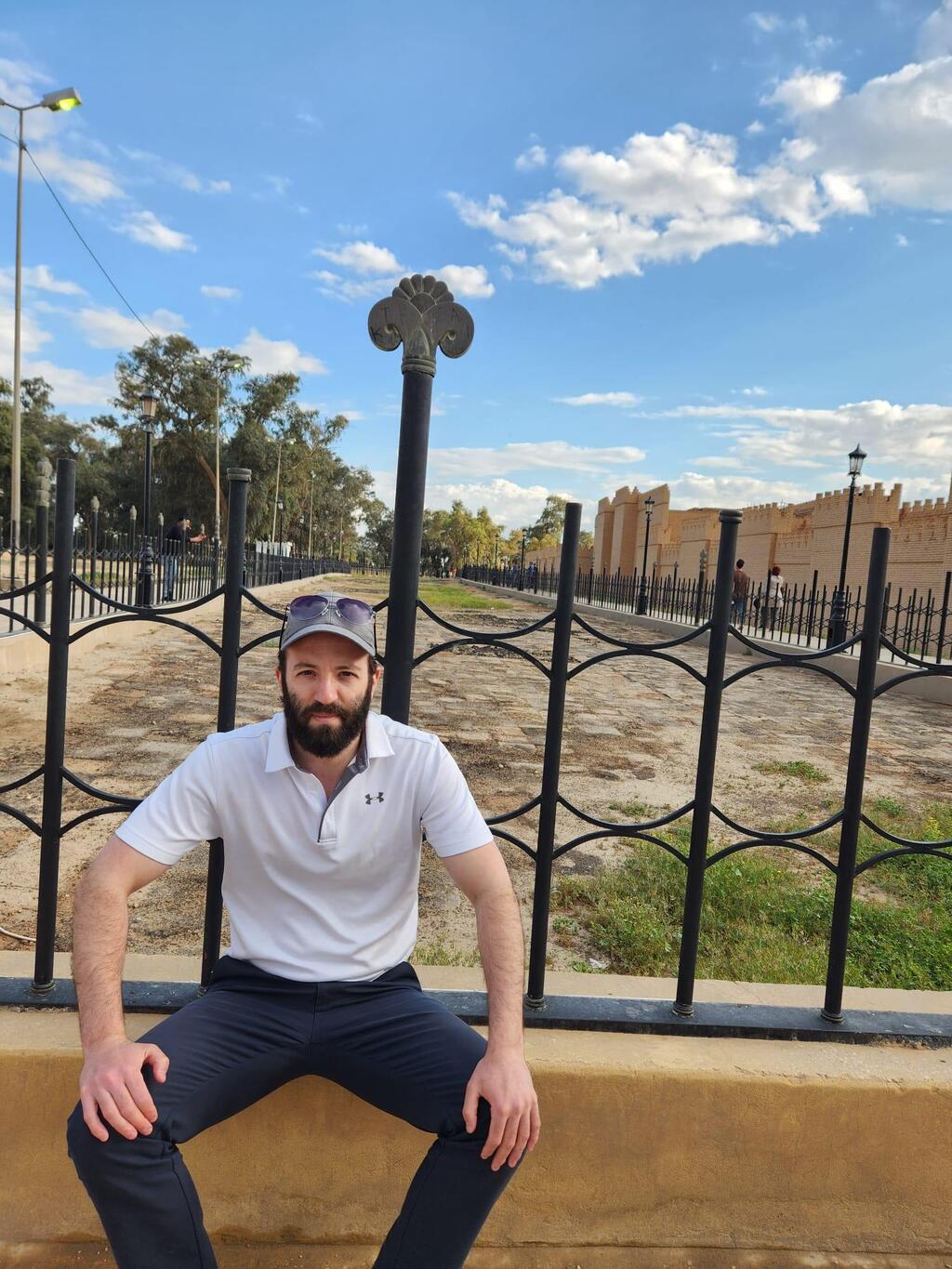
That step quickly led him to destinations most Israelis would not even consider. He began in Iraqi Kurdistan, then moved into Iraq itself. “There’s a lot of Jewish history there,” he said. But the peak, he added, was Afghanistan. “I was there when the Taliban were in power. Not during American presence, but under Taliban rule."
Unlike most global travelers, Wexler is strictly observant, which adds another layer of risk. “In daily life, I dress as Haredi fully,” he said. But in certain places, that identity becomes a liability. “In Europe, I don’t walk around as a Jew. I don’t like to stand out. In South America and Africa, it’s not an issue, but in some Muslim countries, it’s a different story.”
In Kurdistan, he said, he openly appeared as Ultra-orthodox and was surprised by the response. “I walked around dressed like that in markets, and the attitude was warm and supportive. No one tried to harm me; on the contrary, they welcomed and respected me.”
In Iraq, Lebanon and Syria, however, the reality is starkly different. “I don’t walk around there in Haredi clothing. It’s a real-life risk. I hide my tzitzit and wear a cap instead of a kippah,” he said. “But the real fear is with the tefillin. I take them everywhere, and there’s no way to hide them during airport screening. Then the questioning starts, and that can be life-threatening. They say they have no problem with Jews, only with Zionists, but in practice, it’s a very dangerous game.”
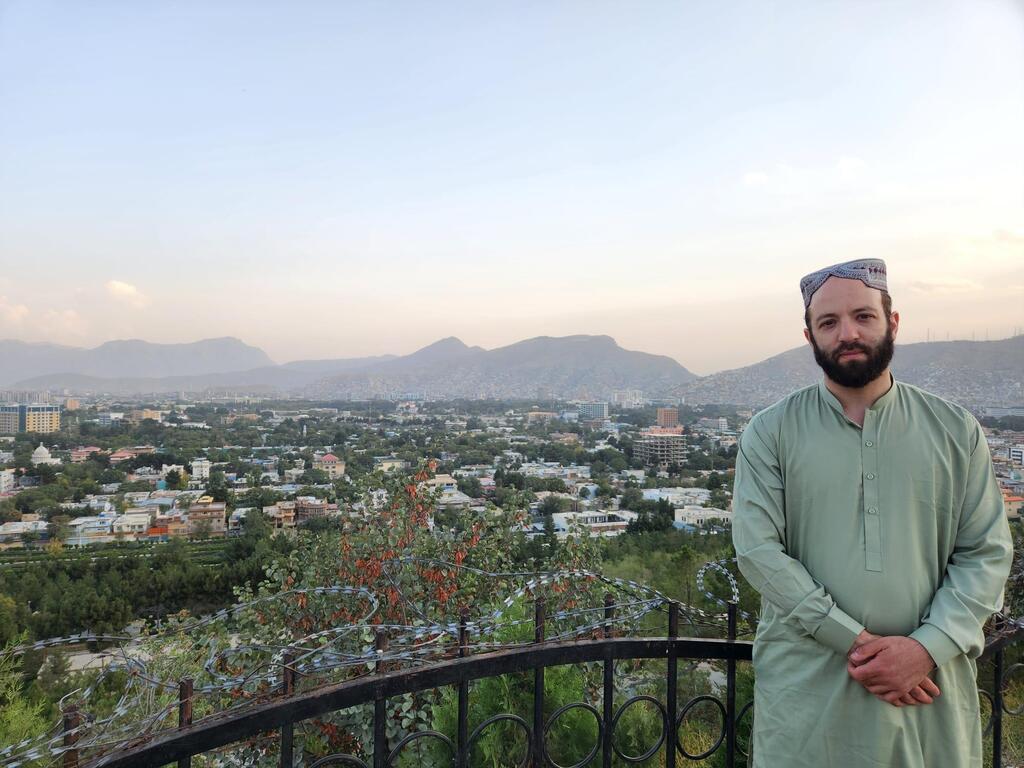
Waxler in Afghanistan
His most dangerous moment came while leaving Afghanistan. “I knew they do thorough checks on the way out, and that was my real fear,” he said. When his bag was opened, he braced for the worst. “I told myself, that’s it, they’re about to find the tefillin.” He had tried to prepare, placing them inside a gift bag he bought in Dubai. “But I didn’t know if it would work.”
Then he made a split-second decision. “I started shouting, ‘Friends, I’m coming from the United States. I heard bad things about you, and I’m surprised by how kind, warm and pleasant you are.’” The reaction was immediate. “They were in shock,” he said, laughing.
“They have a bad reputation and want to get closer to the West. Suddenly a Westerner praises them; they stopped the checks. Everyone shook my hand. I calmly closed my suitcase, put it aside and walked out. They didn’t even realize what happened.”
Only after returning home did the fear fully sink in. “You know that if the tefillin are exposed, it could end very badly,” he said.
Benny Waxler in Afghanistan
Despite the danger, Iraq draws him back repeatedly, not for food or scenery, but for its deep Jewish history. For Benny Waxler, Iraq is not just a dangerous destination, but also a center of abandoned Jewish heritage.
“Iraq is very, very interesting,” he said. “You see huge posters of Nasrallah and Sinwar on every electricity pole. The older generation still supports Iran and Hezbollah. But many young people want change. They’re tired of living under terror and Iranian militias.”
Baghdad itself, he said, is surprising. “It’s a vibrant, colorful city with huge contrasts, very poor neighborhoods alongside luxury areas. I ate at restaurants that rival anything in Dubai.”
Yet the Jewish presence is gone. “There’s nothing, no Chabad, no community, no Judaism. If there are Jews, no one knows about them as they live in complete secrecy. It’s very dangerous to be a Jew there.”
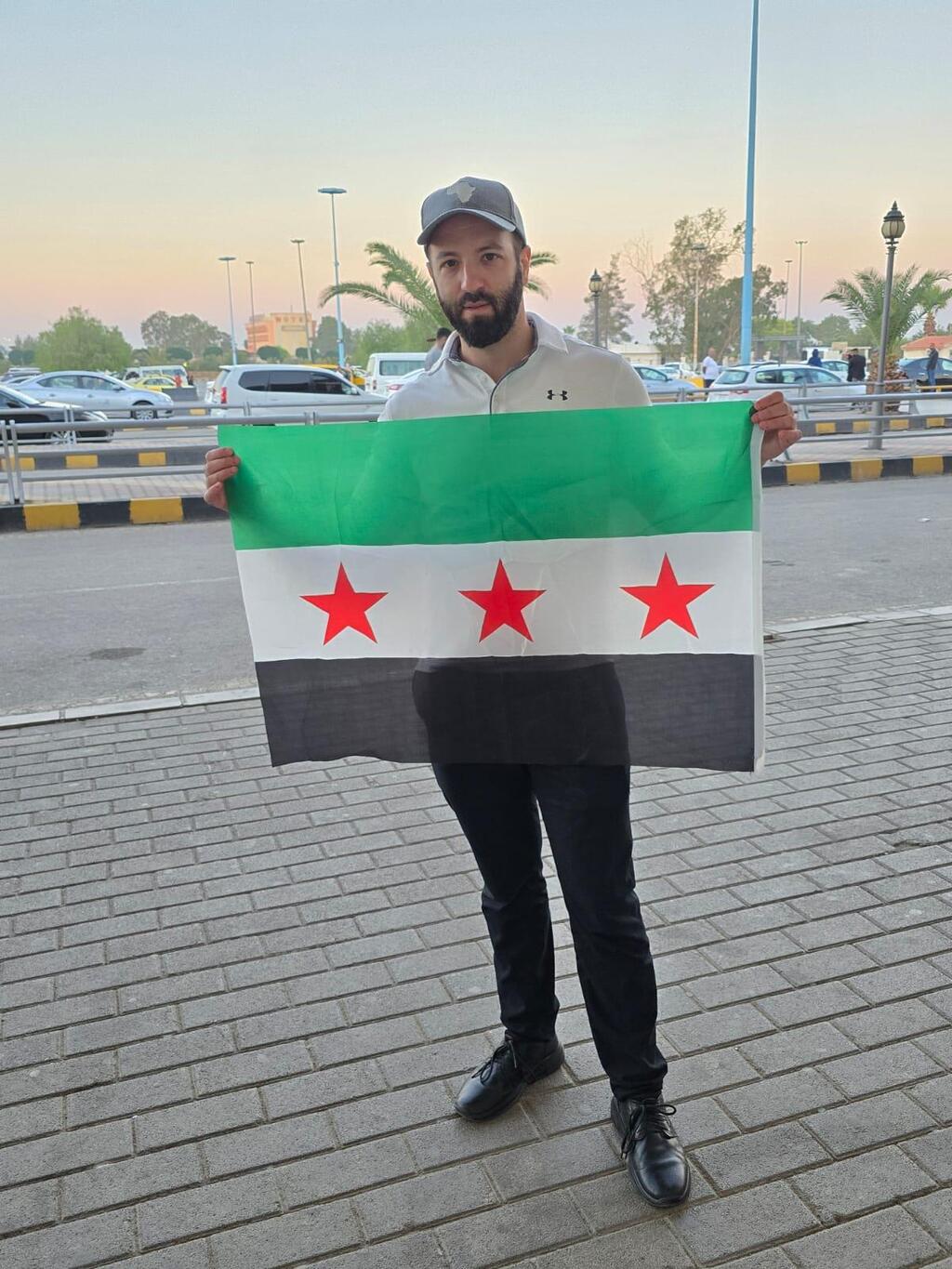
Waxler in Syria
He also takes constant precautions. “I don’t speak Hebrew. I present myself as an American with no roots. Everything is planned.” Even in his hotel room, he remains cautious. “I put on tefillin there, but I still hide them, and I ask that the room not be cleaned.”
One of the most powerful moments of his trip came at the grave of Rabbi Yosef Chaim of Baghdad, known as the Ben Ish Chai. “The building of his yeshiva still exists,” Waxler said. “The synagogues are still there, but inactive. The grave was very neglected. It was very emotional to be there.”
To gain access, he posed as a Christian researcher interested in cemeteries. “The grave is near a Hezbollah neighborhood. It’s dangerous. You can’t stay long.”
He also visited ancient Babylon, believed to be the site where the Babylonian Talmud was composed. “To stand there and know Jewish history began there, it’s very moving,” he said.
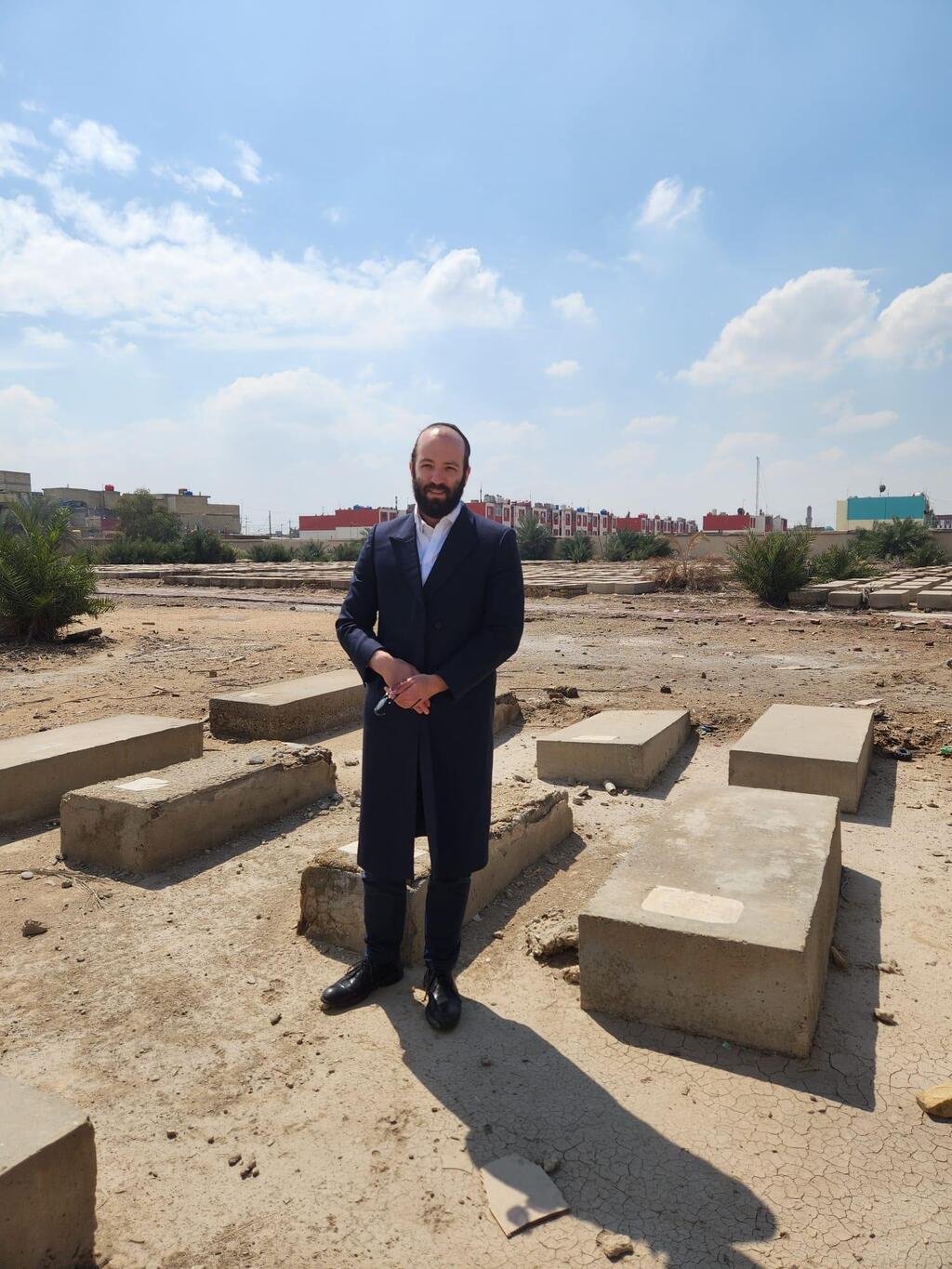
At the cemetery in Iraq
From there, he continued to sites tied to biblical figures, including the graves of the prophet Ezekiel, which today is a mosque. "For them, it’s also considered sacred"; he also visited the grave of Job. “These are very emotional moments,but you can’t let yourself dwell on it, as you’re constantly afraid. Only when I leave do I understand where I was.”
Daily life is also challenging. “There’s no kosher food available. I bring basic items from Israel, like crackers and canned tuna, but I remove the Hebrew labels, and also a lot of fruits and vegetables, just to eat to survive, nothing indulging.”
And now Waxler’s remarkable story reaches a country many Israelis have visited over the years, not as tourists, but as soldiers. "I've been to Beirut. It’s an amazing city, very Western, beautiful. But when you reach Dahieh, the story changes,” he said, describing a sharp contrast between perception and reality.
“In the news, they show the destruction, but not all of Dahieh. It’s a huge area, like the Tel Aviv metropolitan region. About 800,000 people live there, with thousands of buildings. Even if dozens are destroyed, you don’t really feel it.”
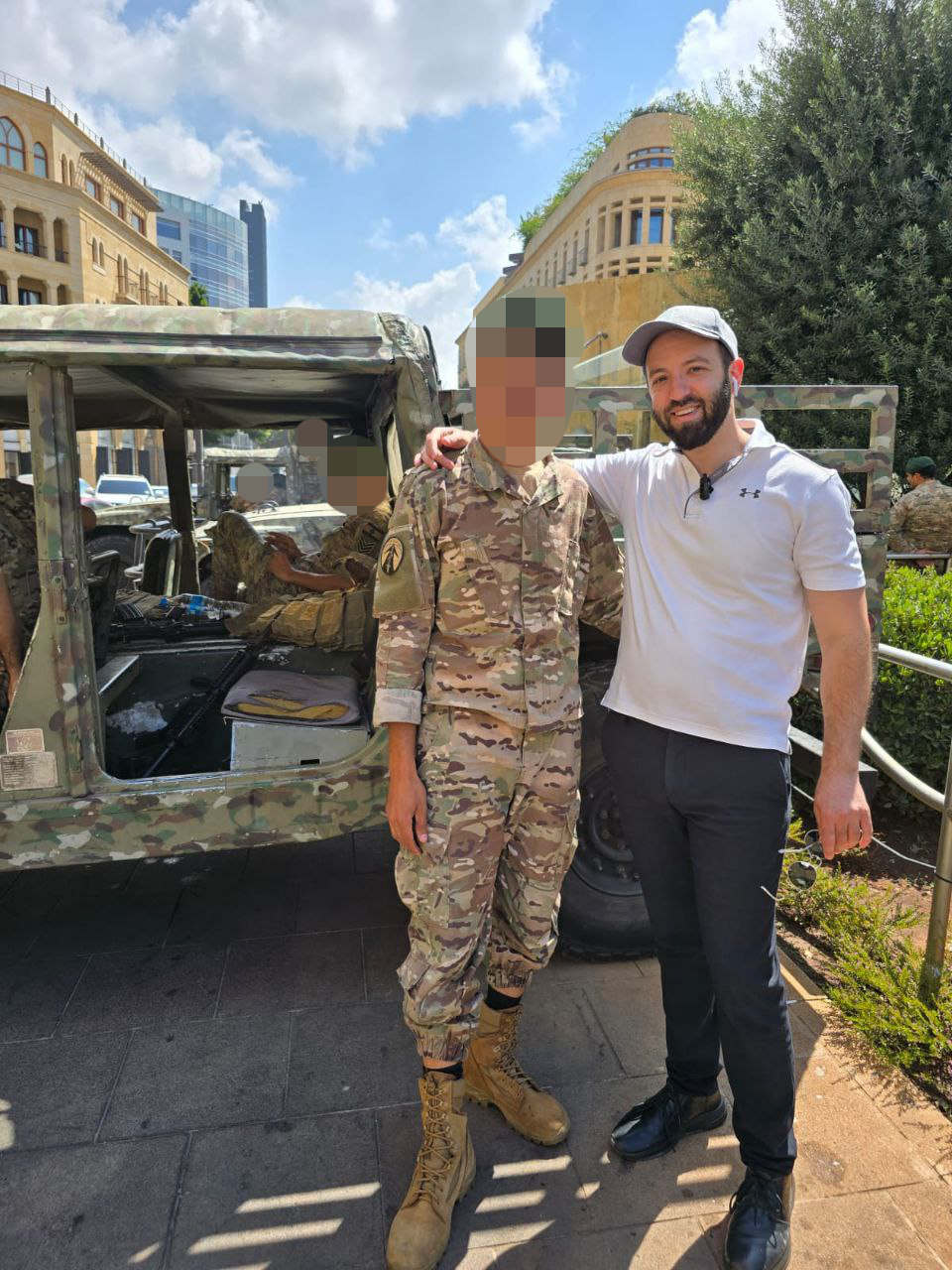
Benny Waxler in Beirut with a Lebanese soldier
(Photo: Benny Waxler)
Waxler stresses that reality is more complex than the image often portrayed. “Dahieh is mostly Shiite, but not everyone supports terrorism. Certain neighborhoods are very extreme, controlled by Hezbollah, and those are the areas the IDF mainly targets.”
Those were the neighborhoods he wanted to enter. “I sat in my hotel trying to figure out how to get there without exposing myself,” he said. "Then a hotel worker called me and said, 'Listen, I figured you out.’ I asked, ‘What did you figure out?’ He said, ‘Relax. I worked with Jews in Dubai. I like your people. I’ll take you to Dahieh. I live there, and I’ll take you anywhere, to a synagogue, a cemetery, wherever you want'. “I was extremely tense, but I didn’t have a choice. I went with him.”
As they entered the Hezbollah-controlled area, the tension escalated. “You can’t take photos there. Hezbollah cameras are everywhere,” he said. He used smart glasses to film discreetly.
Then he reached what he described as one of the most symbolic locations. “There’s a deep pit with a large picture of Nasrallah. You realize you’re in one of the most extreme Hezbollah neighborhoods. You think, maybe everyone here fired at Israel yesterday. It’s insane.”
Still, he described a sense of triumph. “It’s very emotional. A kind of victory image. You tell yourself, 'You try to harm us, and I’m standing here, where we eliminated your leader'.”
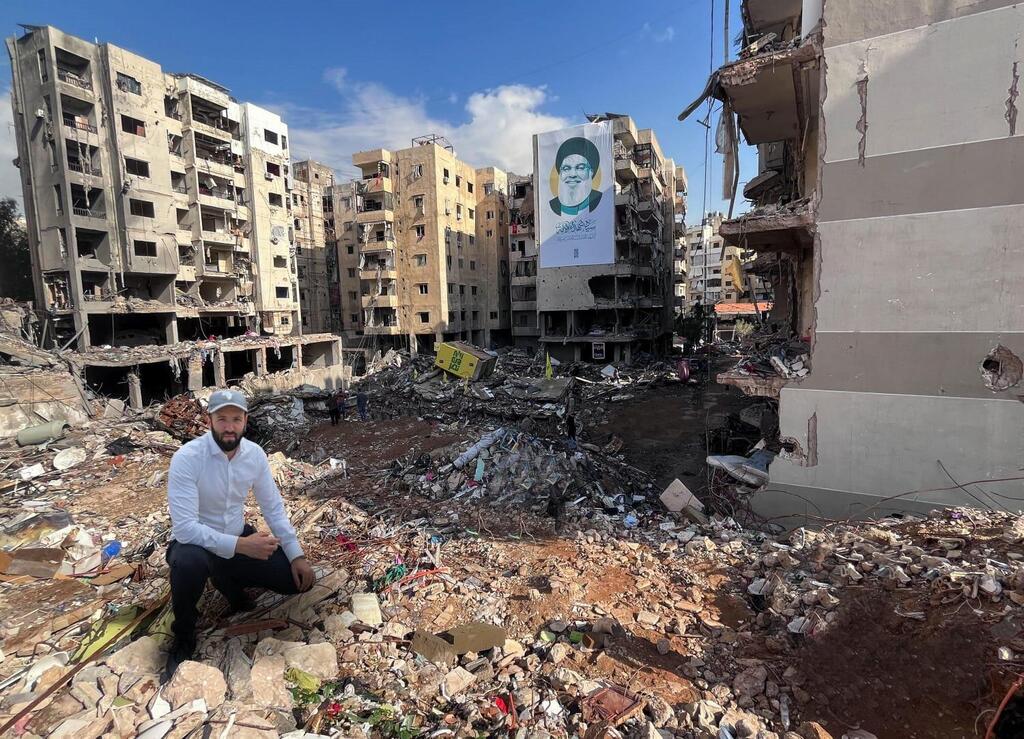
Wexler at the site of Nasrallah's elimination
Even there, he sought out remnants of Jewish life. “There’s one synagogue in Beirut, ‘Magen Avraham.’ It exists, but it’s inactive. I met one of the few Jews left. He hid his identity. Only after he understood I was Jewish did he agree to meet and take me to the synagogue and cemetery.”
Waxler’s travels have also taken him to Syria and Damascus. But one destination remains at the top of his list. “Iran is the ultimate goal,” he said. “I haven’t made it there yet. We’ll see what happens after the war.”