

On Saturday morning, February 28, Operation Roaring Lion began, and Israel’s skies shut down once again, as they had during the earlier Operation Rising Lion. With the outbreak of that war, about 80 aircraft parked at Ben Gurion Airport had to be evacuated immediately.
This time, however, lessons from the previous round meant contingency plans were already in place, including a structured framework to keep the airport operating under attack, subject to Home Front Command guidelines, the Civil Aviation Authority and security officials.
Siren at Ben Gurion Airport as transportation minister oversees passenger evacuation


To see how that plan works in practice, we joined a special tour of the airport on Sunday, as it continued operating under missile fire and repeated alerts.
The tour began with a descent into a protected shelter. This was not a drill. Phones around us blared with the harsh alert tone as a real siren sounded. A glance at the Flightradar app showed an Air Haifa flight from Larnaca circling in the air, delayed before landing, a routine procedure since the start of the rescue effort.
In the operations control room overseeing the “Open Skies” mission, another situation assessment was underway despite ongoing missile launches, with all relevant agencies present. Listening to the briefings, we learned that a missile fired from Iran toward central Israel had been successfully intercepted.
At the same time, standard protocol kicked in. Specialized runway vehicles, known as “carpets,” scanned takeoff and landing strips for debris and metal fragments from the interception. They collected the shrapnel and cleared the runways thoroughly.
Moments later, we were informed of another missile launched toward Eilat. The intensity underscored the challenge facing crews working around the clock in what may be one of the most complex operations ever managed in civil aviation. Only after the runways were fully cleared did operations resume, with landings and takeoffs restarting under strict limitations.
Gallery
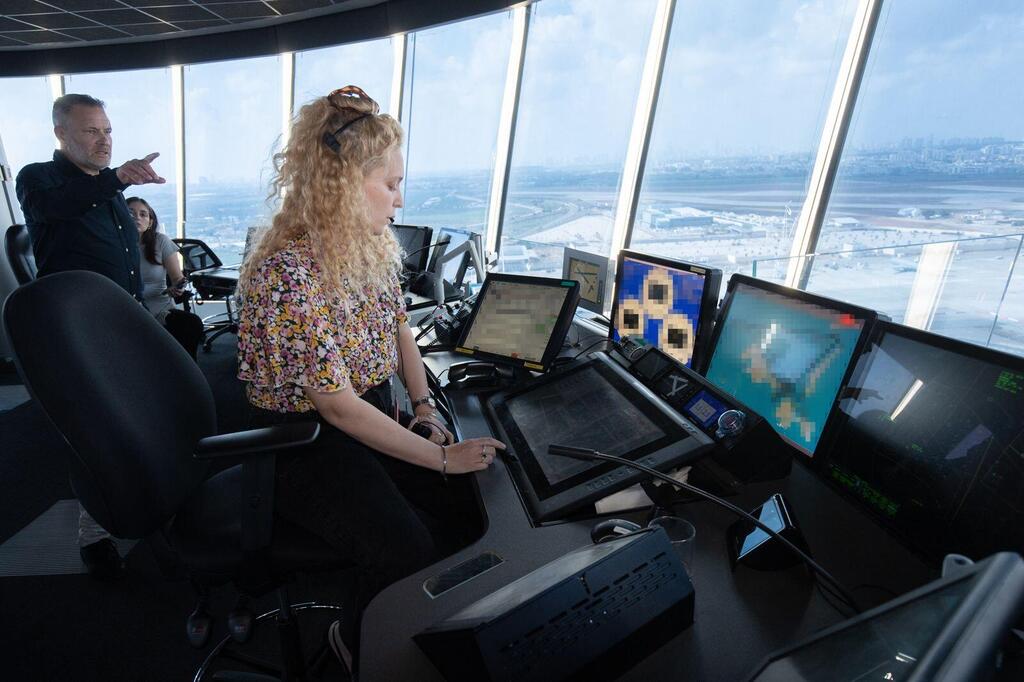
Planes and missiles: Dramatic days in the control tower at Ben Gurion Airport
(Photo: Israel Airports Authority)
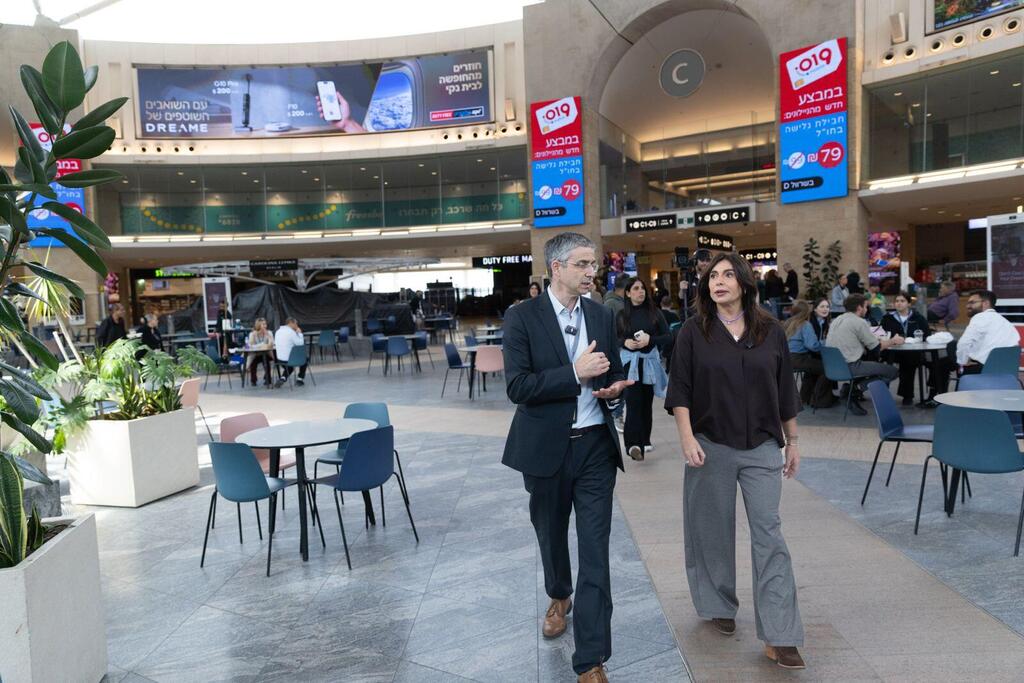
Transportation Minister Miri Regev and Airports Authority CEO in the duty-free area
(Photo: Israel Airports Authority)
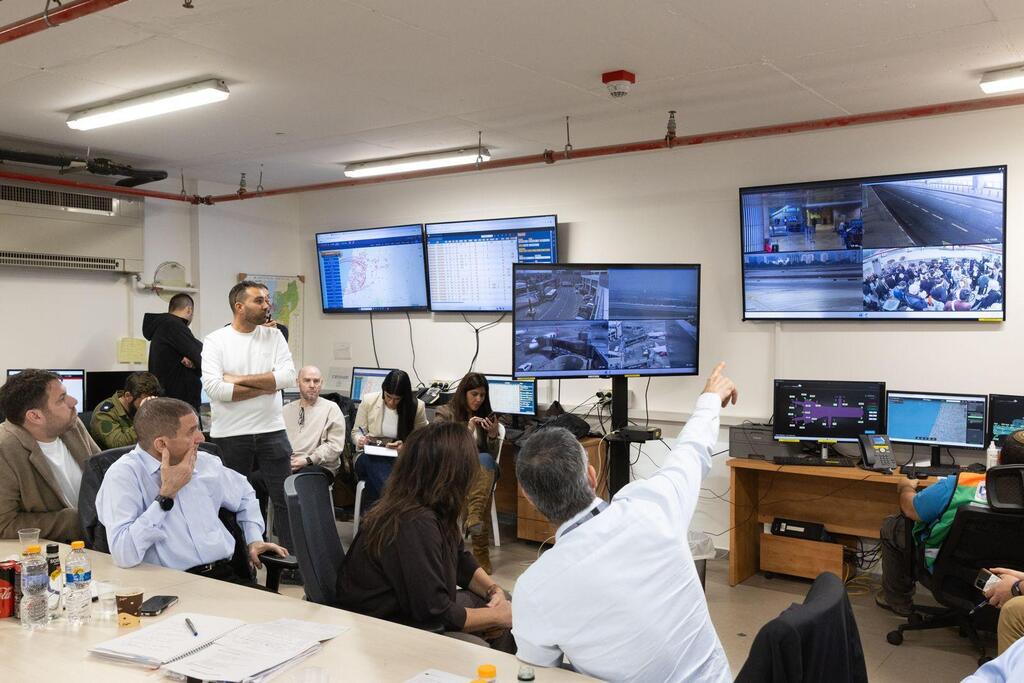
Endless discussions in the control room
(Photo: Israel Airports Authority)
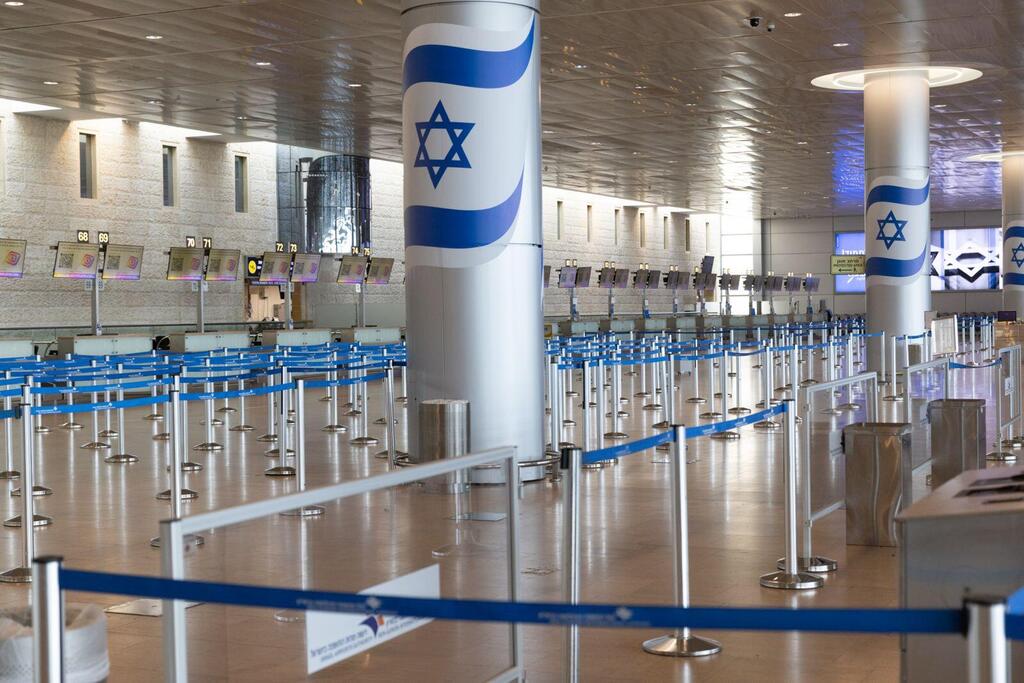
Again, an empty airport, like during COVID and Operation Rising Lion
(Photo: Israel Airports Authority)
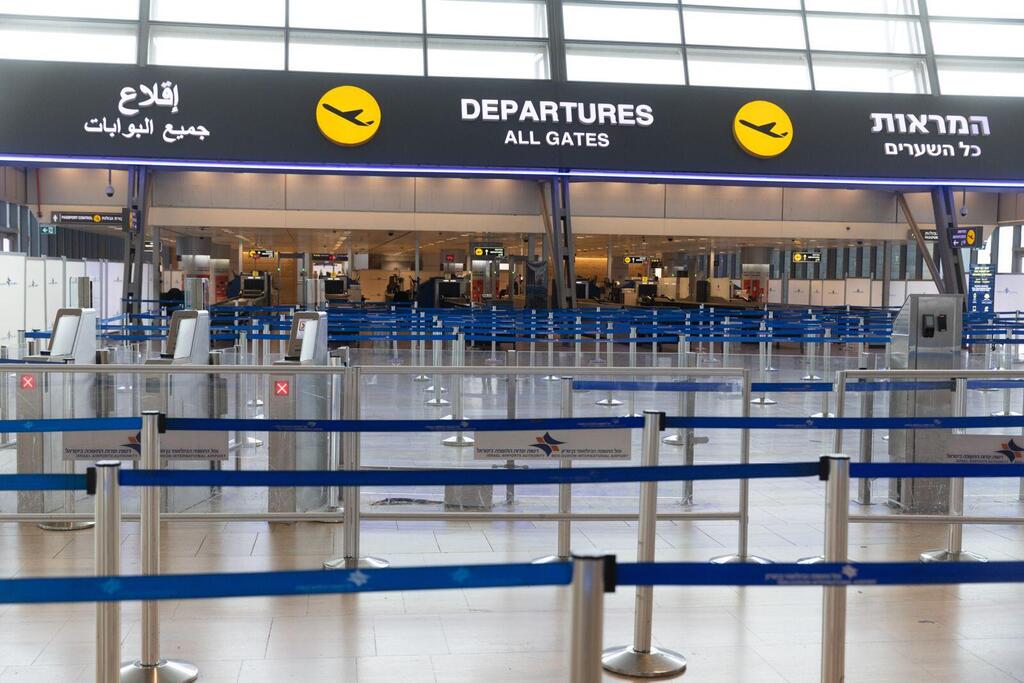
(Photo: Israel Airports Authority)
A passenger’s path: From Hall G to Gate C
What does flying from Ben Gurion look like in wartime? Departing passengers check in and undergo security screening in Hall G, not the usual departures hall. The reason is proximity to shelters, allowing up to 1,500 people to be evacuated quickly if needed.
After check-in and security, passengers proceed through border control and head to Concourse C, where they wait at the gate. Only one café, Tatti, is open, along with a small duty-free shop across from it.
Otherwise, the airport was nearly empty of commercial planes. Aircraft do not remain parked here; they land, take off and clear the area quickly. Much of the airfield is now dedicated to U.S. aerial refueling planes operating around the clock, giving the airport the feel of an American military base.
Life-saving protocols: ‘Lie flat on the runway’
“These are critical moments,” said Airports Authority CEO Sharon Kedmi. “Even when passengers are already seated on the plane, we keep the jet bridge staffed. If there’s an alert, we can reconnect immediately and evacuate everyone to a protected area.”
“If the plane has already pushed back and begun taxiing, we return it to the gate and evacuate passengers. These are the final minutes when the aircraft is still on the ground and not yet airborne.”
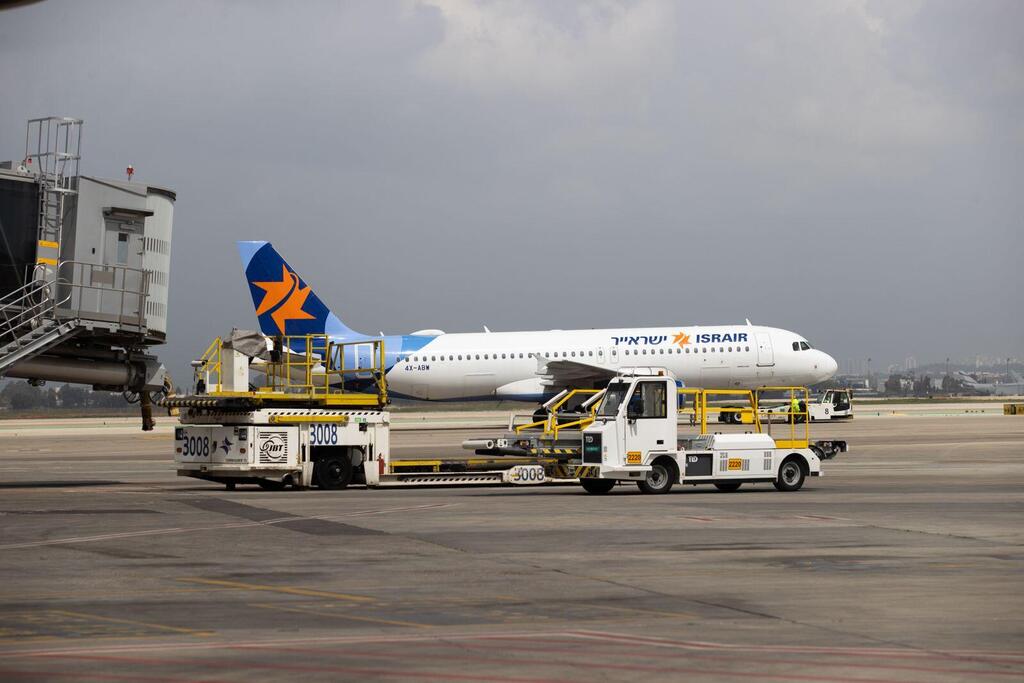
An Israir aircraft on the runway
(Photo: Israel Airports Authority)
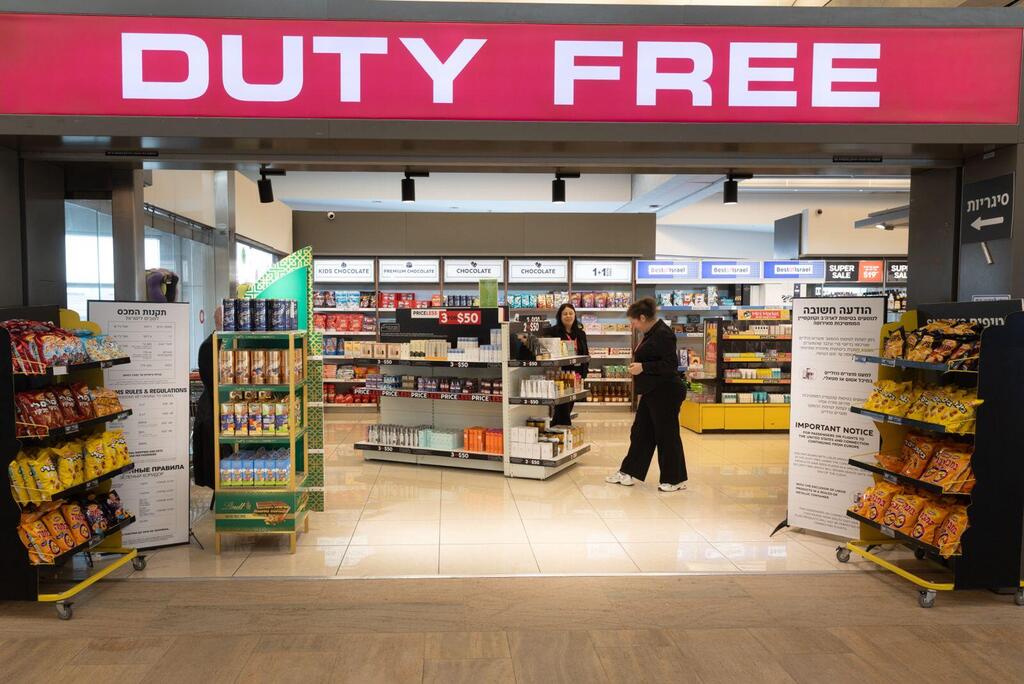
The only shop open in the duty-free area
(Photo: Israel Airports Authority)

No line for coffee
(Photo: Israel Airports Authority)
Airport director Udi Bar-Oz added: “There were cases where, during an alert, we had to open the aircraft doors on the ground and instruct passengers to disembark, lie flat on the runway and cover their heads with their hands. In managing a complex and sensitive operation like this, even that scenario was taken into account.”
The next stop on the tour was the duty-free zone. “It’s not pleasant to see everything closed,” Kedmi said. “But Ben Gurion airport, operating under war conditions and missile fire from Iran and Hezbollah, is functioning in an unprecedented way. No airport in the world has maintained inbound and outbound flights under such intense fighting.”
He pointed to Ukraine as an example, where civilian flights halted entirely once the war began. “The operation we are running here has no precedent and will be studied in the future,” he said.
"The airport is operating under a strict capacity cap of 2,300 people at any given time to ensure rapid evacuation if needed. It’s not worth risking even one passenger’s life for a flight,” Kedmi said.
At that moment another alert sounded for missiles fired toward central Israel. Staff immediately sprang into action, calmly and efficiently directing passengers in the hall toward the protected shelters.
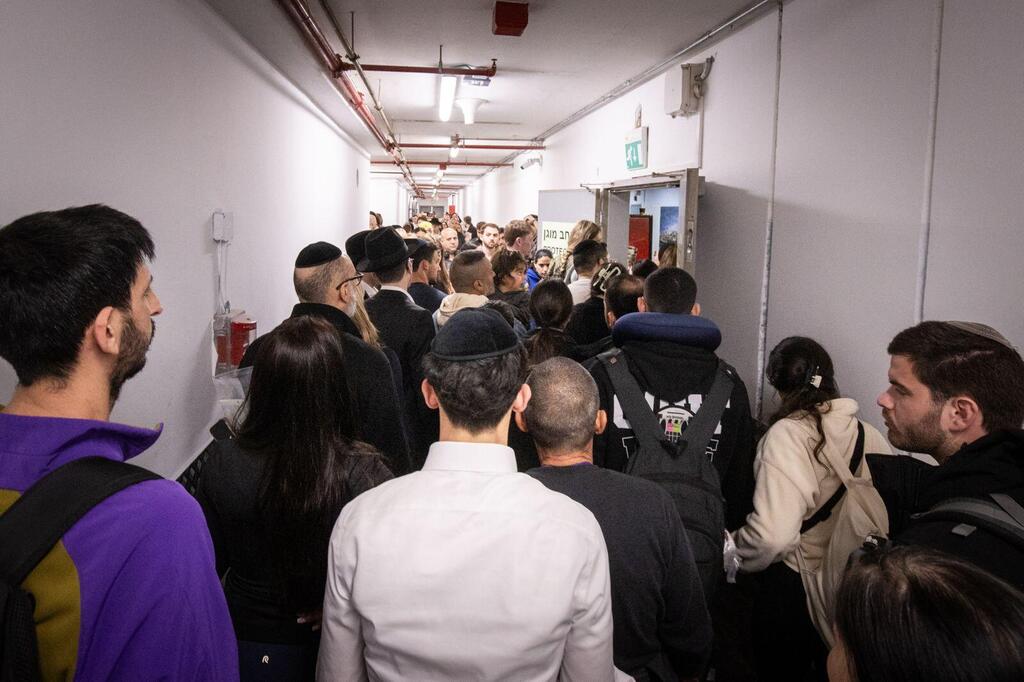
On the way to a protected shelter at Ben Gurion Airport
(Photo: Israel Airports Authority)
“This is why the framework allows a maximum of 100 passengers on narrow-body aircraft and no more than two flights per hour, both departures and arrivals,” Bar-Oz explained. “What allows us to reopen the skies for such a complex operation starts with protecting human life, without taking unnecessary risks.”
"Everything is tightly scheduled. Boarding takes about 20 minutes, and each flight cycle is calculated at roughly half an hour. At peak, the airport is handling about 1,000 passengers per hour.
The tour concluded at the control tower, in the radar room beneath the glass cab above. There, Deputy Director of Operations Assi Ben-Michael gave a detailed briefing on the radar units, approach control and area control.
“Air traffic management has several moving parts, and this is one of them,” he said, without going into detail. “In practice, aircraft control is handled from here. We are fully coordinated with the Air Force under very strict procedures. The complexity is high, because alongside passenger and cargo flights, a fleet of U.S. refueling aircraft is also operating, and the goal is to keep planes on the ground for as little time as possible.”
He said air traffic control operates on three levels: “There’s the tower, the ‘cab,’ the approach unit that organizes aircraft in the airspace near Ben Gurion, and the area control center (ACC) unit, which manages aircraft about 200 kilometers before they reach Israel.”
He noted that managing air traffic during wartime is fundamentally different. "In normal times, efficiency comes right after safety. Now, after safety the priority is operational coordination, especially those of the Air Force, so we can operate without interfering with them. It’s a major challenge, particularly since we sometimes have to move into protected shelters, while continuing to manage traffic and communicate with aircraft."
"The most challenging moments come when many aircraft are in the air and on the ground simultaneously, especially with heavy activity from U.S. refueling planes. During an alert, we still have to manage the airspace, and it can reach very intense peaks. We maintain continuous communication with aircraft, factoring in each plane’s fuel levels while keeping safety above all else.
"There have also been cases where we had to turn a plane back if we couldn’t land it based on real-time assessments. At every moment, we make the necessary adjustments and synchronize the entire operation.”
Asked whether Israelis will be able to fly abroad for Passover, Transportation Minister Miri Regev said: “I closed the skies, and I will reopen them safely as soon as possible. I hope some of you will be able to fly for Passover.”
She noted that wide-body aircraft have already been approved for full-capacity flights, initially for U.S. citizens. Israelis are expected to be integrated into those flights later, depending on ongoing assessments. If we can expand operations and increase the number of departing passengers on narrow-body aircraft in the coming days, we will do so, while safeguarding human life.”
And when will foreign airlines return to Ben Gurion Airport?
“There are airlines that want to come back, but there’s no approval yet. For now, only Israeli carriers are operating under the framework.”
Behind the scenes of the tour and the intense activity on the ground is a complex framework, built gradually since the start of the operation, designed to keep civilian aviation running under fire.
In the days following the outbreak of fighting, all involved agencies worked around the clock, conducting continuous assessments based on developments on both fronts, Iran and Hezbollah. At the same time, real-time data on missile launches was collected to determine when a rescue operation could begin for more than 100,000 Israelis stranded since February 28 in North America, the Far East, Europe, and the UAE, which was itself under missile fire and lacked civilian shelter infrastructure.
Initially, only inbound evacuation flights operated, limited to two narrow-body flights per hour or one wide-body flight. Later, limited outbound travel was introduced, capped at 100 passengers per flight, with about 15% reserved for humanitarian cases. The remaining seats were offered for sale by Israeli airlines, primarily on a first-come, first-served basis, alongside passenger allocations based on criteria set by each carrier.
On Sunday, Israeli airlines received approval, subject to Home Front Command guidelines, to operate wide-body aircraft to North America as part of an effort to return U.S. citizens stranded in Israel. These flights will operate at full capacity, about 270 to 310 passengers per aircraft, with at least 170 U.S. citizens on each flight.
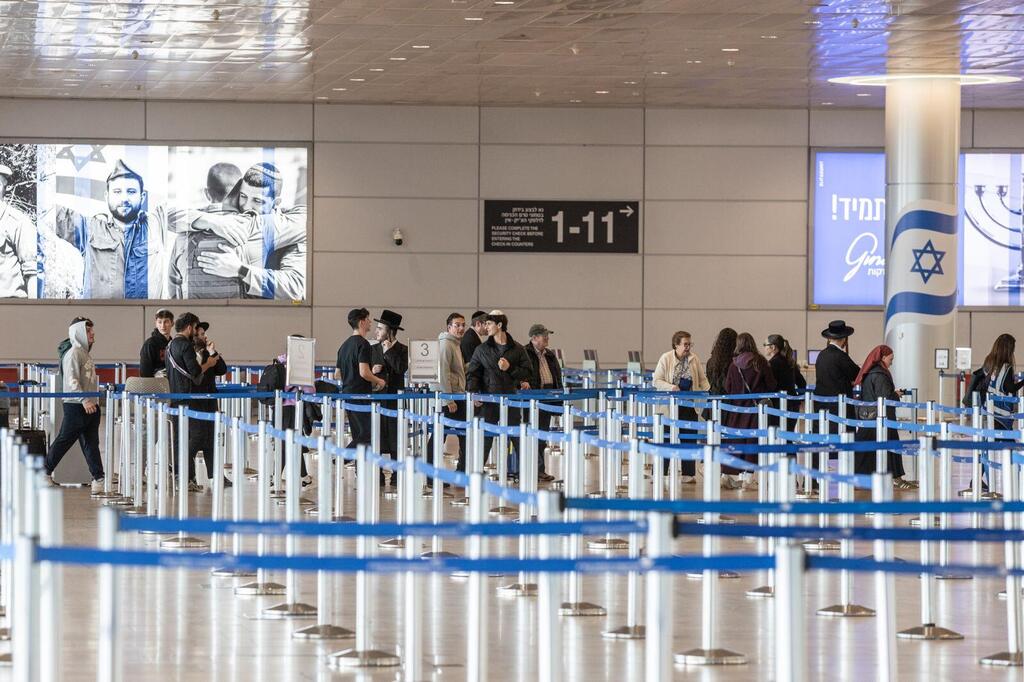
Will more passengers be allowed per flight ahead of Passover?
(Photo: Israel Airports Authority)
El Al alone plans about 25 such flights this week, while other Israeli airlines will also be able to join the operation if they choose to deploy wide-body aircraft on these routes.
To enable the effort, the head of the Home Front Command approved an exception to standard protection policies at Terminal 3, allowing up to 2,300 people to be present at the same time.
In practice, this airlift began overnight from Ben Gurion Airport to North America. If the operation proceeds without disruptions and in line with constantly updated assessments, more Israelis may later be able to join these flights, as well as additional routes to other destinations.
There are also signs that passenger limits on narrow-body planes may soon increase by an additional 80 passengers per aircraft, potentially allowing more Israelis to fly to Europe.
Still, all decisions are reviewed continuously, based on missile activity and security considerations. Restrictions could ease further, or tighten again, including a possible renewed closure of the skies.
Until Sunday, Home Front Command guidelines allowed for a maximum of 1,500 people at Ben Gurion Airport, about 800 of them airport staff. Following approval of the U.S. citizen repatriation effort and the installation of 10 reinforced shelters in the Terminal 3 drop-off area, capacity was expanded accordingly.