

Meir Haim, better known as Miro, grew up in a Haredi family in the northern Israeli city of Migdal HaEmek, studied at a yeshiva and even entered the Orthodox matchmaking world. His first flight abroad, taken without knowing English, opened a door onto an entirely different life. At 21, he left religious observance. A few years later, he also left behind the new life he had built in Tel Aviv and set out to travel the world.
Since then, he has lived alongside students at a Hindu religious school in India, taken part in shamanic rituals in Siberia, stayed at a Buddhist temple and lived with nomadic families in Mongolia. Along the way, he discovered that some of the children he encountered thousands of miles from home reminded him of the boy he had once been in yeshiva.
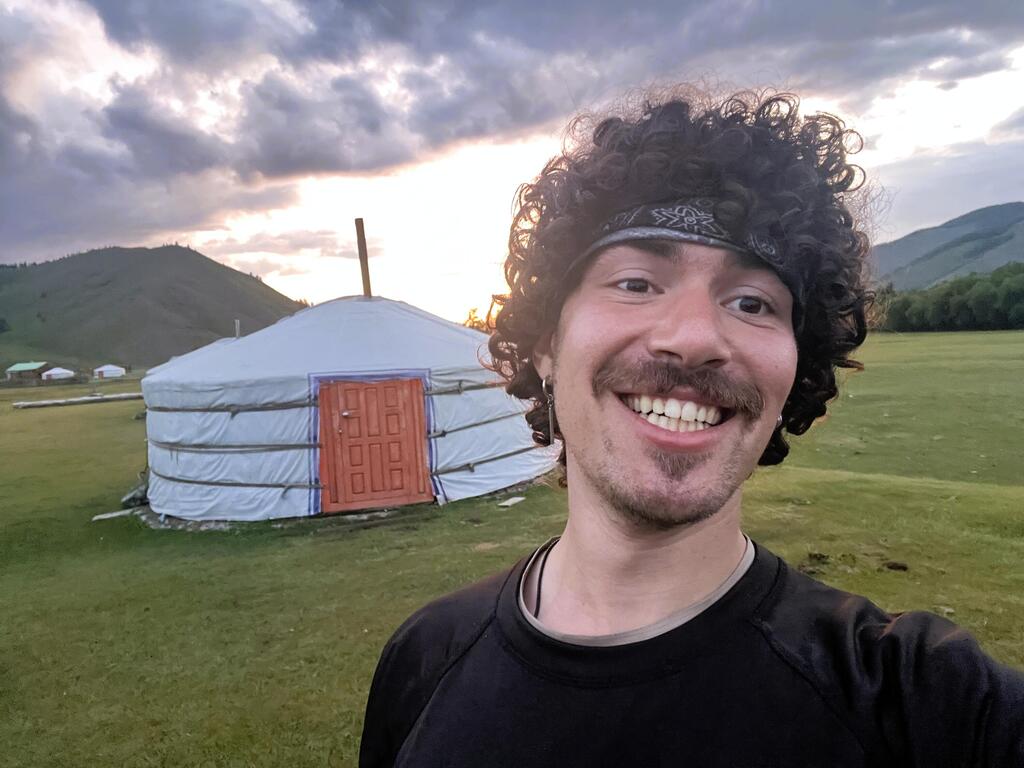
"I flew to the other side of the world and discovered how similar it was," he told ynet.
On his final day in Varanasi, after three weeks living alongside students and teachers at a Hindu religious school, Miro went to watch cremation ceremonies on the banks of the Ganges.
For the young backpacker, confronting death so directly was unlike anything he had experienced before.
“I’m a Cohen, a member of the Jewish priestly class, and because I grew up Haredi, I had never been inside a cemetery,” he says. “Suddenly I saw a dead person in front of me. I watched the body burn and smelled it. I have nothing in my life that I can compare that experience to.”
If someone from his advanced yeshiva had told him then that within a few years he would be studying Hinduism and watching a cremation ceremony, he doubts anyone would have believed it. “Of course they’re shocked by me,” he says with a smile. “Honestly? I’m shocked by myself.”
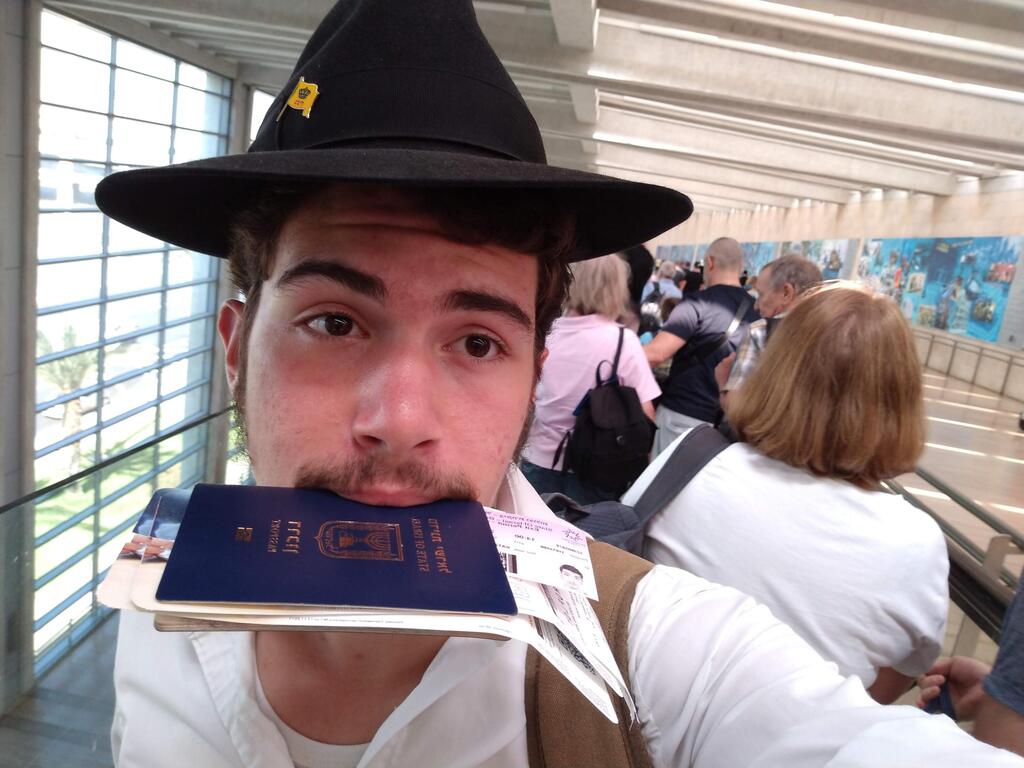
His first solo flight as a Haredi traveler
(Photo: Meir Haim (Miro))
Miro, now 27, says the feeling that he did not fully belong in Haredi society was there from childhood. “Ever since I was little, I always felt that I didn’t belong in the Haredi world,” he says. “On the other hand, I was good at being Haredi. I did what was expected of me and I was fine with it, but I always felt that something was missing.”
His first encounter with life outside Israel came after a close friend living in Germany invited him to visit. “I didn’t know a word of English,” he recalls. “I remember standing in the airport and looking at the letters as if they were shapes. I didn’t even know what they were called.”
“It was my first flight, but I fell in love with the world. I fell in love with the cultures I saw, and also with myself, because I discovered how strong I was and how much more there was for me to discover.”
‘I was in yeshiva, entering matchmaking, but all I wanted was to travel’
After returning to Israel, Miro went back to his studies. “I was in a major yeshiva, with exams, studies and long hours, and by 21 I had started the matchmaking process,” he says. “But the desire to travel kept nagging at me. I told my parents I had to go out into the world.”
He flew to Spain, where, he says, he left religious life behind. The nickname Miro, which has followed him ever since, also has a connection to Spain for him.
He later returned to Israel and began filling in the gaps left by years spent inside an insular Haredi community. He met a partner, moved into his own apartment and grew closer to his family again.
The October 7 attacks, he says, pushed him to stop postponing the trip he had long imagined. He left the new life he had built and boarded a plane without a fixed plan. “I simply decided I wasn’t going to give up on myself,” he says. “I set off without any idea where I was going, how I was going to do it or how long it would last. And here we are, almost two years later.”
More than landscapes or tourist attractions, Miro says he is drawn to the people he encounters.
One of the experiences he remembers most vividly came during his first week in India. He was riding a bus toward a local attraction when an older man sitting behind him tapped him on the shoulder and asked where he was from. When they reached a village, the man motioned for Miro to get off with him.
“I just got off the bus with him and went to his house,” he says. “They slaughtered a chicken especially for me and made a celebration out of it. Seventeen children lived in the house, all in one room.”
“I stayed with them for two days. They fed me with their hands, treated me with incredible respect, taught me their songs and showed me their culture. These were people who had never met anyone from outside India. I had never experienced anything like it.”
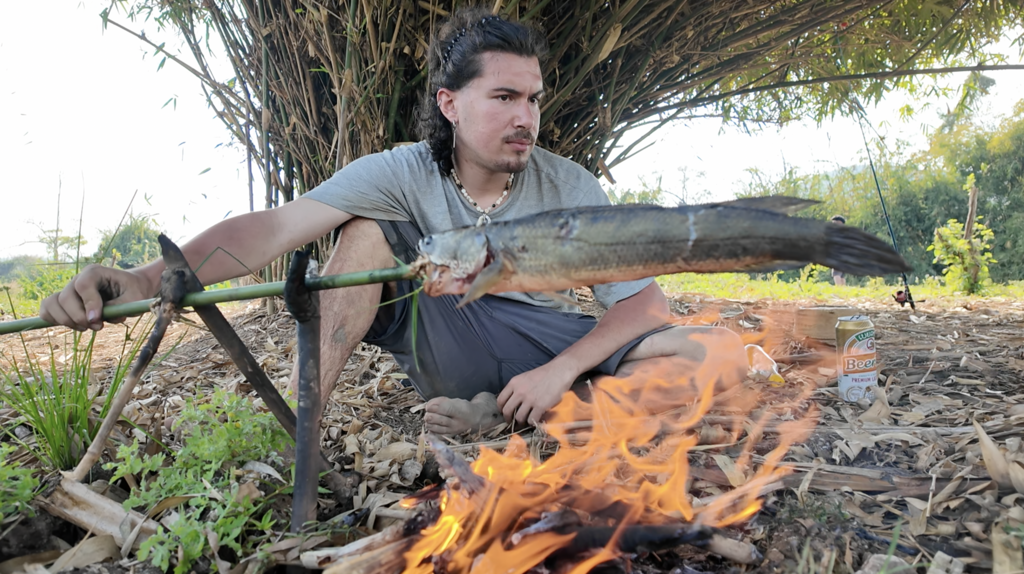
Laos, breakfast after a successful fishing trip
(Photo: Meir Haim (Miro))
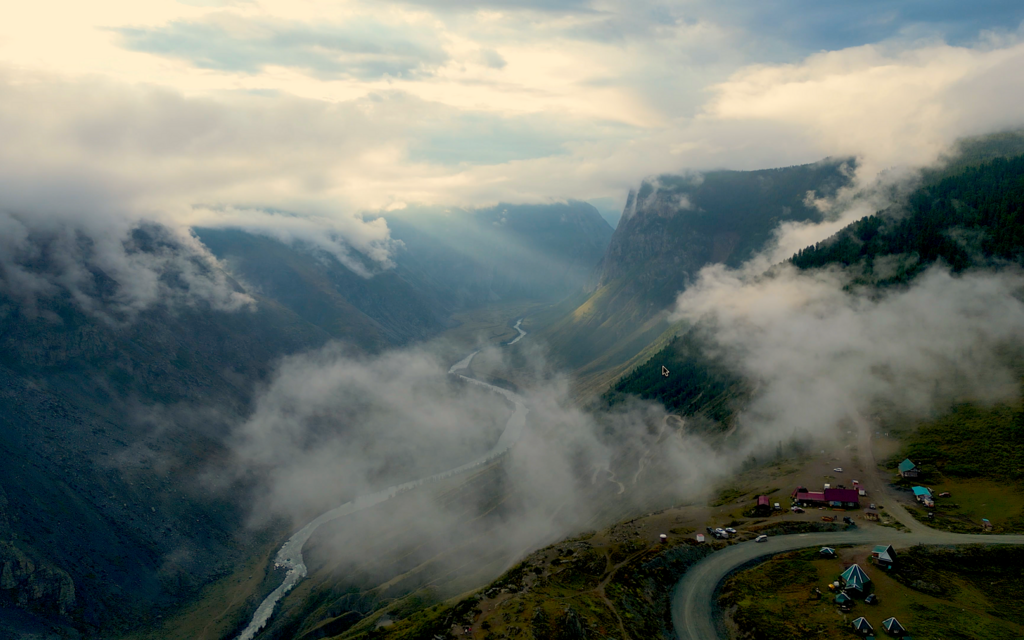
Altai Mountains, Mongolia
(Photo: Meir Haim (Miro))
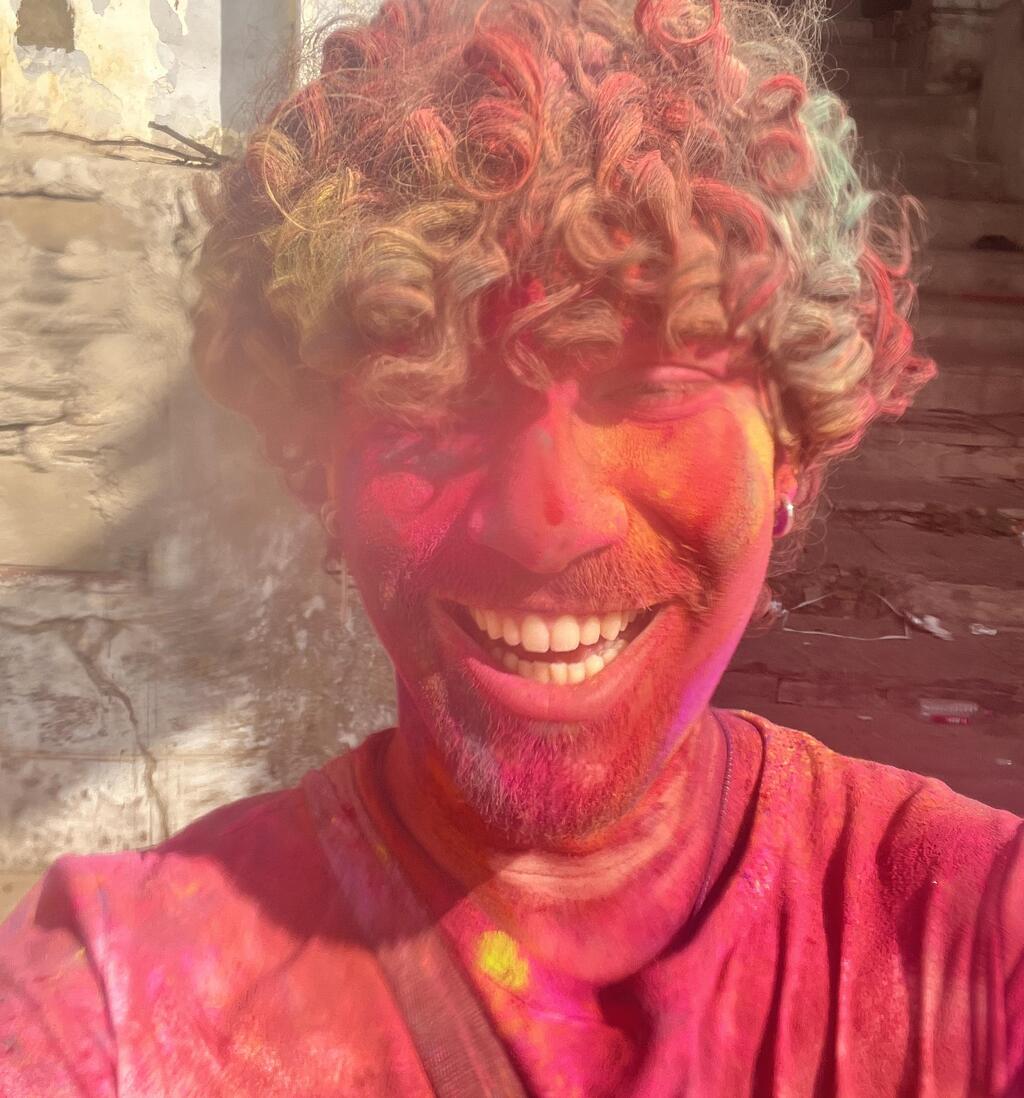
At a colorful festival in Pushkar
(Photo: Meir Haim (Miro))
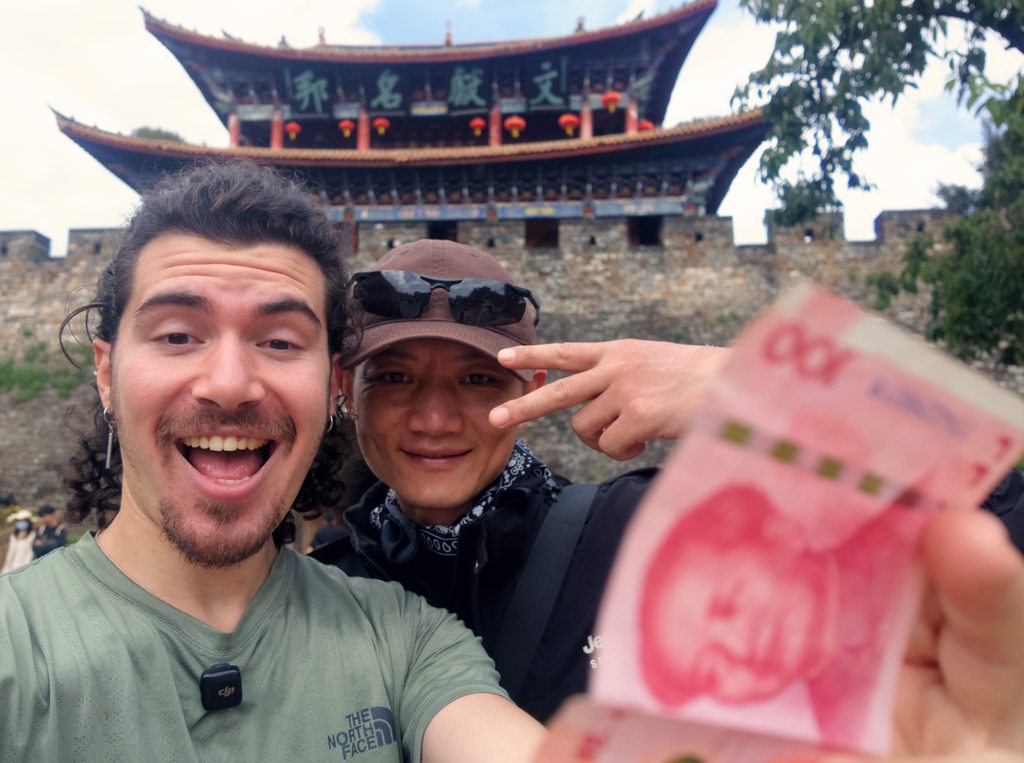
Selfie with a local in China who taught Miro how to make a favorite dish
(Photo: Meir Haim (Miro))
Asked whether he was afraid to follow a stranger home, Miro does not hesitate. “Of course I was scared,” he says. “But it also excites me because I trust myself and believe things will be OK.”
“The fear and pain of staying in an ordinary life, of living an entire lifetime without having these experiences, scares me more.”
He sees his ability to travel this way as a privilege of his generation. “Twenty years ago, someone who wanted to travel the world had to be rich, connected or highly educated,” he says. “Today, any 20-year-old can go out into the world, work from a computer and manage. Everything is accessible, and there is information about everything.”
“I feel privileged to live at a time when I can do this. If I don’t, I’ll miss something enormous.”
One of the most significant stops on Miro’s journey was a religious boarding school in Varanasi, one of Hinduism’s holiest cities.
“Parents send the children to Varanasi when they are very young and leave them there,” he says. “There were about 40 students of different ages, and their parents came to see them around once a year.”
Within his first days there, Miro began noticing parallels between the children’s lives and the world in which he had grown up.
“In the framework where I grew up, if you said a bad word or got up late, you could be sent home,” he says. “There was total adherence to the rules. I would pray and study for about 12 hours a day.”
“There, too, the children wake up and immediately pray. They pray morning and evening, study for hours and are given their meals. Everything is very strict.”
He also noticed differences. “In my institution, nobody hit me,” he says. “There, I saw children being punished and beaten.”
But other details felt uncannily familiar. “I looked at those children and suddenly I knew them,” Miro says. “I saw them hiding phones at night, exactly like I used to hide a phone in yeshiva. When the instructor came, everyone panicked and hid.”
“I also remember being afraid of my own supervisors in yeshiva, afraid they would discover things about me. I looked at those children and thought: I was there. I lived like them.”
“It was crazy to see that life from the outside. I flew to the other side of the world and saw a completely different culture, but I discovered how similar it could be. It made me want to keep learning.”
The Hindu understanding of death also left a deep impression on him.
“I really connected with the way they see death,” he says. “For them, death isn’t necessarily a bad thing. It is part of life, a stage you need to prepare yourself for and reach clean and pure.”
“They eat sweet things, dance and play music. They deeply respect the dead and send them to the Ganges. For them, the Ganges is a connection to the next world, something like a gateway to heaven. They cry, but the crying isn’t only pain. It is also release and farewell.”
For Miro, his direct encounter with death became part of a broader transformation. “This journey has matured me,” he says. “I’m 27, but in terms of the number of experiences I’ve had and people I’ve met, sometimes I feel 40.”
“I grew up in a Haredi home, and suddenly I arrive in these other worlds and see how people live, how they raise children and how they think about life and death. It gives me perspective and helps me understand what I want my own life to look like in the future.”
Miro’s encounter with shamanic traditions had begun several months earlier in Mongolia. “I stayed with lots of people and learned about how they live,” he says. “They eat almost entirely meat and dairy, very fresh food, and almost nothing industrial.”
“We lived in a ger, a traditional dwelling that can be taken apart and rebuilt. About every three months, they move somewhere else so their animals can have fresh grazing land.”
One elderly woman in a family hosting him was suffering from advanced cancer. Dozens of relatives and friends came to say goodbye while she was still alive.
“At least 40 people came and sat side by side, packed tightly inside the ger,” he says. “They drank a beverage made from mare’s milk. Whoever held the cup blessed the sick woman and sang her a song from the heart.”
“You don’t bless her by saying you hope she gets better. You bless the path she took through life. You wish that she will be remembered well, that people will learn from her and that everything she leaves behind will flourish and grow. You are blessing her farewell.”
When the cup reached Miro, he drew on the only spiritual music that felt natural to him. “The atmosphere was unbelievably spiritual,” he recalls. “When they passed me the cup, I blessed her in Hebrew and sang a Hasidic melody because that was the only thing in my heart that I could sing.”
“There were Mongolians sitting there who didn’t know a word of English, listening to me sing a Hasidic melody I grew up with. It was incredibly moving. It was a deeply spiritual experience that I’ll remember all my life.”
Stranded without money in Siberia
From Mongolia, Miro continued into Siberia. “I had heard so many bad things about Russia,” he says. “But I decided I wanted to visit Siberia, and I reached incredible places and fell in love with the people I met. At the same time, I also had a lot of problems with the police and with the laws there.”
His biggest predicament came when he tried to return to Mongolia. “I asked people for directions and they sent me to a border crossing,” he says. “I paid a huge amount for a taxi, and those were my last dollars.”
“When I arrived, I discovered that the crossing was open only to locals and I couldn’t enter Mongolia. I had no money left and couldn’t use my credit card. I was stuck beside a military border, some guy in the middle of Siberia.”
Miro stresses that he had not set out to manufacture a survival challenge for himself. “There’s something a little hollow about deciding in advance, ‘Let’s see how I survive without money,’” he says. “I ended up in that situation because circumstances forced me into it.”
“Suddenly I had to deal with fear of the unknown, pressure and the difficulty of asking strangers for help. It’s very hard. But then I saw how much people helped me, and I felt an enormous amount of love.”
For three weeks, he says, he moved through Siberia with the help of people he met along the way, often without a common language and without money.
Drivers picked him up. Locals posted in community groups looking for people who could help him. Others bought food or paid for transportation.
“I was standing at a bus stop and a woman saw me,” he recalls. “I tried to explain in Russian that I was stuck. She went to a supermarket, bought me bread and something to drink, gave me money, waited with me for the bus and paid for my ride.”
“She didn’t know English and I barely knew Russian. She just tried to give me everything she could.”
There were difficult moments. “I was alone for long periods and I didn’t always have battery power,” he says. “I slept in a tent and it was cold at night. Suddenly I started learning Russian because I had no choice.”
“People helped me even though we couldn’t really talk. I was surrounded by love.”
One day, Miro waited for a ride beside a local woman. For two hours, they sat together without speaking. “She brought tomatoes and I had bread that another woman had given me,” he says. “We just sat there eating bread and tomatoes together without saying a word.”
Eventually, a vehicle carrying three women from Moscow stopped nearby.
“They got out and hugged the woman sitting next to me,” he says. “One of them spoke English and asked what I was doing there. I told her I was stuck without money and trying to hitchhike. She said, ‘You’re coming with us.’”
Miro laughs. “I stayed with them for a week. We went hiking, took a boat trip, stayed with locals and slept in a different home every night. They took me to places with no tourists, places even many locals don’t know. We became really good friends, and we’re still in touch today.”
The women took him to the home of Nadia, a member of a local Indigenous community whom Miro describes as a spiritual figure. She made traditional clothing and lived with her hunter husband in the remote region.
“She was so happy to see me because hardly any tourists come there,” he says. “She asked me to go with her to a waterfall that has spiritual meaning and to take a picture there as a keepsake for her.”
“She dressed me in traditional clothes made from wild animal hides, took me to the waterfall and we sang songs there.”
Through Nadia and his new friends, Miro encountered another way of understanding humanity’s relationship with nature.
“They believe nature is like a womb, that we live inside it and need to have a relationship with it,” he says. “They tie special threads to trees and always share some of their food with nature. They hug trees, smell them and feel deeply connected to the natural world.”
It was in that spiritual world that Miro also lost his drone. During a difficult trek through the remote Altai region of Siberia, the aircraft disappeared.
“My drone fell and I lost it,” he says. “Suddenly, this white owl attacked the drone, broke it and took it away. I was devastated. It had so many videos I had filmed, and I felt like I had lost all my memories.”
His local friends reacted very differently. “They hugged me and said, ‘Nature is trying to teach you something. You’re too busy filming and you’re not connected to nature,’” he recalls.
“They were actually happy. They told me to listen to the lesson nature was giving me. In their view, the trees are like angels and the entire environment is like a womb.”
“They told me, ‘If you don’t listen, it will happen again. The next camera you buy will disappear too.’”
Miro remained upset during the journey back, but the message stayed with him. “I started feeling that maybe I really was so immersed in the blog and in filming that I wasn’t actually present in the experience,” he says.
“They told me that the tool I used to record everything had been taken away so I would understand that I needed to be more connected to my surroundings instead of documenting everything all the time.”
“I took that as a lesson. Afterward, I stopped filming so much and started being more present in what I was experiencing.”