


In recent months, Israeli travelers in Muslim-majority countries, particularly Indonesia, have become targets of pro-Palestinian groups on social media. These groups, with tens of thousands of followers, share the travelers’ names and locations, sometimes with explicit or implicit calls for physical harm.
Several incidents have escalated beyond online threats, including a young Israeli couple forced to flee Indonesia and a well-known content creator inundated with menacing messages.
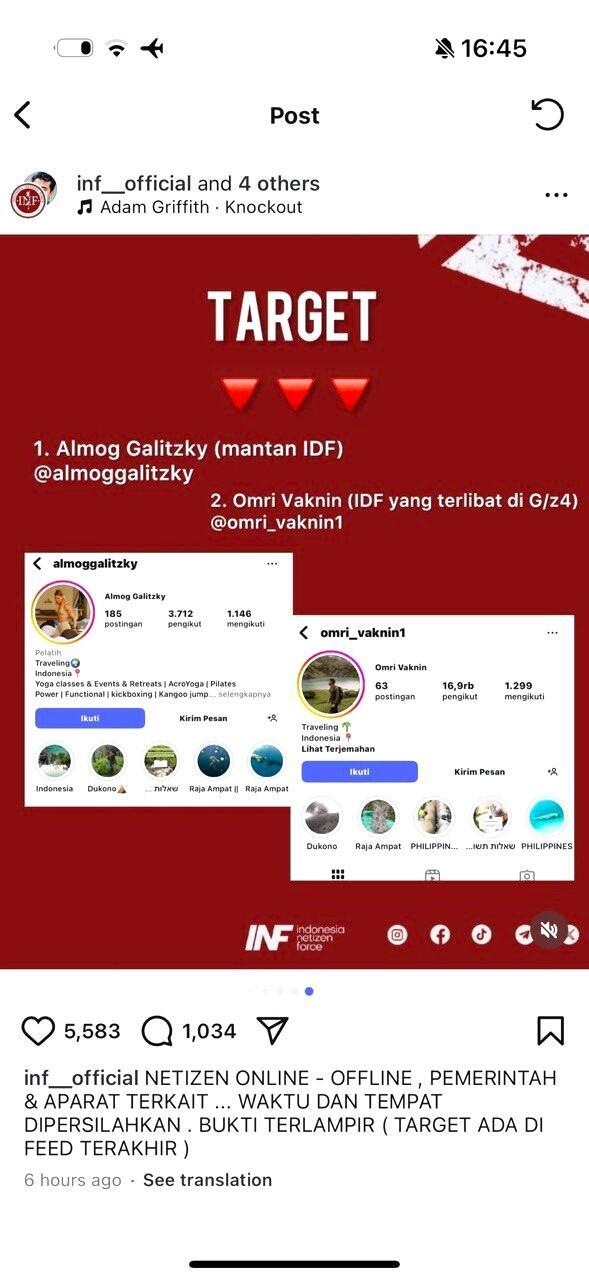
Omri Vaknin and Almog Glitzky, both 25, set out for a dream trip in Indonesia, entering on business visas to collaborate with hotels and explore the country. About six weeks ago, their journey was cut short when pro-Palestinian activists posted their photos, precise locations and calls to harm them.
Following the posts, Indonesian immigration authorities demanded their immediate departure. “We entered Indonesia with Israeli passports on business visas, a standard procedure allowing a two-month stay,” Vaknin told Ynet.
“Our Israeli agent and other Israelis we met there said it was fine to identify as Israeli. We traveled for a month, sharing content on Instagram that gained significant traction. Our videos went viral, reaching Indonesian Muslims, including through hotel collaborations.”
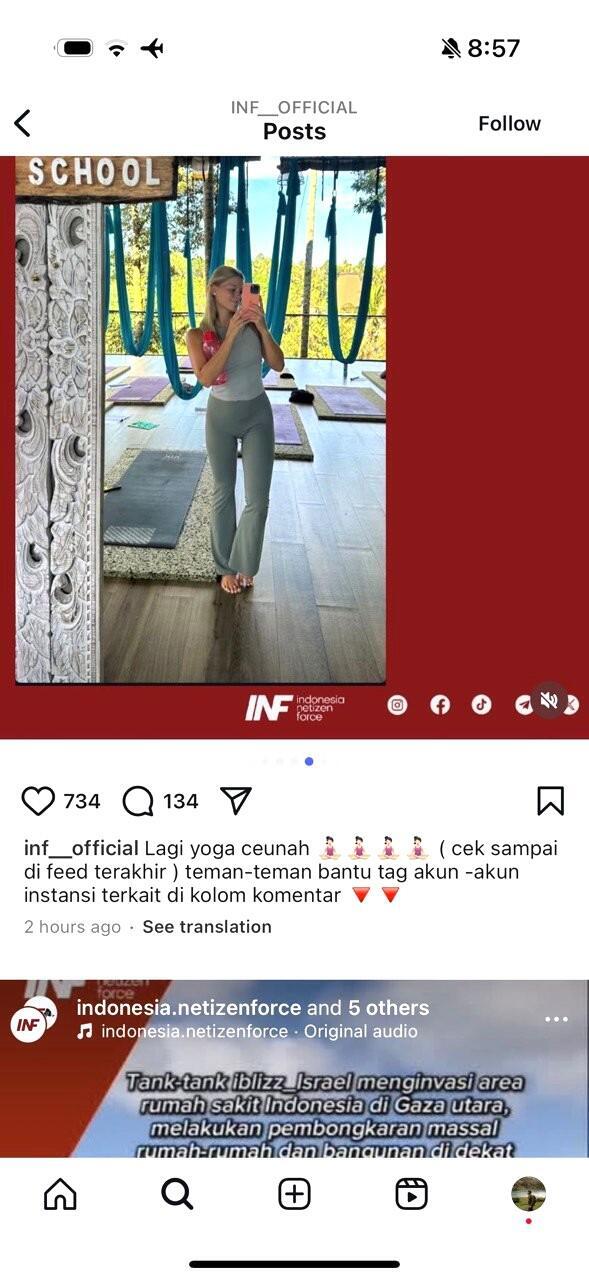
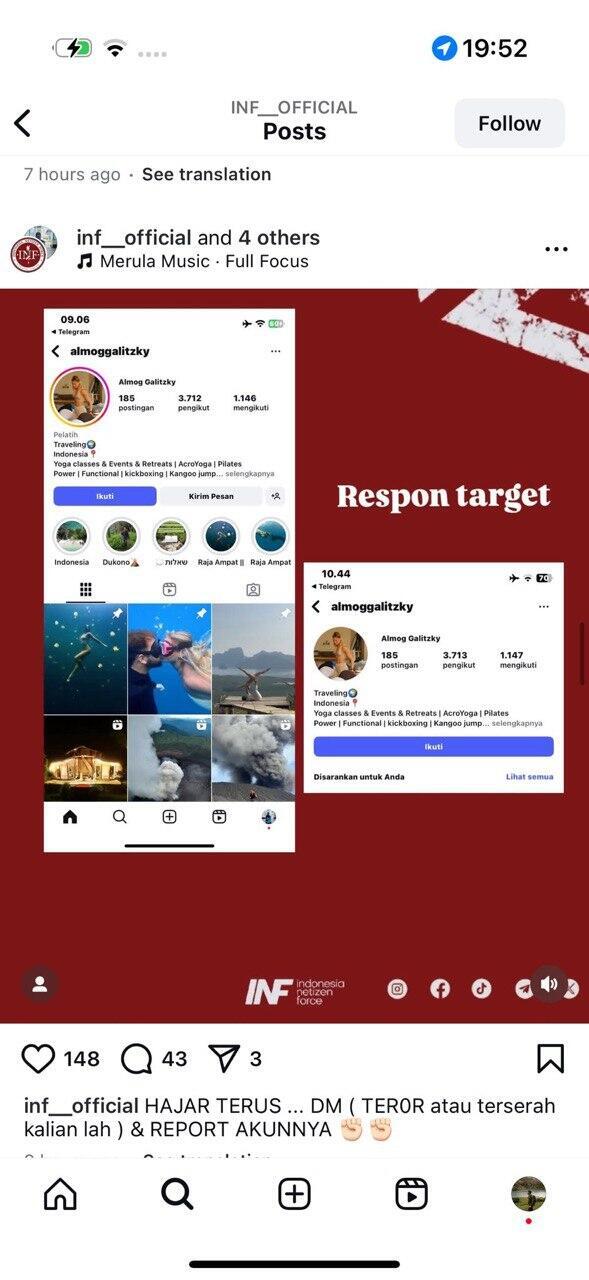
One day, the couple discovered a pro-Palestinian page had posted their photos alongside insults and their exact locations. “It started with abusive messages, then escalated rapidly,” Vaknin said. “They shared a post with our pictures, curses and locations. Almog was at a yoga course in Bali and posted a story with his location.
“They reposted it with the course’s exact coordinates, which was alarming. When they shared a photo of me from Gaza and Almog in uniform, it became overwhelming.” Despite assurances from their agent that the threats were merely online, the situation worsened.
(Photo: via Instagram)
The couple contacted “Hacosem,” (The Magician) an Israeli cybersecurity expert specializing in social media threats, who helped remove the posts and shut down some of the offending pages.
“That evening, I messaged Hacosem and he immediately stepped in,” Vaknin said. “He got the post deleted and the page was eventually closed. This has become a trend against Israelis and we still receive comments from Indonesians.”
Get the Ynetnews app on your smartphone: Google Play: https://bit.ly/4eJ37pE | Apple App Store: https://bit.ly/3ZL7iNv
Glitzky recounted how the situation deteriorated further when additional locations were shared online, culminating in immigration authorities canceling their visas. “The yoga studio manager told me two suspicious individuals showed up after I shared our situation,” she said.
“It was terrifying. Then our agent informed us that immigration had revoked our visas and we had to leave immediately. I broke down crying. It was tough.” The couple booked a flight to Australia within an hour, leaving with feelings of humiliation. “If we’d known this would happen, we would’ve acted differently to continue our trip,” Glitzky said.
“Locals we met, like our taxi driver to the airport, were supportive, apologizing for what we went through.” Since their ordeal, Indonesia has barred Israelis under 40 from entering on business visas.

Almog Glitzky and Omri Vaknin

Hacosem
Hacosem, a cybersecurity expert and owner of a company specializing in social media account recovery, has assisted dozens of Israelis facing similar threats abroad. He noted a dangerous trend that intensified after October 7, 2023, with pro-Palestinian groups systematically targeting Israelis.
“These groups identify Israelis abroad, post their details on platforms like Instagram and Facebook and mark them as targets, often with calls for physical harm,” he explained. “This is expanding and could become a broader trend because it’s so easy to do.
“With hundreds of thousands of followers, a few reckless individuals might act on these calls, making it a frightening and dangerous phenomenon.” While prominent in Indonesia, the issue extends to European countries like the UK and France, where Israelis remain unaware of the risks.
To avoid such incidents, Hacosem advised caution. “In Muslim-majority countries, don’t tag your locations on Instagram immediately,” he said. “People arrive in a new place and want to share instantly, making it easy for these groups to track them.
“In such countries, avoid real-time posts and consider sharing content only after returning home. If you face this situation, I can help and have always succeeded in resolving it.”
(Photo: via Instagram)

Digital nomad and Israeli blogger Uri Liron
(Photo: Uri Liron)
Uri Liron, a digital nomad and Israeli blogger with tens of thousands of followers, also faced online harassment after traveling in Indonesia. “A week ago, I woke up to find my account under attack,” he told Ynet. “It was hard to process. I received numerous death threats over a trip I took a year and a half ago, which I didn’t see as dangerous at the time.
“A news interview about my trip reached pro-Palestinian groups in Indonesia, who then targeted my profile.” Liron made his account private, restricted comments and continues to receive threatening messages.
“As a content creator sharing my life, I’m aware of the risks,” he said. “I post content with a delay, especially in places like Indonesia. It’s a price we pay as Israelis traveling in countries with hostility toward us. After my face was shared like that, I won’t return to Indonesia anytime soon, at least not until things change dramatically.”
First published: 14:26, 07.16.25