

Qantas is preparing to launch one of the world’s longest commercial flights, unveiling new details of its “Project Sunrise” service connecting Sydney and London without a stopover.
The ultra-long-haul route is scheduled to begin in October 2027, with ticket sales expected to open in February. The flight is expected to take between 19 and 21 hours, depending on winds and routing, cutting around four hours compared to current one-stop itineraries via hubs such as Singapore.
Gallery
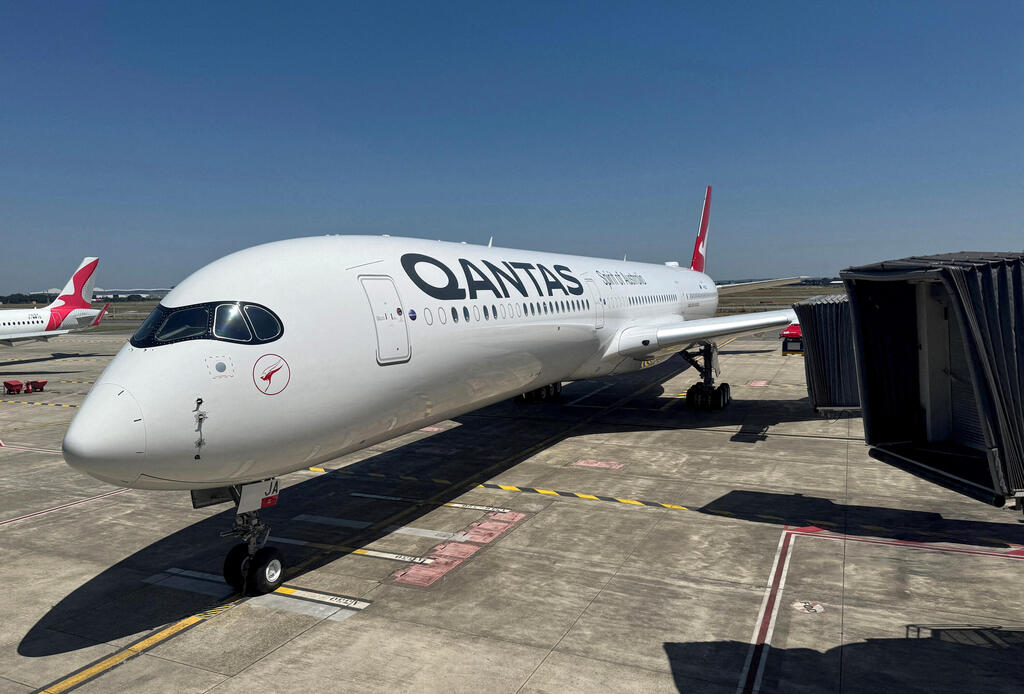
Australia’s Qantas unveils the first of 12 Airbus A350-1000ULR aircraft, specially configured for ultra-long-haul direct flights, at a ceremony held at Airbus headquarters in Toulouse
(Photo: REUTERS/Tim Hepher)
Today, travel between Sydney and London typically takes 24 to 25 hours. According to Qantas, around a quarter of the flights will operate on polar routes over the Arctic, particularly during winter months in the Northern Hemisphere.
The service will be operated using specially configured Airbus A350-1000ULR aircraft, designed for extended endurance missions of up to 22 hours. Each aircraft will carry 238 passengers, with Qantas ordering 12 planes in total, half of which will be used on routes including Sydney–London and Sydney–New York. The project was originally announced before the COVID-19 pandemic but delayed due to industry disruption and supply chain issues.
Wellness-focused cabin design
To address the physical strain of nearly a full day in the air, Qantas has spent years working with sleep scientists, nutrition experts and health researchers.
Professor Peter Cistulli, a sleep medicine specialist at the University of Sydney involved in the research, said crossing seven to nine time zones to London and up to 16 on New York routes creates a significant biological challenge.
He said experiments showed that careful meal timing — including avoiding immediate post-takeoff food service — and tailored lighting designed to create a “protected sleep window” significantly improved passenger alertness compared with standard long-haul flights.
First class and business class on the Airbus A350-1000
(Video: Qantas)


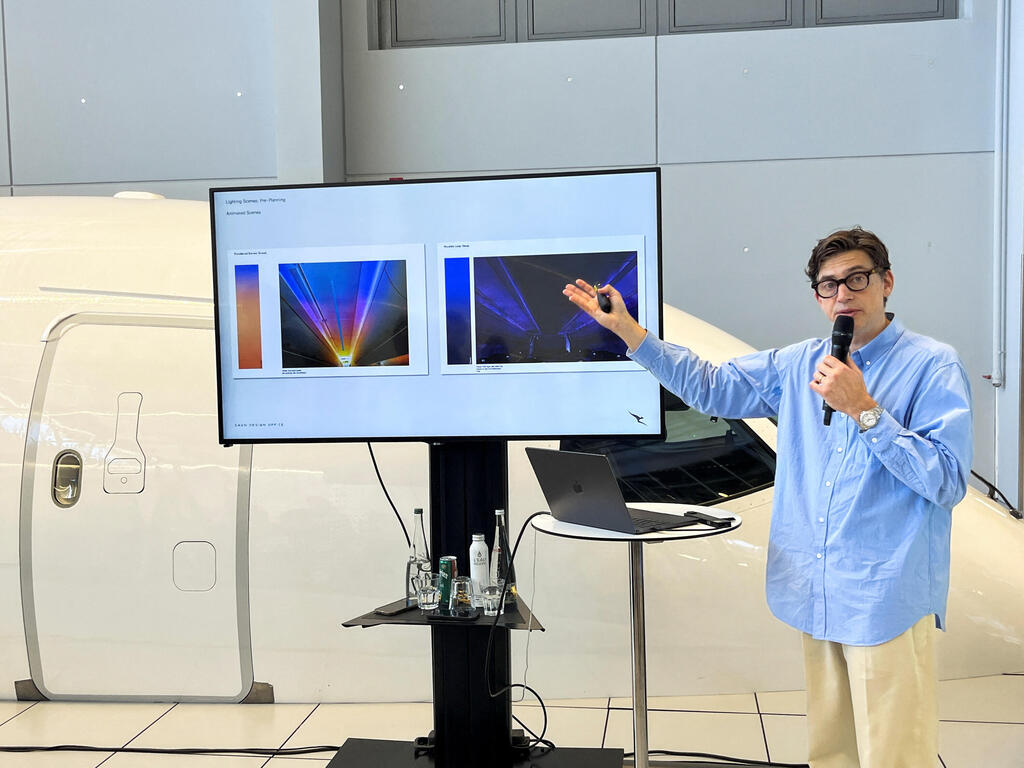
Industrial designer David Caon presents the dynamic cabin ambient lighting concepts
(Photo: REUTERS/Tim Hepher)
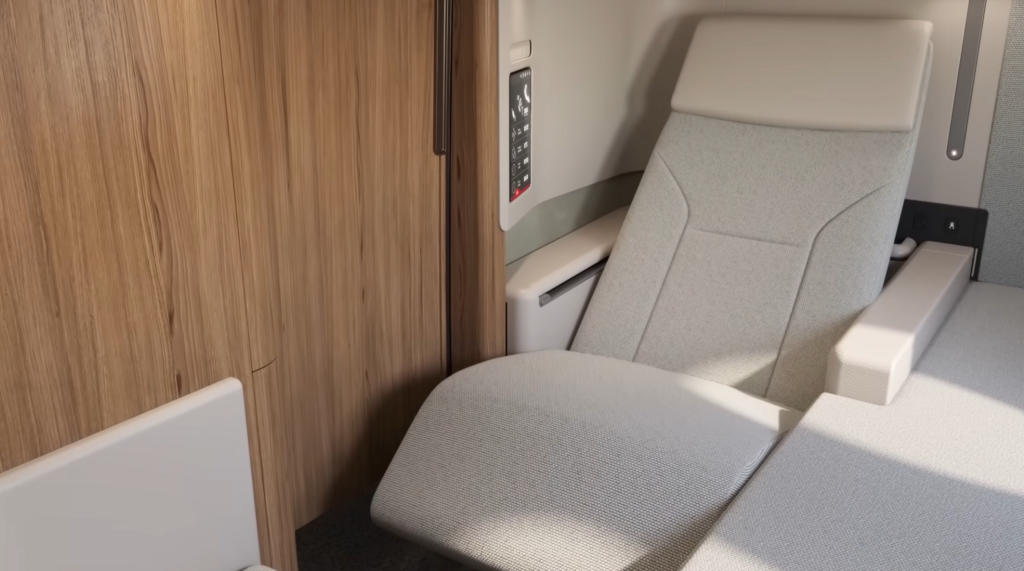
First class in the simulation stage
(Photo: youtube / @Qantas)
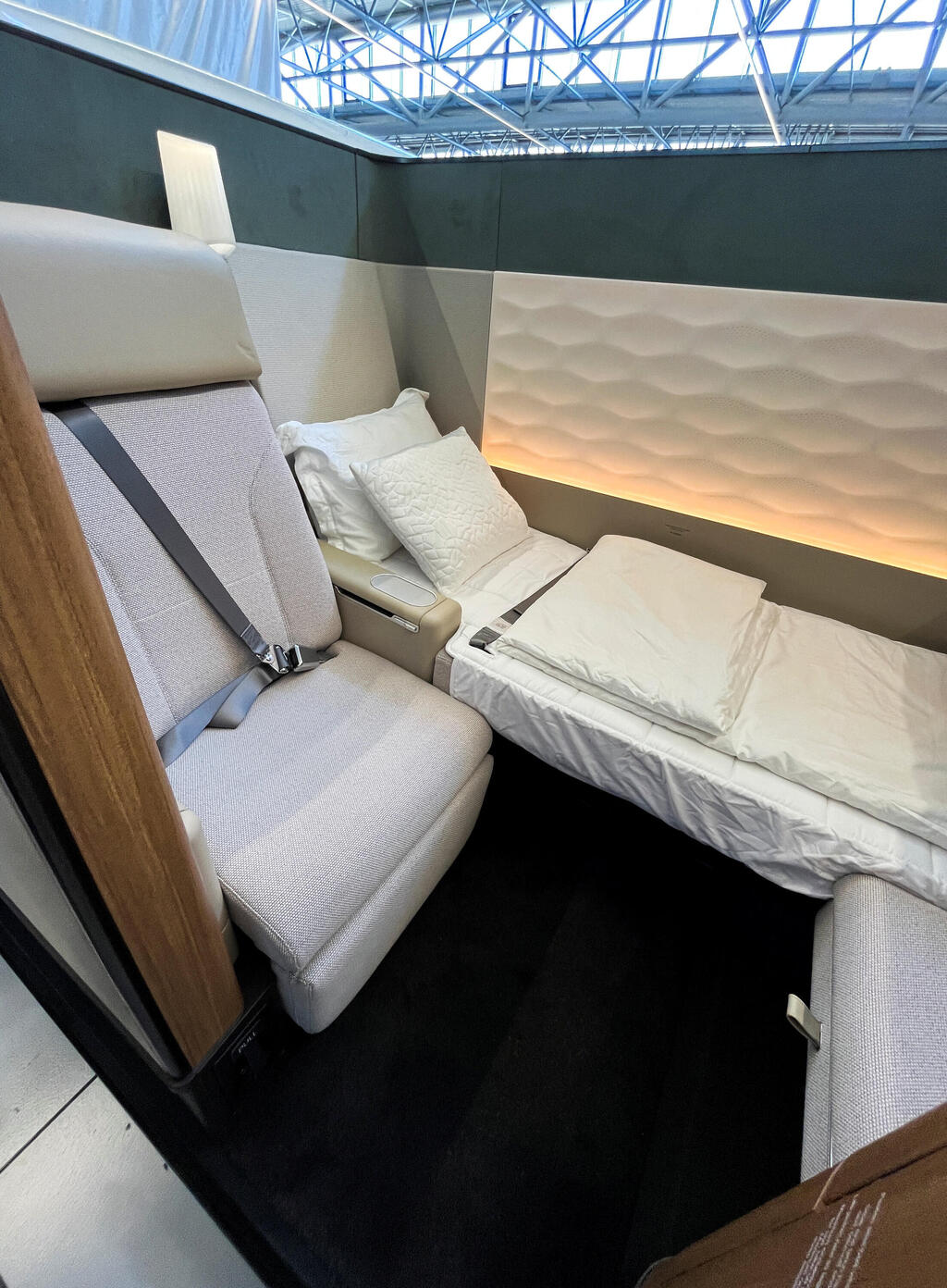
And this is how it already looks in reality, in a demonstration carried out by the Australian airline
(Photo: REUTERS/Tim Hepher)
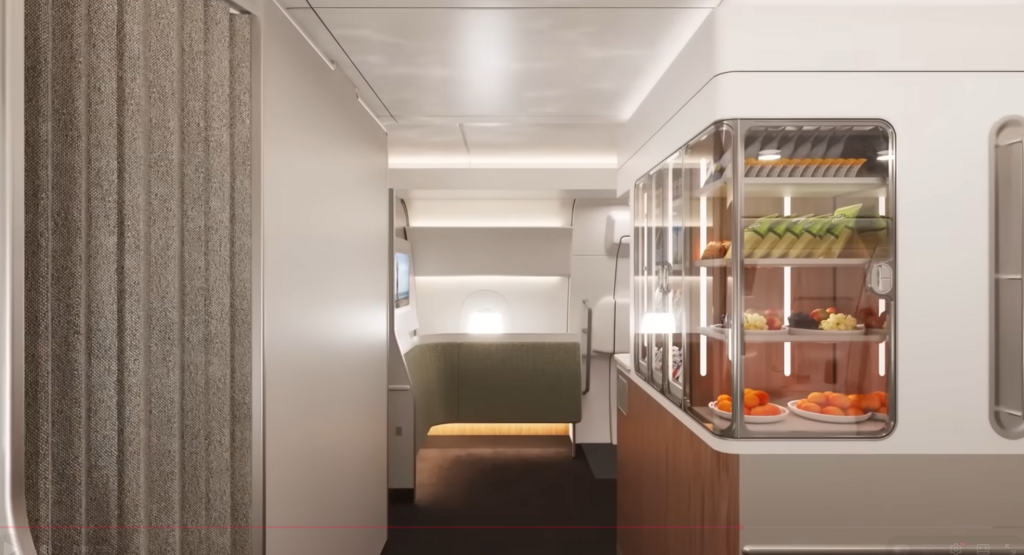
Simulation of the wellness area
(Photo: youtube / @Qantas)
Lighting, sleep and 'wellness zone'
Industrial designer David Caon, who worked on the cabin concept, said he was asked to approach the project as a health and science challenge rather than a purely aesthetic exercise.
Among early concepts considered but not adopted were exercise bikes and yoga mats. Instead, Qantas included a dedicated wellness zone designed for stretching and movement, with soft, diffuse lighting intended to create a calming environment. Caon said the aim was to recreate the feeling of lying beside a swimming pool.
Elsewhere in the cabin, dynamic lighting will simulate sunrise and sunset, moving gradually through the aircraft from front to back. The system includes 14 programmed lighting scenarios inspired by Australian landscapes.
Cabin layout and pricing expectations
In economy class, seat pitch will generally be 84 cm, with some rows slightly tighter at 81 cm, clearly disclosed at booking. A premium economy section will offer 86 cm of legroom, while first-class suites at the front of the aircraft will include enclosed seats with fully flat beds.
Qantas estimates passengers may be willing to pay around 20% more compared with flights involving stopovers, similar to premiums already achieved on its Perth–London route.
However, passengers interviewed by Reuters said that while time savings are attractive, comfort and price will remain decisive factors for a journey lasting nearly a full day.
Project Sunrise represents a multi-billion-dollar investment in aircraft, cabin design and research aimed at improving passenger wellbeing. Qantas expects the route could add more than 400 million Australian dollars annually to its earnings.
The project is named after the airline’s “Double Sunrise” flights during World War II, which were so long that passengers and crew saw two sunrises during a single journey.
After launching the Sydney–London route, Qantas also plans to introduce direct flights from Sydney to New York.