

The sun was beginning to set beyond the snow-covered mountains of southern Chile when Opal Seror, 22, an energetic travel blogger from Haifa, began to realize something was wrong. Her phone battery was dead, the marked trail had disappeared and she was lost.
“It was the closest I have ever come to death,” she recalls. “You try to go down, and there’s a black cliff. You try from another place, and there’s another cliff. You walk back and forth, looking for the way as the sun is setting, and then suddenly you understand that you are really stuck.”
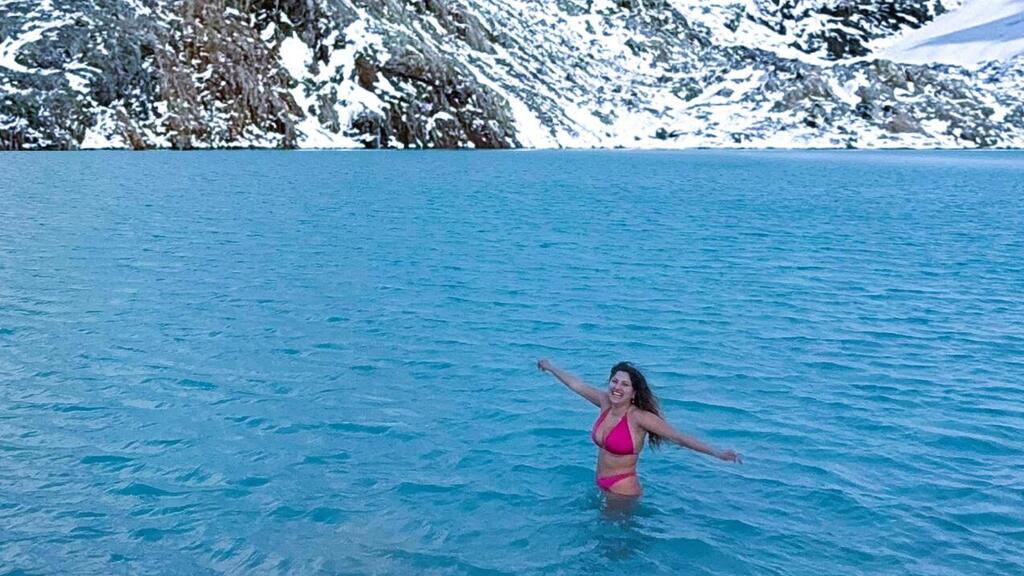
The tense survival drama of the young backpacker began like another routine day on the post-army trip. She and another friend set out on a hike in an unmarked area of Conguillío National Park in Chile and decided to veer off the main trail to look for a hidden ice cave they had heard about from other travelers.
“We were already really high up the mountain after visiting the cave, and when we tried to go back, we simply lost the way,” she says. “The scariest thing was that you had no idea where you had come from. You are sure you came up from a certain place, but when you try to go down, you discover it is actually a cliff you could roll down into an abyss.”
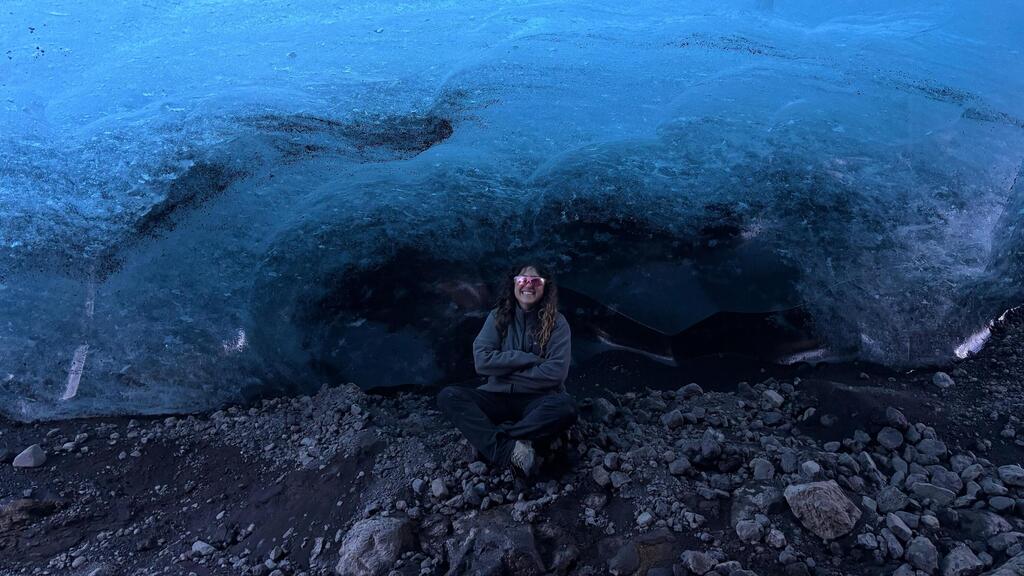
Opal in the hidden ice cave
(Photo: Courtesy of Opal Seror)
Slowly, the light disappeared, the pressure grew and fear became paralyzing. In the short time left before total darkness, resourcefulness and clear thinking became the basis for survival.
“The friend who was with me still had a little battery left,” she recalls. “He had taken a few pictures of the scenery along the way, so we started trying to reconstruct from them where we had come from. We looked and said: ‘OK, the waterfall was on the left, so now it should be on the right.’ It was really a survival situation.”
Then came the moment of rescue. “Suddenly we found cairns — piles of stones that mark a trail. I remember just looking at those stones and laughing with happiness. Then it became completely dark, and suddenly a full moon appeared and lit our way down. Without that moon, I honestly don’t know how we would have gotten down.”
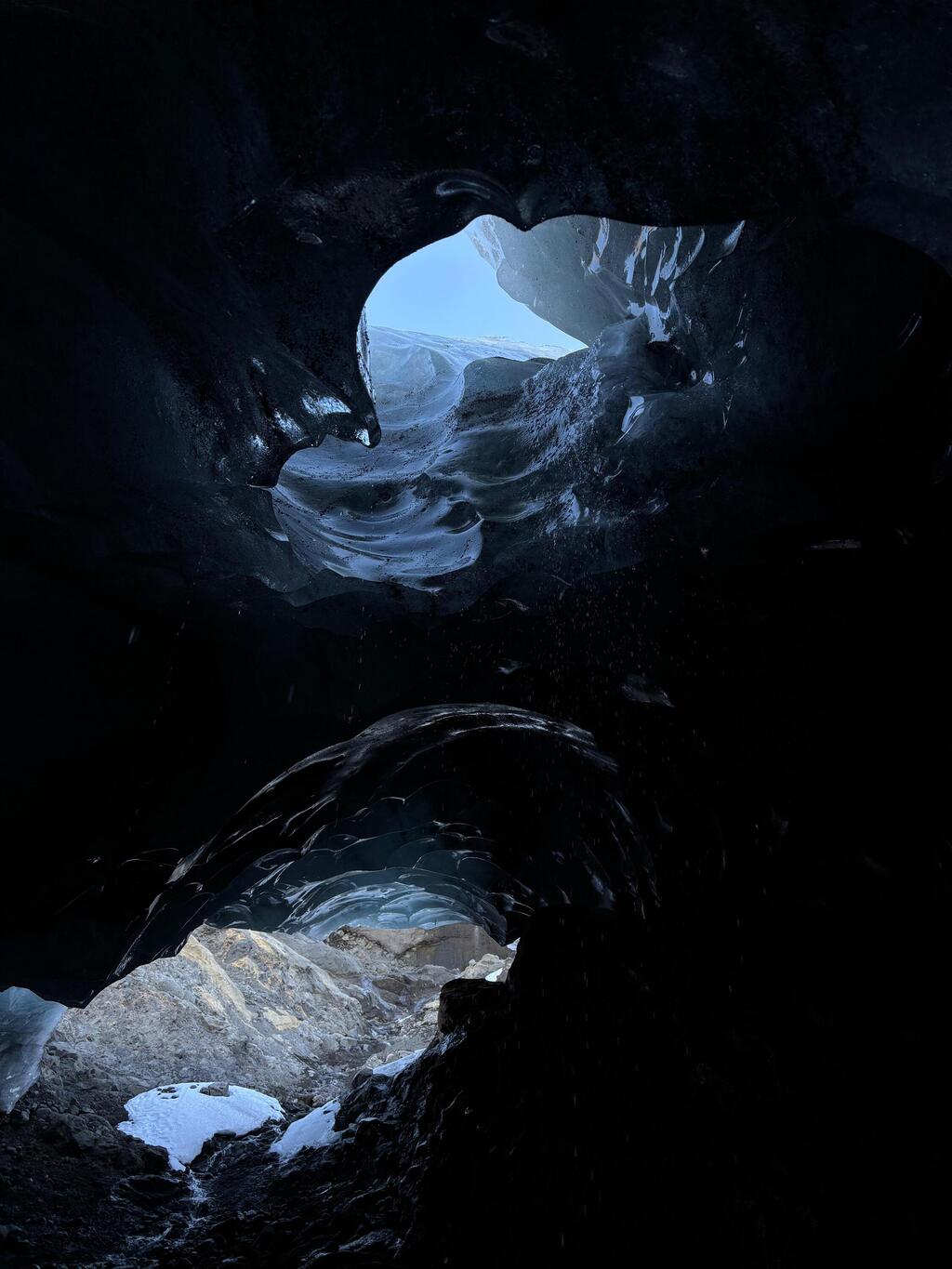
It could have ended differently
(Photo: Courtesy of Opal Seror)
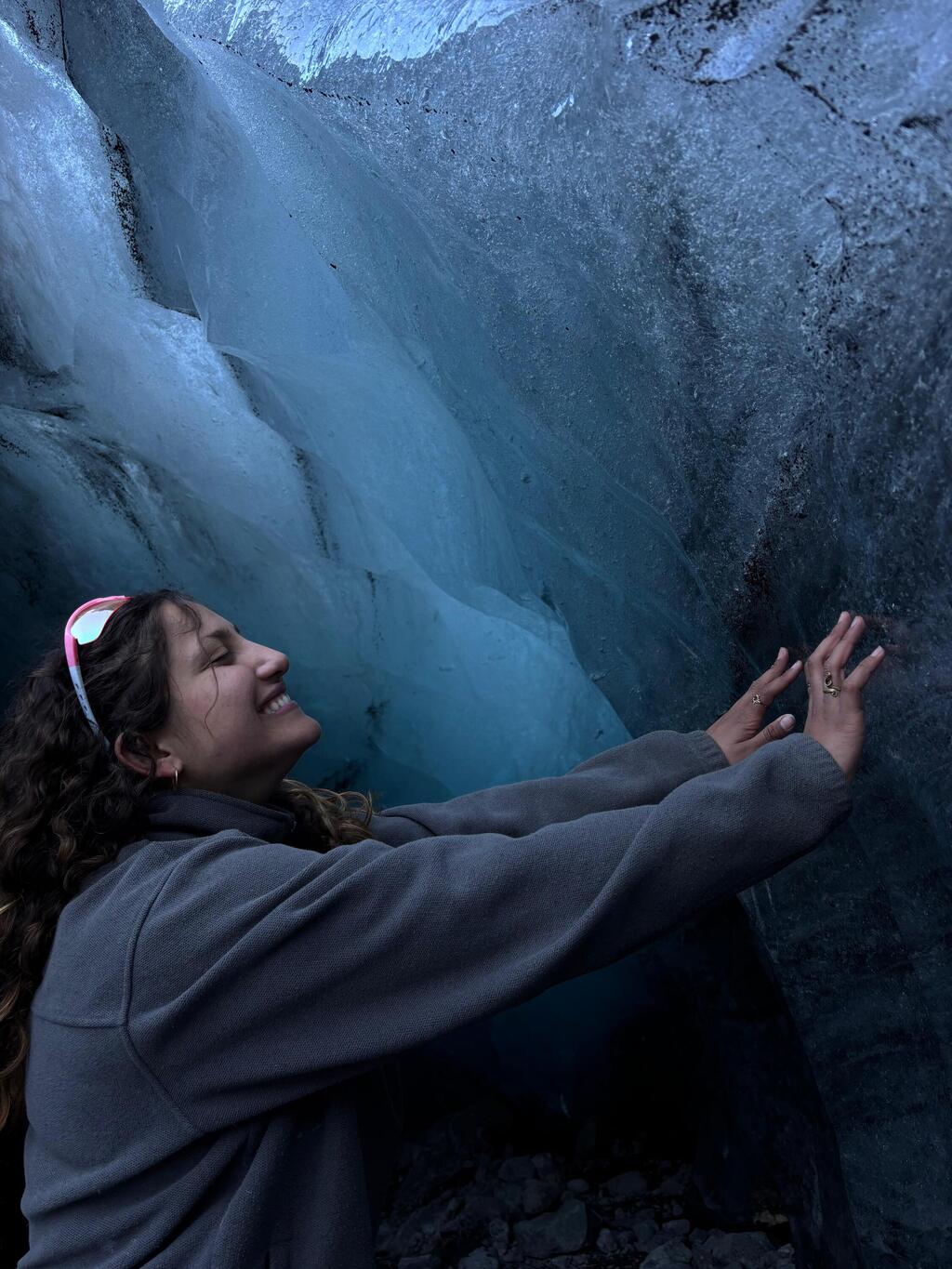
The hidden ice cave
(Photo: Courtesy of Opal Seror)
Opal may be only 22, but the wider world has long since become her second home. Even before her army service, she had traveled alone in the United States and Southeast Asia, and today she has already been crisscrossing South America for four months — sleeping in wet tents, hitchhiking with truck drivers and seeking out routes far from the Israeli “hummus trail.”
“There are people for whom travel is what does it,” she laughs. “The more you travel, the more you understand how little you know, and how much more you want to see of the world. I don’t have countries where I say, ‘I’ll save that for 40.’ I don’t save things for later. Anything I can do now, I do.”
Opal’s love of travel began long before her success on Instagram. “As a child, I flew abroad for cycling competitions, and I found myself alone in other countries from a young age. Competitive sports really built my independence.”
Later, while traveling, she also discovered the world of content creation and photography. “I found myself documenting endlessly,” she says. “Then I asked myself why I was photographing so much. I felt there was something bigger I wanted to do with everything I was experiencing.”
That is how her intriguing travel page was born, combining dips in freezing lagoons, extreme treks and less glamorous moments, like difficult nights when rain pounds the tent for hours.
“There are moments when you wake up in the morning and all your gear is wet,” she laughs. “The clothes don’t dry, it’s cold at night, and you say to yourself: Why am I even doing this?” But then morning comes, and a new day of adventures on the other side of the world begins. “I see the view from the tent, and my eyes can’t process that it’s real,” she laughs.
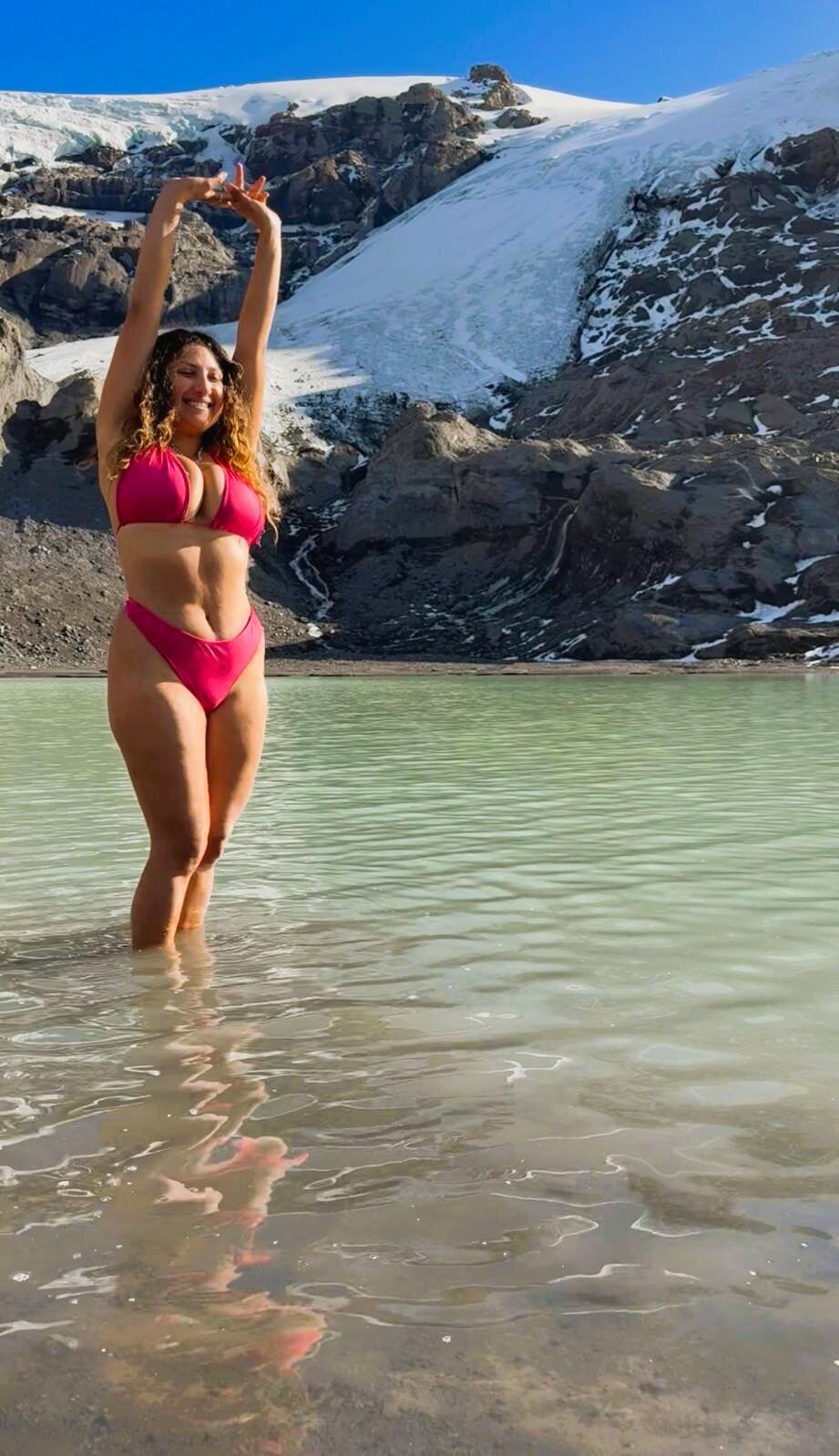
Opal, crossing South America from lagoon to lagoon
(Photo: Courtesy of Opal Seror)
Conguillío Park is considered one of the most impressive and wild natural sites in southern Chile. Located in the Araucanía region at the foot of the active Llaima volcano, the park combines ancient forests, frozen lakes, black lava fields and dramatic landscapes that sometimes look like another planet. In recent years, it has become a particularly popular destination for trekkers and adventurers seeking less touristy routes, hidden ice caves and breathtaking views of the Andes and the glaciers of southern Chile.
Just moments before she got lost in Conguillío Park, Opal fulfilled a dream and entered a mysterious ice cave in the heart of the glacier.
“It was one of the most beautiful things I have seen in my life,” she says. “There is this insane blue light coming in, waterfalls inside the glacier, huge spaces and holes that turn into waterfalls. Your eyes can’t grasp that it’s real.”
According to her, the magical ice cave cannot be spotted from the marked trail. “You don’t know it exists until you actually reach its entrance. And suddenly you are walking inside the glacier for 20 minutes, and every few meters it becomes even more beautiful.”
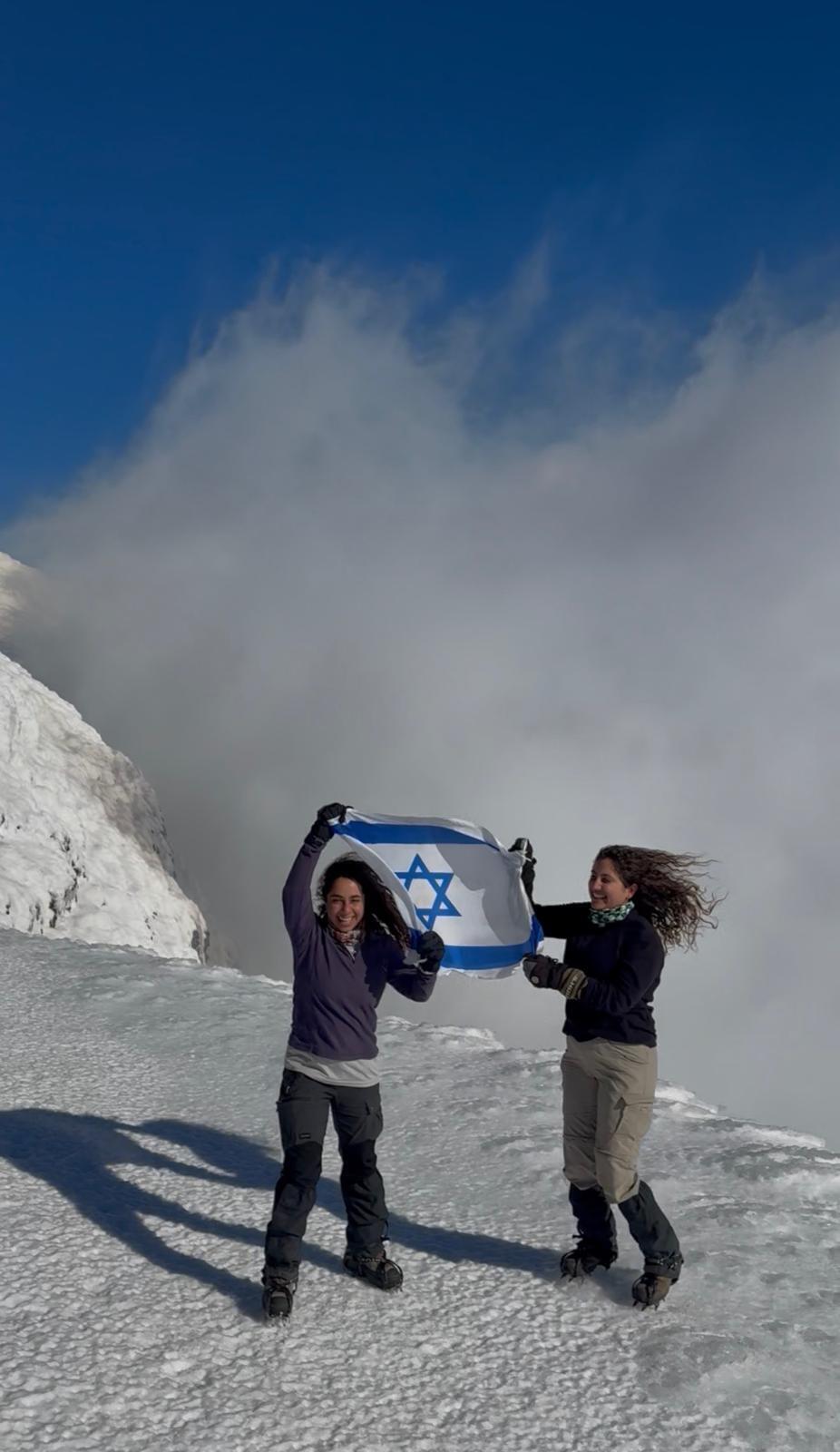
With the flag on a volcano in Chile
(Photo: Courtesy of Opal Seror)
If the young Israeli had to be defined in a few words, “a fan of dips in freezing water” would be an accurate description. “Every frozen lagoon I reach on a trek — I go in,” she laughs. It actually began on hikes in Israel. “I went into the Banias in winter and the coldest streams in the country, and then I realized it gave my body an incredible feeling.”
According to her, the first moment in the water is always difficult. “Your pulse shoots up like crazy, so either you run away immediately, or you stay and start breathing. Then, after a few minutes, you suddenly calm down inside the cold.”
The feeling afterward, she warns, is addictive. “You come out of the water and your whole body feels alive. There is an insane euphoria. Really like drugs. I also read studies about it — the body is flooded with dopamine.”
At home in Haifa, her family has learned to live with her madness. “My father is the most supportive person in the world,” she laughs. “He is very extreme himself, loves treks and challenges, and he always wants another destination for me. My mother is the complete opposite. Every time I have no reception, she gets stressed. Every phone call ends with, ‘So, when are you coming back to Israel?’”
But alongside the landscapes and backpacker adventures in South America, there are also unpleasant moments, especially in the current period. “There is this silence the moment I say I’m from Israel,” she sighs. “Sometimes I already prefer not to say I’m Israeli so as not to get into an uncomfortable situation.”
According to her, in southern Chile one can strongly feel the combination of authentic and justified anger over fires caused in the past by careless Israelis in national parks, together with a pro-Palestinian political atmosphere.
“At the entrance to parks, they immediately warn me to avoid lighting fires — and after they hear I’m from Israel, there are these looks of suspicion.”
That political tension can emerge unexpectedly during the trip, at any time of day. In one case, for example, a truck driver who picked her up at the border between Argentina and Chile introduced himself as Palestinian.
“He told me his father was from Lebanon and asked me whether I had a ‘good heart or a bad heart,’” Opal says. “For two hours, I simply explained Israel in Spanish.”
Spanish, incidentally, has nearly become a second language for her. “I speak with locals all day, and there are situations where I forget English. Every new word I learn, I immediately write in the notes on my phone.”
Opal speaks honestly about my concern over her frequent hitchhiking, sometimes on completely isolated roads. “I’m a woman, of course it’s scary sometimes,” she says with a smile. “I get comments, I feel it, but I am not prepared to let it limit me.”
She also has one particularly unpleasant example: One night in Brazil, a taxi driver who was driving her began making disturbing comments. “He told me maybe he wouldn’t drop me off at my destination at all. I just became cold, stopped talking to him and only wanted the situation to end.”
Still, she has no intention of stopping. “When you find yourself in real situations of difficulty or fear, you suddenly understand how our regular problems in life are not really problems. It puts everything into perspective.”
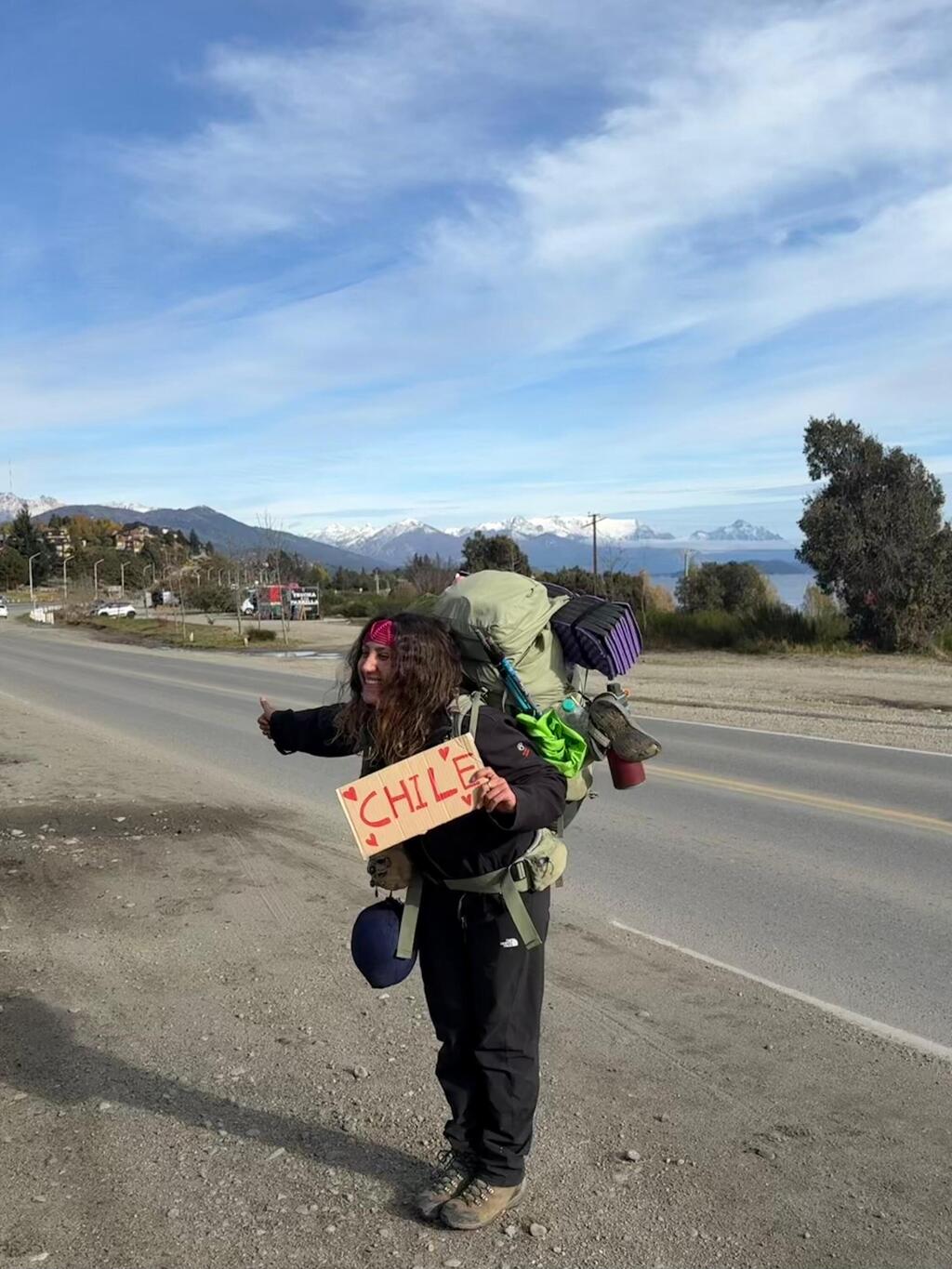
Hitchhiking
(Photo: Courtesy of Opal Seror)
During her trip in Tierra del Fuego, Opal met a young Chilean man who encouraged her to leave the Israeli “hummus trail.” The two met during the Torres del Paine trek in Patagonia, one of the most famous routes in South America.
“I went out on the trek with a fever of 40 degrees Celsius, there was a storm, I hitchhiked and I had no idea how I would survive the first day.”
Vladi, the Chilean, helped her reach the first camp on the trek safely, and from there the connection between them developed quickly. “He was actually working at one of the camps along the route, but he took days off to keep traveling with me.”
Later, he invited her to travel in the area where he lives, near the town of Pucón in southern Chile. “He told me, ‘There is much more here than what all the Israelis know’ — and that is exactly what happened.”
For her, traveling with the Chilean man completely changed the way she experiences South America. “When you travel with locals, you see everything differently,” she says. “Suddenly you are not just moving between attractions — you see how people really live, you reach places that don’t appear in any guidebook and eat in places you would never have reached on your own. There is a lot of fun in the ‘hummus trail,’ in Israelis and the laughs, but when you leave it, suddenly every landscape takes on more meaning.”
And while many people her age are already thinking about a steady job or an apartment, Opal, who has a yacht license, is planning to cross the Pacific Ocean.
“My dream is to reach New Zealand by boat,” she says. “I simply want to keep seeing the world for as long as I can.”