

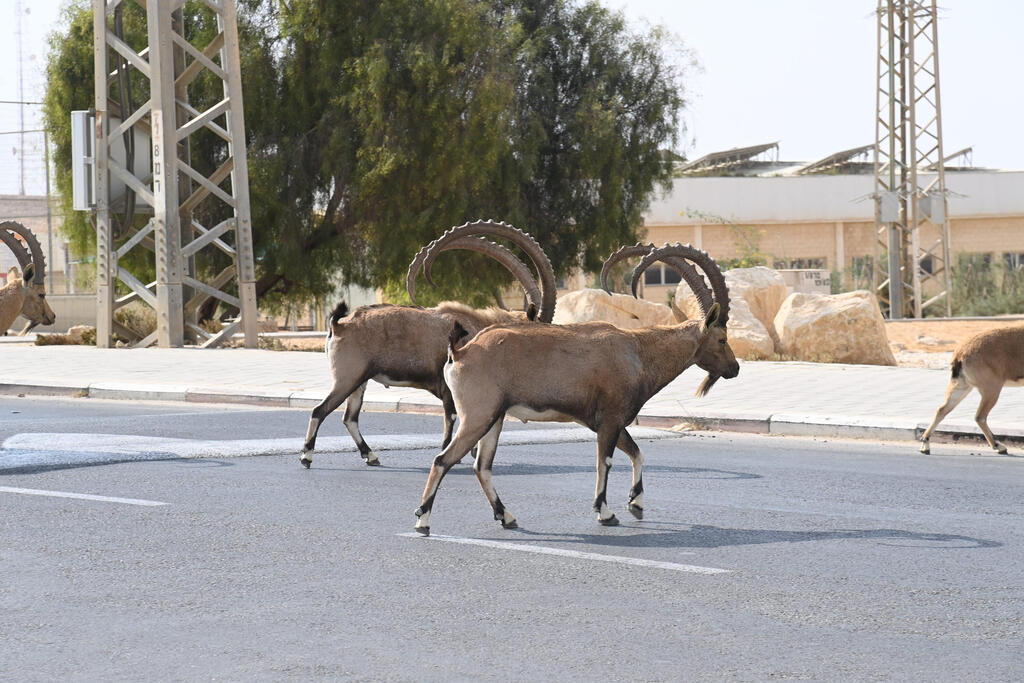
A herd of Nubian ibexes ambles across Ben-Gurion Boulevard in Mitzpe Ramon. A male ibex with majestic horns leads the way with calm authority, while drivers patiently wait for the last ibex to cross. Not a single horn is honked. It’s one of the many magical moments I experienced during a two-day stay in this quiet town perched on the northern rim of the Ramon Crater, set to mark its 70th anniversary in the coming year.
After just 48 hours, it was clear how Mitzpe Ramon became a magnet for artists, spiritual seekers, and anyone yearning for change, escape, insight or silence. “It’s a kind of bubble; the distance, the darkness, the stars, the wild nature let you breathe,” says Rachel Hevroni, owner of Uma, a café-gallery-shop hybrid.
We join a walking tour through the Spice Route Quarter with culinary tour guide Adi Rosen, who tells us, “Some places feel like an open heart; Mitzpe Ramon is one of those.” The unofficial 'king' of the quarter is Sami Alkrinawi, who arrived here 35 years ago. Born in Tel Arad, his is a remarkable success story. He started out working at a gas station and gradually became a tourism entrepreneur, hosting thousands of evacuees after October 7.
“What makes Mitzpe Ramon special is the air, the calm, the people and the good vibes,” he says. “You can really breathe here. The view expands your heart, and the crater is a wonder.” Over the years, Alkrinawi has transformed industrial hangars into entertainment and hospitality venues. In a few months, he plans to open Hotel HaRova (“The Quarter”), alongside a hummus eatery and an Italian restaurant.
Since the COVID era, Mitzpe Ramon has only grown in appeal. Here are a few standout new spots, plus some old favorites:
A taste of Paris in the desert
Chef and pastry artist Gal Yisraelovitch-Meirovitch's body is adorned with tattoos of a Swiss chard leaf and a cherry tomato vine, with radishes and artichokes decorating his right arm. “I got them to feel healthy every morning,” he jokes. These vegetables also appear in the excellent savory pastries and salads he makes.
Gal is part of a collective that includes chefs Avishai Nagar and Sharon Brick, musician Sharon Maor and graphic designer Yinon Biton. Together, they run “Sumsumiya” restaurant, the “Sitar” guesthouse, and now “Man - Bakery Desert.” The name recalls the biblical manna, an edible substance bestowed upon the Israelites while they were wandering the desert, following the Exodus.
“I love the desert and realized I had to live here,” says Yisraelovitch-Meirovitch, who grew up in Rosh Ha’ayin and worked in the dining hall of Kibbutz Lotan. “I'm really a metalhead, so I don’t know how I ended up baking. But I love the focus and determination it demands.”
The newly opened Man is designed in desert tones and offers outdoor seating under a pergola. The kosher menu, boldly displayed on the wall, changes based on available ingredients and the chef’s mood. Highlights include cinnamon brioche, both sweet and savory croissants, and gourmet sandwiches.
“My favorite is the semolina cream, orange blossom water and pistachio croissant,” says the chef, who cites famed French pastry chef Pierre Hermé as a role model. “The almond pastries are the most popular. On Fridays I bake traditional challah for people to take home for Shabbat dinner. It’s much harder to bake in the desert as the weather has a big impact. In August, it took me time to adjust the air conditioning until I found the right baking temperatures.”
Prices range from 12 to 42 shekels.
Man – Bakery Desert, 8 Har Ardon Street
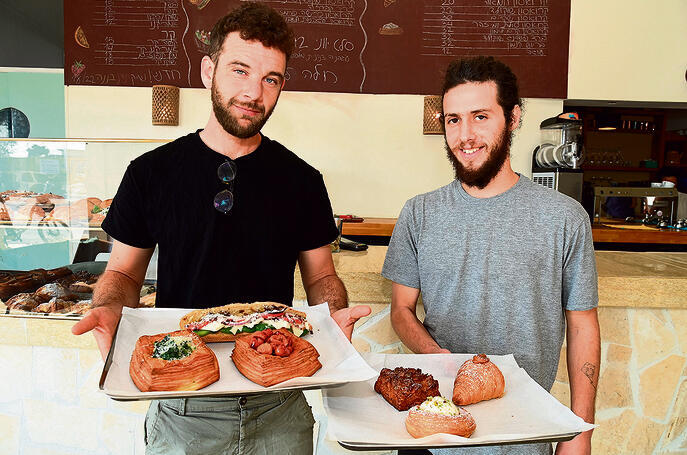
Man-Bakery Desert. Ccroissant with semolina cream, orange blossom water and pistachio
(Photo: Hertzel Yosef)
Cooking only with local ingredients
BOTZ, a chef-driven restaurant in the heart of the desert, is the creation of Tal Ashkenasi, formerly sous-chef at Tel Aviv’s OCD restaurant, who also worked in Michelin-starred European kitchens and rural Japan, and Omer Seltzer, who grew up in the world of desert hospitality, open-fire cooking, and traditional culinary methods.
“Our partnership brings out something authentic and almost ancient,” they explain. “We share one core belief: cook only with local ingredients. The big suppliers take Route 90, not passing through Mitzpe, which pushed us to work with local producers.”
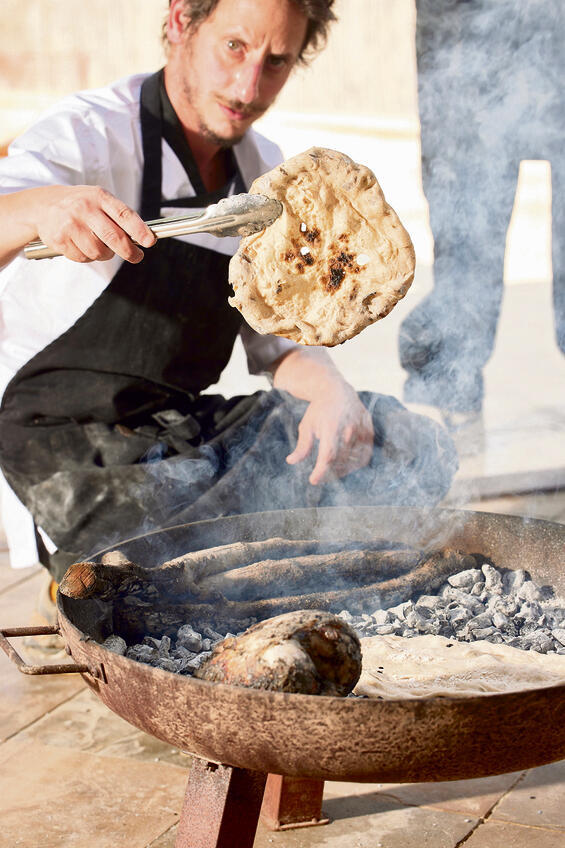
BOTZ. Two chefs cooking in the desert
(Photo: Afik Gabay)
The intimate space seats just 20 and features ingredients like yogurt stones from Bedouins in Wadi Attir, vegetables and cheeses from desert farms, and a wine list focused on ecologically grown natural wines. The tasting menu costs 450 shekels per person and changes regularly.
Signature dishes include fire-roasted vegetable gnocchi, coal-baked bread with spicy condiments and olives, goat tartlets, smoked chicken breast, lamb with pkaila and papaya amba.
“We want to offer people top-level cuisine with locally sourced ingredients and the soul of those who work the land and embrace both its hardships and tenderness."
BOTZ, 5 Har Oded Street
Dumplings, rice and salads from the Caucasus
Ultra, a kosher restaurant soon celebrating its 10th anniversary, is worth visiting not only for the rich flavors but also for the personality of its chef and owner, Shlomo Davidov. Known for his warm humor and house rules, Davidov declares: “Rule number one is health. I always check for allergies, especially in kids. Two: freshness. Three: if guests don’t finish their food, they can’t leave. I pack it up for them. It’s a shame to waste."
Davidov, along with his wife Asia and sister Rita, immigrated from Dagestan in the early 1990s. In his homeland, he was a barber and musician. “We came to Mitzpe Ramon because of my aunt. People here welcomed me warmly. Before opening the restaurant, I worked guard shifts at the tank factory and performed with a band."
Since 2016, Ultra has served both grilled meats and traditional Caucasian dishes and pastries. Favorites include chebureki (deep-fried meat-filled pastries), dumplings called dushpera, and plov (a rice and meat dish). “I also make rice dishes from other Jewish traditions,” he says. In winter, he offers soups including a green borscht with asado.
The salads are a highlight too, especially the mushroom salad. “I don’t charge for salads. Everyone comes to the salad bar and picks what they want. You won’t find this anywhere else in the country."
Dishes range from 25 to 140 shekels.
Ultra, 8 Har Boker Street
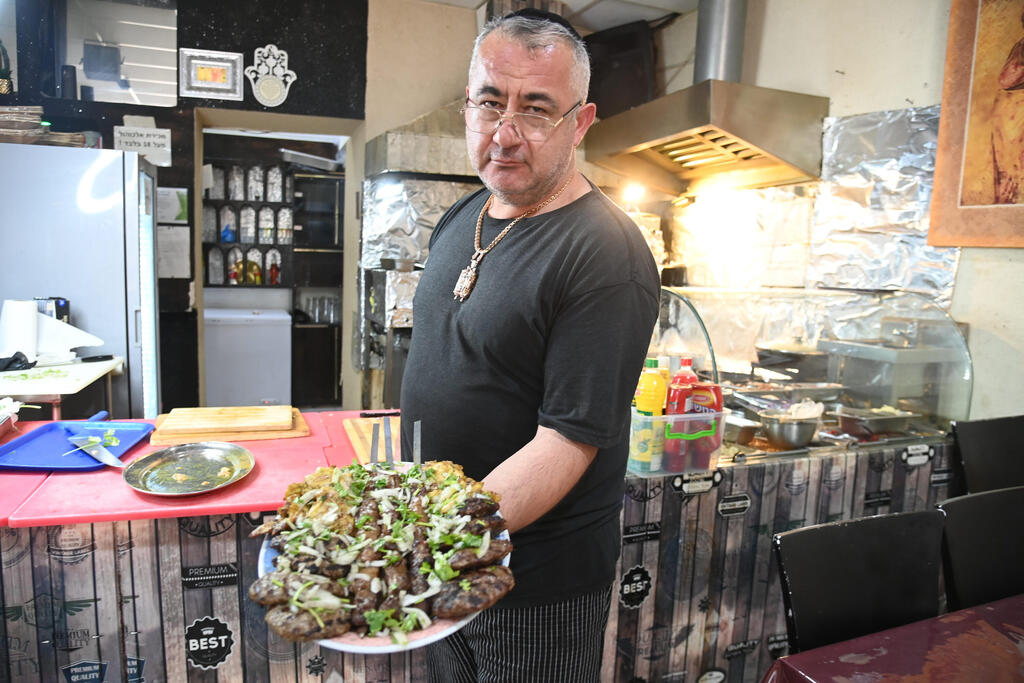
Ultra. Salads are free of charge
(Photo: Hertzel Yosef)
Fine cuts and inventive cocktails
Chefs Avishai Nagar and Sharon Brick, who moved to Mitzpe Ramon from Kibbutz Afikim, opened Sumsumiya five years ago, naming it after a traditional Bedouin string instrument, a large painting of which adorns the central wall. A real sumsumiya also hangs nearby.
The menu is refreshingly straightforward: smoked eggplant fillet, quinoa and cranberry salad, vegan arayes, crispy gnocchi, sea bass fillet, schnitzel, and a selection of premium meats, all generously served. Among the visitors: actor Brett Gelman of Stranger Things, who became a vocal supporter of Israel after October 7. “We focus on doing the basics, done right,” says Nagar. “When you’re cooking for 600 people, there’s no time for nonsense. I enjoy creating an experience that suits everyone. During the week, we offer specials, sometimes with a Mexican twist. I lived in Mexico for years and brought those influences with me."
Pair your meal with one of the creative cocktails crafted by Azima, the restaurant’s manager. “I try to match the drinks to the food and the desert vibe,” she explains. “Our signature cocktail, the Timinsky, is thyme-based with a hint of spice. We don’t dance on tables, but the atmosphere is lively, especially on Fridays. Sometimes we host parties and events."
Sumsumiya is open evenings and Saturday afternoons.
Sumsumiya, 7 Nahal Tziah Street
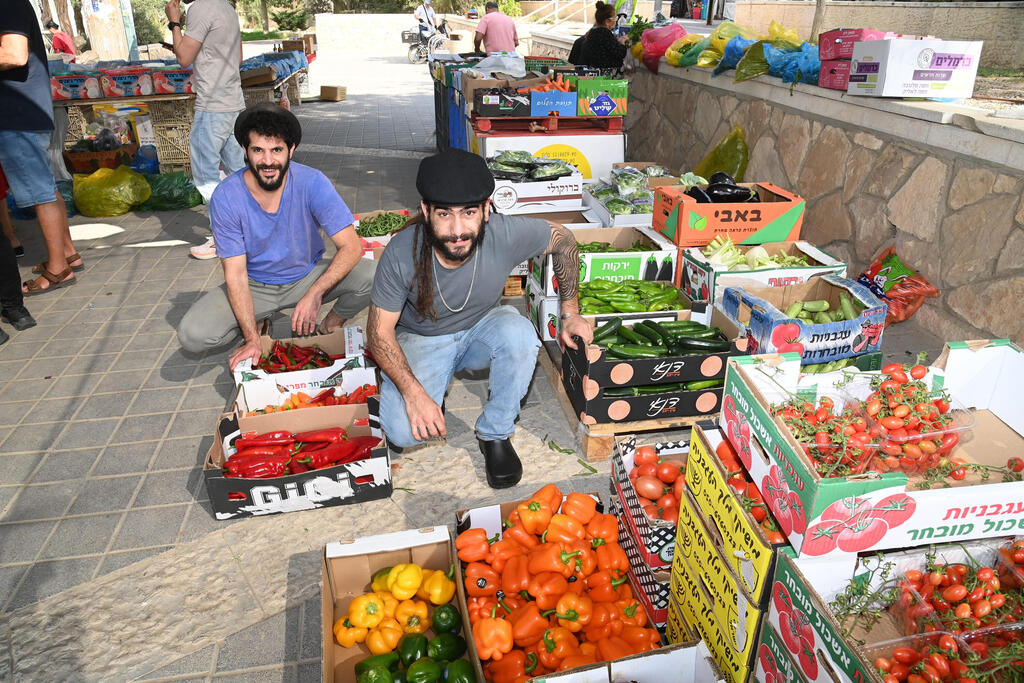
Owners of Sumsumiya
(Photo: Hertzel Yosef)
A tiny, charming shop
Etti Shaham, a lively and warm-hearted woman, came to Mitzpe Ramon for a week and never left. “There’s something about this town that calms my restlessness and ADHD,” she shares. Over the past 18 years, she has worked in various roles, including helping people declutter their homes, a fitting prelude to opening Asif, a delightful café-shop she launched just months ago.
At Asif, Shaham sells nostalgic items and stylish secondhand clothing (“some I collect from women with great taste who never even wore them”), as well as new goods like puzzles, wooden birds, Little Prince pillows, Pippi Longstocking music boxes, retro toys, and miniature cars from around the world.
“Asif is a rotating collection of things I love and believe in,” she says. “A mix from my travels, from England to India. Prices range from a few dozen shekels to several hundred. I even have 19th-century Dutch tiles I sell for 70 shekels."
Asif, 10 Har Ardon Street
A mandala for everyone
A few months ago, Atalia, a spiritual soul and free spirit, was searching for a name for her new “space for art and fashion.” Then, a hummingbird flew into her living room, hovered in front of her, and the name Colibri, the foreign word for hummingbird, was born. “It’s a bird that brings joy, lightness, and love,” she says.
At the heart of Colibri is a large mandala (a symbolic, geometric diagram used in mysticism and meditation), hand-painted by Atalia on the floor. She also paints mandalas on necklaces, desert stones, seashells, and canvas.
“A mandala is a circle that reflects our inner world,” she explains. “Drawing one is a kind of meditation that brings peace and transfers that serenity to the viewer. Mandalas exist in nature too; open an orange, and you’ll see one. Even children can create them. I also hold desert workshops where people connect with themselves and with others."
The shop sells scarves, mobiles, leggings, incense, notebooks, lamps, and colorful, comfortable clothing, including kimono-style pieces from Israeli designer Nani, which have become local favorites. “I also offer yoga wear and crop tops that are popular. On the other hand, I have a strong religious clientele and provide modest clothing as well as men’s items."
Prices range from 50 to 200 shekels
Colibri, 8 Har Ardon Street
Sabra and wheat stalks
At the entrance to Miklat 44 stands a striking cactus sculpture made of wood and headless nails. Inside the gallery, paintings of prickly sabras line the walls, while matching potted plants decorate the balcony. “Sabra is the dream and its collapse,” says artist Avital Ifergan, who co-founded the gallery five months ago with pottery artist Ido Zimmerman.
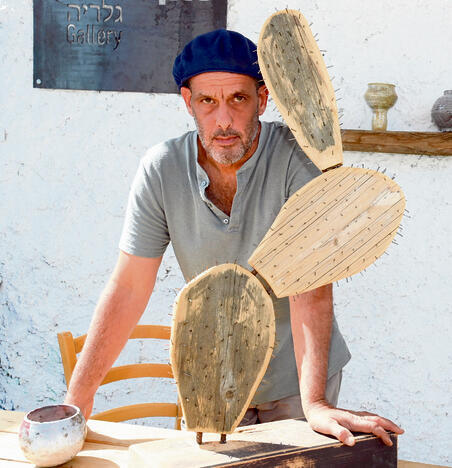
Miklat 44
(Photo: Hertzel Yosef)
“Why Miklat 44? The local council gave us a key to the bomb shelter and it had that number on it. The place looked awful when we arrived, so we painted, fixed the electricity and plumbing, and spread straw on the ugly floor. Why straw? Because it’s beautiful and soothing. As a native of the Jezreel Valley, straw moves me. Recently, inspired by music from the valley, like Yam HaShibolim (“Sea of Wheat”), Ifergan began painting wheat stalks, soon followed by sabras.
A former martial artist, dancer, and carpenter, he says, “I create from the body, not the head. I used to draw women on anything I found; now I’m into sabras. It’s a strange transition. By the way, Mitzpe Ramon has more artists than yoga teachers,” he laughs.
Miklat 44, 10 Har Boker Street
A feminine, containing oasis
When Rachel Hevroni, a religious woman with a calm, commanding presence, stands in the spacious interior of Uma, it’s hard not to be drawn in by her serenity. She opened Uma during the COVID era with a group of fellow female creators (most of whom have since moved on), transforming what was once the bathroom and shower area of a former army sewing factory.
“‘Uma’ means mother or grandmother in many languages. We wanted a feminine, containing space,” she says.
Uma is a desert oasis that blends a shop (featuring books, cards, paintings, paintbrushes, yarn, teas, soaps, natural cosmetics, clothing, and jewelry), an art gallery, a café, and a beautiful garden where visitors can sit and relax.
“I dreamed of creating a place where I could sell my art and the work of others, and where everyone feels at home,” says Hevroni, who has a background in dance.
“These days, I’m drawn more to working with my hands and making jewelry. We also offer workshops. Art can be a bridge between people. In today’s fast-paced, impatient world, I want to offer a space for people to sit, breathe, and connect, beyond labels and definitions."
Uma, 5 Har Boker Street
Culinary tours
This tour was guided by Adi Rosen, who leads culinary tours throughout southern Israel. “We bring people to a place where silence meets creativity, where endless landscapes meet authentic flavor,” she says. “Choosing to live in Mitzpe Ramon is a Zionist choice - to build, create, and shine light in the periphery. The South isn’t marginal; it’s the beating heart of this country."
For more information and bookings: 054-221-2646