

Summer 2026 is likely to be remembered vividly by hundreds of millions of people across Europe. Temperatures of 38 degrees Celsius, about 100 Fahrenheit, in Budapest and Paris are no longer seen as one-off events but as a harsh reality that can stretch on for days and recur frequently. Tourists are suffering alongside local residents, and demand for destinations is beginning to shift.
Recent data from VisitBritain, Britain’s national tourism agency, show that flight bookings made during the six weeks ending July 19 rose 15% for Scottish airports compared with the same period last year. The figure stands out against the trend elsewhere in Britain: Bookings to London fell 5%, to the rest of England 4% and to northern England 3%.
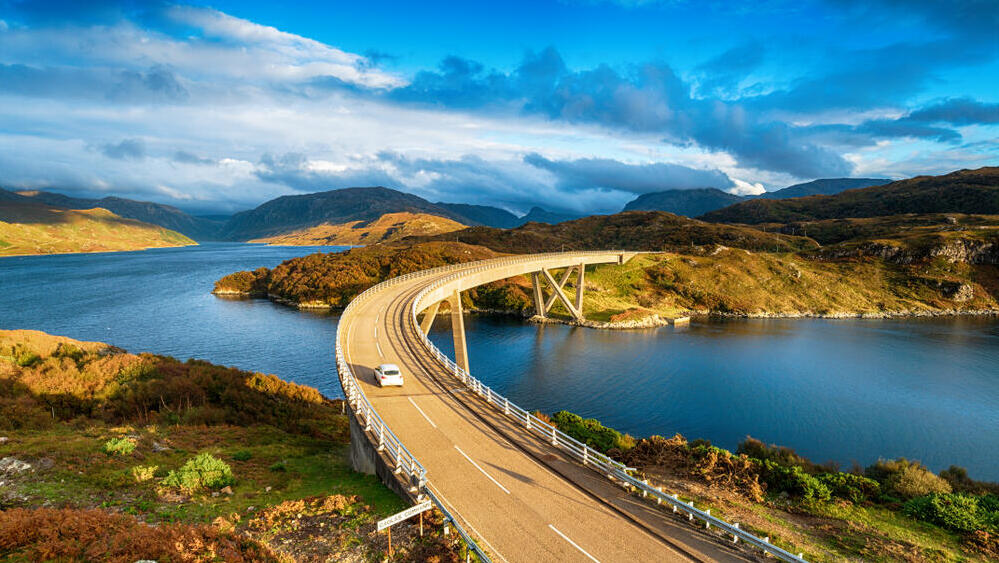
Spending figures tell a similar story. In the first quarter of 2026, Visa card spending by tourists in Scotland was 19% higher than in the same period last year. In England, spending rose just 3%, while Wales recorded a decline.
The numbers still do not prove that heat waves are what is sending vacationers north, and local tourism bodies are cautious about drawing that conclusion. VisitScotland, Scotland’s national tourism organization, says there is not yet enough data to attribute the increase directly to the weather. Still, the organization has reported strong demand from Europe this year, including from Spain and Italy.

Skara Brae, Scotland
(Photo: Shutterstock)
The trend fits a phenomenon that has in recent years acquired a name of its own in the tourism industry: the “coolcation,” a vacation chosen specifically for its milder, cooler weather.
When heat begins to influence destination choices
A study published this summer by the European Travel Commission, which brings together Europe’s national tourism organizations and tracks travel trends across the continent, found that 76% of Europeans say climate considerations already influence their travel behavior in some way.
Among those adjusting their vacation plans, 16% said they are actively looking for destinations with milder temperatures, while 15% said they avoid areas prone to extreme heat or check the weather forecast before booking.
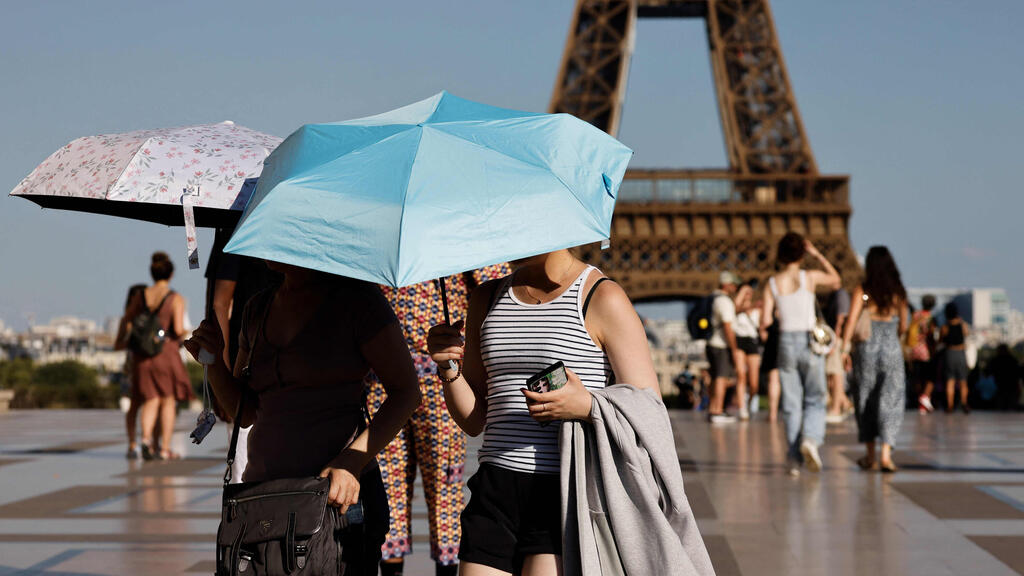
Heat wave in Paris
(Photo: Ludovic Marin / AFP)
Online searches also reflect the trend. Tourism group Awaze reported a 420% surge in searches for the term “coolcations” over three months and a 300% increase in searches related to “escaping the heat.” Scotland was the most sought-after domestic vacation destination in Britain.
And it is not alone. Other northern countries are also benefiting from growing interest in cooler vacations. Trivago data pointed to a sharp rise in bookings by British travelers to Norway, Sweden and Denmark for this summer.
Meanwhile, southern Europe continues to contend with prolonged periods of extreme heat. In June, unusually severe heat waves hit parts of Spain, France and Italy, with temperatures nearing or exceeding 40 degrees Celsius, about 104 Fahrenheit, in some areas. Heavy heat also persisted in August.
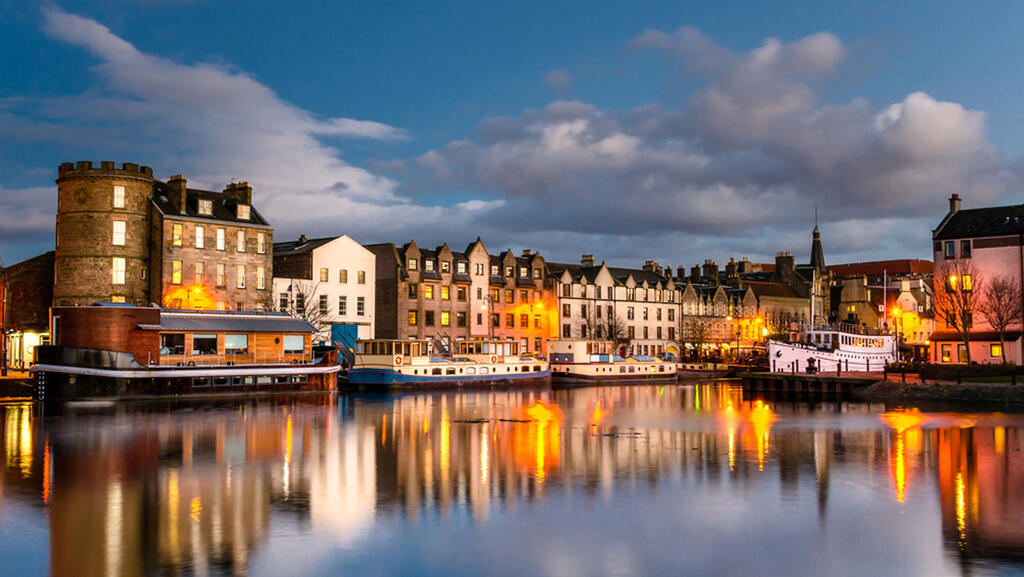
Edinburgh, Scotland’s capital
(Photo: Shutterstock)
Scotland itself is not immune to warming. It too has recorded above-average temperatures this year, along with periods of drought and wildfires. Even so, the gap with southern Europe remains significant: During the first half of the summer, Scotland’s average temperature was about 0.9 degrees Celsius above the seasonal norm, compared with roughly 2.4 degrees above average in England.
The foundation for growth is already in place. In 2024, about 4.37 million international tourists visited Scotland, up 9% from 2023 and 26% from 2019. They spent nearly 4 billion pounds in the country.
Not just the weather: Americans, 'Outlander' and Harry Potter
Anyone looking for an explanation for the rise in demand also needs to look beyond temperatures.
The United States is by far Scotland’s most important international tourism market. In 2024, Americans made about 964,000 visits to the country, an increase of 21% in one year. Those visitors spent about 1.44 billion pounds, more than a third of all international tourist spending in Scotland during the same period.
This year, American Airlines launched a seasonal nonstop route between New York’s JFK Airport and Edinburgh. United Airlines is again operating a seasonal daily route between Newark and Glasgow, while WestJet has resumed direct service between Glasgow and Toronto.
There is also a tourism force that is difficult to measure through flight numbers alone: television and film.
According to VisitScotland, about 19% of overnight visitors said movies, television series or literature influenced their decision to visit. “Outlander,” the “Harry Potter” films and “Braveheart” are among the brands most closely associated with the phenomenon.

A favorite among American tourists; Scotland
(Photo: Shutterstock)
Another study estimated that in 2023 alone, about 1.14 million tourists visited Scotland in trips linked to content they had seen on screen. Their total spending during those trips amounted to about 787 million pounds.
Edinburgh is one of the main beneficiaries of that demand. In 2024, the city recorded more than 5 million overnight visits, with visitors spending about 2.57 billion pounds there.
The success is already carrying a cost. In July, the city introduced a tourist levy equal to 5% of the cost of accommodation. Municipal officials estimate it could generate up to 50 million pounds a year.
Questions about the limits of growth are also beginning to emerge outside Edinburgh. The Highlands, the Isle of Skye and other rural areas are attracting more travelers, but local infrastructure is not always equipped to handle large numbers of visitors.
Sites such as the Fairy Pools on the Isle of Skye and Edinburgh’s Royal Mile are already dealing with significant crowding during certain periods.