

Fall is beginning, the squill flowers are in full bloom — and it’s still hot. This year’s Rosh Hashanah break created a long midweek holiday window, and unlike last year, all northern nature sites are open and accessible again. Here are some of the best trails to enjoy the outdoors: water, blossoms, migrating birds and sweeping landscapes.
Hula Lake
Now is the perfect time to head to the Hula Valley and watch the start of the bird migration. In recent days, dozens of flamingos have arrived at Hula Lake from their nesting grounds in Turkey and Iran on their way to Africa, turning the waters a hopeful shade of pink. Storks and pelicans have also begun arriving, and in the coming weeks, some 600,000 white storks from across Europe and northern Asia are expected to pass through the lake, along with hundreds of thousands of raptors.
Birds recorded last week at Hula Lake Park
(Video: Inbar Shlomit Rubin, KKL-JNF)


The major migration happens at night, when flamingos, herons, waders and songbirds take advantage of the cooler hours. At dawn, the lake fills with color, sound and new life. Soon, tens of thousands of cranes will also gather here, staying until March. Managed by Jewish National Fund as an eco-tourism site, Hula Lake offers walking trails, bike and golf cart rentals, and wagon tours that bring visitors close to the bird flocks. Entry costs 35 shekels for adults, 21 for children, and visits must be booked in advance on the JNF website.
Amud Stream
Amud Stream, the highest of Israel’s rivers, flows year-round. Originating in the Upper Galilee between Mount Meron and Safed, it runs about 25 kilometers before reaching the Sea of Galilee. The stream is named for a tall rock pillar near Kibbutz Hukok that resembles a column.
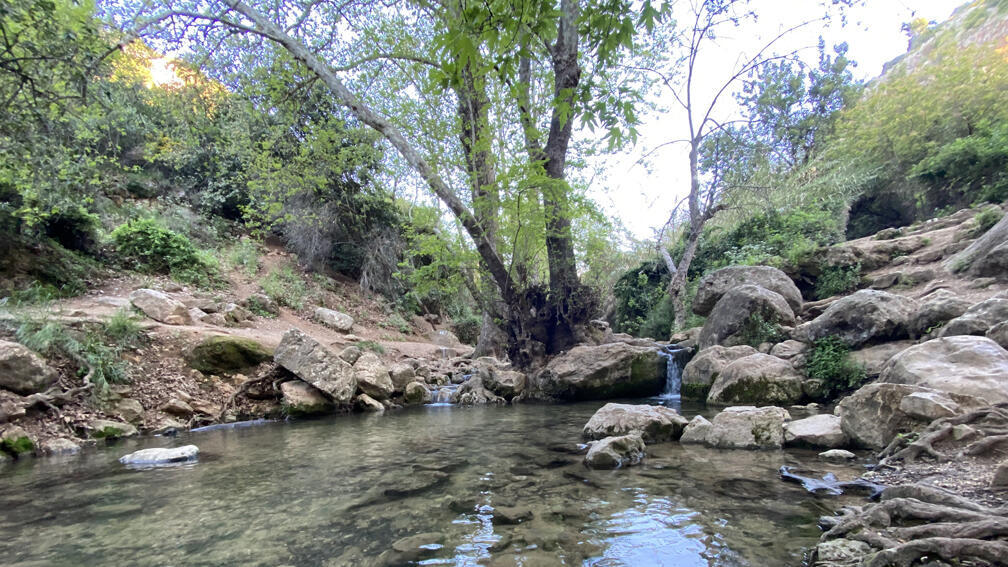
The upper section, where it meets Meron Stream, is a designated nature reserve featuring springs that feed the river, clear pools, cliffs covered in woodland and remnants of ancient settlements. A circular hiking trail to the Sechvi Pools is suitable for families. More details are available in the full guide to the Amud Stream Reserve. Entry fees are 31 shekels for adults, 16 for children, with free admission for Israel Nature and Parks Authority (INPA) members. Advance registration is required on the INPA website. A nearby campsite offers overnight stays for a fee.
Kziv Stream
In the Western Galilee, Kziv Stream is one of Israel’s last coastal rivers with clean, unpolluted water. The surrounding nature reserve includes archaeological sites such as the impressive Montfort Castle, scenic lookouts, freshwater springs and rare plants. The area is also home to a population of Persian fallow deer, reintroduced to the wild by the INPA after the species had disappeared from Israel.
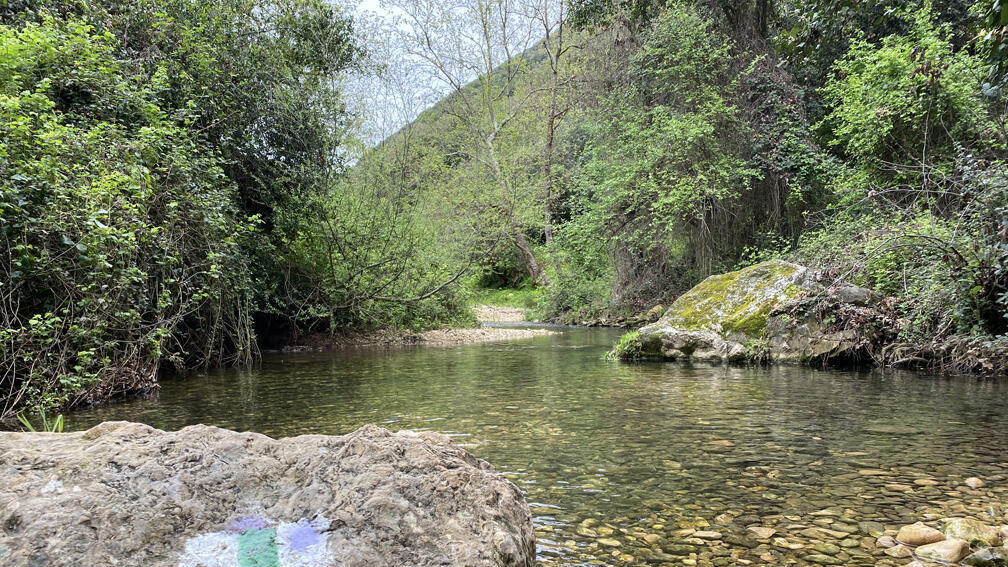
Hiking trail at Kziv Stream
(Photo: Gilad Carmeli)
The stream offers trails of varying difficulty, many with opportunities for swimming. Options include the “mini-jungle” trail at Ein Hardalit (as of August 2025, vehicle access is closed, requiring a 5.5 km walk each way from Goren Park), the route between the waterfall at Ein Ziv and the “Garden of Eden Pools” at Ein Tamir and dry trails like the Temple Cave hike, which passes by the mysterious “Man in the Wall” carving. Entry to the reserve is free. Goren Park, overlooking the stream, has campgrounds with drinking water taps and restrooms.
Yehudiya Forest Nature Reserve
The Yehudiya Forest Reserve in the Golan Heights is the largest nature reserve in the region, offering everything from water-rich streams and tall waterfalls to deep canyons, lagoons, volcanic formations, rare wildflowers and abundant wildlife — all within a vast oak forest stretching between Katzrin and the Sea of Galilee. For hikers seeking water trails and natural pools, this is the place.
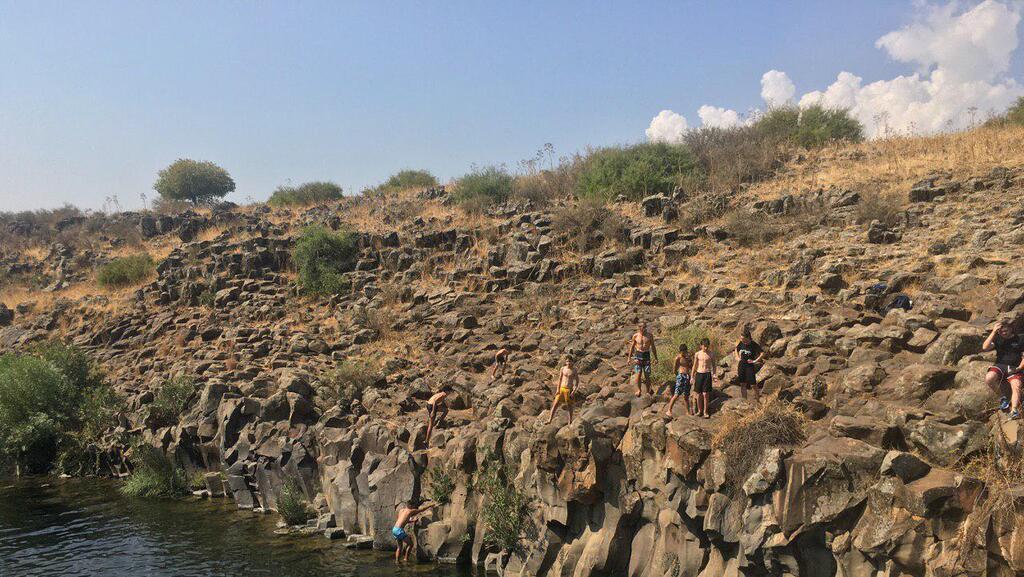
Meshushim Pool, Zavitan Stream, Yehudiya Forest Nature Reserve
(Photo: Gilad Carmeli)
The reserve is carved by deep streams, the largest being Yehudiya, Zavitan, Meshushim and Daliot (better known at its estuary as Majrase). These rivers flow year-round and are a vital part of the Sea of Galilee watershed. Each stream offers excellent trails, some challenging and others family-friendly. Detailed guides are available for each route. Entry fees are 24 shekels for adults, 10 for children, with free access for INPA members. Advance registration is required via the INPA website. A nearby campground allows overnight stays for a fee.
Mount Meron
Mount Meron Nature Reserve is the largest in northern Israel, featuring towering peaks, dense woodlands, unique plants and wildlife, springs, streams, caves and sweeping views. At 1,204 meters above sea level, the summit is the highest in Israel west of the Jordan River. The circular “Summit Trail” is recommended for families.
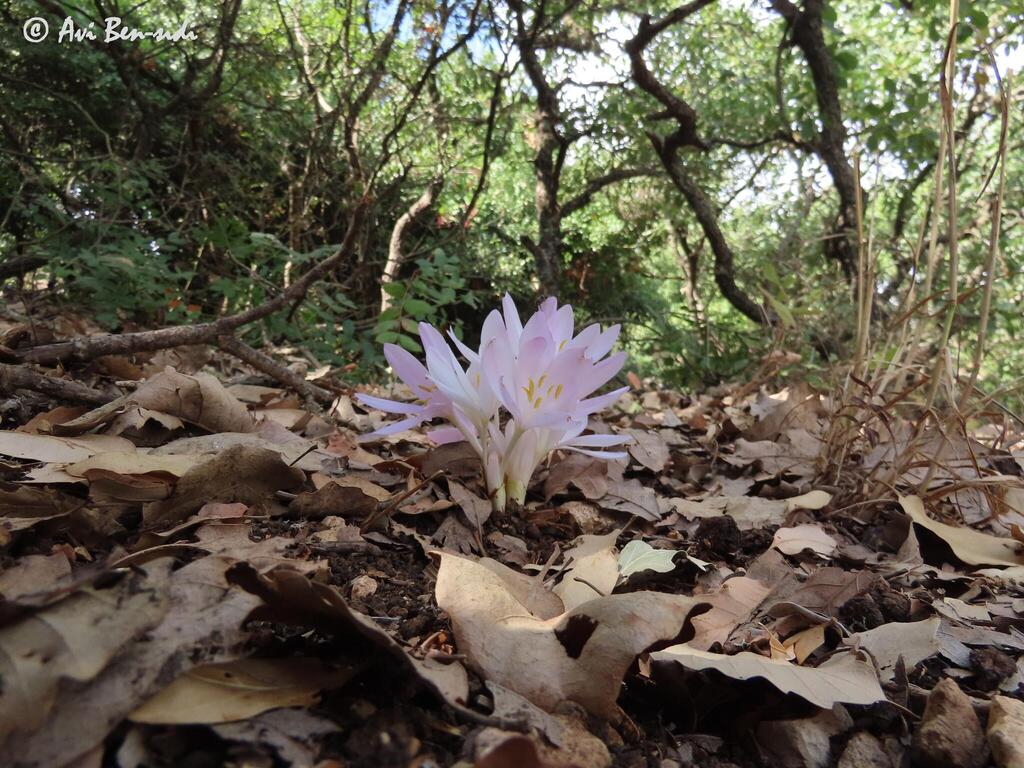
Sternbergia flower blooming along the Summit Trail, Mount Meron
(Photo: Avi Ben-Sidi)
Along the trail, the Israel Nature and Parks Authority has set up scenic lookouts over the Upper Galilee and Lebanon, the Golan Heights and Mount Hermon, the coastal plain and parts of Lower Galilee. Early fall blooms have already begun here, with the first Sternbergia flowers — their white-pink petals among the season’s earliest signs. Later in the fall, they will be joined by the bright yellow Sternbergia clusiana. The circular trail is about 2.5 kilometers long, marked in red, and is considered easy. Full details on the trail and others in the area can be found in the Mount Meron Nature Reserve guide.
Entry to the reserve’s trails is free and requires no advance booking. Two free, well-maintained campgrounds — Horvat Hamama and Hapitul — are also located in the reserve.
Ayun Stream
Ayun Stream, which begins near the Lebanese town of Marjayoun, is one of the Jordan River’s sources and enters Israel near Metula. The Ayun Stream Nature Reserve features a canyon with four waterfalls: the 9.2-meter Ayun Falls, the 21-meter Mill Falls cascading into an old flour mill, the twin Hashad Falls with a combined drop of 15 meters, and the famous 30-meter Tanur Falls.
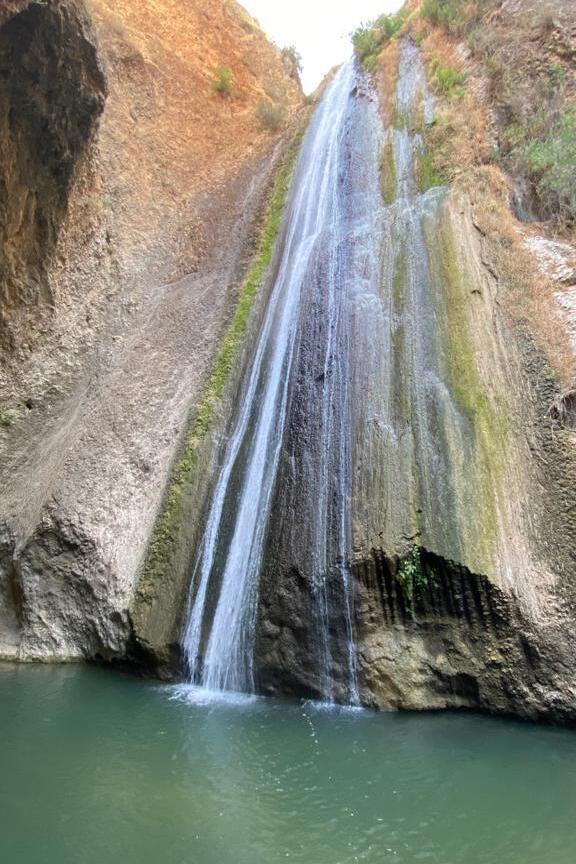
Tanur Waterfall, Nahal Ayun Nature Reserve
(Photo: Sarit Palachi Miara, Israel Nature and Parks Authority)
Visitors can choose between two routes. A short, wheelchair-accessible trail runs 300 meters each way from the lower parking lot. It passes the Gafni lookout over Tanur Falls before continuing to the base of the waterfall and back. Near the lot are a wading pool, picnic tables, a water fountain and accessible restrooms.
The longer linear route starts at the upper parking lot (Eucalyptus Grove) and continues about 1.5 kilometers to the lower lot, passing all four waterfalls. Visitors must arrange a vehicle pickup or walk back along the same path.
Admission: 31 shekels for adults, 16 shekels for children. Advance booking is required through the Israel Nature and Parks Authority website.
Tel Yodfat
While squill flowers are considered “messengers of fall,” they actually bloom in late summer, starting in mid-August. The High Holidays are an ideal time to visit squill hotspots, and one of the most spectacular is Tel Yodfat in Lower Galilee — also among Israel’s most fascinating archaeological sites. This year, tens of thousands of squills are carpeting the hill in white.
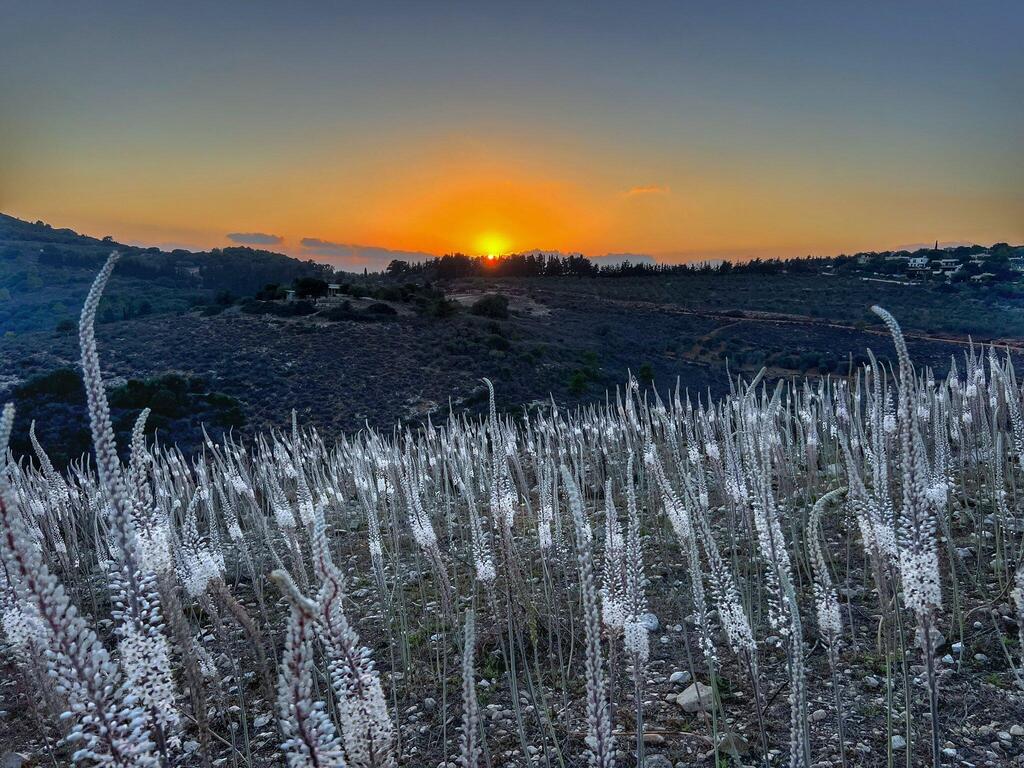
Tens of thousands of squills in bloom at sunset, Tel Yodfat, last week
(Photo: Ben Prashitz, The Northern Guide)
The hill was once home to a biblical-era city and, during the Second Temple period, a Jewish settlement. In 67 CE, at the outbreak of the Great Revolt, the city was fortified and held out for 47 days before the Romans captured it, destroyed it and killed most of its inhabitants.
To reach the site, drive toward the community of Yodfat. About 100 meters past the entrance junction, turn left and continue 900 meters to the national park parking lot. A short circular trail runs atop the hill. More advanced hikers can continue along the blue-marked path to Mount Atzmon lookout, a route that requires vehicle coordination at Sheikh Abu al-Hija’s tomb. Admission is free and requires no reservation.
Banias Nature Reserve
Because of the soil composition of Mount Hermon, much of the winter snowmelt seeps underground instead of flowing on the surface, emerging instead from springs beneath the Cave of Pan to feed the Hermon Stream. Within the Banias Nature Reserve, the stream forms Israel’s most powerful waterfall, plunging 10 meters into a scenic pool surrounded by lush vegetation. The Nature and Parks Authority has built a 100-meter hanging trail along the rushing water, allowing visitors to walk close enough to feel the spray.
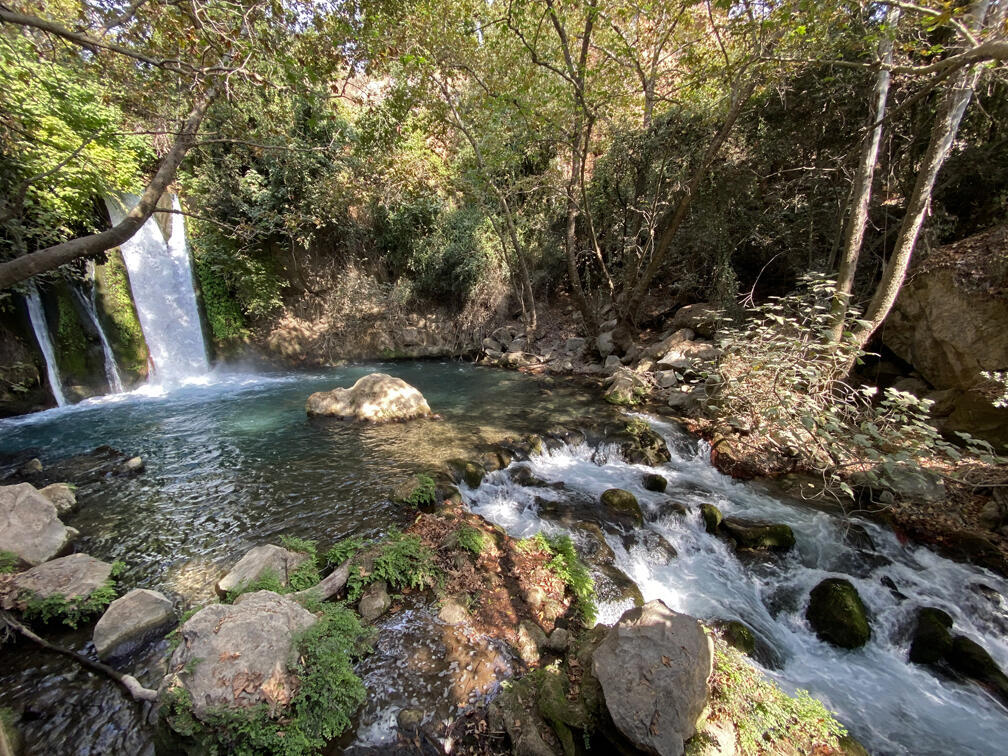
Banias Waterfall
(Photo: Gilad Carmeli)
At this time of year, squills are in bloom, and along the stream the first fall leaves of Oriental plane trees — relatives of Canada’s maple — are already appearing. These endangered trees create red, yellow and orange carpets in the fall. Visitors can also explore the cave, once part of a temple dedicated to the Greek god Pan (Faunus in Roman mythology). The site’s Arabic name, Banias, is derived from his name. In front of the cave are remains of a temple built by King Herod in honor of Emperor Augustus.
Admission: 31 shekels for adults, 16 shekels for children. Advance booking is required through the Israel Nature and Parks Authority website.
Kibbutzim Stream
The Beit She’an Valley is among the water-richest regions in Israel. Along its edge with Mount Gilboa, several large springs feed Kibbutzim Stream. In Park HaMaayanot (Springs Park), the stream offers both wet and dry hiking routes, with several pools and a large one near the parking lot.
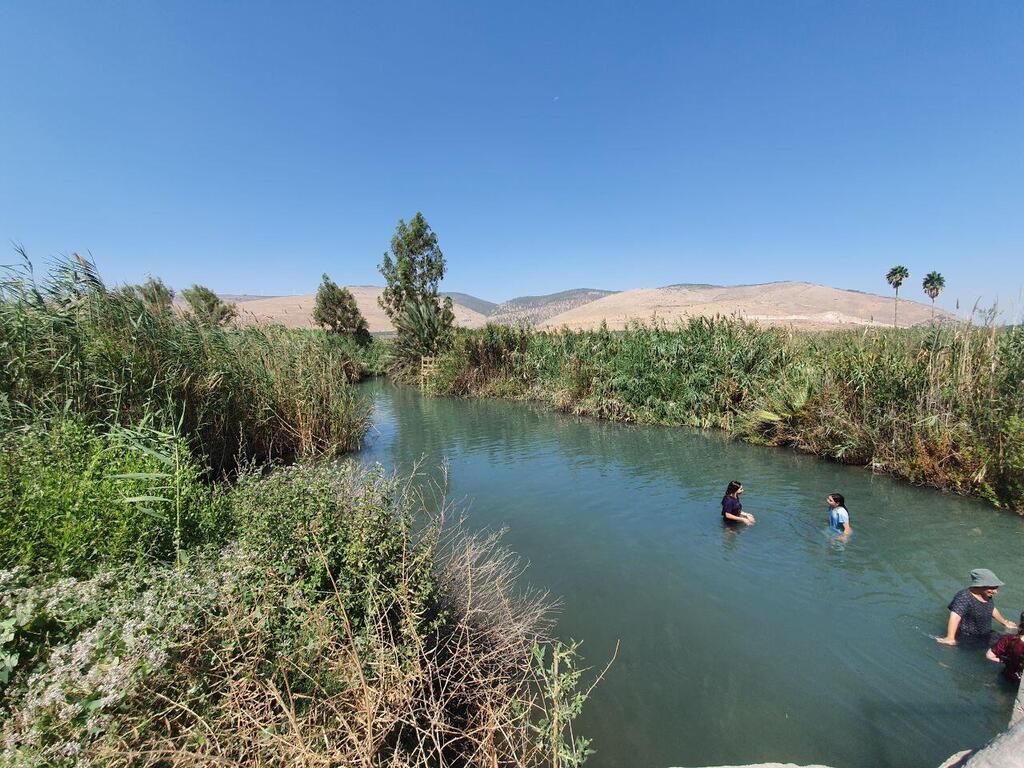
Kibbutzim Stream
(Photo: Assaf Kamar)
Recent upgrades to the stream include water slides, bridges, observation decks, paved paths and steps for safe entry into the water. The trail is family-friendly, though some sections are deep. Non-swimmers should use flotation devices.
Entrance to Springs Park is free on foot, and the stream’s trail is close to the parking area. Three other natural springs — Ein Moda, Ein Shokek and Ein Migdal — are also nearby and open for swimming. No advance reservation is needed.
Nahal Taninim
Taninim Stream, which flows from the Menashe Heights to the Mediterranean near Kibbutz Ma’agan Michael and the Arab town of Jisr al-Zarqa, is a perennial stream. During the Roman period, a dam was built along its course as part of a sophisticated waterworks system that raised the water level so it could be diverted by aqueduct to Caesarea. Remains of this aqueduct are still visible today along the beach.
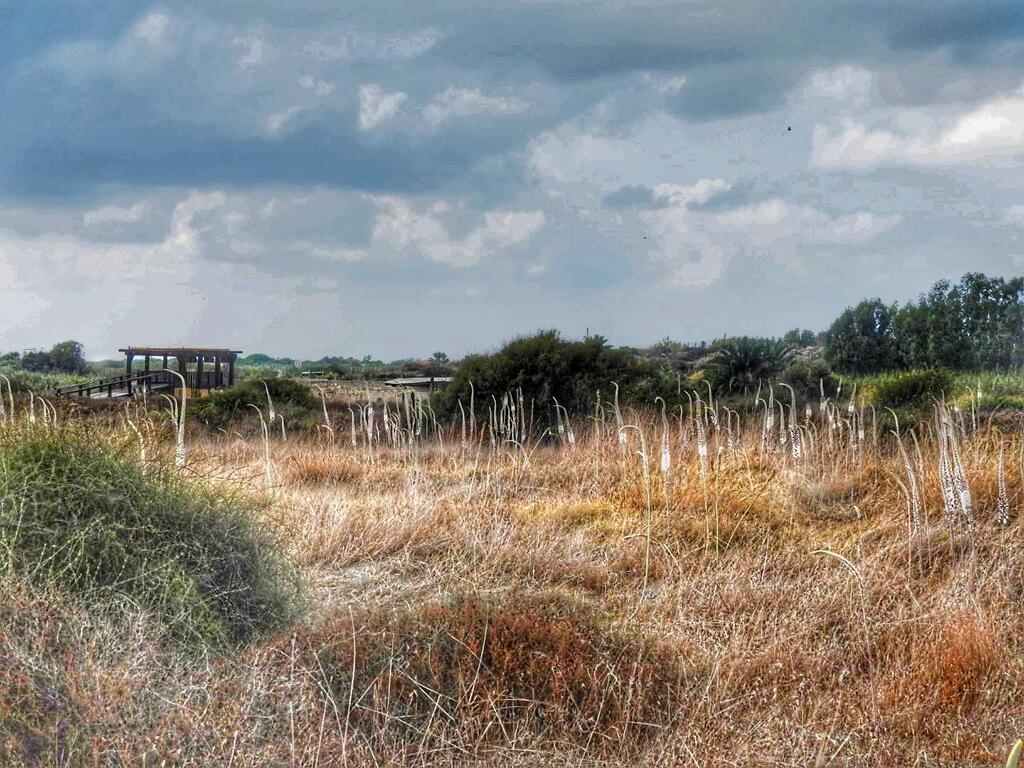
Squills blooming, Nahal Taninim Nature Reserve
(Photo: Sarit Palachi Miara, Israel Nature and Parks Authority)
Over the years, lack of maintenance turned the dammed area into a swamp, known as Kabara Marsh. Although most of it has been drained, Taninim Pond remains within the nature reserve. A 1.5-kilometer trail follows the southern bank of the stream to the sea, and a 260-meter “wet trail” runs through a carved aqueduct channel filled with 45-centimeter-deep stream water. Squills bloom here too in the fall.
Admission: 24 shekels for adults, 10 shekels for children. Free for Matmon cardholders. Advance booking is required through the Israel Nature and Parks Authority website.
Tel Dor
Tel Dor, on the kurkar ridge of the Carmel coast northwest of Kibbutz Nahsholim, is identified with the biblical city of Dor. The national park features three coves, the largest bounded by three small islands that create a lagoon ideal for anchoring ships. This natural harbor allowed Dor to flourish as a major port and trade hub in the ancient world. More than 20 shipwrecks have been discovered along the shoreline. On the eastern side of it, a large cluster of squill flowers overlooks the sea.
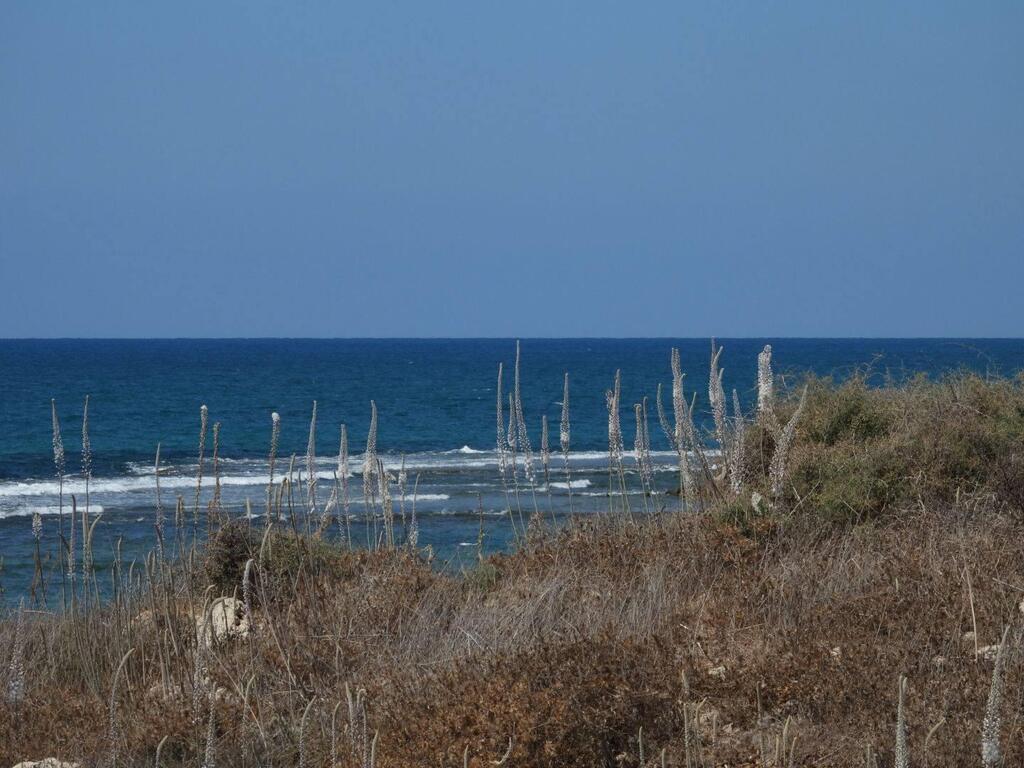
Squills blooming, Tel Dor Nature Reserve
(Photo: Sarit Palachi Miara, Israel Nature and Parks Authority)
Entry to the park is free and does not require advance booking, though private vehicles are admitted only if space is available. Visitors can walk to the site from Dor Beach, approach via a dirt road east and north of Kibbutz Nahsholim, or arrive from the nearby Hof Habonim Nature Reserve (paid entry) along the red-marked trail.
Ein Lavan
One of the most popular springs in the Jerusalem Hills, Ein Lavan is located beneath Givat Massuah above the northern bank of Nahal Refaim. The spring emerges from a carved tunnel that feeds two pools — one shallow and one about 1.6 meters deep, suitable for swimming. It is named for the white limestone of the Lavan Ridge. The site is shaded by fig, walnut, almond, carob, olive, terebinth and mulberry trees. Archaeological remains indicate intensive agricultural use of the spring since antiquity.
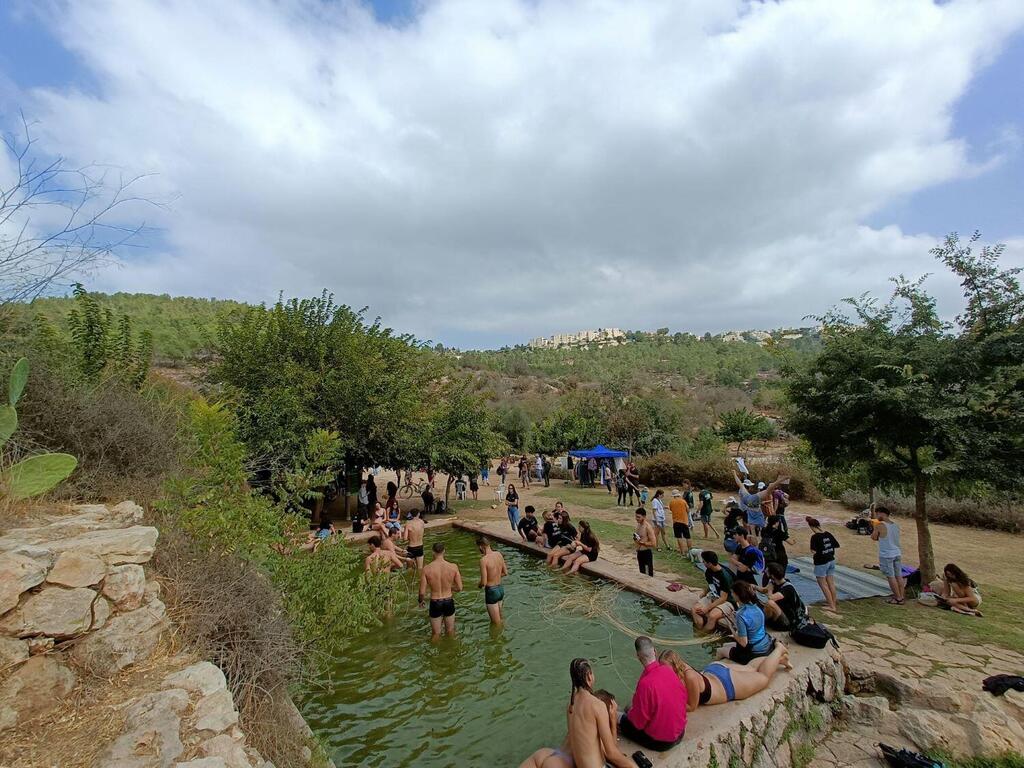
Ein Lavan, Jerusalem Hills
(Photo: Pazit Shavid-Sheit, Society for the Protection of Nature in Israel)
In 2015, the Jerusalem Municipality and the Israel Nature and Parks Authority restored the spring’s pools as part of the “Jerusalem Park” project. But two years later, a plan for 5,000 housing units on the ridge above raised fears of drying out the spring. After years of environmental campaigning, Mayor Moshe Lion scrapped the plan in 2022 and advanced a much smaller alternative.
How to get there: Set navigation to the Jerusalem Biblical Zoo. A paved 1.5-kilometer path leads from the zoo’s parking lot to the spring. Entry is free, no reservation required.
Bible Hill
Bible Hill, overlooking the Khan Theater and Jerusalem’s historic railway station, is one of six remaining undeveloped ridges in the city. It sits on the watershed line — with Nahal Refaim flowing west to the Mediterranean, and the Hinnom Valley and Kidron Stream flowing east to the Dead Sea. The hill also offers sweeping views of Mount Zion and Dormition Abbey, while St. Andrew’s Church sits on its slopes. Despite its small size, the hill bursts with seasonal wildflowers, and in the fall it is carpeted with squill blossoms.
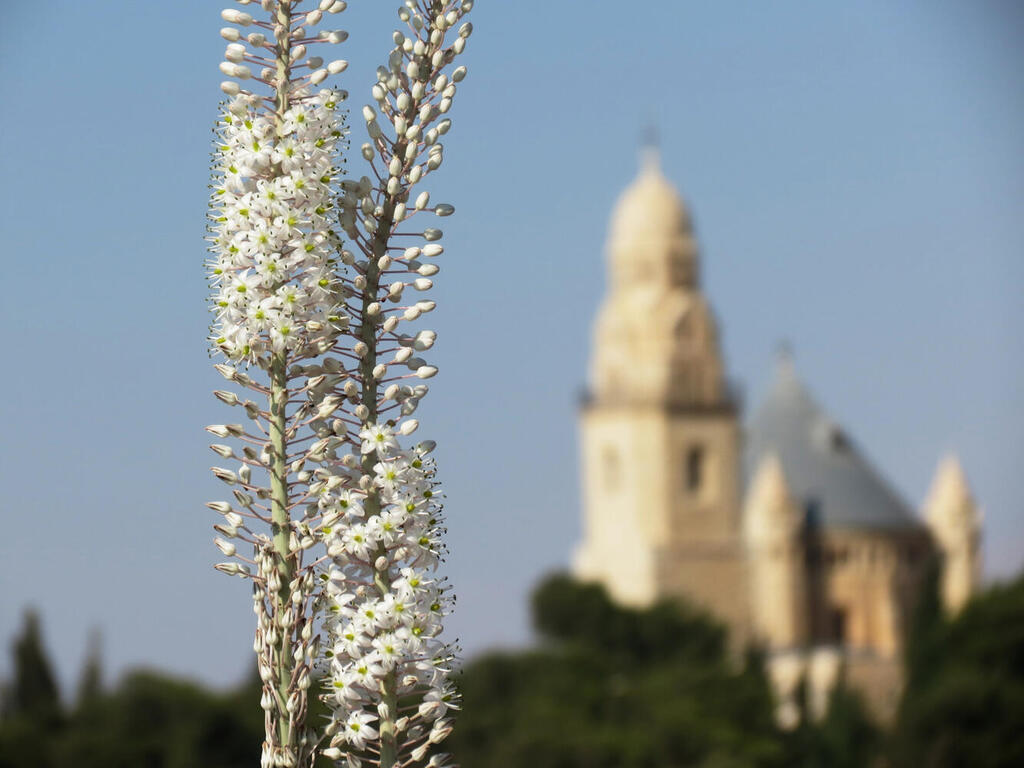
Squills on Bible Hill with Dormition Abbey in the background
(Photo: Dov Greenblatt, Society for the Protection of Nature in Israel)
The easiest access is from the parking lot on Hebron Road across from the Mount Zion Hotel. Another option is via David Remez Street across from the First Station complex, though that route is steeper. Entry is free and requires no reservation.
Ein Haniya
Ein Haniya combines a natural spring, an ancient pool, an archaeological site and traditional agricultural scenery. Located in the Nahal Refaim basin, the spring flows into a restored irrigation pool now used for swimming. The Nature and Parks Authority has also replanted orchard terraces at the site.
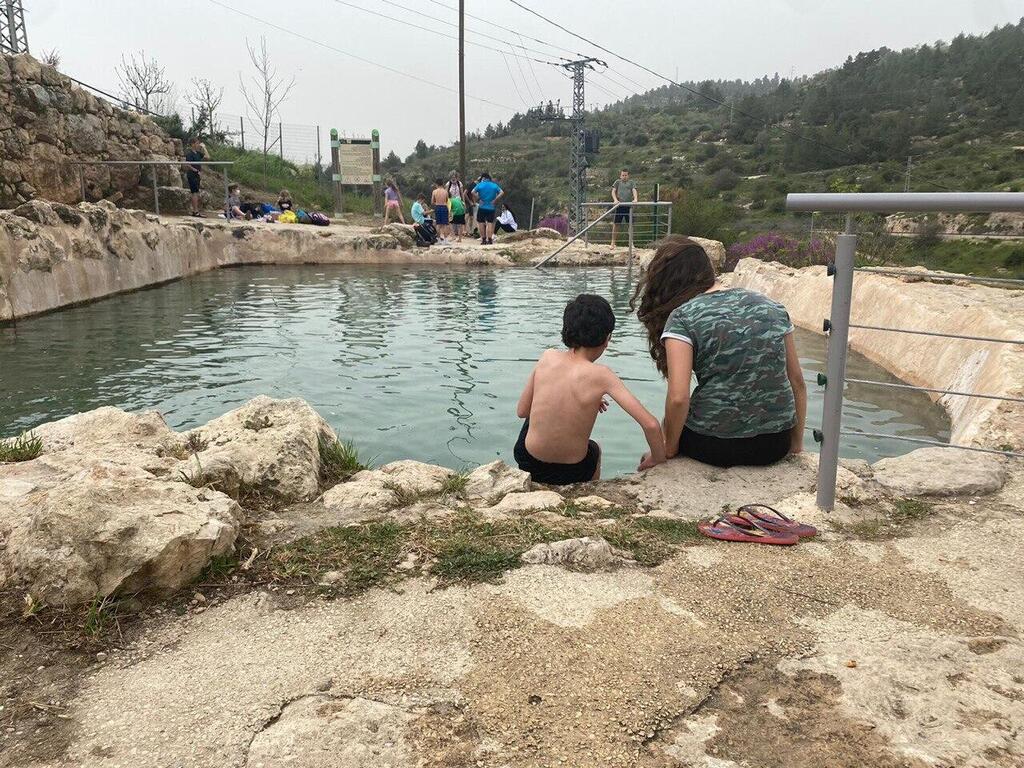
Ein Haniya
(Photo: Shlomit Shavit, Israel Nature and Parks Authority)
Excavations revealed one of Israel’s most impressive ancient water systems, two Byzantine-era pools and a Roman nymphaeum (decorative fountain). The system continues to channel water into the pools as it did in antiquity. Ein Haniya is a holy site for Armenian and Ethiopian Christians, and the area surrounding the spring and nymphaeum belongs to the Armenian Church.
How to get there: Search for “Ein Haniya” in Waze. From Malha Mall in Jerusalem, drive toward Gilo and Gush Etzion. The parking lot is 2.5 kilometers past the Ein Yael site. It can also be reached on foot or by bike via the trail connecting Ein Haniya and Ein Lavan. Admission: 16 shekels for adults, 7 shekels for children. Advance booking is required on the Nature and Parks Authority website.
Ein Bokek
Near the Dead Sea, Ein Bokek spring feeds Bokek Stream — one of the Judean Desert’s shortest, just 15 kilometers long. Ein Bokek forms a lush oasis supporting diverse flora and fauna. In the past, the spring’s waters flowed naturally to the Dead Sea, but today much of it is diverted for hotel water use.
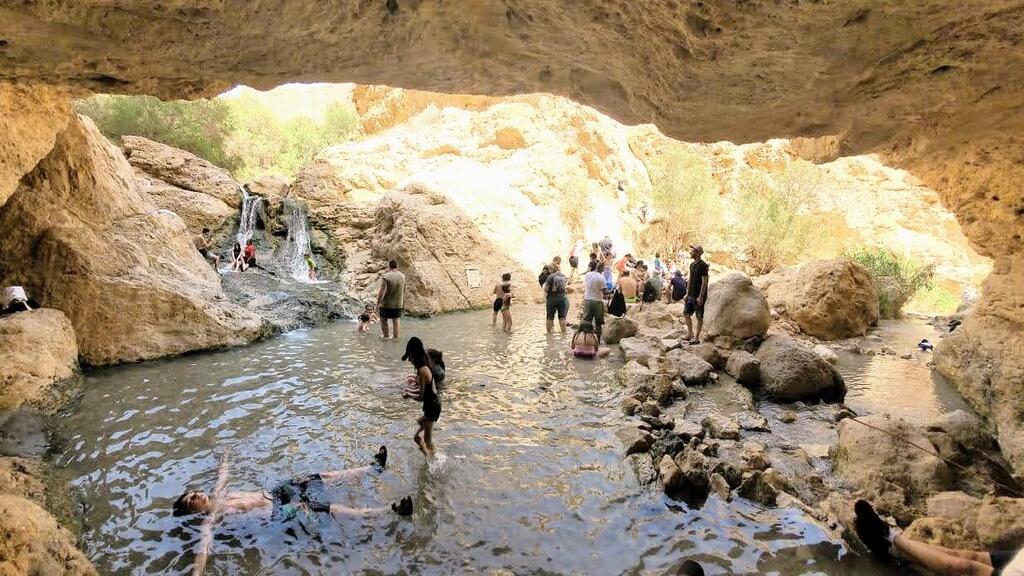
Ein Bokek
(Photo: Tanya Bird, Israel Nature and Parks Authority)
How to get there: Navigate to “Ein Bokek” in Waze. The route leads to the hotel area along Bokek Beach. Park nearby, then cross safely west across the road into the streambed. Within minutes, hikers can wade in flowing water under shade, reaching pools and a small waterfall within 10 minutes. Entry is free, no reservation required.
Enot Tsukim
Along Route 90 beside the Dead Sea lies Enot Tzukim Nature Reserve (also called Ein Feshkha), a rich oasis of springs and vegetation. The site includes archaeological remains of a Second Temple-era farmstead and a lookout over the Dead Sea.
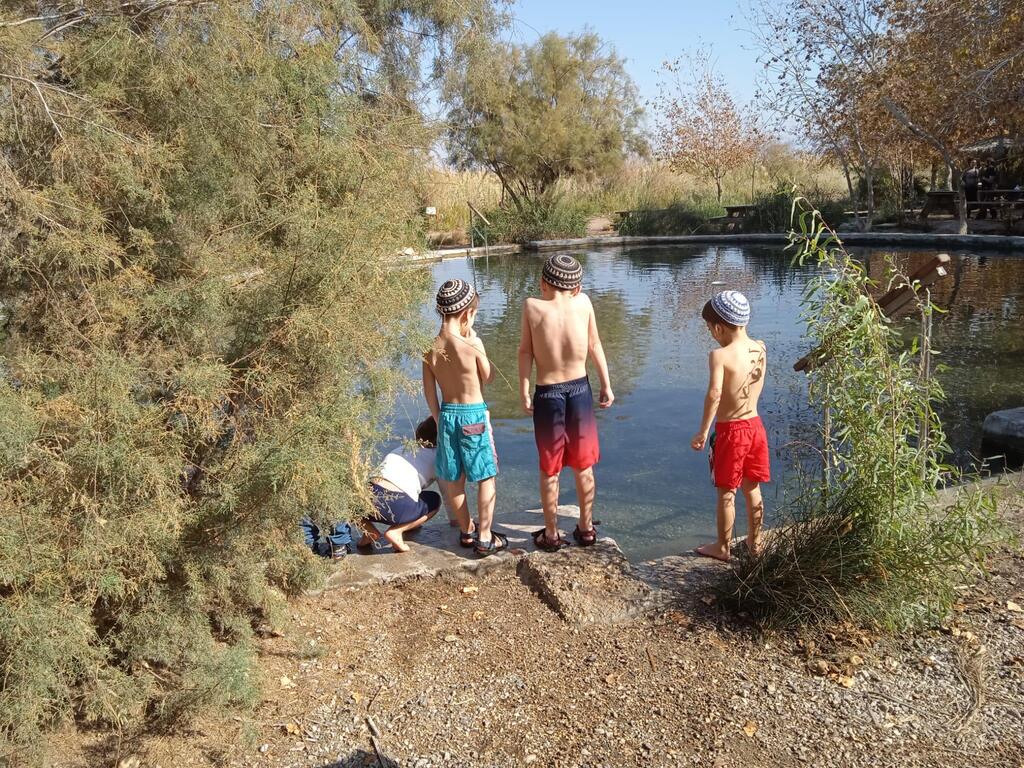
Einot Tzukim Nature Reserve
(Photo: Eldad Hazan, Israel Nature and Parks Authority)
The pools are divided into wading and bathing areas. The first, Tamar Pool, is round and deep, ideal for relaxing. Further east, visitors reach Poplar Pool, fed by a shallow stream running through Euphrates poplars. Fish species such as blue tilapia and Jordan tilapia swim in the waters. Admission: 40 shekels for adults, 25 shekels for children. No advance booking is required.