

The waters of the Arctic Ocean were painfully cold. Nimrod Mellhausen-Hasson, 24, of Haifa, stood on the desolate shore of the Beaufort Sea at Prudhoe Bay, the northernmost point in North America accessible by road, staring at the gray water stretching toward the horizon. Around him were only wind, oil pipelines and the seemingly endless Alaskan wilderness.
“I almost chickened out,” he told ynet. “But then I remembered that I had been dreaming about this moment since I was 12. I told myself that if I had made it all the way here, there was no chance I wasn’t jumping in.”
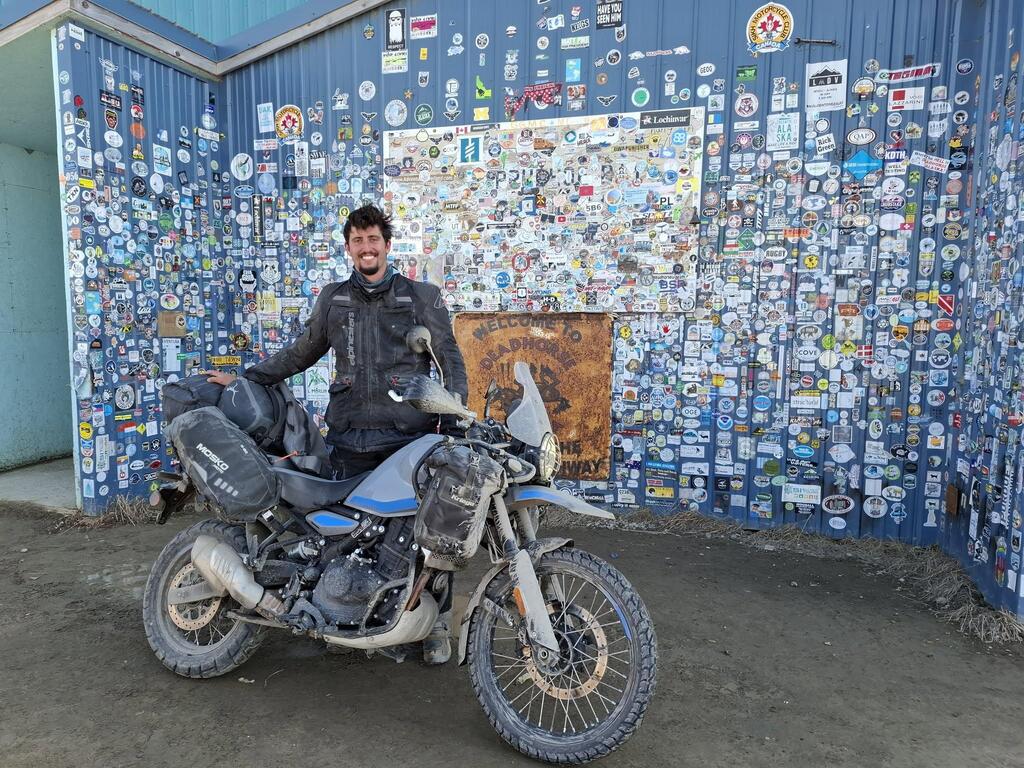
Seconds later, he was immersed in the freezing Arctic water, marking the true beginning of the journey he had imagined since childhood: the Pan-American route, widely considered one of the ultimate adventures for motorcyclists and long-distance travelers.
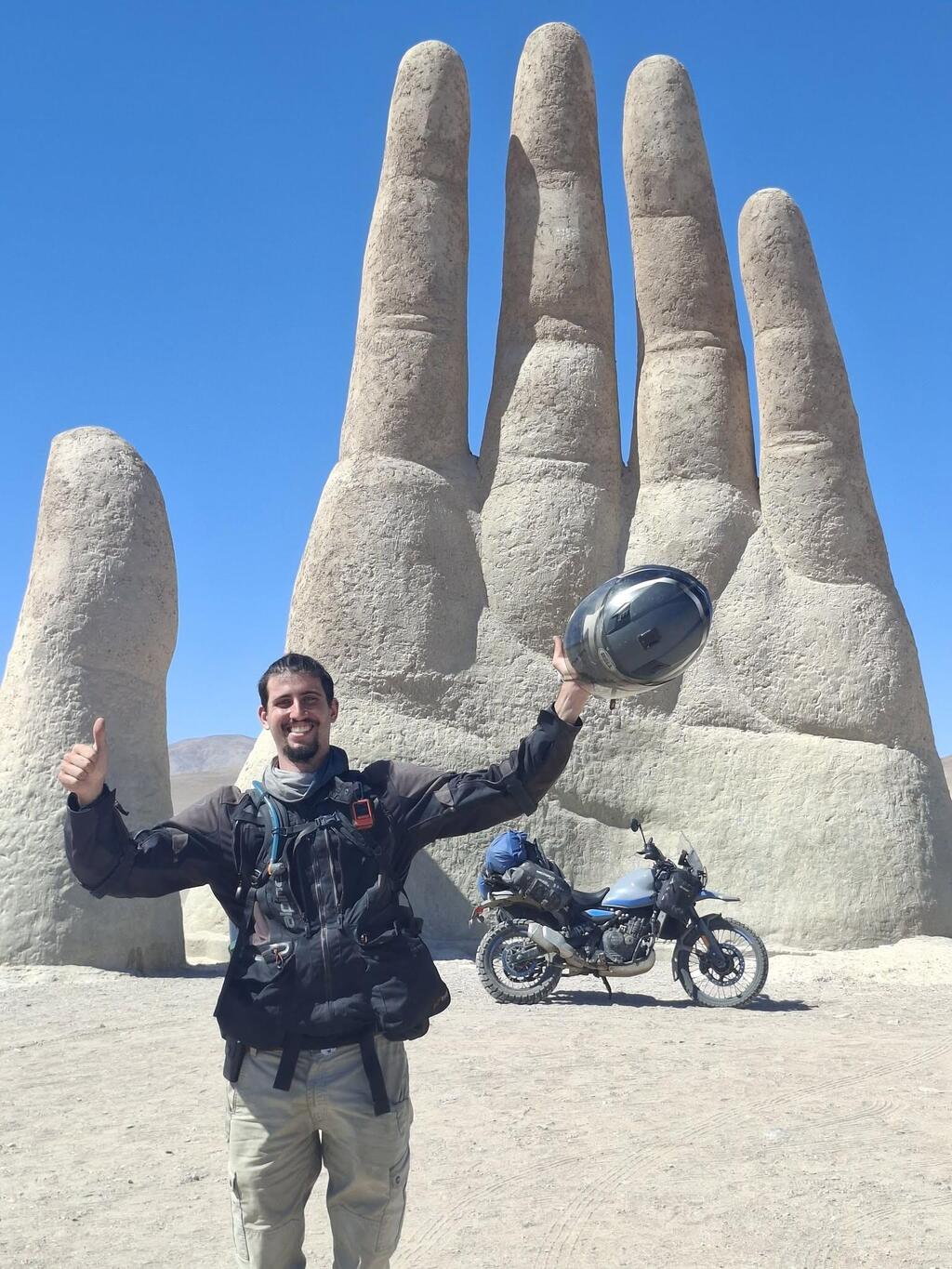
Mellhausen-Hasson at the Hand of the Desert sculpture in Chile
(Photo: Courtesy)
The vast network of roads stretches roughly 30,000 kilometers (18,600 miles) from Alaska in the north to Tierra del Fuego at the southern tip of Argentina. Along the way, it passes through about 14 countries and countless cultures and extreme landscapes, from glaciers and frozen tundra to deserts, the Andes Mountains, Amazon rainforests and the windswept plains of Patagonia.
“I have always loved adventures,” Mellhausen-Hasson said. “At some point, I discovered the idea of the Pan-American route. I was fascinated by the fact that there was a road that was essentially the longest in the world. The thought of the people I would meet, the cultures and the nature I would encounter really excited me. I told myself: I’m going to do this.”
Toward the end of his military service, while friends began planning post-army trips to Asia or South America, Mellhausen-Hasson was already thinking about his much larger expedition. “I served for more than four years. I was a combat soldier and a paramedic, and after such a long period of service, I felt that this was my time to do the thing that had been sitting in my head for so many years.”
Before leaving Israel, he contacted a company in Alaska and arranged to buy a motorcycle. “The motorcycle was already waiting for me when I arrived,” he said with a laugh. He chose a Royal Enfield Himalayan 450, which he regarded as ideally suited to the journey.
“I think it is the perfect size for a trip like this. The balance between weight and power is excellent, especially if you want to leave the paved roads and ride off-road. The motorcycle, the equipment and all the upgrades cost about $12,000. I added protective guards and made various adjustments because, on a journey like this, you want to make sure everything can survive a minor fall or an annoying bump somewhere along the road.”
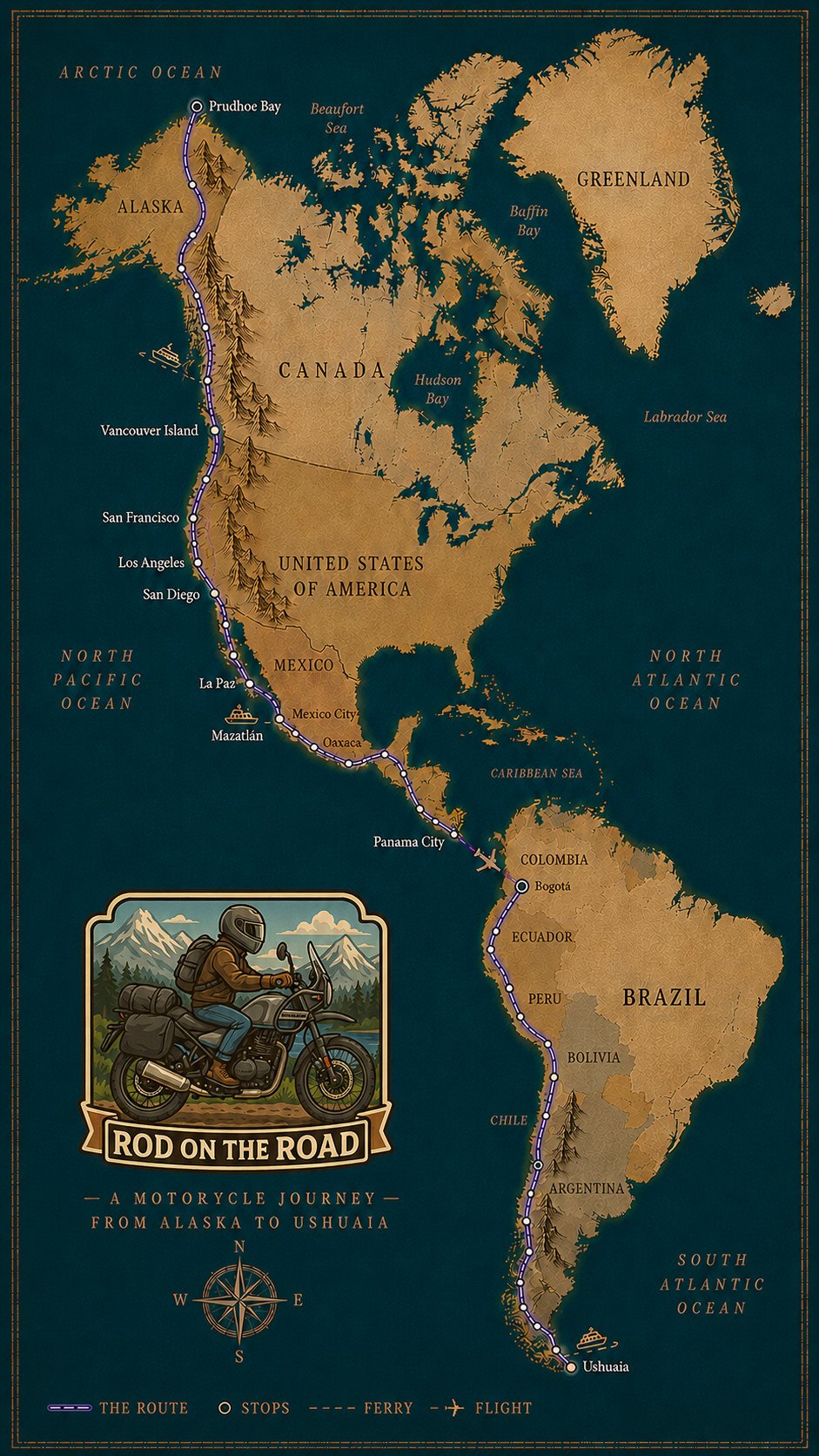
Route map
His first destination was Prudhoe Bay, the northernmost point in North America reachable by road. Getting there required traveling along the Dalton Highway, one of Alaska’s best-known and most demanding routes.
“It is a road built for the oil industry,” he said. “It is undeveloped, fairly dangerous and filled with truck drivers traveling very fast. Beyond that, the entire area is extremely isolated. Once you pass Fairbanks, there are only two gas stations left, one halfway and one at the end. Everything else is simply endless Alaskan wilderness.”
For a young Israeli accustomed to a small, densely populated country, the landscape felt like another world. “There is nothing around you. Just the road, the wind and nature. It was the first major challenge of the journey, but also one of the most extraordinary experiences.”
Inside his bag were two small stickers carrying a deeply personal story of loss. “It was important to me to commemorate two fallen soldiers who had accompanied me during my military service: Staff Sgt. Itamar Shemen, who was with me in the paramedics course, and Maj. Hod Shriebman, the brother of my commander in the unit.
“For me, that was the opening moment of the journey. I entered the Arctic Ocean, placed their stickers there and only then began riding south.”
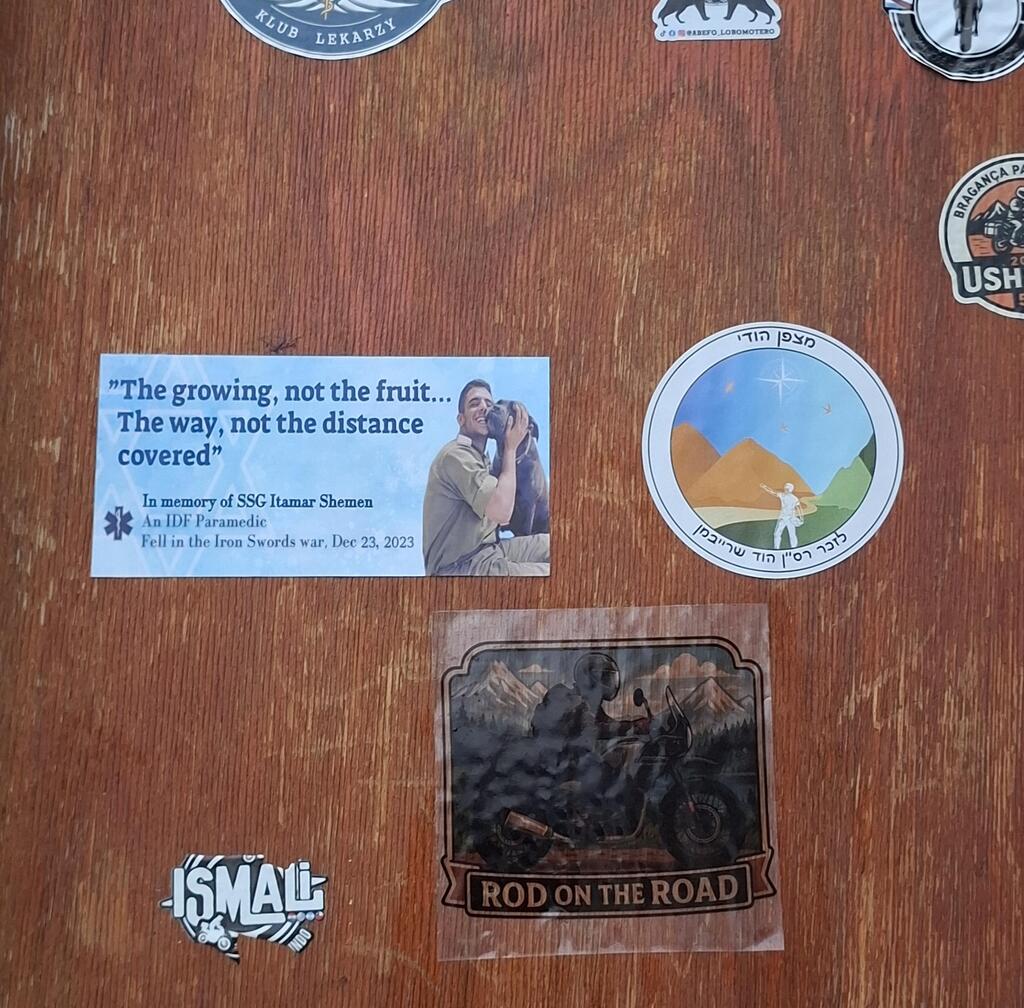
Stickers commemorating Staff Sgt. Itamar Shemen and Maj. Hod Shriebman, carrying their light and values forward
(Photo: Courtesy of Nimrod Mellhausen-Hasson )
Alongside the memorial stickers, Mellhausen-Hasson carried another, more personal design. “My parents made me a sticker showing me riding a motorcycle, with the words ‘Nimrod on the Road.’ There is a tradition among motorcyclists who go on long journeys. You leave a sticker in a special place or give one to people who helped you along the way. For me, it was a way of saying thank you.”
With the memorial stickers, a motorcycle loaded with equipment and the dream he had carried since age 12, Mellhausen-Hasson turned his handlebars south and began riding. By the end of the expedition, he had traveled more than 36,000 kilometers (22,400 miles) through 15 countries and two continents, spending 315 days on the motorcycle. Even those figures, he said, could not truly explain what he experienced.
“I wanted to take my time and enjoy it. I know people who complete the route in three months and simply race through it. For me, the experience was about stopping, meeting people, remaining in certain places and allowing the road to unfold.”
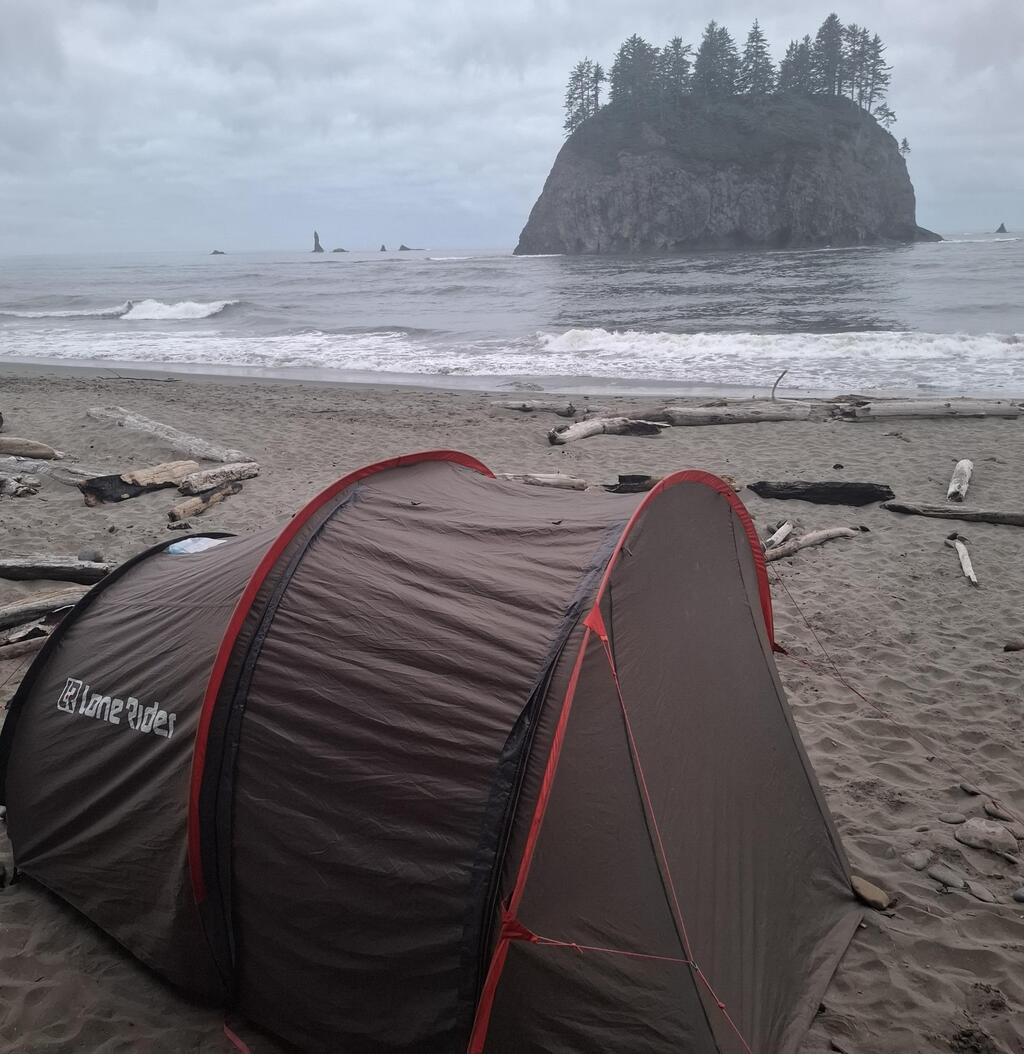
Camping on the beach in the United States
(Photo: Courtesy of Nimrod Mellhausen-Hasson)
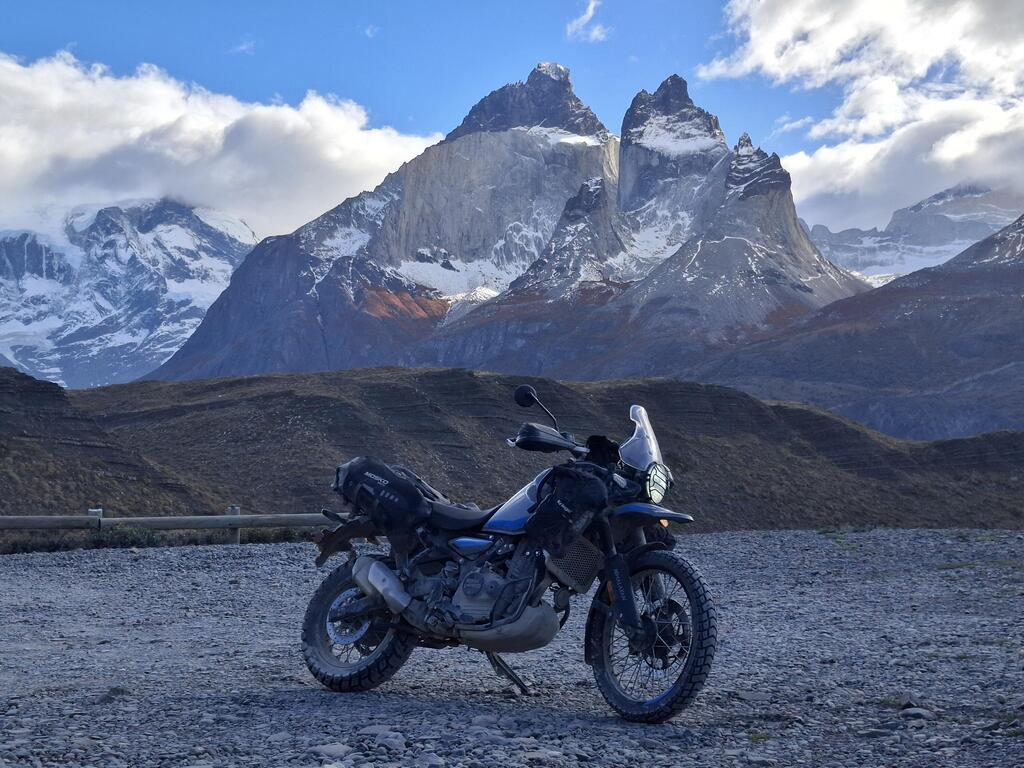
At Torres del Paine National Park
(Photo: Courtesy of Nimrod Mellhausen-Hasson)
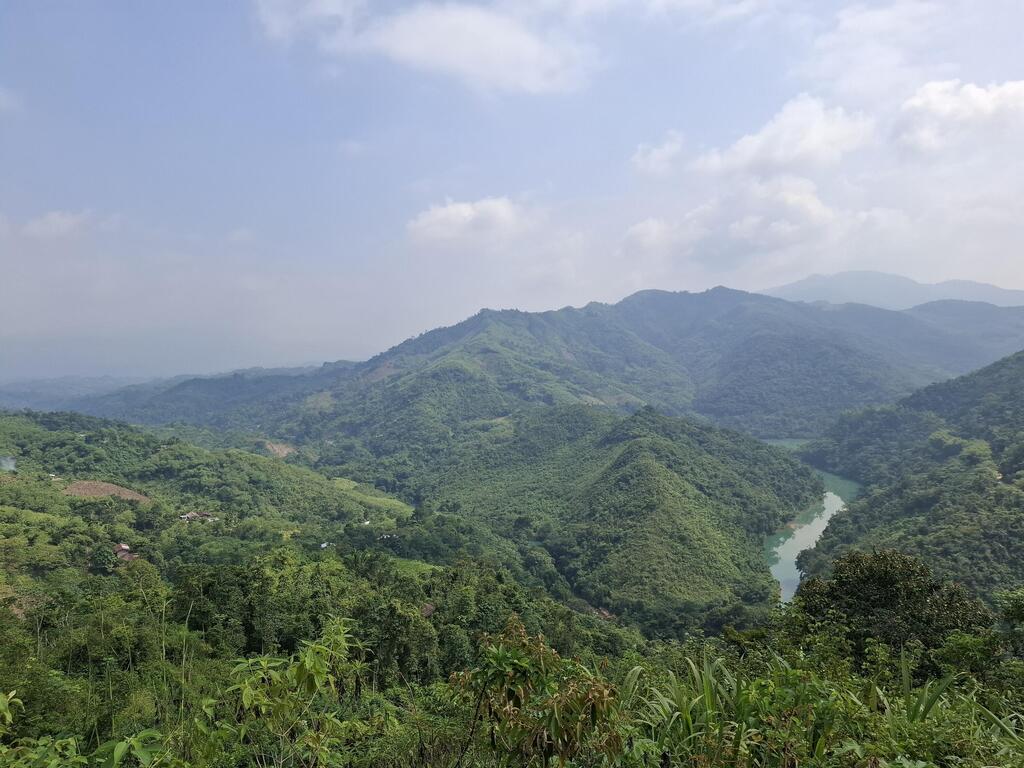
Wild landscapes in Guatemala
(Photo: Courtesy of Nimrod Mellhausen-Hasson)
One of his most memorable encounters took place in the small town of Stewart, Canada. “It is a fairly isolated town in the middle of nowhere,” he said. “You leave the main road and travel along a side road between mountains and glaciers, beside a river, with scenery that leaves you speechless around every bend.”
When he arrived, the local community was holding a small Canada Day celebration. “There was some music and dancing. I got off the motorcycle wearing my riding pants and boots, completely exhausted from the road, and I saw two older women dancing. I liked the idea, so I simply joined them.
“Suddenly, more people from the town joined us, and before I understood what was happening, I found myself line dancing with almost the entire population of Stewart. It was one of the most beautiful experiences of the journey.”
For months, he traveled with about 30 kilograms (66 pounds) of gear strapped to the motorcycle. “Every day started with packing up the tent and ended with pitching it again. At first, it felt demanding. Eventually, it simply became part of everyday life.”
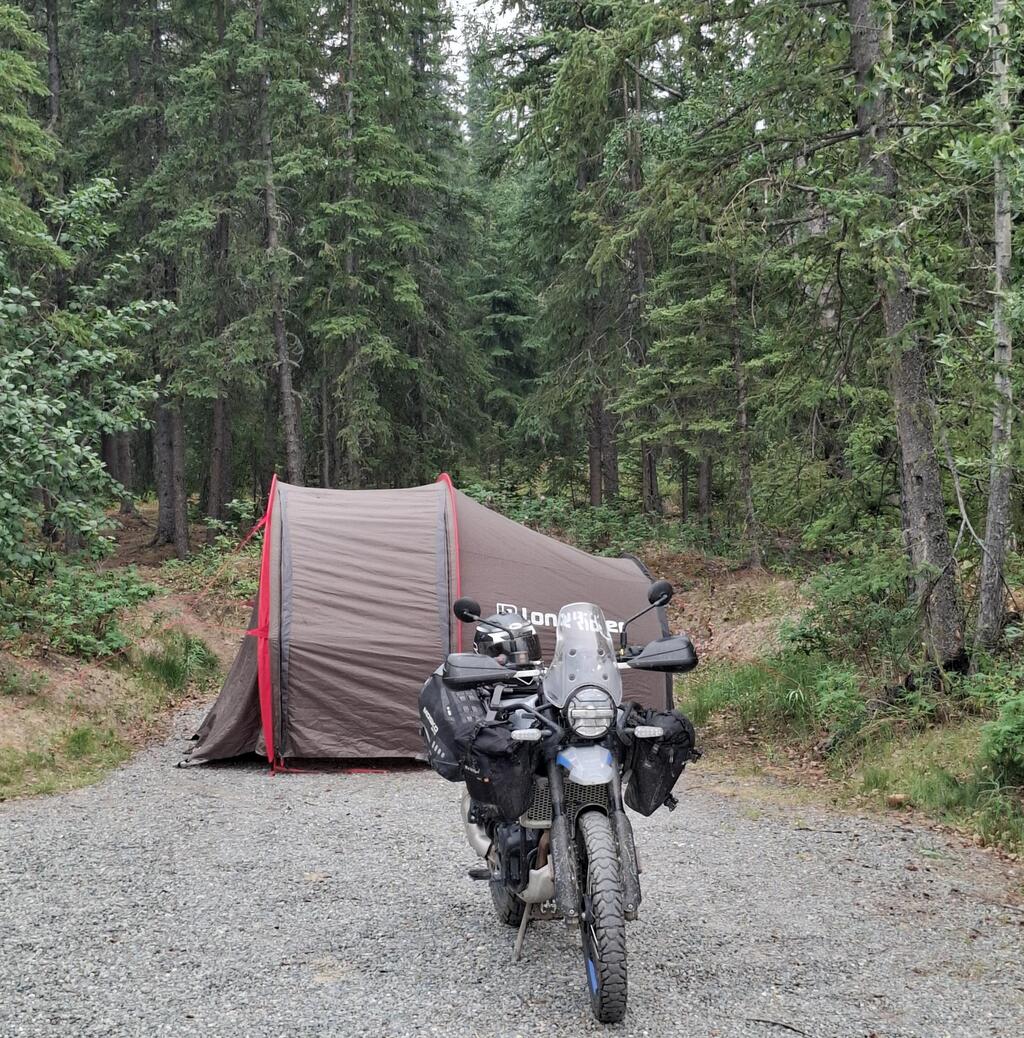
Camping in Canada
(Photo: Courtesy of Nimrod Mellhausen-Hasson)
In Northern California, he stopped for a week to volunteer at a local flower farm. What seemed like a small detour became one of his warmest memories. “My grandfather was a farmer in the Jezreel Valley and also grew roses, so I have always loved flowers. I specifically searched for a place like that and found one.”
For a week, he lived and worked alongside the farm’s owners, gradually becoming part of the family. “We woke up together, worked together, picked flowers and made bouquets. I also helped them prepare for a local festival where they sold their flowers. Later, they even invited me to a family birthday celebration.”
They have remained in touch to this day. “Some people you meet along the way simply stay with you.”
Mexico was the country Mellhausen-Hasson feared most. Before crossing the border, he met a young Mexican man who had been wounded in cartel violence. “He kept warning me, ‘Don’t go into Mexico. Mexico is dangerous.’ He was a good person, but meeting him at that moment was the last thing I needed. It only intensified the fears I already had at the start of the journey.”
Mexico became his first major test of nerve. “I knew that if I could make it through Mexico, I would be fine. Suddenly, you are entering an unfamiliar country, surrounded by a language you do not speak, and you realize there is no turning back.”
The approach to the border only heightened his anxiety. “There are signs, ‘Last exit in the United States,’ and you get the sense that this is your final chance to turn back.” Yet Mexico became the country where he stayed the longest. “It was incredible. Deserts, jungles, mountains, history, people. Mexico has everything.”
In Baja California, he encountered armed men blocking the road, with no clear indication of who they represented. “There were checkpoints where it was not entirely clear whether the men were police officers or members of a cartel,” he recalled. “You understand very quickly that the worst thing you can do is panic.”
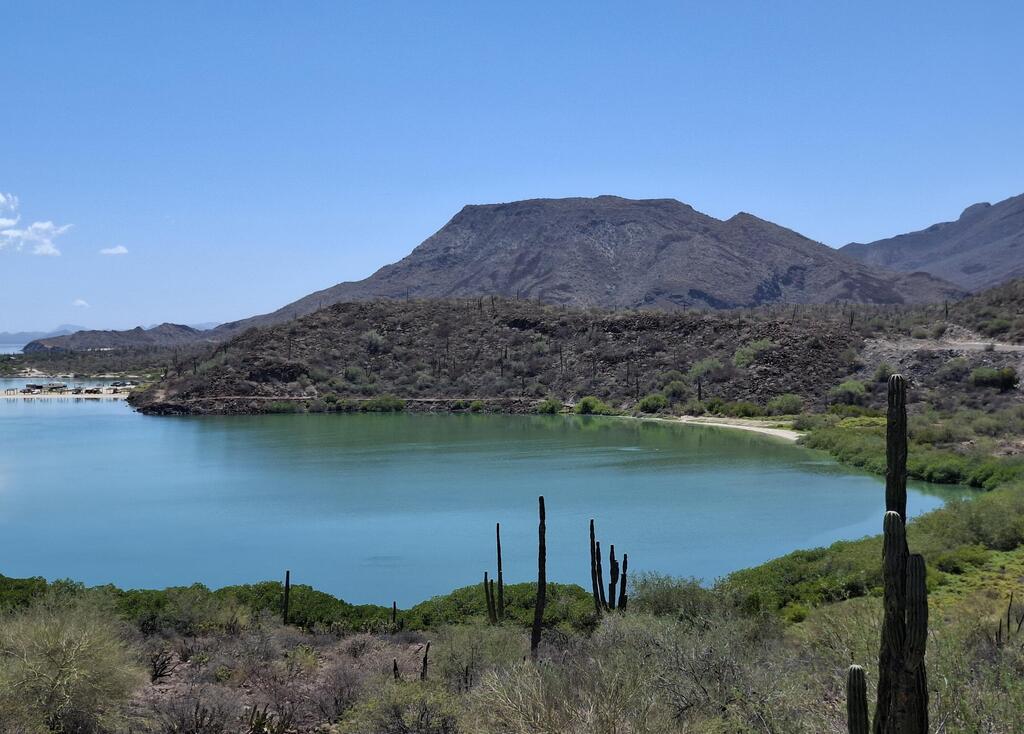
A secluded bay in Baja California, Mexico
(Photo: Courtesy of Nimrod Mellhausen-Hasson)
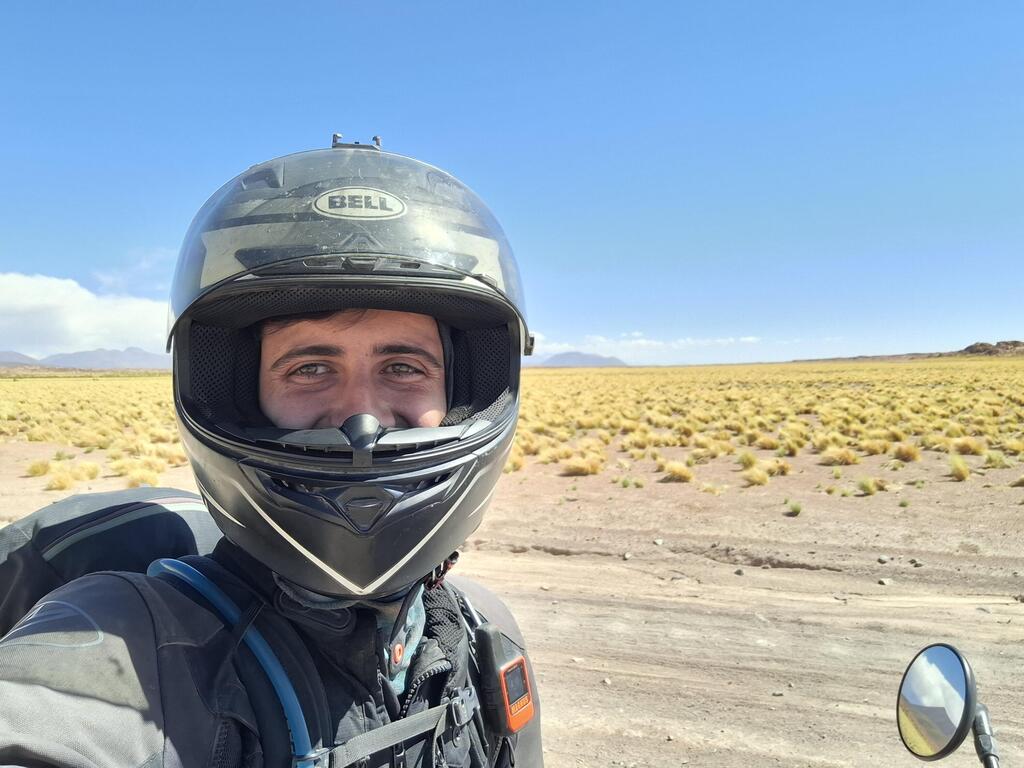
In Chile’s Atacama Desert
(Photo: Courtesy of Nimrod Mellhausen-Hasson)
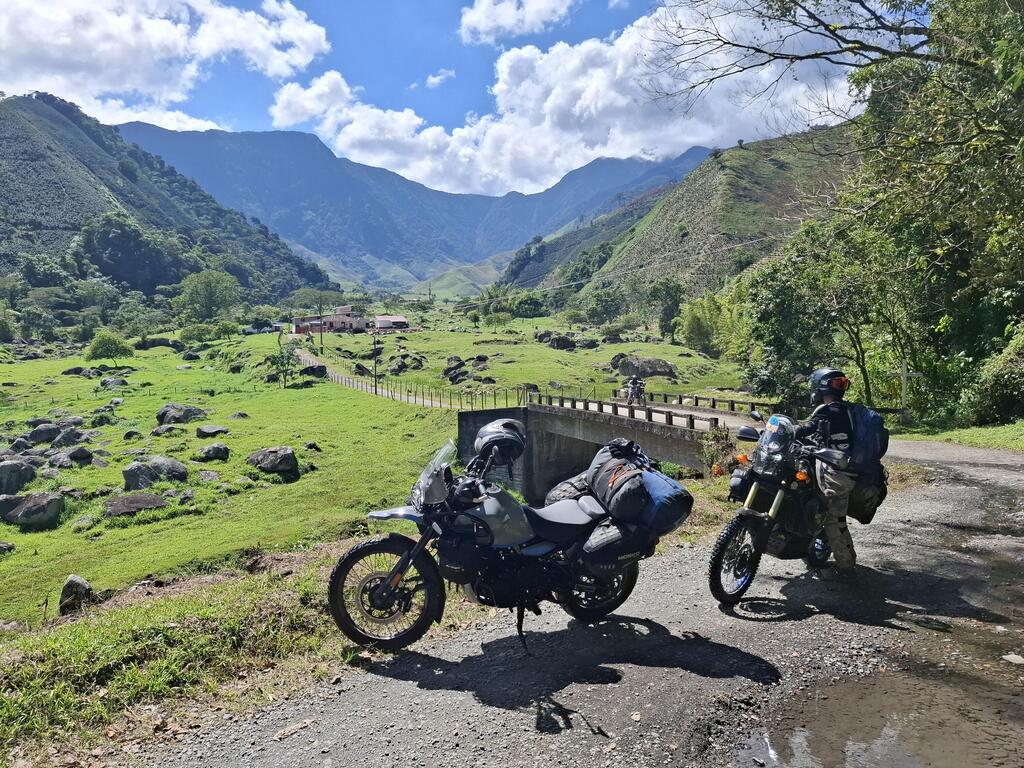
Meeting fellow motorcyclists in Colombia
(Photo: Courtesy of Nimrod Mellhausen-Hasson)
At one checkpoint, he suspected the men were trying to pressure him into paying a bribe. “I just played dumb. I knew that if I panicked, they would realize they had leverage. So I sat there, waited and kept saying I did not understand Spanish. Eventually, they gave up and waved me through.”
The experience taught him a lesson that stayed with him for the rest of the journey: “The anticipation is often far more frightening than the situation itself.”
In Peru, he faced a different kind of adventure. “At one point, I was standing at the side of the road with a motorcycle leaking oil, a suspected flat tire and an insurance problem. Then police officers suddenly arrived and wanted to see all my documents.” Once again, he decided to remain calm. “If you become emotional, you lose.”
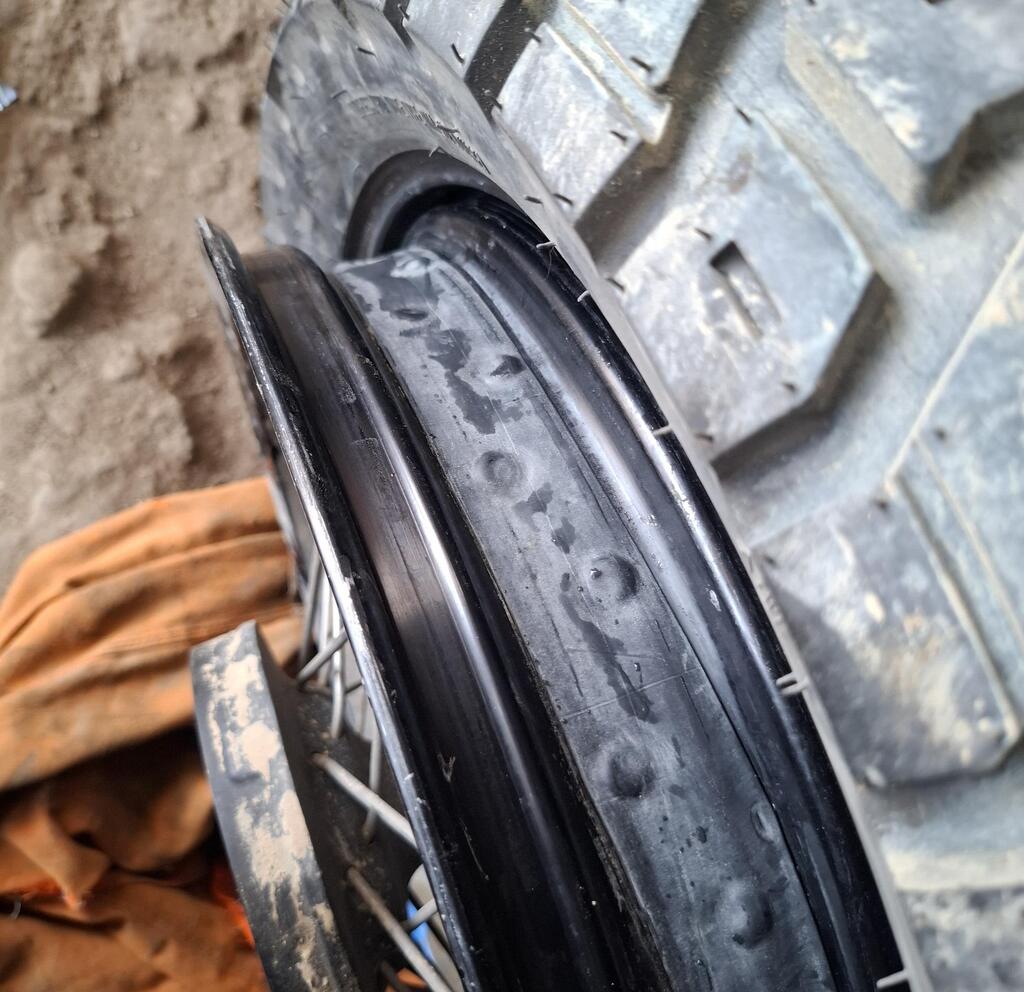
Repairing a flat tire in Peru
(Photo: Courtesy of Nimrod Mellhausen-Hasson)
When an officer asked for proof of insurance, Mellhausen-Hasson tried to explain that he had already purchased the policy but had not yet received the documents.
“I showed him the receipt in English, but he could not understand it. At one point, I asked how a commander in the Peruvian police could not know English.” To his surprise, the gambit worked. “The other officers started laughing at him, and eventually he let me go. It was the kind of moment that could have ended the journey, or at least created a serious problem, and suddenly I was free to continue.”
After nearly a year on the road, Mellhausen-Hasson reached his final destination: Ushuaia, Argentina, widely known as the southernmost city in the world. “I arrived as winter was approaching. The leaves had turned red, and the road was simply incredible.”
At the famous gateway to the city, where travelers and motorcyclists from around the world stop to take photographs, he once again took out the memorial stickers. “I also placed Itamar and Hod’s stickers in Ushuaia. It was important to me that they would be at both ends, at the northernmost point and the southernmost point.”
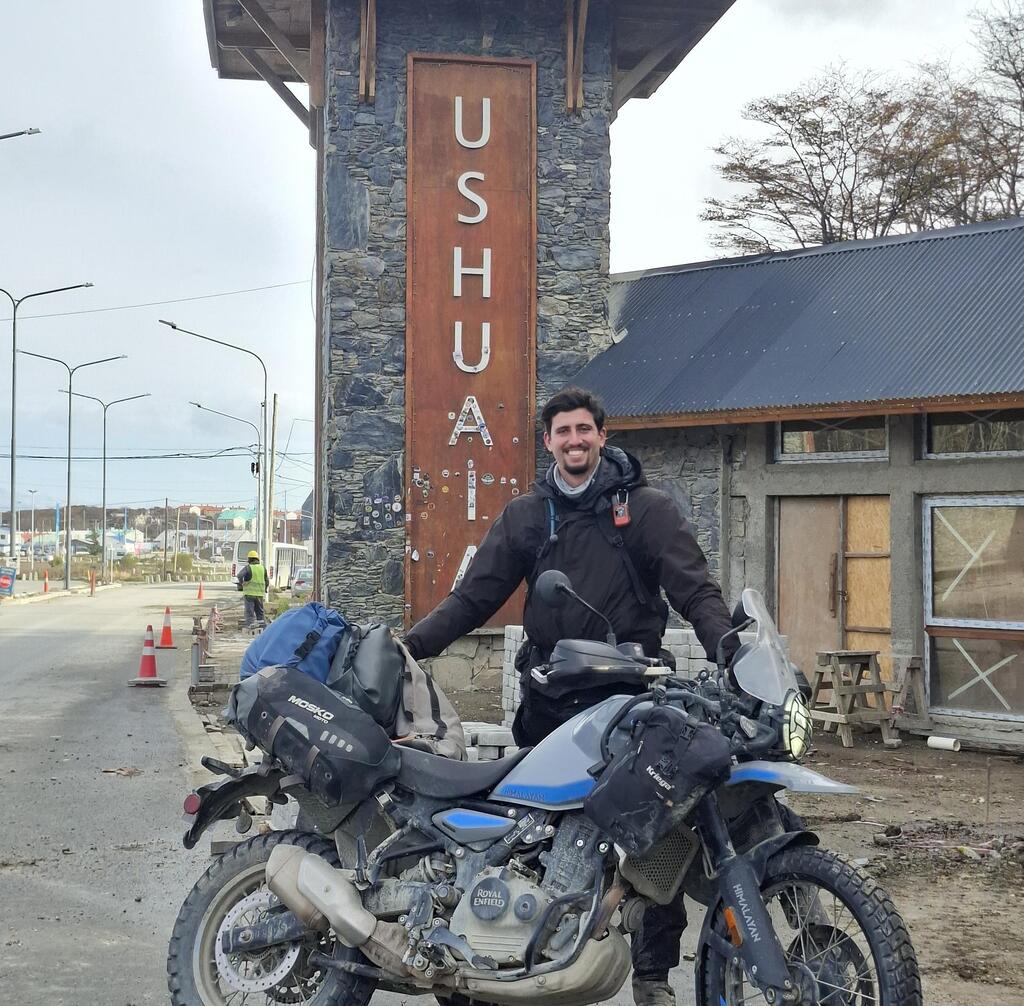
The end of the journey at the entrance to Ushuaia
(Photo: Courtesy of Nimrod Mellhausen-Hasson)
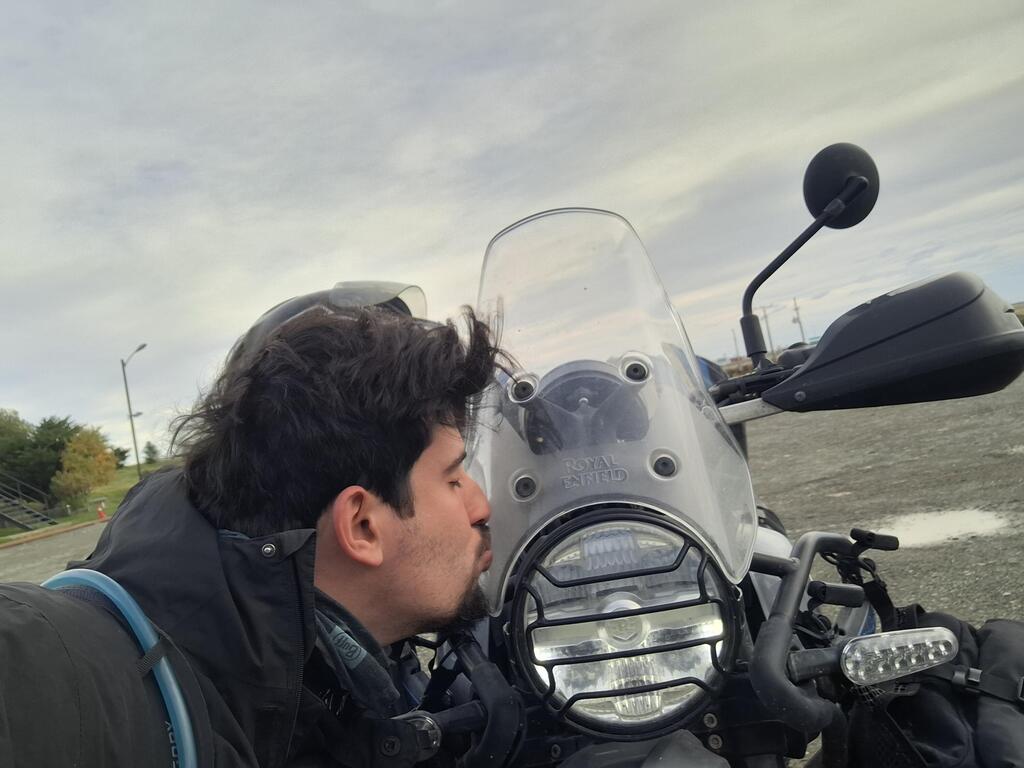
A farewell kiss for the motorcycle at the end of the journey
(Photo: Courtesy of Nimrod Mellhausen-Hasson)
He then continued to the southernmost point accessible by road and once again entered freezing water, this time in the Beagle Channel. “I wanted to complete the circle,” he said. “I jumped into the water at the northern end, and I jumped into the water at the southern end.” This time, he added with a smile, the water was slightly less cold.
Only months after returning home has he begun to grasp what the journey meant. “You look back and realize it was really a process of growing up. It profoundly shaped me.”
What stayed with him most was not the number of countries, the miles traveled or even the landscapes. “One of the biggest things I learned is that people are good and want to help,” he said. “We tend to focus on the dangers and the bad things, but most of the people I met along the way simply wanted to help.”
His other lesson was even more direct: “Dreams are meant to be pursued. It is not enough to think about them. You have to go out and make them happen.”