

In March 2012, Brian and Jill Skarda moved into one of the houses on Arlington Row in Bibury, a particularly photogenic row of historic cottages in England’s Cotswolds region. Their original plan was to stay for just six months, but those six months turned into a year, then another and ultimately 14 years living in one of the country’s most photographed locations.
But in recent years, life inside this picture-postcard setting has become increasingly less idyllic. Now, after more than a decade in their home, the couple have decided to leave Bibury, which was named the world's most beautiful village, and move to Minehead in western England. The reason, they say, is tourism that has become increasingly intrusive.
Gallery

Tourists stroll among the traditional stone houses in the picturesque village of Bibury
(Photo: Wang Sing / shutterstock)
In a farewell column published in the local magazine Village Life, Brian described people knocking on their door, peering through their windows and repeatedly intruding on their privacy. According to Skarda, the behavior of some visitors has changed since the COVID-19 pandemic. At times in 2026, the crowds became so overwhelming that the couple struggled to leave their home or their car down the street.
And the problem goes far beyond a few tourists lingering to take selfies. In a column published in May, Skarda described a series of unusual encounters. One man rang the doorbell and asked whether he and 10 family members could come inside to look around. On another occasion, a tour guide discovered that Skarda lived on Arlington Row, raised her flag and led about 50 tourists from her bus to his front door, hoping they might be allowed inside for a tour.
Despite his frustration, Skarda also recalls some amusing moments. One day, as he ducked to pass through the house's low doorway, he found himself facing a group of about 10 Japanese tourists. Apparently mistaking his movement for a bow, they bowed back.
Even the front window has apparently become part of the attraction. Once, a Japanese tourist stood directly outside the house and used her reflection in the window as a mirror while applying makeup. Skarda suddenly opened the curtain and waved hello.
More serious incidents, he said, included visitors attempting to enter the house when the door was left open and others entering the cottages' private gardens to have picnics. The National Trust, which owns the Arlington Row properties, now makes clear to visitors that these are private homes and that the public is not permitted to enter the houses or their gardens.
Despite his frustration, Skarda also recalls some amusing moments. One day, as he ducked to pass through the house's low doorway, he found himself facing a group of about 10 Japanese tourists. Apparently mistaking his movement for a bow, they bowed back.
On another occasion, American tourists spotted him filling a bucket with water from the river and asked whether his house had running water. Skarda jokingly told them that they also generated their own electricity by pedaling a bicycle. According to Skarda, they apparently believed him.
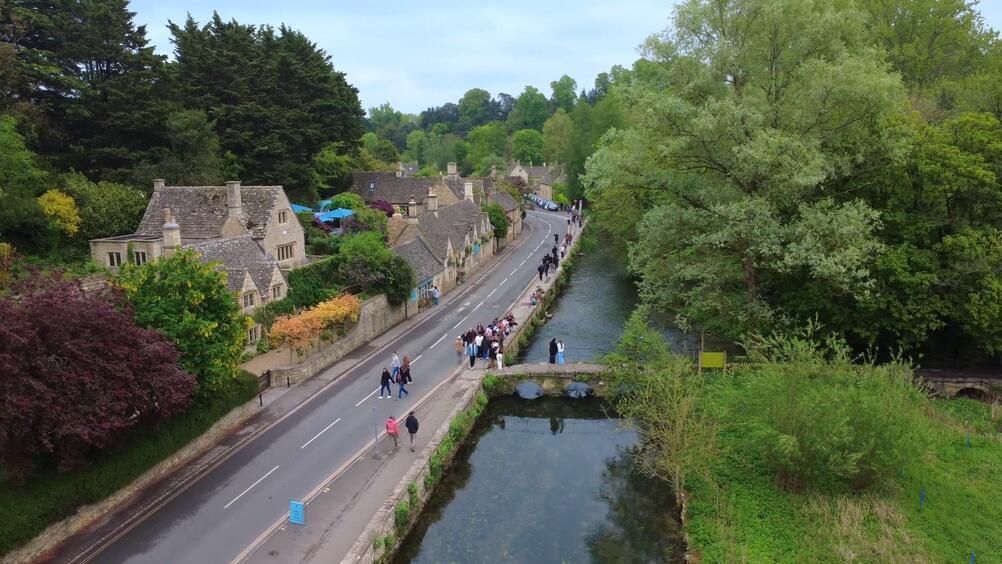
Tourists cross an old stone bridge over the stream in Bibury
(Photo: whereguygoes001 / shutterstock)
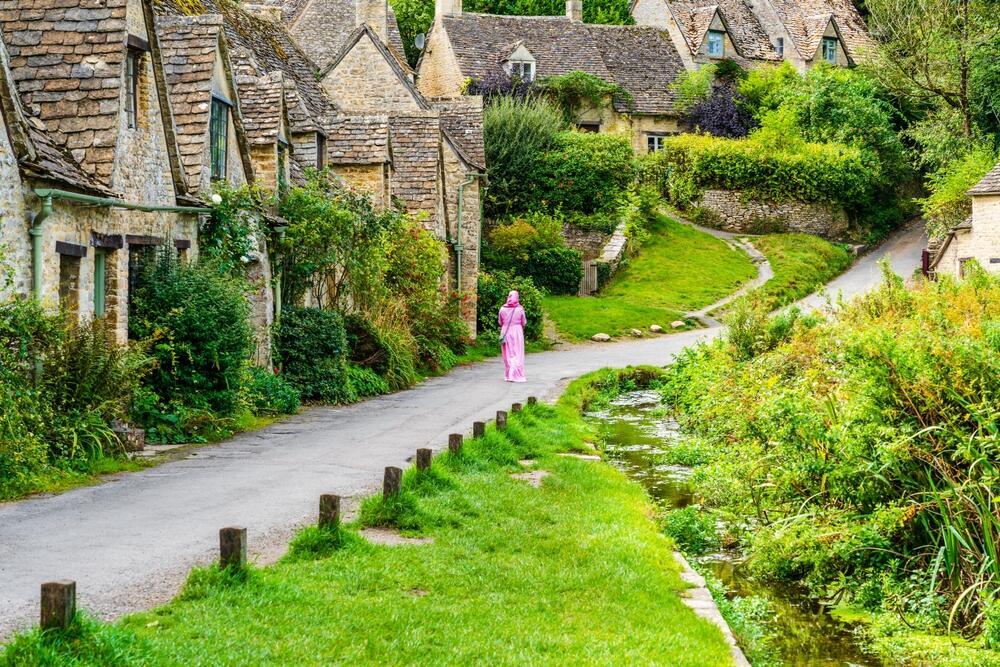
The village of Bibury during a peaceful moment
(Photo: PhotoFires / shtterstock)
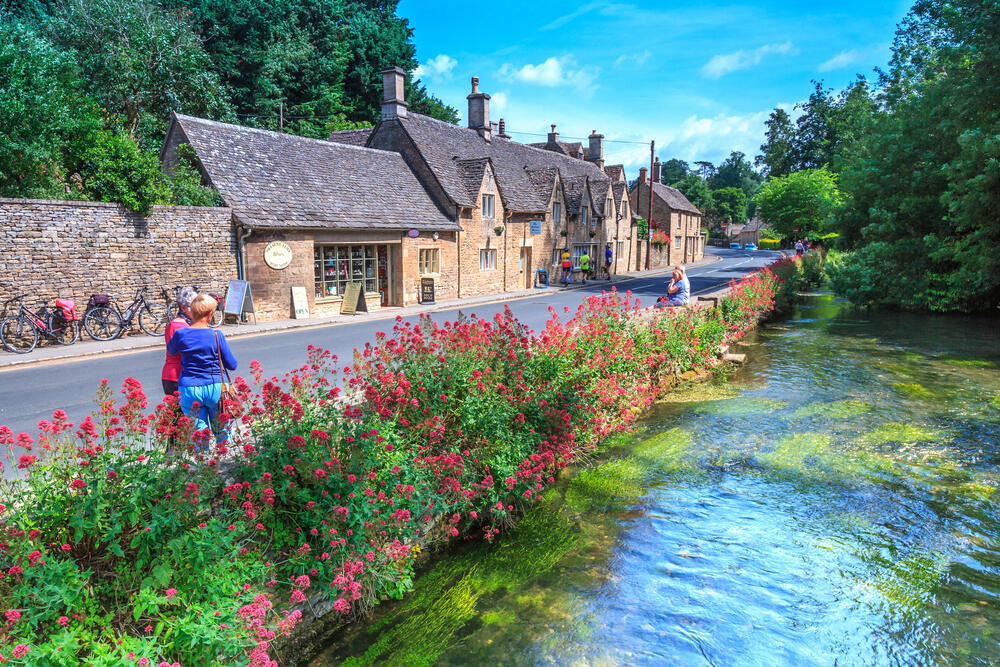
Another tranquil view of Bibury
(Photo: iLongLoveKing / shtterstock)
The couple's home attracts particular attention because it appeared in the 2007 fantasy film Stardust. But for Skarda, the situation has long since stopped being a laughing matter.
As early as the summer of 2023, he wrote that Arlington Row residents sometimes felt "under siege." On particularly busy days, he said, so many visitors crowded outside the cottages that residents had difficulty getting in and out of their homes. Some visitors rang doorbells, knocked on doors and even pushed stones through letterboxes.
Skarda was not simply a resident complaining from the sidelines. Over the years, he was active in the local community, served on the parish council and participated in efforts to address the traffic, parking problems and overcrowding caused by tourism in the village. Now, after years of trying to be part of the solution, he and Jill have decided to leave.
When England's most beautiful village became too popular
It is not difficult to understand why so many tourists want to visit Bibury. Located on the banks of the River Coln in Gloucestershire, England, the village looks almost like a perfect representation of the classic English countryside: honey-colored stone houses, a small river, a bridge, green lawns and a row of cottages that seem frozen in time.
The British writer and designer William Morris described Bibury as "the most beautiful village in England" back in the 19th century, a phrase that has since become an inseparable part of the village's identity.
Its biggest attraction is Arlington Row. The buildings were constructed around 1380 as a monastic wool store and converted into weavers' cottages in the 17th century. Today, they are owned by the National Trust, a British heritage conservation organization, and most remain private residences.
The row of cottages has become one of the most recognizable sights in the Cotswolds and was even featured on British passports. In the age of Instagram and TikTok, its appeal has only grown.
Bibury itself has a population of just about 600, but on busy weekends, it can attract as many as 20,000 visitors. Many arrive on organized bus tours of the Cotswolds, stopping briefly, primarily around Arlington Row.
And that is where the problems begin. Bibury's narrow roads were built centuries before anyone could have imagined dozens of buses and hundreds of cars arriving in the village every day. An official traffic survey recorded more than 4,500 vehicle movements across Swan Bridge in a single day, and congestion has become a persistent source of traffic jams and safety concerns in recent years.
Authorities have already been forced to intervene. Changes have been made to bus drop-off points, parking restrictions have been introduced and additional measures are being considered to ease congestion and allow residents to move around the village.
But the complaints have not disappeared. In addition to traffic jams, residents report problems involving drones, visitors climbing over walls and people trespassing on private property.
Even the river has become a source of controversy. The village is promoting measures aimed at preventing tourists from entering the water and the environmentally sensitive areas around Rack Isle, a wet meadow near Arlington Row that provides a habitat for local wildlife and plants.
Bibury's paradox is simple: Tourists come because the village looks peaceful, historic and idyllic, but their sheer numbers threaten the very tranquility they have come to experience.
For Brian and Jill, that balance has already been lost. Over the years, Skarda said, visitors repeatedly told him two seemingly contradictory things: how lucky they were to live in such a beautiful place and how terrible it must be to live somewhere overrun by tourists.
After 14 years in Bibury, it seems the couple have come to believe that both are true.