

A trail run through the mountains of Albania turned into a fight for survival in a matter of seconds when Australian tourist Amy Lecons was bitten by a venomous snake while running alone on a remote path.
Lecons, who lives in Wanaka, New Zealand, said she suddenly felt a sharp pain near the Achilles tendon of her left leg. “I immediately knew a snake had bitten me,” she later recalled.
Lecons had arrived in the northern Albanian village of Valbona just three days earlier. On June 21, she set out on what was supposed to be a roughly 90-minute trail run through the mountains, carrying a phone, water, running poles and a camera.
One thing she normally carried, however, was missing: her small first-aid kit. She had left it behind that day, she told Truth Times in an interview later cited by People magazine.
Videos Lecons posted after the incident have since attracted millions of views on TikTok, with the most popular surpassing 21 million. Her story has received renewed attention in recent days following a detailed interview in which she described the bite, the struggle to summon help and the rescue that followed.
Lecons said she had previously encountered snakes in Greece and Australia. That morning, she had seen a large group of hikers pass along the trail and assumed any snakes nearby would have already moved away.
Then, as she descended the trail and rounded a bend, she was bitten. One of her first actions was to take out her phone and photograph the snake so it could later be identified.
According to Australian outlet news.com.au, the snake was a nose-horned viper, named for the distinctive horn-like projection on its snout. The species is found primarily in southeastern Europe and the Balkans and is considered one of Europe’s more medically significant venomous snakes. Its bite can cause intense pain and swelling, and severe cases may produce systemic symptoms.
After photographing the snake, Lecons sat down on the trail and tried to call for help. But calls to the European emergency number, 112, ran into a language barrier. She was unable to explain in English what had happened or where she was. HuffPost Greece reported that she tried calling twice without success.
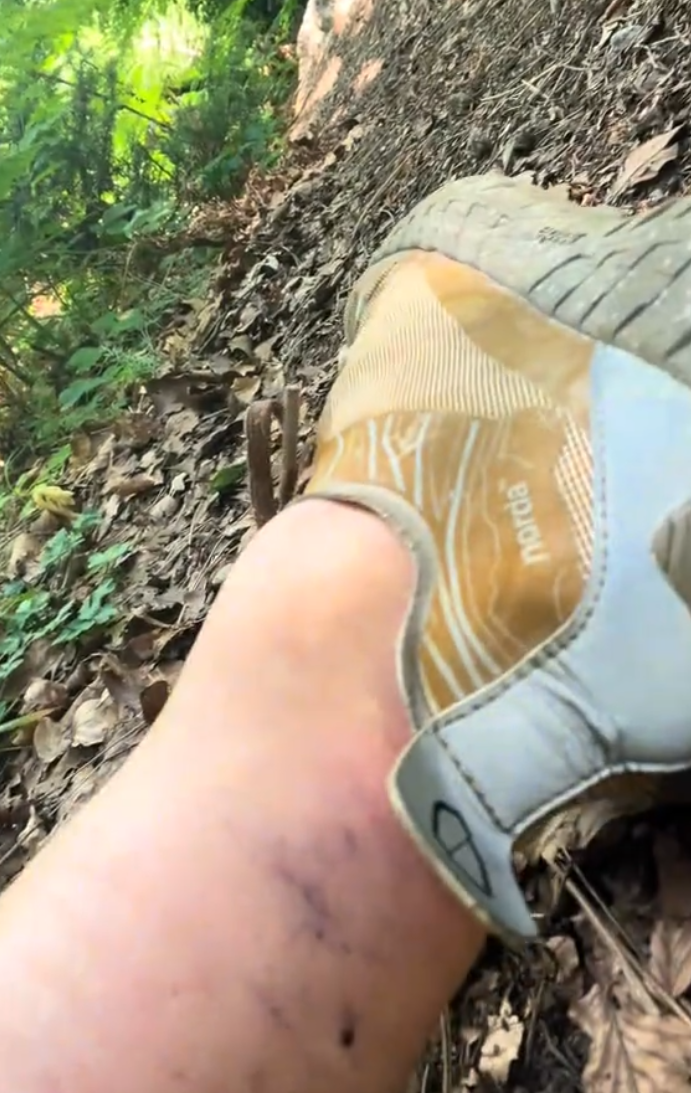
The bitten leg
(TikTok / Amy Lecons)
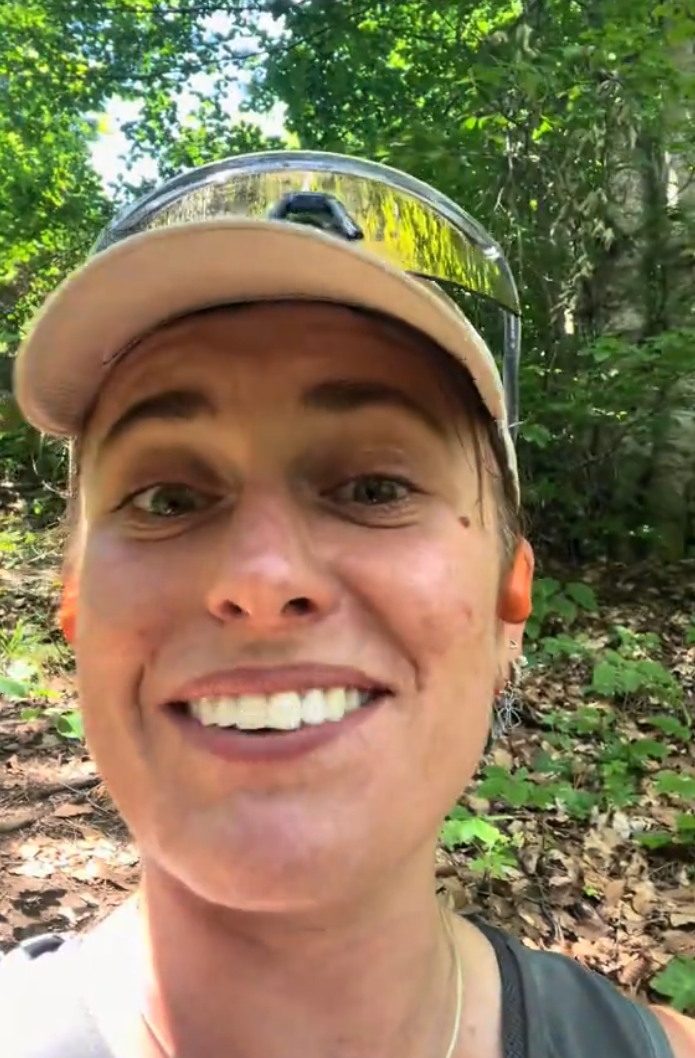
Alone in the wilderness, Lecons then switched on her camera and began recording herself. The series of videos she later uploaded to TikTok follows the ordeal almost from beginning to end: the minutes after the bite, her wait for assistance, the arrival of rescuers, the evacuation and her treatment and recovery in the days that followed.
Despite the pain and uncertainty, she appears remarkably calm in parts of the footage and even smiles at the camera. At the same time, Lecons sent a WhatsApp message to her father, Robert, a doctor in Australia. From thousands of miles away, he advised her to immobilize her leg and try to keep her heart rate low while also working to find help.
Lecons shared her exact location using the What3Words app and contacted the owner of a hostel where she had previously stayed in Shkodra. She said the hostel owner managed to reach a local clinic in the Valbona area, while Australian emergency officials also worked through Interpol in an effort to assist her.
An ambulance was eventually dispatched about 25 minutes after the bite. Because of Lecons’ remote location, it took roughly another 30 minutes for help to reach her. The journey from there to the hospital in Bajram Curri took about another hour.
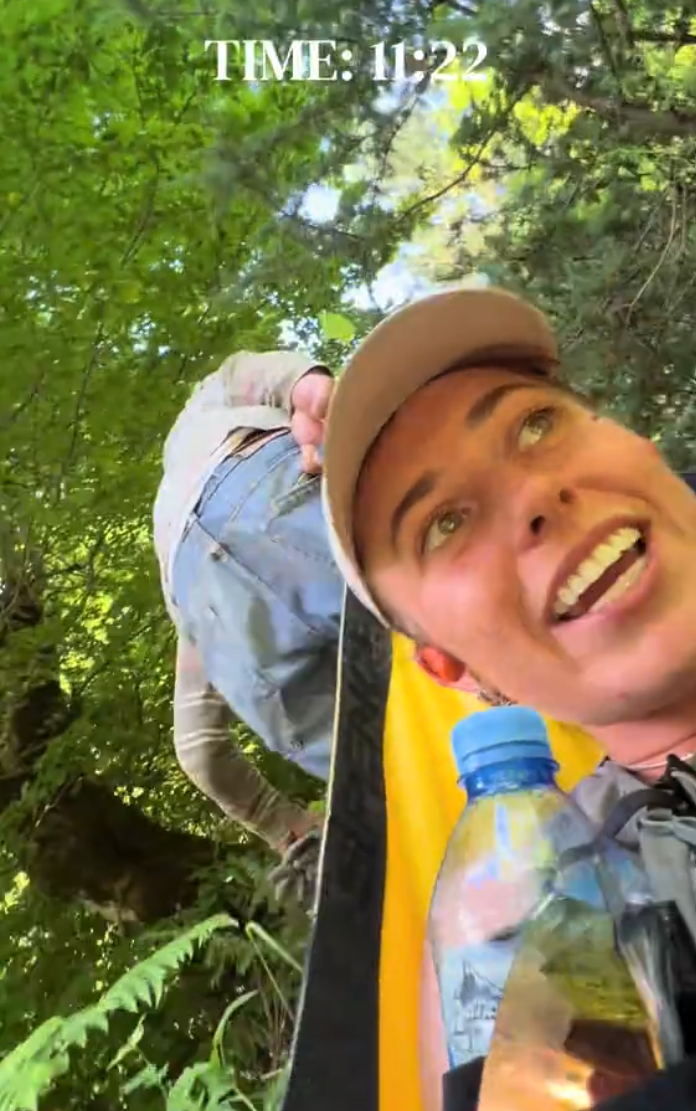
Rescuers arrive. Amy is taken to the ambulance
(TikTok / Amy Lecons)
Lecons continued filming even after rescuers arrived. The videos show her foot, ankle and leg gradually swelling. In one clip she describes severe pain, and later, from the hospital, recounts a frightening warning she said medical staff had given her. “They keep saying that if I move, my whole leg will turn blue,” she said, adding that they then made a cutting gesture.
At the hospital, Lecons received antivenom and remained there for two nights. She was later discharged and returned to her guesthouse to continue recovering.
After the rescue, she thanked the medical personnel and local residents who had helped her, particularly one man who carried her on his back through the mountainous terrain and heat to speed up her evacuation.
Despite her initial difficulty reaching emergency services, Lecons later described the assistance she received as “the perfect example of Albanian hospitality.”
Lecons said she decided to share her story to raise awareness of the problems travelers can face when trying to contact emergency services abroad, particularly when venturing alone into remote areas without reliable cell service.
Looking back, she said she realized she should have carried a satellite communication device. But the experience has not convinced her to give up trail running. “I can’t let fear control my life,” she said, “especially when trail running is such a big part of who I am and what makes me happy.”