

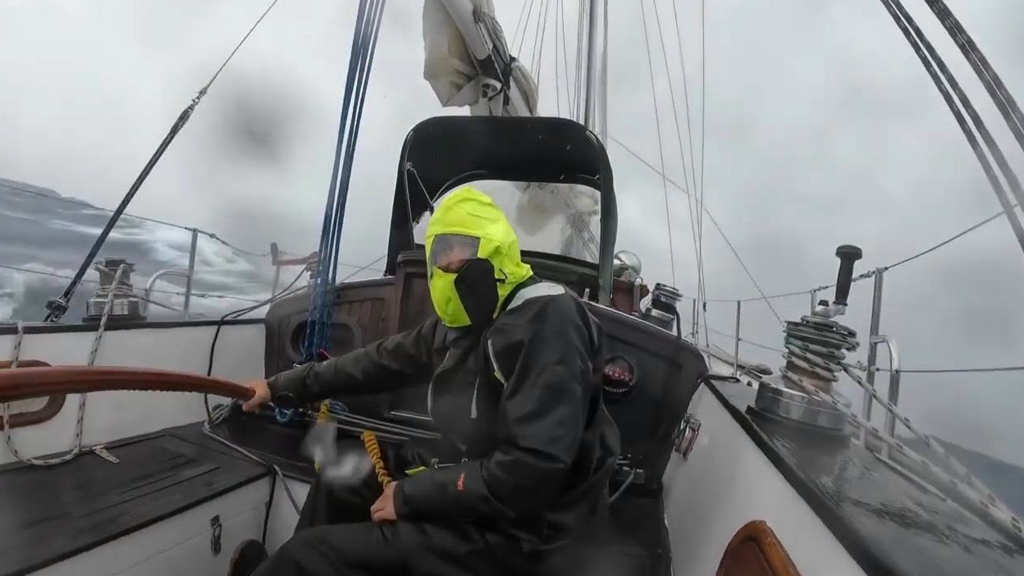
It was not until 3 a.m., after hours battling fierce winds and breaking waves, that Daniel Pinsky was finally able to go below deck. The 35-year-old Israeli sailor, who is in the midst of a solo circumnavigation of the globe as part of the 2026 Golden Globe Race, encountered a severe storm in the South Atlantic Ocean. He was forced to steer his sailboat, "Exodus," manually, with its sails lowered and wind gusts reaching about 60 knots (111 km/h), or possibly even more, according to his account.
"I've been through storms like these before. Even so, I was scared," Pinsky said in an update published by the race organizers. "I steered Exodus manually, with no sails up, in winds of more than 60 knots, until I was shivering from the cold, completely soaked after breaking waves hit me again and again. It was a very long night. Only at 3 a.m. was I finally able to go below deck. Thank God, Exodus and I are OK."
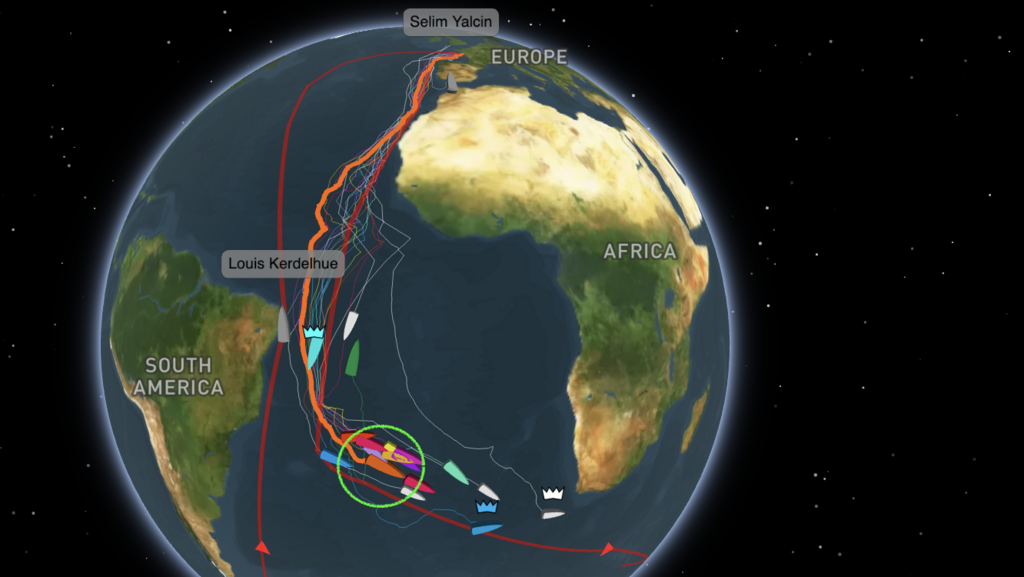
Daniel Pinsky's boat is circled in green; the route he has traveled so far is marked in orange
(Screenshot: Race tracking website)
The Golden Globe Race is considered one of the world's most challenging sailing competitions. Participants must circumnavigate the globe across three oceans, without stopping or receiving outside assistance, under rules based on a historic race held in 1968. Navigation relies on traditional methods, without GPS or digital navigation equipment, and communication with the outside world is extremely limited. The voyage is expected to take approximately eight to nine months.
Daniel reports from the middle of the ocean:
The dramatic update came Wednesday, after race organizers had already reported severe weather conditions in the area where Pinsky was sailing. A day earlier, he contacted race management and reported winds of about 35 knots, with stronger gusts, as well as growing exhaustion. A weather warning reached him in the early morning hours, when his ability to change course northward and move away from the storm system was already severely limited. After consulting with race officials, he was advised to sail with the wind rather than struggle to head back north.
But the storm left more than exhaustion and memories of a difficult night. During a satellite phone conversation with race founder Don McIntyre, Pinsky also reported damage to his boat's equipment. A wave that struck the stern of "Exodus" broke the wooden vane of its Windpilot system, a mechanical self-steering device that uses wind direction to keep the boat on course. For a sailor alone in the middle of the ocean, the system is particularly important because it allows him to leave the helm to rest, eat and maintain the boat.
Several fittings on the storm jib, a small sail designed for use in exceptionally strong winds, were also damaged. Pinsky said he had not yet completed his inspection of the equipment, meaning the full extent of the damage remained unclear. However, he believed the boat's structure had not sustained significant damage and reported that he was uninjured.
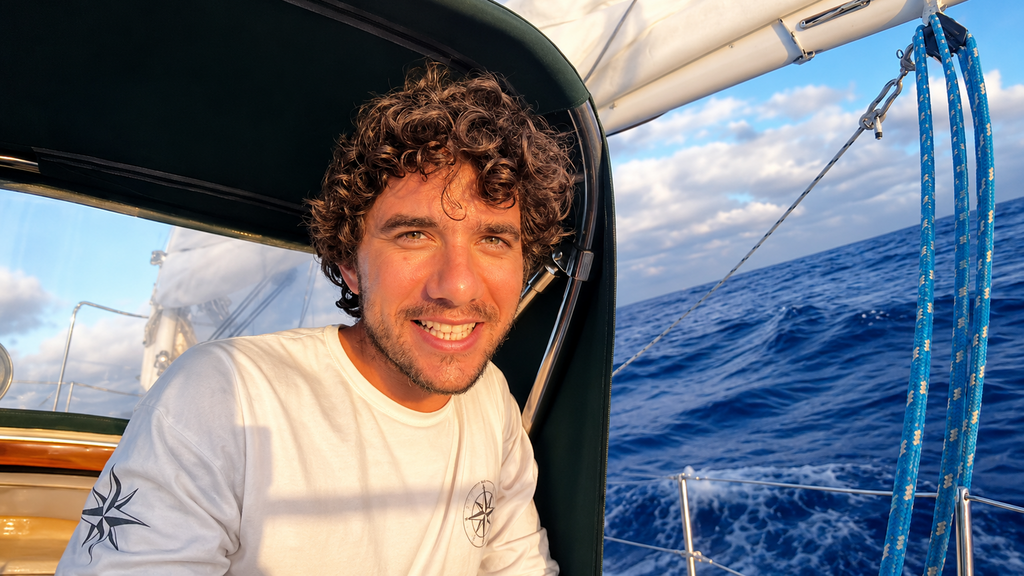
'I've been through storms like these before. Even so, I was scared'
(Photo: Courtesy of Daniel Pinsky)
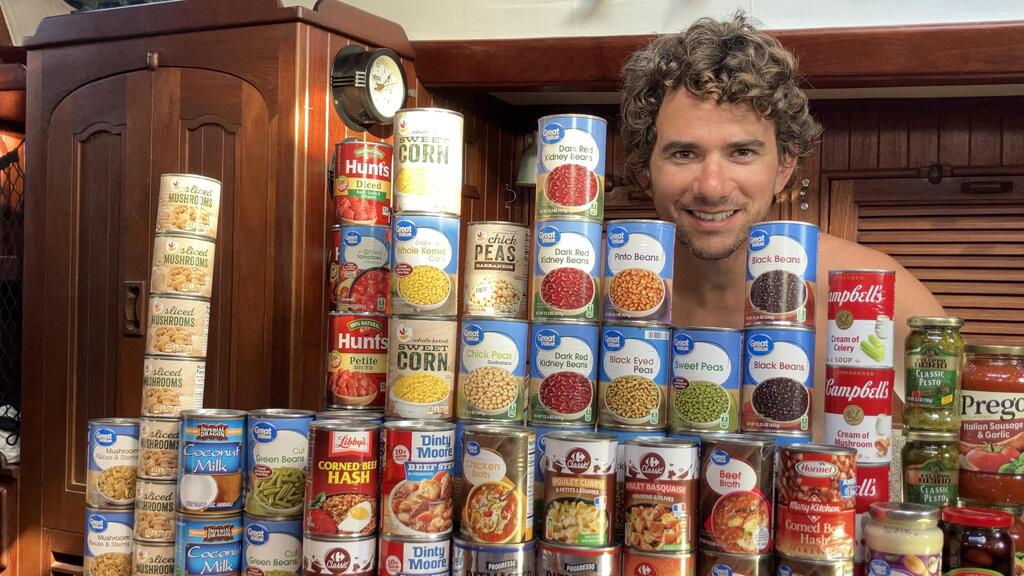
Daniel Pinsky
(Photo: Courtesy of Daniel Pinsky)
At the end of the call, Pinsky said all he wanted was to warm up, make himself some tea and climb into his sleeping bag to rest. According to the forecast he received, the winds were expected to ease, although he could soon face another problem familiar to ocean sailors: winds that are too weak, potentially slowing his progress for days.
The race continues: 16 started, three have already withdrawn
Despite the dramatic events, Pinsky has already made impressive progress in the competition. During October, he climbed as high as fourth place and held that position for a week. However, he lost several places in recent days, and tracking data from October 29 showed him in eighth place.
It is important to emphasize that the standings are only provisional. The race, which began September 6 in Les Sables-d'Olonne, western France, is expected to continue for several more months, with competitors still in the early stages of their journey around the world. Pinsky, now on his 52nd day at sea, has reached the South Atlantic, but tracking data indicates that he still has approximately 21,000 nautical miles to cover before reaching the finish line.
The harsh conditions have affected other competitors as well. French sailor Damien Guillou leads the race and is also contending with storm systems. Of the 16 sailors who started, three have already been forced to withdraw, partly because of equipment failures and health problems. For those still competing, every change in wind conditions, mechanical malfunction or navigational decision could affect the rest of their voyage.
'My mother cried and begged me to give it up'
Pinsky's extraordinary story was first reported by ynet in February this year. The 35-year-old from Ariel spoke in an interview conducted months before the race began about his decision to compete in one of the world's toughest sailing events and his family's deep concern.
"She cried quite a bit on the phone, asking me to give it up, but ultimately, it's my life," he said of his mother, who struggled to accept his decision and feared the dangers he would face at sea.
Pinsky's love of the sea began at an early age. At 14, he left home to attend the maritime boarding school at the Naval Officers School in Acre. At 23, he bought his first small boat, which he named "Asterix." He later embarked on a sailing journey around the world with his then-partner, crossed the Atlantic Ocean and lived in Panama for an extended period. Over the years, sailing became a way of life, until he decided to take on an especially ambitious challenge: circumnavigating the globe alone.
(Daniel Pinsky on the day of the race's start, September 2026)
To compete in the race, Pinsky sold his previous boat, purchased a 1980 Baba 35 sailboat in the United States and prepared it for the voyage. We spoke with him again in May, when he was in the middle of a solo passage from the Caribbean to France. At the time, he described three storms he had already encountered, along with long stretches when there was almost no wind, leaving him stranded in the middle of the ocean with no way to make progress.
His family's concerns also came up during that interview. Pinsky said his mother had gradually learned to cope with his solo voyages, partly because she could track his location. But he admitted, "She still worries like crazy."