

For years, passport power was measured by a single, simple question: how many countries can its holder enter without a visa? The Global Passport Index by Global Citizen Solutions takes a broader view, weighing not only freedom of movement but also the quality of life in the issuing country and its economic attractiveness.
That wider formula produces a ranking dominated almost entirely by Europe, with Sweden in first place and Israel far from the global top tier.
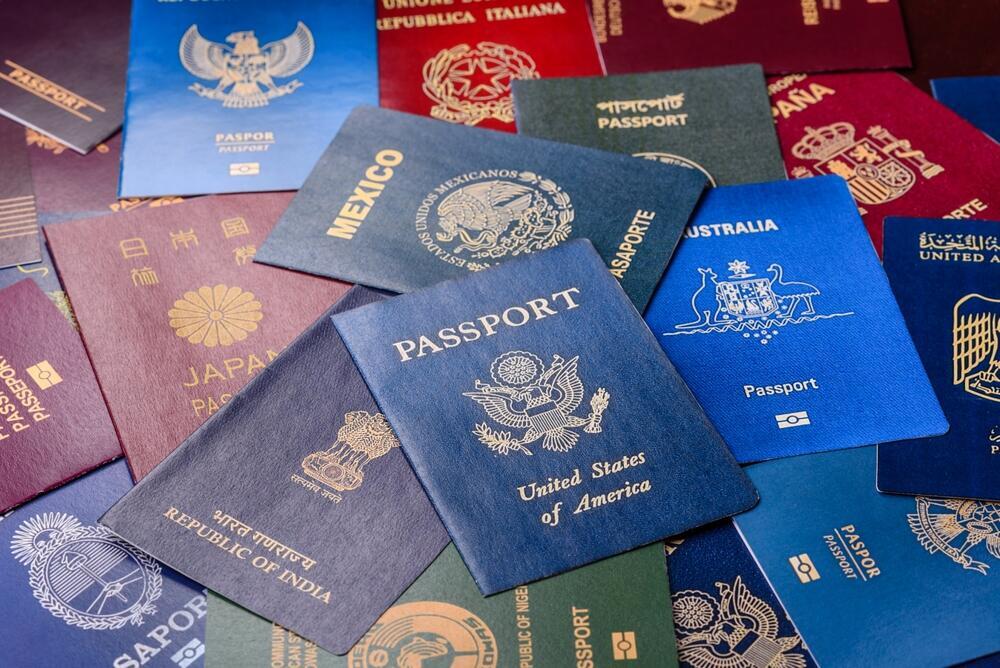
The Global Passport Index ranks passports according to three main components: enhanced mobility, which carries the most weight at 50% of the overall score; investment attractiveness, which accounts for 25%; and quality of living in the country issuing the passport, which accounts for the remaining 25%.
In other words, the index does not stop at counting how many countries a passport holder can enter without a visa, but it also tries to assess the passport’s broader value: how much it enables global movement, economic activity and access to a stable, high-quality living environment.
Europe dominates the top 10
Singapore ranks 10th, making it the only country outside Europe to enter the top 10. It leads the world in both mobility and investment attractiveness, but a lower relative score for quality of life pushed it down to 10th place overall.
Norway ranks ninth, benefiting from a strong combination of broad travel freedom and one of the highest quality-of-life scores in the world. Even without leading the investment category, its overall balance places it near the top.
The UK ranks eighth. The British passport remains very strong, largely because of the quality of life and economic attractiveness, but its mobility ranking is significantly lower than that of most of the countries around it in the top tier.
Ireland is in seventh place, helped by the combination of an EU passport, high quality of life and broad access to destinations around the world. Its position mainly reflects a balance between the index’s three components.
The Netherlands and Denmark are tied for fifth place, meaning no country is ranked sixth. The Netherlands scores highly across mobility, quality of life and economic attractiveness, while Denmark stands out especially for quality of life, reinforcing northern Europe’s dominance near the top.
Germany ranks fourth, thanks to high quality of life, a strong economy and a passport that allows broad travel freedom. It does not rank first in any single category, but receives consistently high scores across all three.
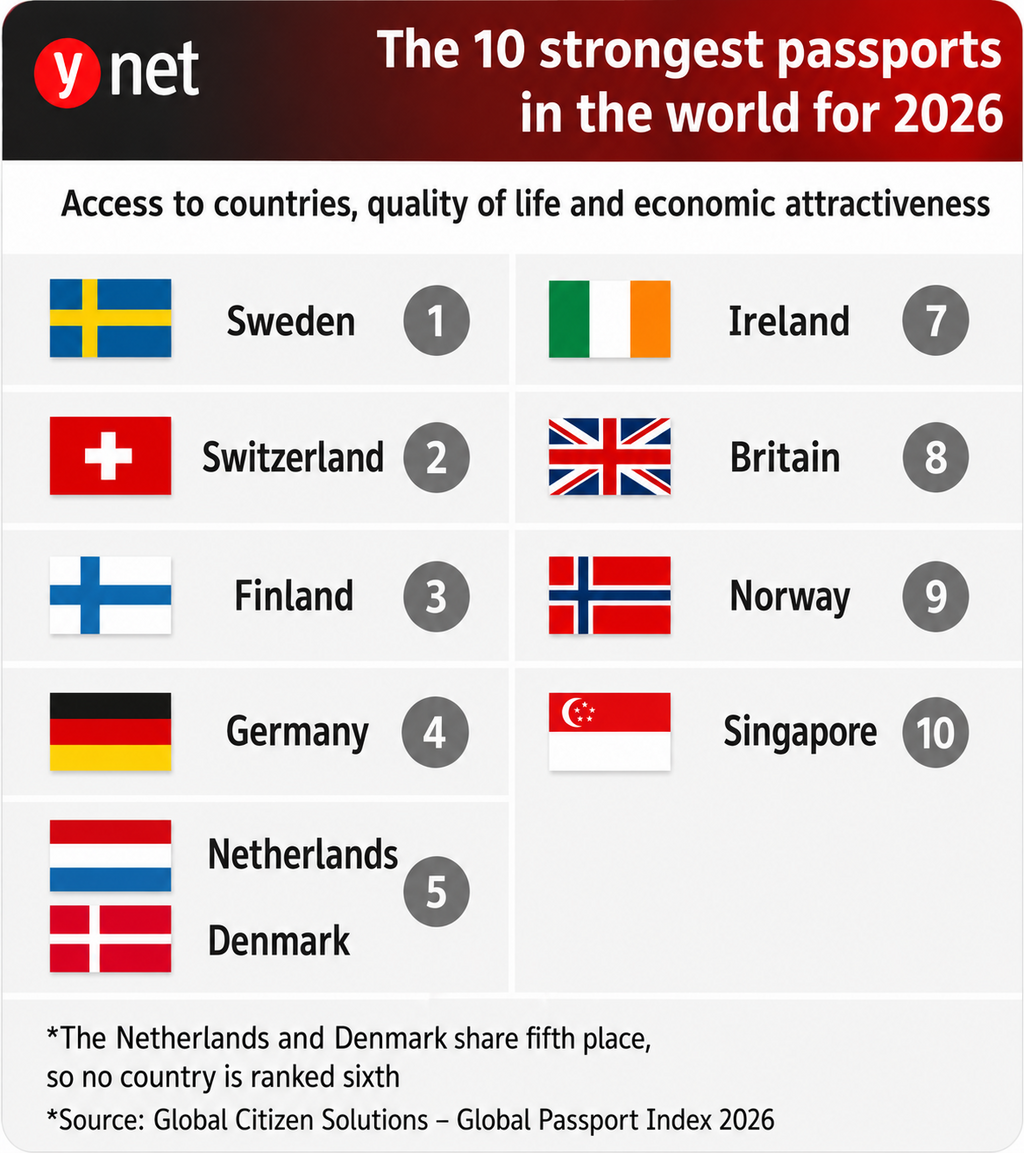
Finland is third, ranking first worldwide in quality of life and fourth in mobility. Its investment score is lower than that of some other countries in the top tier, but its quality-of-life score pushes it into third place overall.
Switzerland ranks second, largely because of a very high score for investment attractiveness and a strong position in mobility. However, its quality-of-life ranking is lower than that of several Scandinavian countries, preventing it from taking first place.
In first place is Sweden. It does not lead the mobility category and is not first in investment attractiveness, but its combination of especially high quality of life, a strong economy and broad global access places the Swedish passport at the top of the global ranking.

Lulealven river, Sweden
(Photo: shutterstock)
Israel’s passport: strong for entry, weaker on broader measures
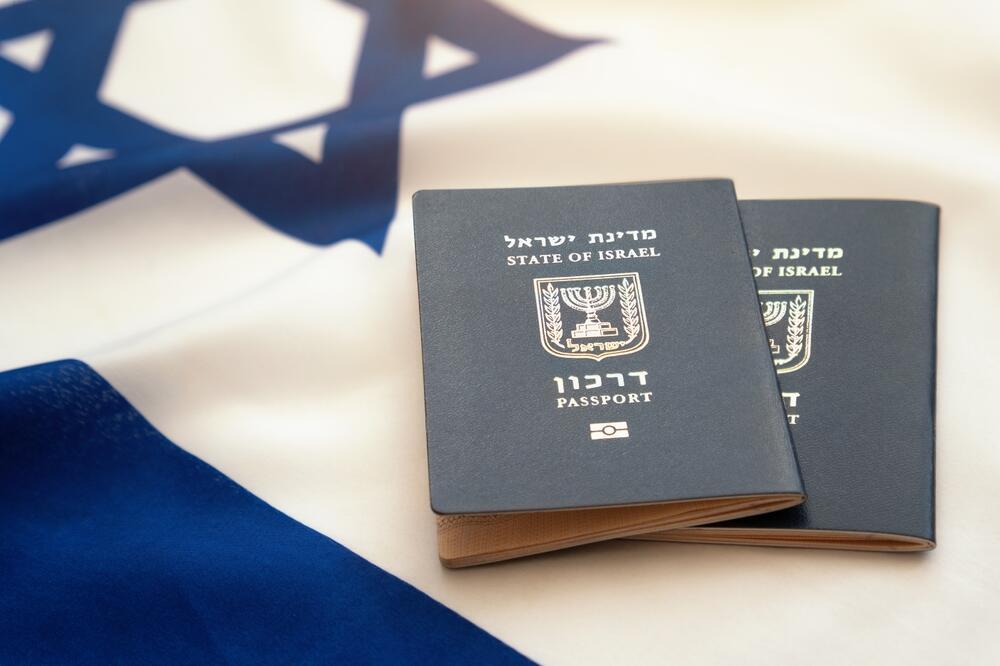
Israel ranks 55th in the Global Passport Index, far from the top 10. The gap is especially striking because in simpler indexes, which focus mainly on visa-free access, the Israeli passport is considered relatively strong. In the 2026 Henley Passport Index, for example, Israel is ranked 18th globally, with access to 165 destinations without requiring a visa in advance.
Israeli passport
(צילום: shutterstock)
The difference lies in the methodology. While indexes such as Henley focus primarily on freedom of movement, Global Citizen Solutions attempts to measure the broader value of a passport, including the quality of life in the issuing country and its economic attractiveness.
Under that formula, the Israeli passport may still open many doors for tourists and business travelers, but once quality of life, stability and the economic environment are added to the equation, the picture becomes far less flattering.
The UK and the U.S. show how passport power is changing
The UK remains in the top 10, ranking eighth, but according to Global Citizen Solutions, its position masks a significant gap. It scores very highly on quality of life, but ranks only around 30th in mobility.
That gap is attributed largely to Brexit. For short-term tourism, the British passport remains very strong, but British citizens have lost the automatic right to live, work and settle in EU countries.
The United States also illustrates the changing perception of passport power. According to Global Citizen Solutions, the American passport recorded the sharpest decline over the past five years among G7 countries. In 2021, it ranked first in the index, with its highest weighted score ever. By 2025, it had fallen to 14th place. In the current ranking, it recovered slightly to 12th.
Among the reasons cited was the return of visa requirements for U.S. citizens by certain countries, including Brazil.
The bottom of the list
At the bottom of the Global Passport Index are mainly countries affected by war, diplomatic isolation, sanctions, political instability or weak economies.
North Korea ranks last, in 198th place. It is followed by Afghanistan in 197th, Sudan in 196th, Somalia in 195th and South Sudan in 194th.
The rest of the bottom 10 includes Eritrea, ranked 193rd; Syria, 192nd; Yemen, 191st; the Democratic Republic of Congo, 190th; and the Central African Republic, 189th.
According to Global Citizen Solutions, a weak passport does not merely limit vacations or business travel. It often reflects diplomatic isolation, economic hardship and broader restrictions on citizens’ freedom of movement. Afghan passport holders, for example, have visa-free access to only four destinations, compared with more than 180 destinations for holders of the world’s strongest passports.