

The world’s most famous Israeli blogger, Nas Daily, arrived in Israel this week to take part in the “New Map” tourism conference. With nearly 70 million followers across social media platforms, a reach that turned him into a global phenomenon, Nas landed in Tel Aviv to talk about tourism, image, online hatred and, above all, what lies ahead as Israel attempts to recover from the deep crisis in its tourism industry.
Will tourists return, or has Israel lost its place on the global map
“There is no such thing as an ‘isolated’ country when you have Jerusalem and Nazareth,” Daily replied, expressing confidence in Israel’s religious tourism sector. “I think this is probably the best time to own a hotel in Israel or be a taxi driver. If you are Muslim, Christian or Jewish, you want to visit Israel, and if there is no war, you will come. I think they will arrive soon, in the hundreds of thousands or even millions.”
A personal conversation with Nas Daily
(Video: Assaf Kamar)


Now that the war is over, can Israel improve its image abroad?
“I think so. I am not sure, but I am optimistic.”
Nas Daily, whose real name is Nuseir Yassin, was born and raised in the Arab town of Arraba in the Lower Galilee. In 2016, he began publishing a video diary documenting his travels and adventures. Since then, he has become the most influential social media figure to emerge from Israel.
After the October 7 terror attack, he told his followers that until then he had struggled with his identity. Before the events, he saw himself as Palestinian Israeli, but afterward, he said, he was first and foremost Israeli. “I have only one home, Israel. Sometimes you need a shock like that to see things clearly,” he said at the time.
Gallery
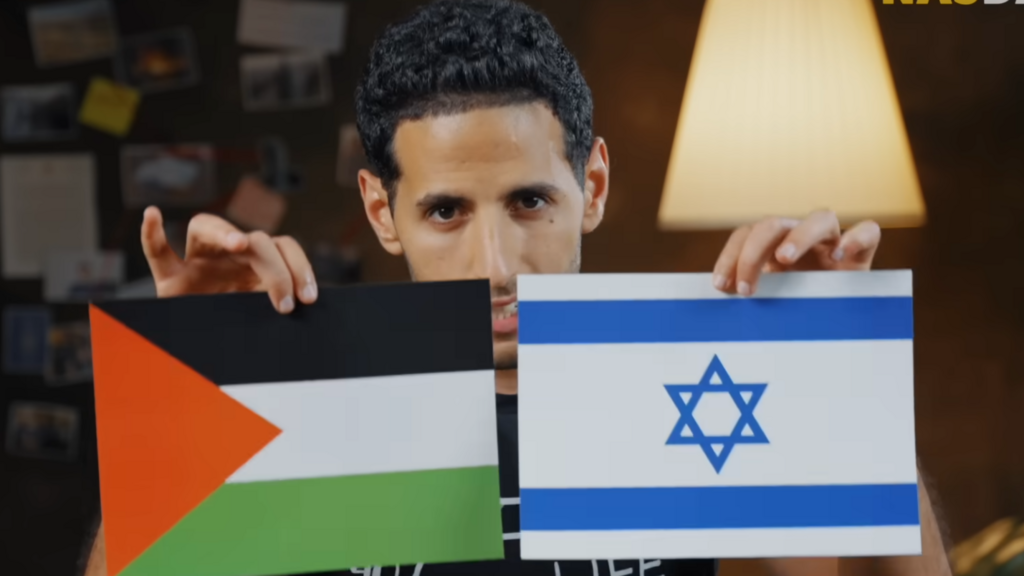
Nas Daily in one of his videos. After October 7, he said he is Israeli first
(Photo: Nas Daily / youtube)
More than two years later, he was asked to describe the personal price he paid online and beyond for publicly standing with Israel. “It does not matter what I lost,” he said. “I gained in other ways, and I feel that everyone lost. Many Israelis lost, many Palestinians lost, many people with no connection to the conflict lost. We all lost. No one really won.”
Asked whether he presents himself as Israeli while traveling, he answered, “I never say I am from Greece or Malta. I always say I am from Israel, and I love that they do not always like hearing it. I think Israel’s negative image is at its worst ever on social media since it began. So my advice is simple: travel to friendly countries, and you do not need to go to Europe anyway. With war or without war, Europe is not interesting. Europe is boring.”
So where should people go?
“Asia,” he said. “I love Asia. It is wonderful. Thailand, Vietnam, India, Sri Lanka, Bhutan, Dubai. Travel more in Asia. They like you there and welcome you.”
He also addressed the difficulty of traveling as an Israeli in certain parts of the world. “The Israeli passport is amazing, but you cannot take it for granted. It is terrible for Muslim countries, and I wanted to go there. So I bought a Caribbean passport for $150,000.”
The hall in Tel Aviv was packed with tourism professionals and content creators, all excited to see the man who has become a global legend. Nas Daily took the stage to thunderous applause, and from the first moment it was clear that no matter what he talked about, it would be engaging.
“I grew up in Israel for 18 years, and I wanted to escape. That is the truth,” he said. “Life in the village was very hard. I felt I had to leave, that I needed air.”

Nas Daily in Greenland. A one-man content machine
(Photo: Nas Daily / youtube)
He was accepted to Harvard unexpectedly, received a scholarship in Boston and met his first Israeli friends there. After graduating, he moved to New York, where what he called the real journey began.
He recalled his ambitious project of producing 1,000 daily videos, which made him famous. “Each video took 15 hours of work. These are tourism videos. You fly to Japan and make a video about cleanliness. You fly to Madagascar and film the baobab tree. One thousand videos. Fifteen hours each. I took it very seriously. If you want to create travel content, invest 15 hours in every single piece.”
Millions of followers are used to hearing Nas rave about exotic destinations, but when asked what he learned after 1,000 videos, his answer surprised many.
“The world is boring,” he said. “I mean it. We are much more similar than we think. We all love our children. We all want to be happy. We all want money. The difference between us is maybe one percent.”
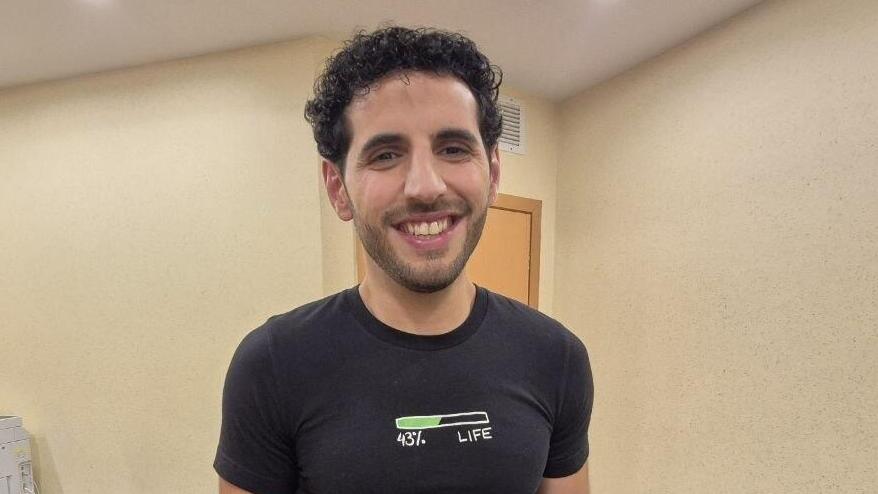
Nas Daily in Israel, spreading optimism everywhere
(Photo: Assaf Kamar)
What sounded like provocation quickly turned into a philosophical reflection on humanity, connection and a universal perspective.
“My goal is to bring people together. Three words: bring people together,” he said. “All my childhood, I saw people tearing each other apart. I wanted my life and my project to do the opposite. Jews and Muslims, Hindus and Muslims, just to be together.”
One of the lighter and more emotional moments of the conversation came when Nas spoke about his partner, a Jewish woman from Israel.
“I knew it would be hard to marry an Indian, Japanese or European woman,” he said. “I needed someone who cares deeply about the Israeli Palestinian conflict. It is a big part of my life. So there were only two options: a Palestinian or a Jewish woman. And in New York, there are more Jewish women. I found love. She is amazing. Everyone should follow her.”