

On October 5, 2026, at 3:30 p.m., a 57-year-old man emerged from the English Channel onto Shakespeare Beach near Dover, in southern England. He was wearing a wetsuit, his body ached, and waiting on the shore were his father, brother and friends.
The man was Karl Bushby, a former British paratrooper who had not set foot on British soil since 1998. When he left, he was 29 years old, with $500 in his pocket and an almost impossible idea: travel from the southern tip of Chile to his mother's home in England without using any form of transport to advance along the route.
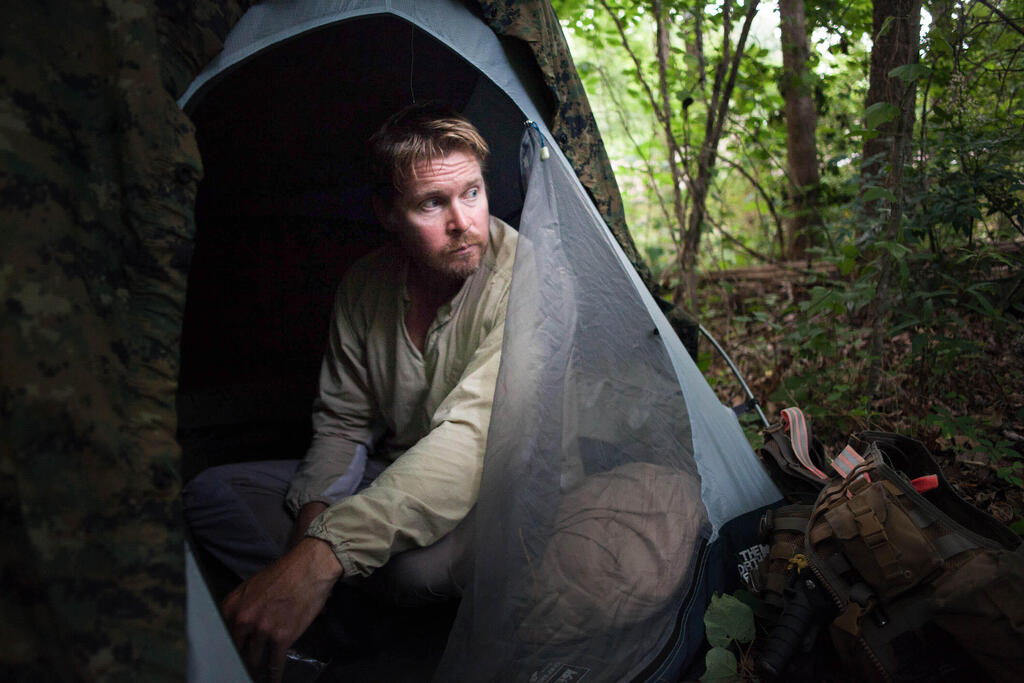
In an interview with ynet in November 2025, while still making his way toward Britain, Bushby said the greatest cost of his adventure had not been the physical hardships or the dangers he had faced, but the relationships he had lost along the way.
"The hardest thing was losing those connections," he said. "Loneliness is a real issue." Asked what he intended to do when he finally returned home, he spoke of lectures, interviews and projects planned for after the expedition. "After that, I suppose I'll have to find some peace," he added. Now that he is back on British soil, the question of what comes next is no longer hypothetical.
Obstacles until the very end
"It feels good to have British soil under my feet again," Bushby said after reaching Dover. Yet the emotional reunion on the beach did not mark the finish line. He still had approximately 400 kilometers (250 miles), to walk before reaching his mother's home in Hull, northern England.
Over the preceding months, Bushby had traveled across Europe toward the French coast. His original plan was to enter Britain by walking through the service tunnel of the Channel Tunnel. But in June, the tunnel operator rejected his request, citing safety and operational concerns. After traveling tens of thousands of kilometers, one of the shortest stretches of his journey had become an unexpected obstacle.
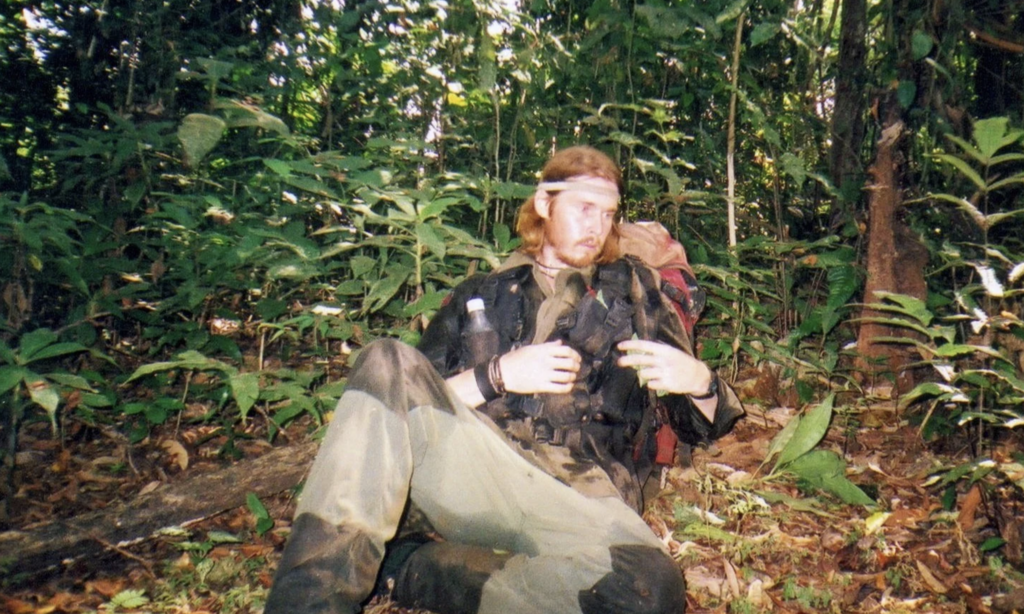
Karl Bushby
(Photo: Courtesy of Karl Bushby)
His alternative was to swim across the English Channel, but that, too, required special permission. French authorities do not generally permit organized Channel swims departing from France toward Britain.
In early September, Bushby announced that he had received approval and hoped to enter the water on October 1. Weeks later, however, it emerged that the arrangements had not been finalized. "We thought we had permission to swim from the French beach. It turned out we didn't," he told AFP in late September.
He made little attempt to hide his feelings about the proposed crossing. "I swim like a cat thrown into a bathtub," he joked. Eventually, permission was secured in coordination with authorities and the coast guard. Bushby, who had already swum across the Caspian Sea during his extraordinary expedition, found himself putting on a wetsuit once again. This time, the destination was home.
‘I hadn't trained at all’: Three days in the water
Despite his previous experience, Bushby entered the English Channel with remarkably little preparation. "There was no training at all," he admitted in an interview with the BBC after completing the crossing. He said his only preparation had been checking that his wetsuit still fitted. "After an hour in the water I was already cramping up and I was really thinking, 'am I going to be able to pull this off?'"
The crossing took three days, during which he spent approximately 20 hours swimming. He used a wetsuit and flotation equipment, resting aboard a support boat between swimming sessions.
It was not a continuous Channel swim under the strict rules followed by professional long-distance swimmers, a distinction Bushby himself was careful to acknowledge. He explained that whenever he returned to the water, he resumed from the exact point where he had stopped, in accordance with the rules he had established for his wider expedition.
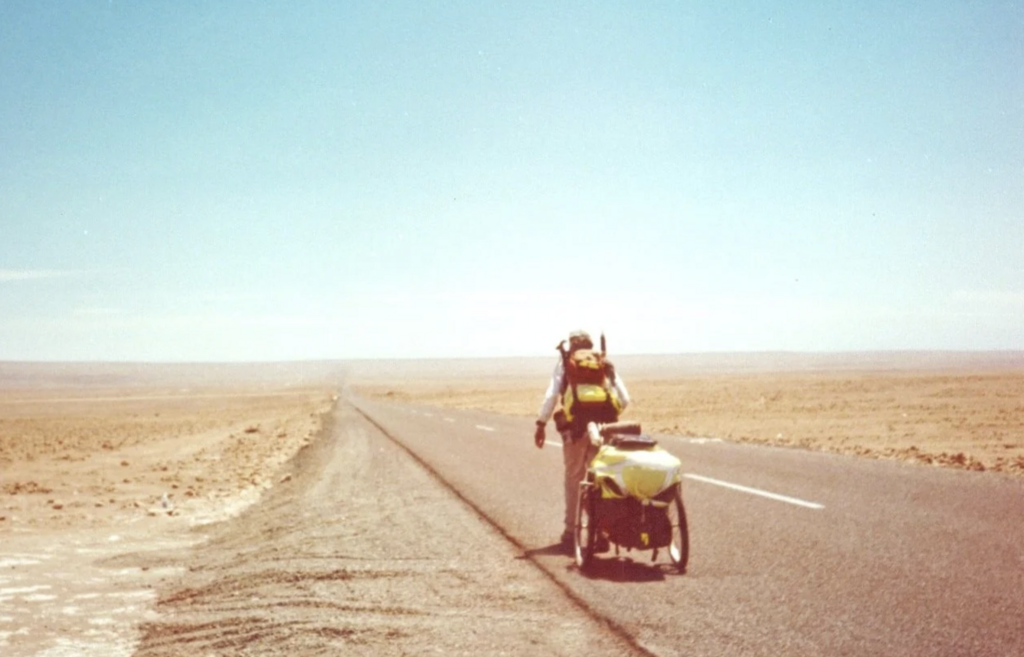
Karl Bushby
(Photo: Courtesy of Karl Bushby)
Although conditions at sea were relatively calm, the physical demands were considerable. Muscle cramps, exhaustion and the cumulative strain of hours in the water accompanied him throughout the crossing.
Yet some of the most memorable moments came at night. Floating on his back, far from the light pollution of coastal towns, Bushby looked up at a sky filled with stars.
"You're far away from light pollution and have the whole night sky in front of you," he told the BBC. "It gave me something to think about and took my mind off the pain and aches."
On the third day, the English coast finally appeared ahead of him. Among those waiting on the shore was German filmmaker Werner Herzog, who is documenting Bushby's adventure for an upcoming film.
In an interview with GQ, Bushby said Herzog had actually welcomed the possibility that he would have to swim the Channel. From the director's perspective, the dramatic image of an exhausted adventurer emerging from the sea made for a far more cinematic scene than a man walking through a tunnel. Bushby, who would have preferred to stay dry, was considerably less enthusiastic.
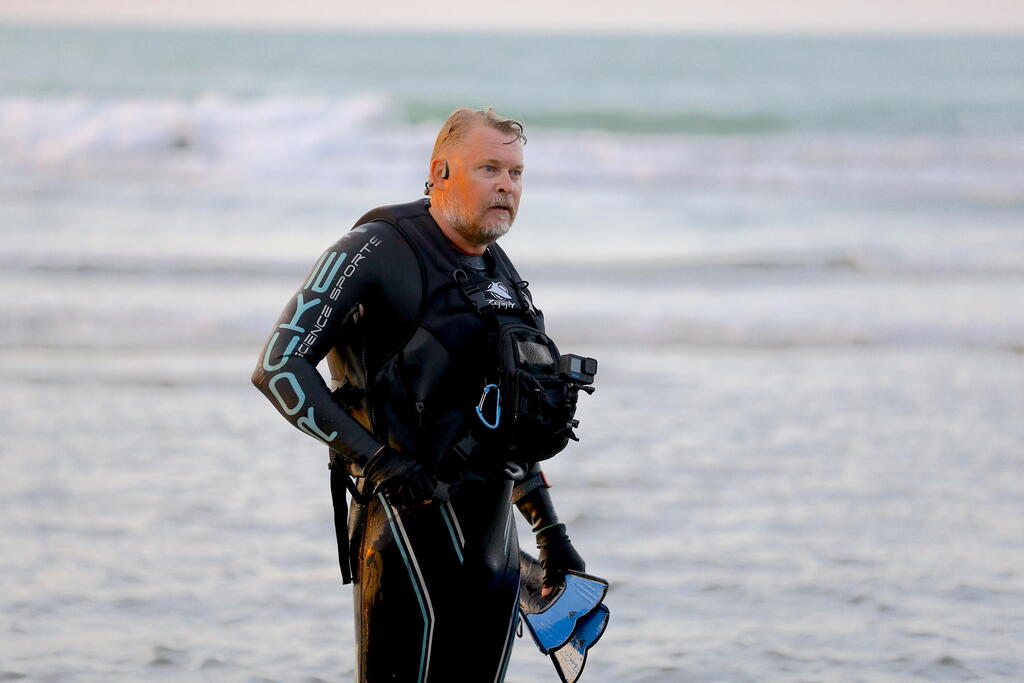
Karl Bushby
(Photo: Resul Rehimov/Anadolu via Getty Images)
One greeting card, 28 years of adventure
The extraordinary journey began in the 1990s, when Bushby received a greeting card from his father, Keith, who had previously served in Britain's elite Special Air Service, or SAS. The card referred to an idea discussed by soldiers: walking from London to New York by way of the Bering Strait, which separates Russia and Alaska.
Bushby studied a map and began plotting an even longer route. On November 1, 1998, he departed from Punta Arenas in southern Chile, launching an expedition he named the Goliath Expedition. He initially expected the undertaking to last about 10 years.
Along the way, he crossed the notorious Darién Gap, a dangerous stretch of jungle between Colombia and Panama and in 2006, he crossed the Bering Strait between Alaska and Russia, only to be arrested after entering Russian territory without authorization.
Visa restrictions, funding difficulties and the COVID-19 pandemic subsequently prolonged the expedition by years.
Then, in 2024, Bushby encountered another extraordinary geographical obstacle: the Caspian Sea. To continue along his route, he undertook a swim from Kazakhstan to Azerbaijan. The crossing took 31 days and involved more than 130 hours in the water. He had hoped it would be the last time he would need to swim during the expedition.
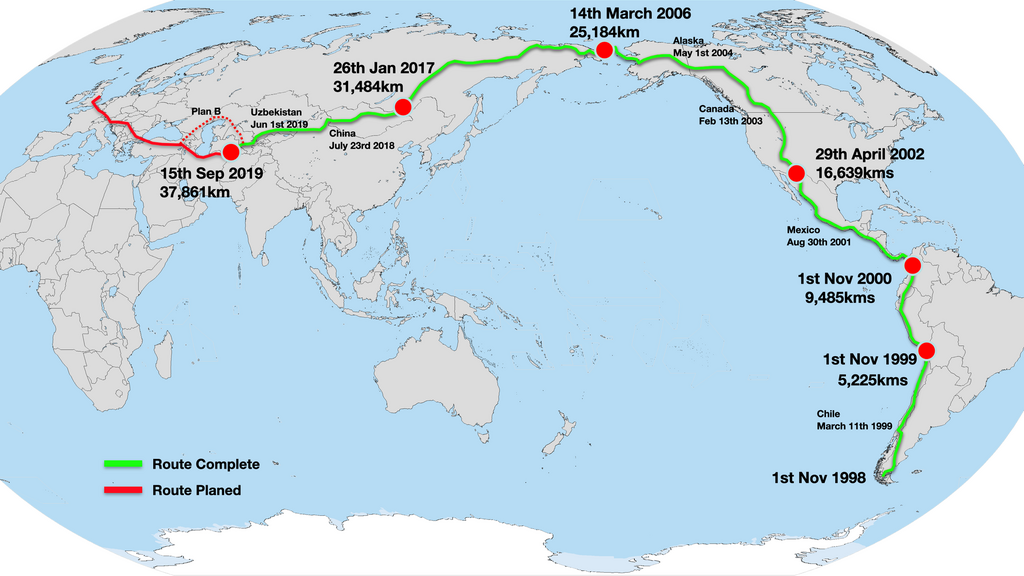
Map of Karl Bushby's expedition route
(Photo: Courtesy of Karl Bushby)
Over the years, Bushby did use flights and other transport during periods when the expedition was suspended. However, he says he always returned to the exact point where he had stopped and never used transport to shorten the distance he needed to cover under his expedition rules.
Almost three decades after the greeting card first sparked his imagination, the father who had inspired the idea was among the first people to embrace him on the beach at Dover.
A mother waiting at home
Bushby's mother, Angela, is waiting for him in Hull, in northern England. According to the BBC, the two have not seen each other since 2015. Over the years, she bought her son a Christmas present every year, saving each gift for the day he would finally come home.
Last September, a BBC reporter delivered a letter from Angela to Bushby. It contained a sentence that captured the emotional weight of the entire journey. "You used to think you were useless. Well, you have proven you're not," she wrote, as cited by the BBC.
But the adventure has also carried a heavy personal cost. Bushby's son, Adam, was just eight years old when his father set out in 1998. Today, Adam is 36 and a father himself. In an interview with GQ, he said he understood his father's decision to pursue such an extraordinary ambition, while also recognizing how many years together they had lost.
Bushby has acknowledged that unresolved issues remain between them. He also has a granddaughter he has never met.
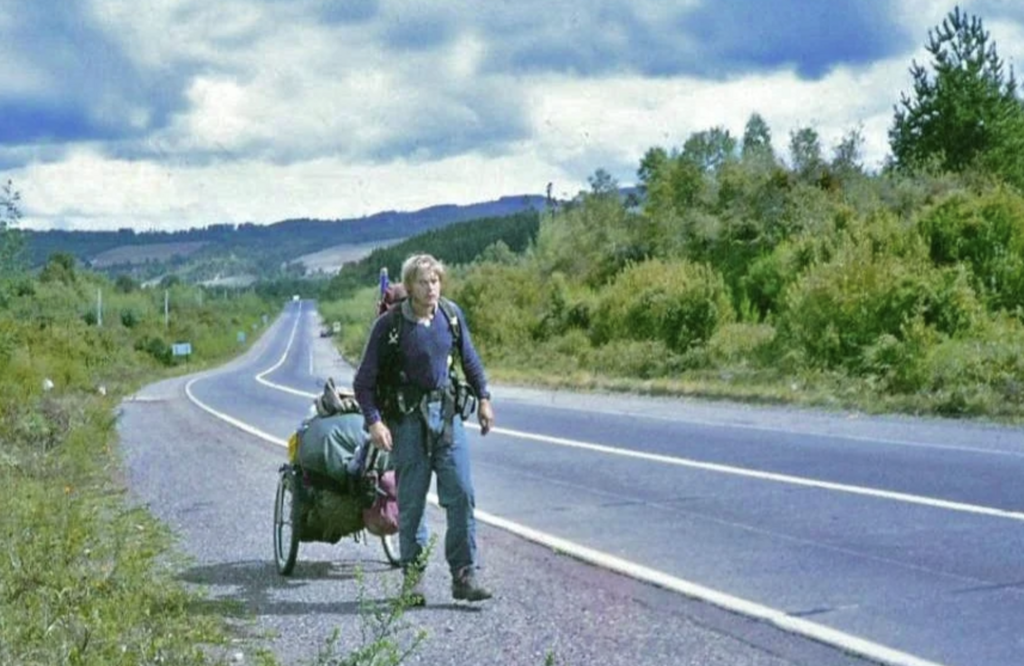
Karl Bushby in the early years of his expedition
(Photo: Courtesy of Karl Bushby)
In the first days after returning to Britain, Bushby enjoyed some simple pleasures he had missed. He treated himself to traditional fish and chips and took satisfaction in seeing the British flag flying outside his hotel in Dover.
But beyond the familiar food and emotional reunions, he faces a very different kind of challenge. For almost three decades, his life has revolved around a single objective. Each morning brought another stretch of road, another border to cross or another obstacle to overcome.
Now, as the finish line approaches, Bushby admits that returning to ordinary life is a daunting prospect. He told AFP in September that he would have to find a way to reintegrate into society and face the challenge of starting over with nothing.
He hopes to earn a living through speaking engagements and projects connected to his expedition, including Herzog's documentary.
On October 9, four days after emerging from the English Channel, Bushby was already photographed walking north from Dover, pushing the equipment cart that has accompanied him during his travels.
He hopes to reach his mother's home in late October or early November, around the 28th anniversary of his departure from Chile.
This time, the finish line is not a distant mountain, a dangerous border or a stretch of open water. It is the front door of a house in Hull, where a woman has been waiting for her son to come home for almost three decades.
After tens of thousands of kilometers, countless adventures and a lifetime devoted to a single ambition, Bushby is finally approaching the goal he set himself at 29. And when he opens that door, a very different journey will begin: learning how to stop walking.