

Europe’s beach season is at its peak, with millions of tourists flocking to the Mediterranean and Atlantic coasts. But as beaches grow more crowded, residents complain and authorities step up environmental protection, more destinations are tightening their rules of conduct.
In some cases, they are also reviving long-standing regulations, with fines that can reach hundreds or even thousands of euros.
Gallery

A vacation can take a turn for the worse in an instant
(Photo: Dmytro Buianskyi/ Shutterstock)
Turn down the speaker: Heavy fines for loud music
Israelis, like many other tourists, often arrive at the beach with a portable speaker. In Portugal, however, that habit could prove expensive.
The country’s beach regulations, enforced by the National Maritime Authority, prohibit the use of sound equipment when the noise becomes a nuisance or disturbs other beachgoers. In other words, owning or carrying a speaker is not banned, but excessive noise is.
Fines for individuals begin at €200 and can reach €4,000. For companies or other legal entities, penalties may climb into the tens of thousands of euros. Authorities may also confiscate the equipment.
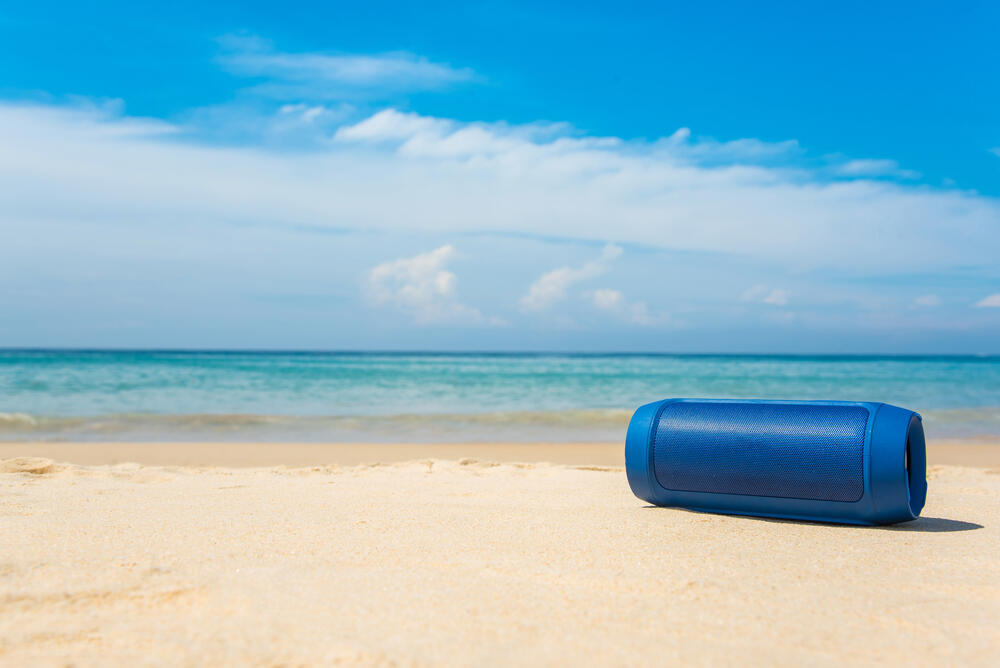
A speaker on the beach. Let the waves make the noise
(Photo: Satit Sewtiw / Shutterstock)
Strict dress codes: Leaving the beach? Cover up
In many European tourist destinations, authorities are becoming less tolerant of visitors who leave the beach and continue walking through streets, stores and restaurants wearing only swimwear or no shirt.
Italy: In the picturesque southern town of Sorrento, walking around in a bikini or swimsuit outside designated beach areas can result in a fine of up to €500. In Varenna, on the shores of Lake Como, visitors can be fined up to €200 for going shirtless or wearing swimwear away from bathing areas.

Tourists in Varenna on the shores of Lake Como
(Photo: Ceri Breeze / Shutterstock)
Spain: Rules vary from city to city. In Barcelona and several destinations in Mallorca, walking outside the beach area dressed only in swimwear can lead to a fine of about €300. In Malaga, where the municipality has launched a campaign urging tourists to dress fully in streets and public spaces, fines may reach €750.
Croatia: Popular coastal cities, including Split, Dubrovnik, and Hvar, also restrict revealing clothing in city centers. According to Euronews, anyone caught shirtless in areas where it is prohibited could face a fine of up to €150.
The towel wars: Do not reserve a spot
The practice of reserving poolside or beach space with towels is familiar to many vacationers, but at some European beaches it can result in a fine.
In the Spanish resort town of Calpe, visitors are prohibited from placing umbrellas, chairs or loungers on the beach before 9:30 a.m. to reserve a spot. Inspectors may also remove equipment left unattended for more than three hours. Violators risk having their belongings confiscated and receiving a fine of up to €250.
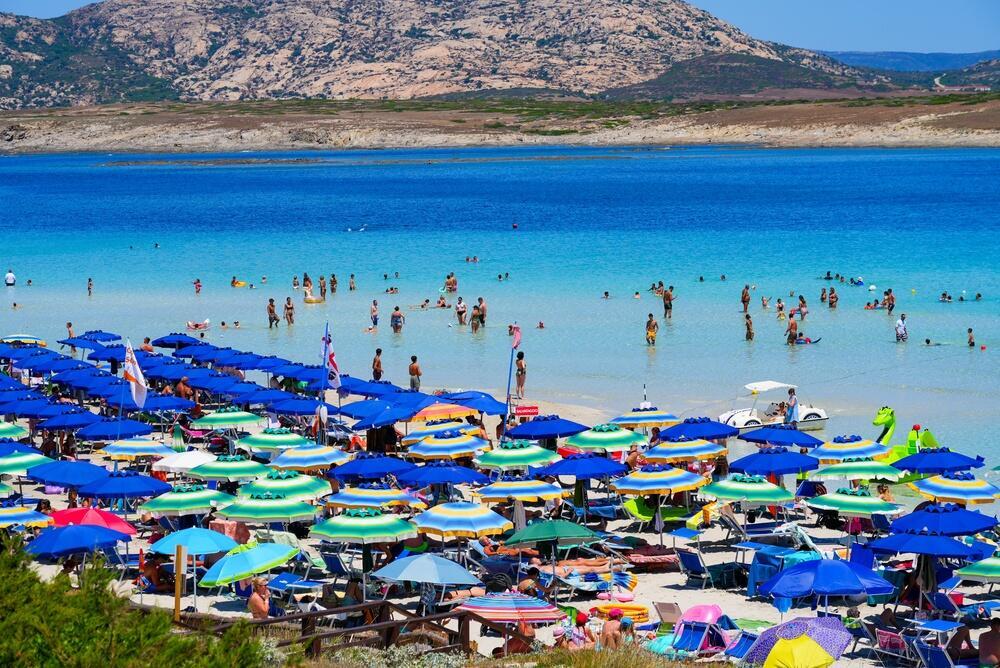
La Pelosa beach in Sardinia on a crowded day. Do not try to game the rules by reserving a spot
(Photo: Alexandre.ROSA / Shutterstock)
Do not take the sand, or leave your towel directly on it
Europe’s most beautiful beaches have come under increasingly strict protection, and in some places the rules for tourists can be surprisingly specific.
At the famous La Pelosa beach in Sardinia, Italy, visitors are prohibited from placing towels directly on the sand because grains may stick to the fabric and be carried away. Beachgoers must place a mat beneath their towels, and violations can result in a fine.
The restrictions go further. In Sardinia, taking sand, shells or other natural materials from the beach as souvenirs is also illegal. Those caught with such items can face fines ranging from €500 to €3,000.
Greece is also stepping up protection of its coastline. This year, the list of beaches receiving the highest level of protection was expanded to 250. Rental loungers, umbrellas and other commercial facilities are prohibited at those locations.
The selfie that could cost €275
Found the perfect place for a photo? Do not linger too long. In Portofino on the Italian Riviera, authorities have designated “red zones” where pedestrians are not allowed to remain stationary for extended periods, as part of an effort to reduce congestion around popular photo spots.
The regulations, often described as a “selfie ban,” do not actually prohibit taking photographs. Visitors may pull out their phones and take pictures, but they may not stand in one place for too long and block pedestrian traffic.
The restricted areas include sections near the town’s crowded piers, and the regulation returned for the 2026 tourist season. Anyone who fails to keep moving could face a fine of up to €275.
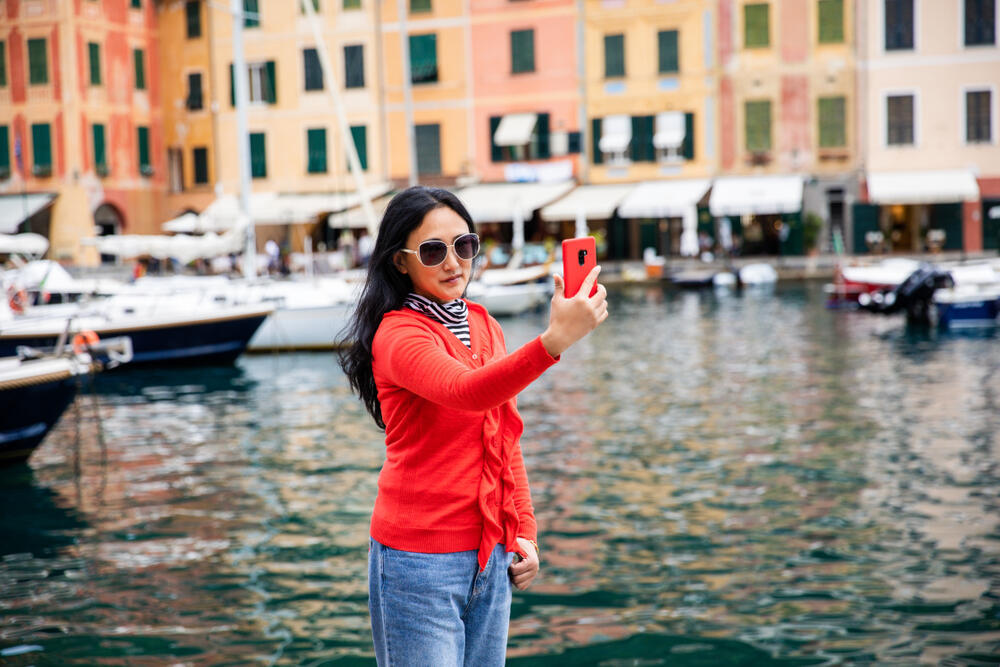
A daring tourist takes a selfie in Portofino
(Photo: Piupiupics / Shutterstock)
Nature’s bathroom? Fines for urinating in the sea
Anyone too lazy to walk to the beach restrooms and tempted to relieve themselves in the water should be careful.
The city of Vigo, in Spain’s Galicia region, imposes fines of up to €750 for what local regulations define as “physiological evacuation on the beach or in the sea.” The rule took effect in 2022 and is explicitly worded to include relieving oneself in the seawater.
Smoke-free beaches
Cigarettes are continuing to disappear from European beaches. In France, a nationwide smoking ban was expanded in July 2025 to include beaches adjoining designated bathing areas during the swimming season. Violators can face a fine of €135.
Spain already has many smoke-free beaches under local and regional regulations. The government recently took another major step by approving legislation that would ban smoking and vaping on beaches nationwide.
For now, however, the proposal still requires parliamentary approval and has not yet taken effect across the country.

Smoking is not allowed
(Photo: Salajean / Shutterstock)
An expensive shampoo: Soap banned in beach showers
Another common habit is using beach showers to wash hair or soap up before returning to a hotel. In several Spanish coastal municipalities, however, showers are restricted to rinsing with water only.
In Alicante, for example, regulations explicitly prohibit the use of soap, shower gel or shampoo in beach showers. The violation is classified as a minor offense, but the fine can still reach €750.
The bottom line is simple: Before spreading out a mat, switching on a speaker or lighting a cigarette, take a moment to read the signs at the entrance to the beach. Rules vary not only from country to country, but sometimes from one city to the next. A mistake that seems harmless on vacation could end with a painful fine.