


A rare clay seal, known as a bulla, used to secure letters or packages, was recently discovered in soil excavated from Jerusalem’s Temple Mount, dating back to the First Temple period (1000 BCE to 586 BCE).
Uncovered during the Temple Mount Sifting Project, which searches for historical artifacts in the area, the find emerged about two weeks ago, near the fast of the 17th of the Hebrew month of Tammuz, marking the breach of Jerusalem’s walls before the Temple’s destruction.
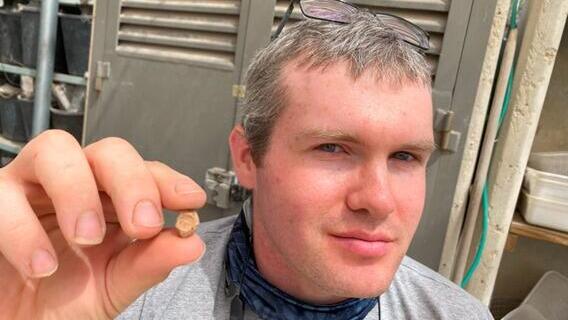
Archaeologist Mordechai Ehrlich found the intact bulla, which researchers Dr. Anat Mendel- Geberovich and Yitzhak Dvira analyzed, deciphering all but one letter, likely an “ayin.”
They propose that the inscription reads “L’Yedaya Ben Asyahu,” meaning “To Yedaya, son of Asyahu,” based on marks on the seal’s back. The bulla likely secured storage vessels to prevent unauthorized access, with the owner’s fingerprint visible on its edge.
Get the Ynetnews app on your smartphone: Google Play: https://bit.ly/4eJ37pE | Apple App Store: https://bit.ly/3ZL7iNv
According to biblical accounts, 2,647 years ago, during King Josiah’s reign, a Torah scroll was found during Temple renovations. Shaphan ben Azaliah, the king’s scribe, read its warnings of destruction due to Israel’s sins, prompting Josiah to tear his clothes in distress.
He sent a delegation, including Asyahu, titled “servant of the king”—likely a senior official—to the prophetess Huldah, who foretold Jerusalem’s destruction but spared Josiah from witnessing it. Asyahu’s son, possibly Yedaya, likely held a high-ranking role in the royal court around the same period or shortly after.

The ancient seal
(Photo: Temple Mount Sifting Project)
For 20 years, the Temple Mount Sifting Project, led by archaeologists Dr. Gabriel Barkai and Yitzhak Dvira under Bar-Ilan University’s Institute of Archaeology, has sifted soil illegally excavated in 1999 by the Islamic Movement in Israel's northern branch.
Over 260,000 volunteers have helped uncover more than half a million artifacts, primarily from the First Temple period onward. Funded by private donations through the Israel Archaeological Foundation, the project has operated since 2019 at the Mitzpe Masuot site on Mount Scopus, supported by the Mount of Olives Ridge Jewish Communal Development Foundation.