

There are destinations you arrive at, look around and tell yourself, "Well, this is nice." Then there are destinations that simply mesmerize you with what unfolds before your eyes and make you say, "Wait, why is this so beautiful and captivating?" Azerbaijan and its capital, Baku, definitely belong in the second category.
Baku hits you immediately: a beautiful, cosmopolitan city that surprises you at every turn and from every angle, with every glass of Azerbaijani tea served in a pear-shaped glass and every encounter with a local who greets you with a warm smile. The secret to Baku's unique charm lies in its fantastic and unexpected combination of old and new, living side by side in harmony: On one hand, ancient architecture, winding stone alleyways and old mosques such as Taza Pir and Heydar Mosque; on the other, futuristic and groundbreaking structures such as the Heydar Aliyev Center and the stunning Carpet Museum, designed to look like a rolled-up carpet. The city's cosmopolitan character is also reflected in its modern, luxurious hotels, available to tourists at affordable prices, as well as the local and international food served generously and in abundance.
To my surprise, I discovered that Israel and Azerbaijan have close, longstanding ties, reflected in security, strategic, economic, cultural and scientific cooperation. The two countries have maintained full diplomatic relations since 1992. Azerbaijan is a predominantly Muslim country, with most Muslims belonging to the Shiite branch, but most of its population is secular and there is a separation between religion and state. These factors, together with the country's thriving Jewish community, make Azerbaijan a welcoming destination for Israeli and Western travelers.
Your eyes never tire of Baku's sights. On our first evening in the city, we went for a walk along the promenade and enjoyed the combination of old and new, with the famous Flame Towers glowing in changing lights in the background. The three skyscrapers were designed to symbolize the element of fire associated with Azerbaijan.
We enjoyed looking at and photographing Baku in the evening and during the "blue hour" — the short period after sunset when the sky turns a deep, enchanting blue. We discovered that evening and nighttime are particularly flattering to the city and that it is well worth experiencing after dark as well.
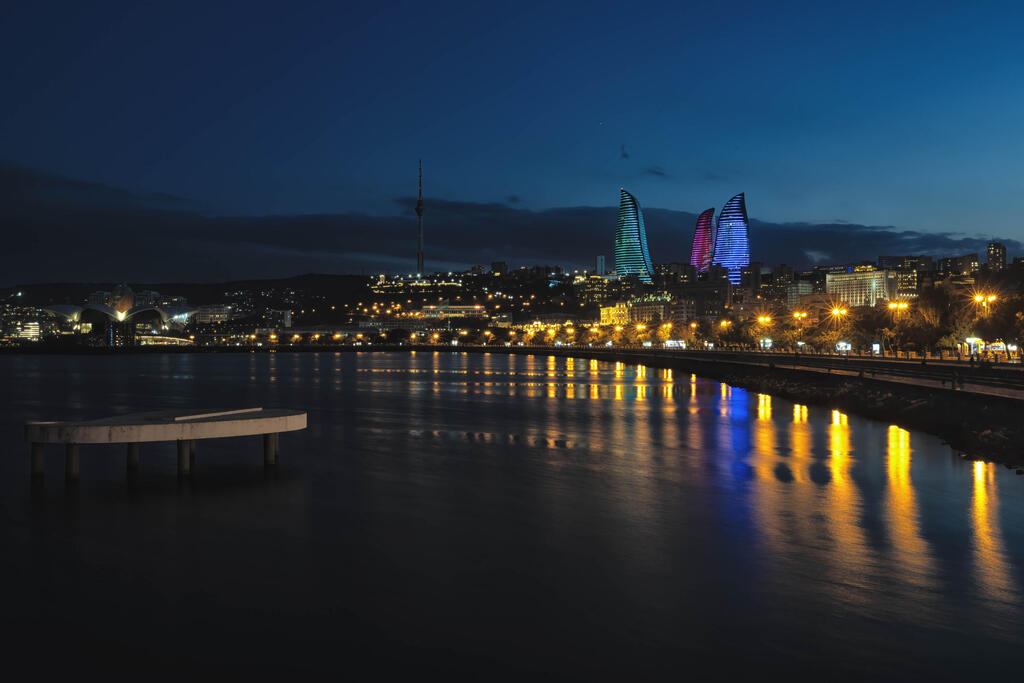
The blue hour in Baku
(Photo: Tali Stein)
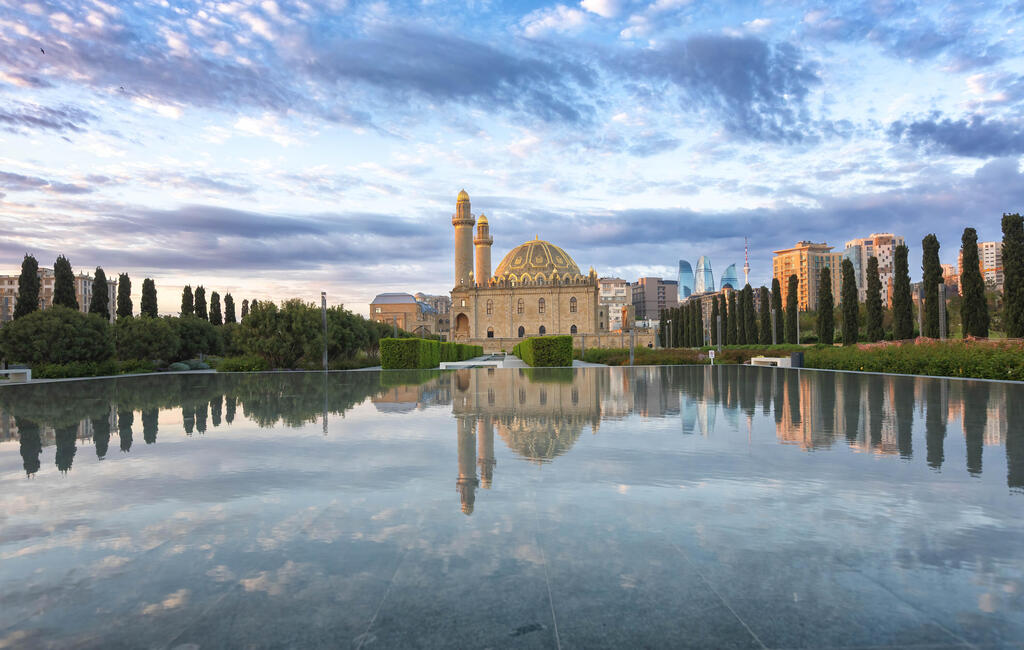
Taza Pir Mosque, Baku
(Photo: Tali Stein)
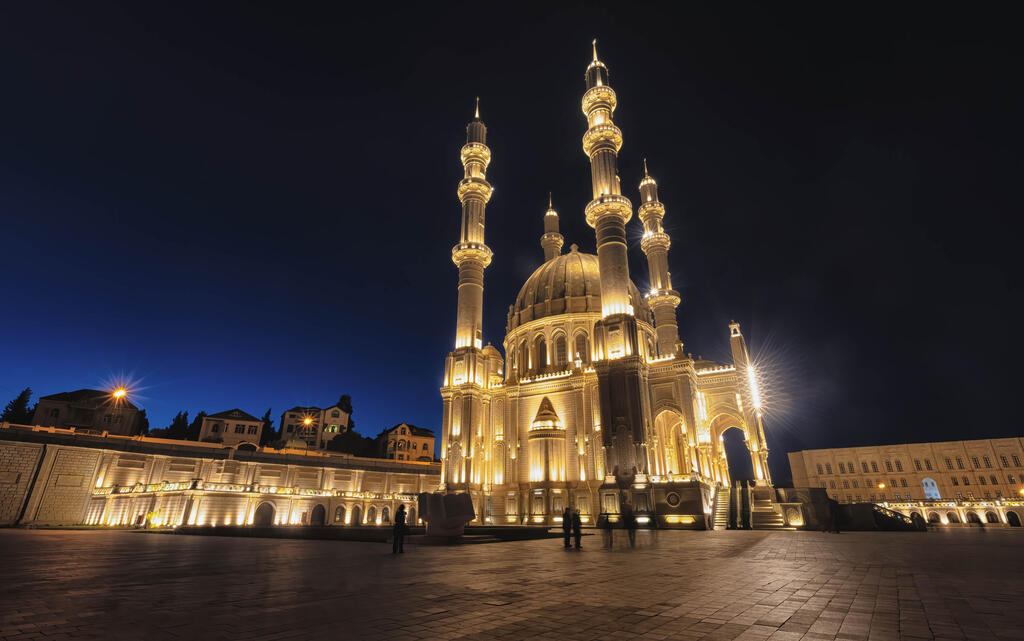
Heydar Mosque, Baku
(Photo: Tali Stein)
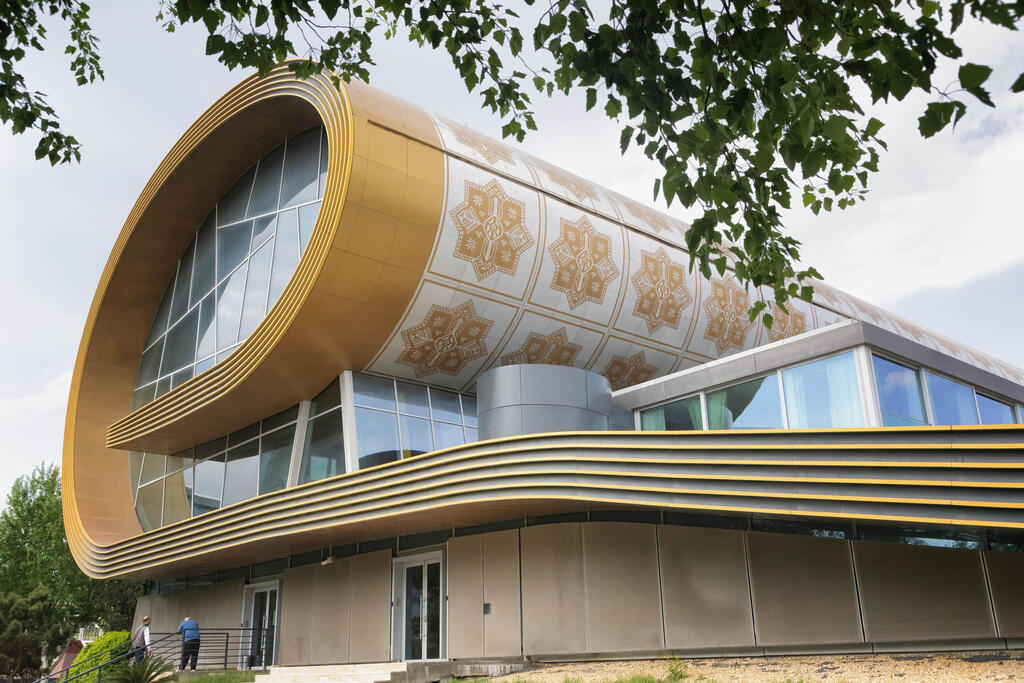
Baku Carpet Museum
(Photo: Tali Stein)
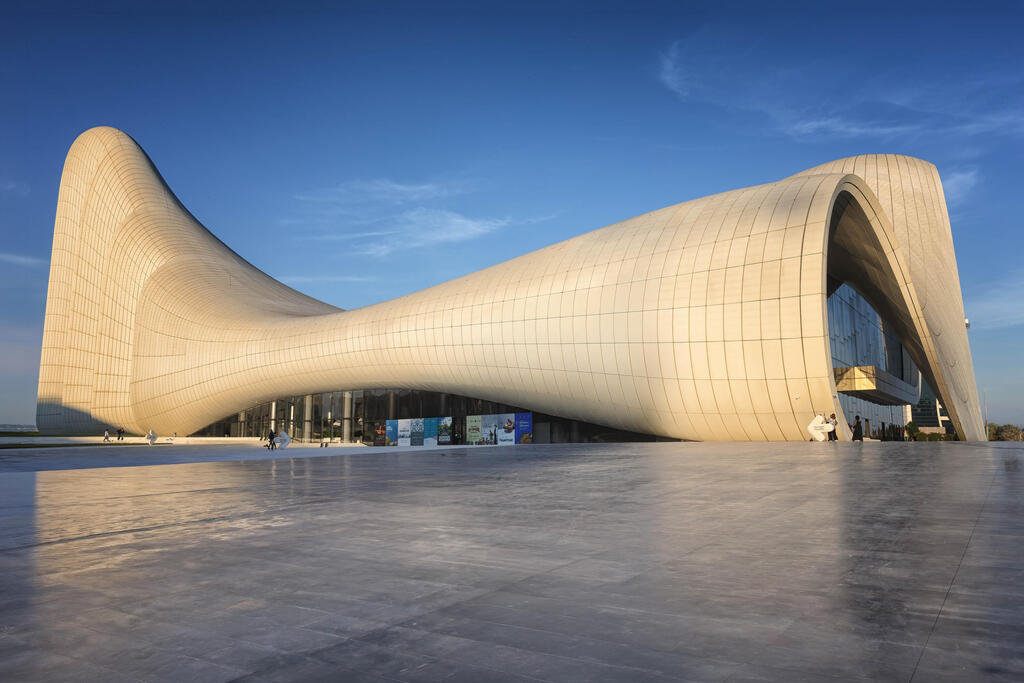
Heydar Aliyev Center, Baku
(Photo: Tali Stein)
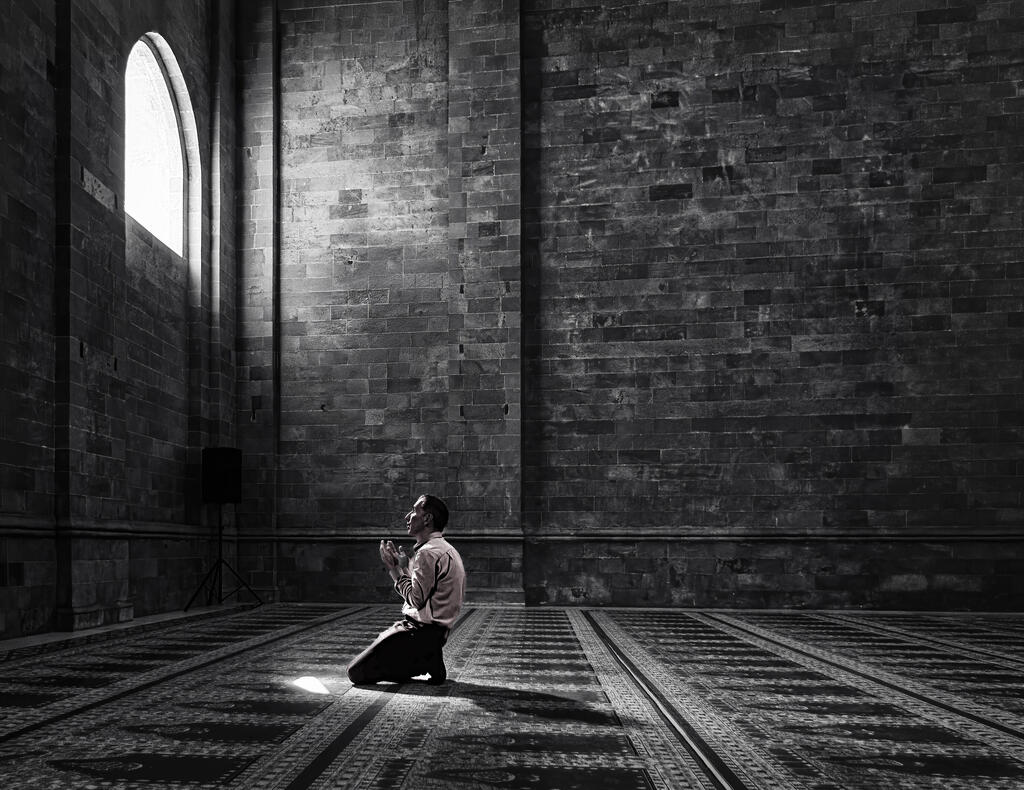
Prayers at the mosques
(Photo: Tali Stein)
The Heydar Aliyev Center, one of the city's most prominent buildings, is well worth seeing from the inside rather than simply viewing it from the outside. It is worth setting aside at least a few hours for an in-depth visit to the spectacular structure, characterized by flowing contours and an absence of sharp angles, with fascinating exhibitions and displays inside.
The magic of Azerbaijan does not stop at the capital's borders. To truly delve into the soul of the country, we headed outside the city to experience its wild landscapes and fascinating history.
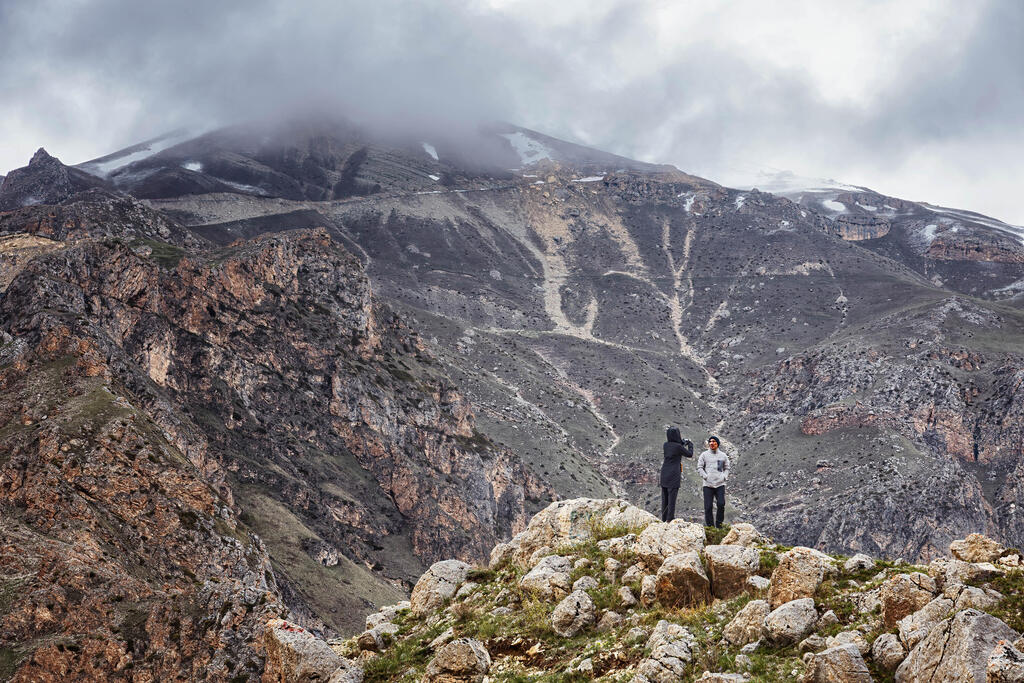
The best way to experience the ruggedness of Azerbaijan's natural landscape is on a challenging off-road drive. Our convoy of jeeps took us through hidden mountain passes, deep green valleys, rushing rivers and remote villages that are difficult to reach in ordinary vehicles. I felt that this was a breathtaking experience that brought me face to face with some of the most raw and impressive landscapes of the Caucasus.
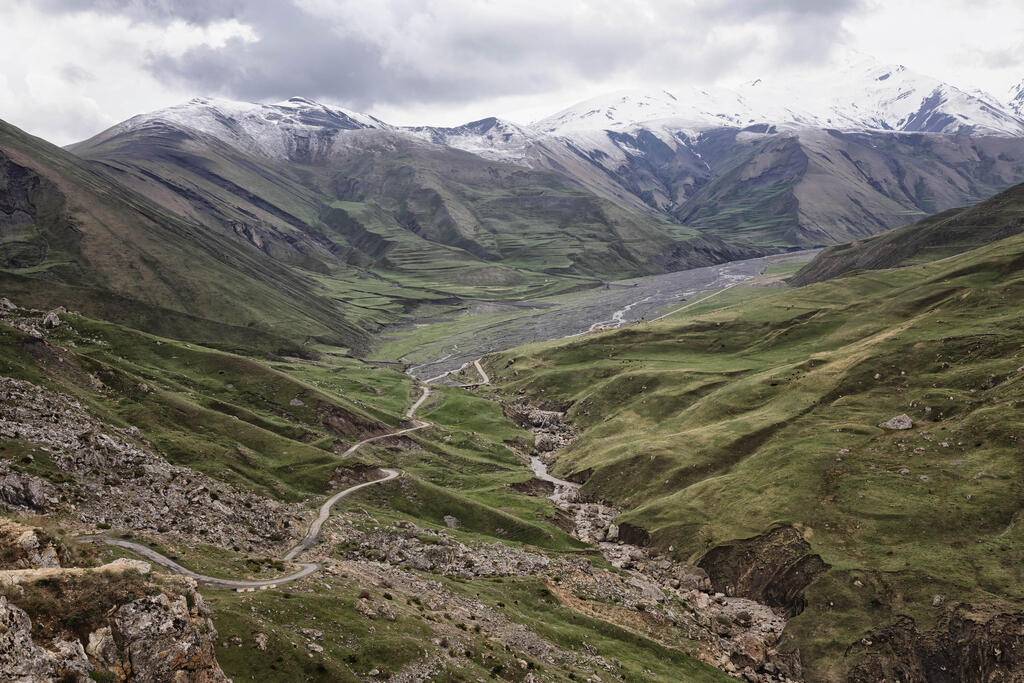
The breathtaking landscapes of the Caucasus Mountains
(Photo: Tali Stein)
Exploring the mountains of Khizi
We arrived in an area north of Baku characterized by particularly dramatic mountain scenery. The highlight here is a rare geological phenomenon known as the "Candy Cane Mountains." Due to the unique mineral composition of the soil, the mountains are marked by spectacular natural stripes of red, pink, purple, white and yellow, creating the feeling that you are walking on another planet.
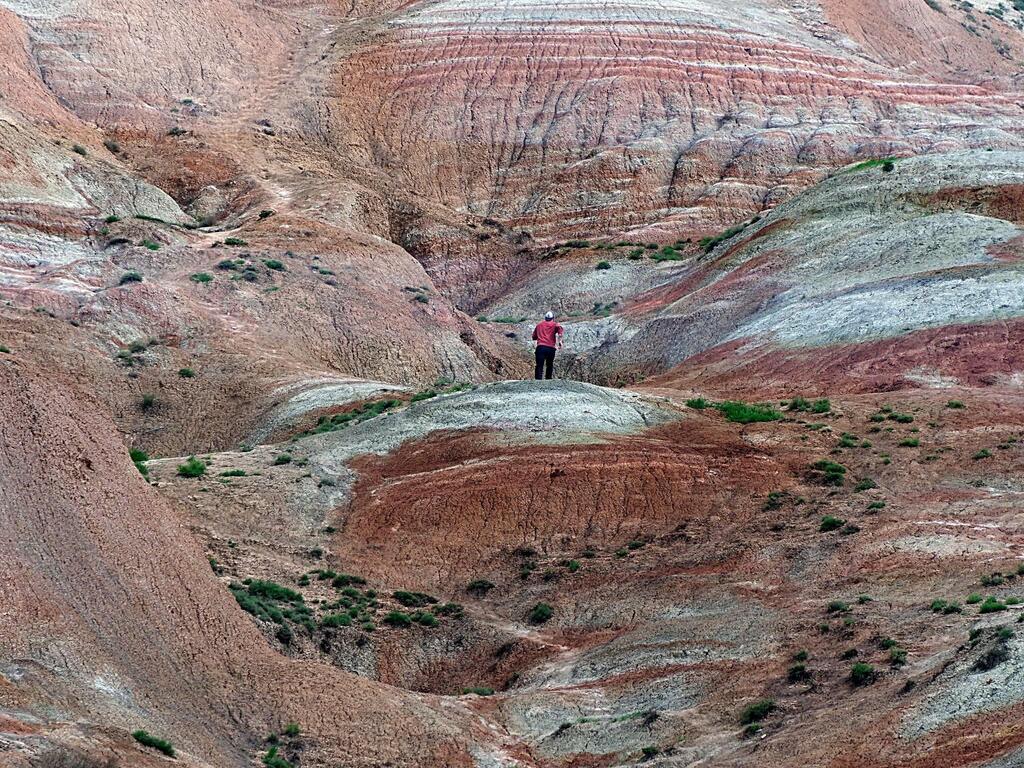
The Khizi mountain region
(Photo: Tali Stein)
Azerbaijan is known for its enormous number of mud volcanoes — more than anywhere else in the world. The area looks like the set of a science-fiction film and glows in reddish hues reminiscent of the surface of Mars. This geological phenomenon consists of mounds of earth from which mud, gases and water constantly bubble up — a mesmerizing and somewhat otherworldly sight that is worth making a special trip to see.
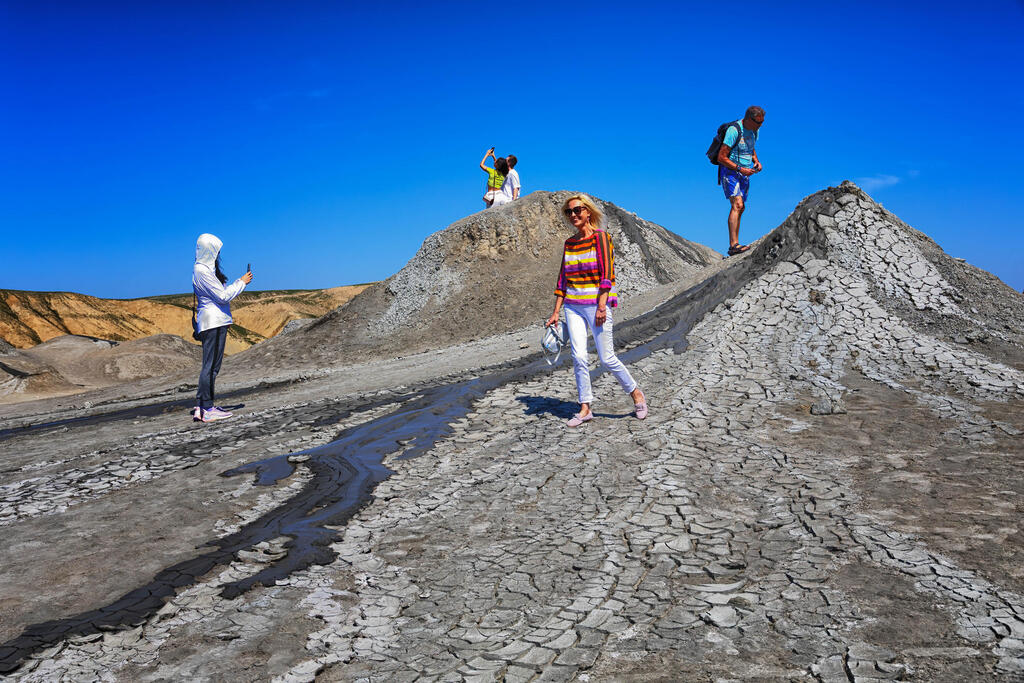
A Martian landscape near Baku
(Photo: Tali Stein)
Another place that left a strong impression was the village of Khinalig (Xınalıq) in the Greater Caucasus. This is an ancient, isolated village located at an elevation of about 2,300 meters (7,545 feet) above sea level. It is one of the world's oldest continuously inhabited settlements and its residents fiercely preserve a unique culture, language and traditions unlike those of any other group. Reaching the village involves an exciting, winding drive between enormous cliffs and the sight of ancient houses built one above another along the mountainside is simply unforgettable.
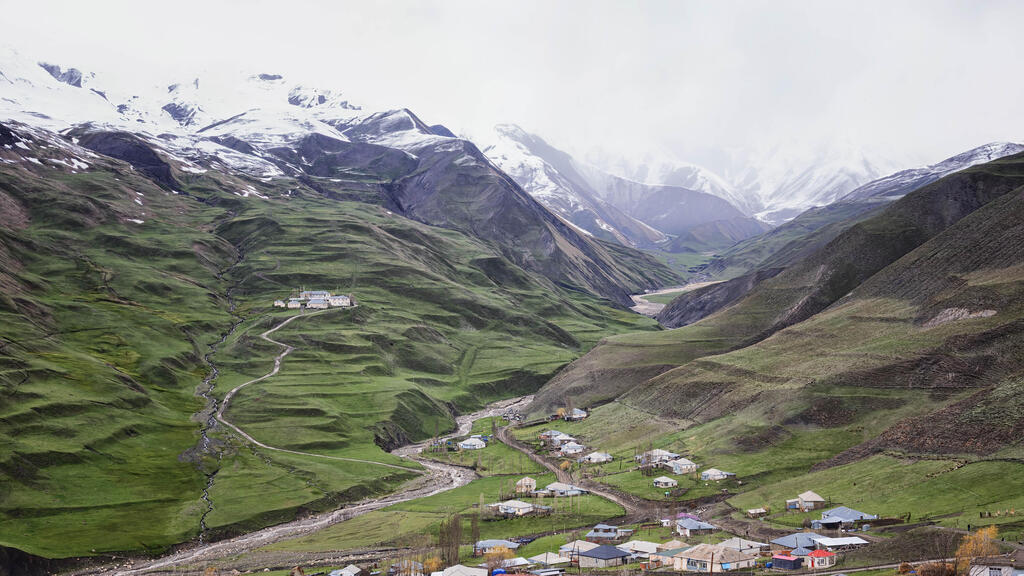
Khinalug village
(Photo: Tali Stein)
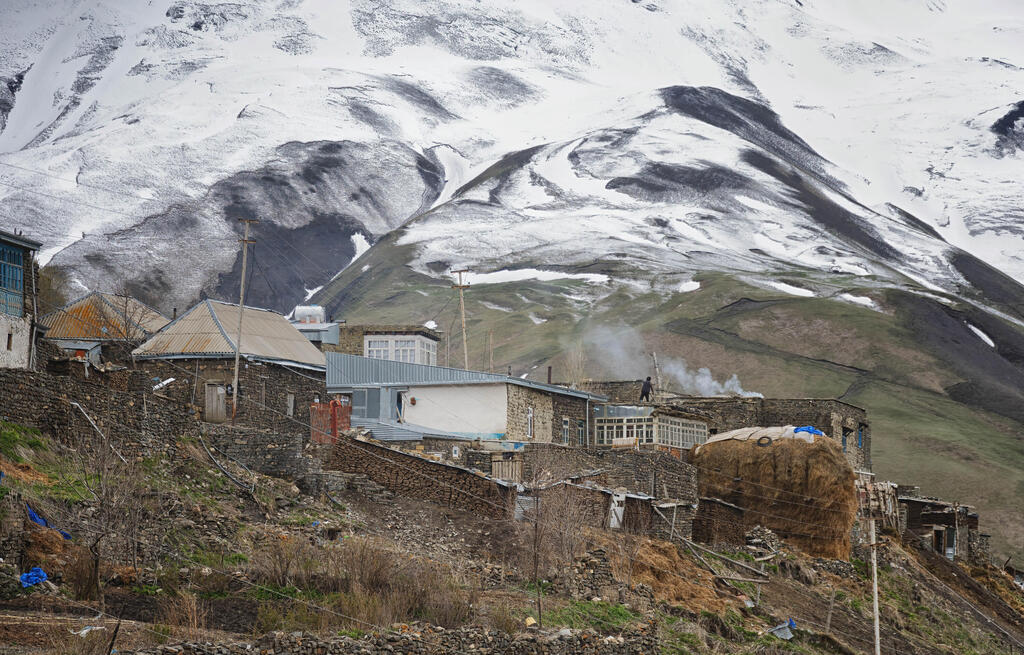
Khinalug village
(Photo: Tali Stein)
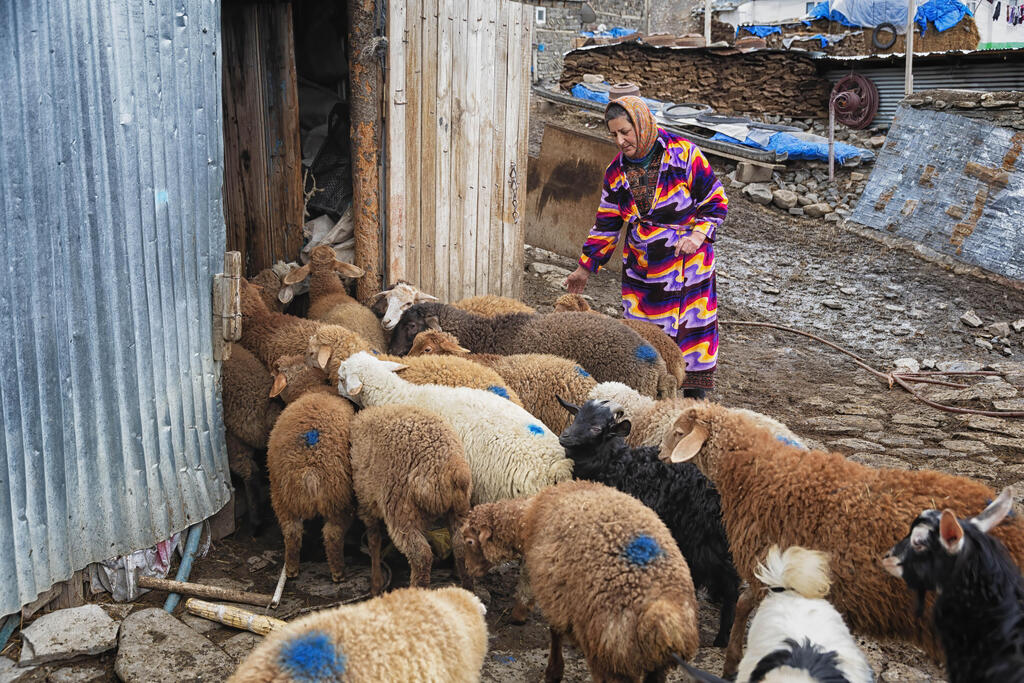
Like a journey through time
(Photo: Tali Stein)
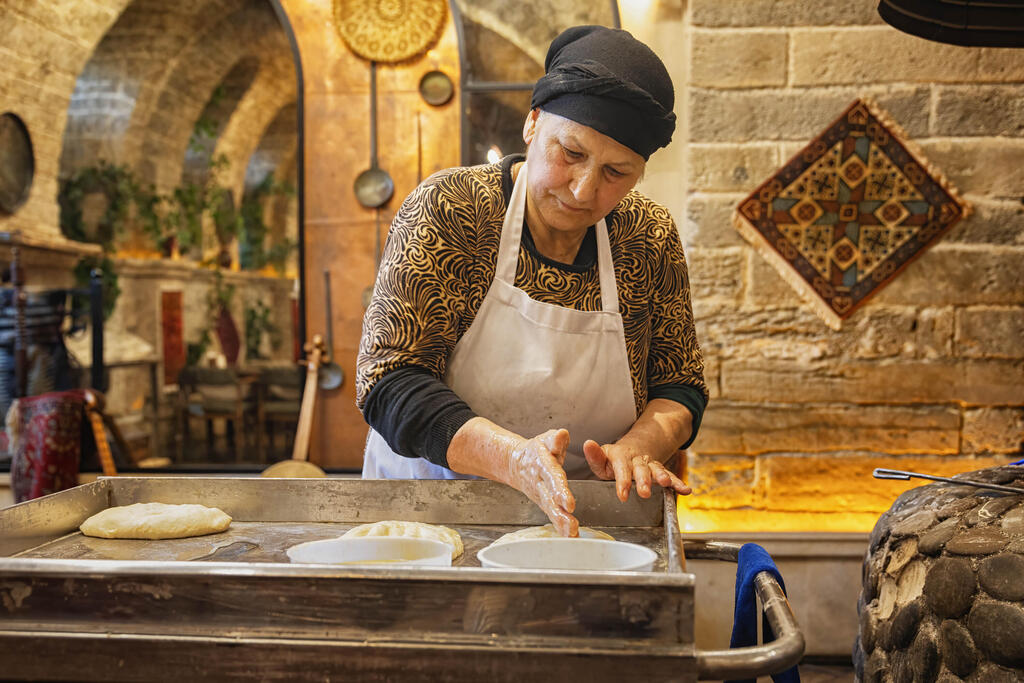
Making tandoor bread
(Photo: Tali Stein)
I highly recommend not skipping a visit to this beautiful and unique village nestled among the Caucasus Mountains. It is advisable to book a meal at one of the village's guesthouses and enjoy a variety of local delicacies served generously and with great hospitality.
It is worth noting that the village and its shepherds' route have been included on the UNESCO World Heritage List since 2023.
A visit to Shaki (Şəki)
Shaki is one of Azerbaijan's most historic and beautiful cities and once served as a major stop along the Silk Road. Surrounded by dense forests and the Caucasus Mountains, it is famous for the spectacular Palace of the Shaki Khans, whose windows feature impressive stained glass made from colorful glass assembled without nails or glue. The town is also known for its traditional sweets, particularly Shaki halva.
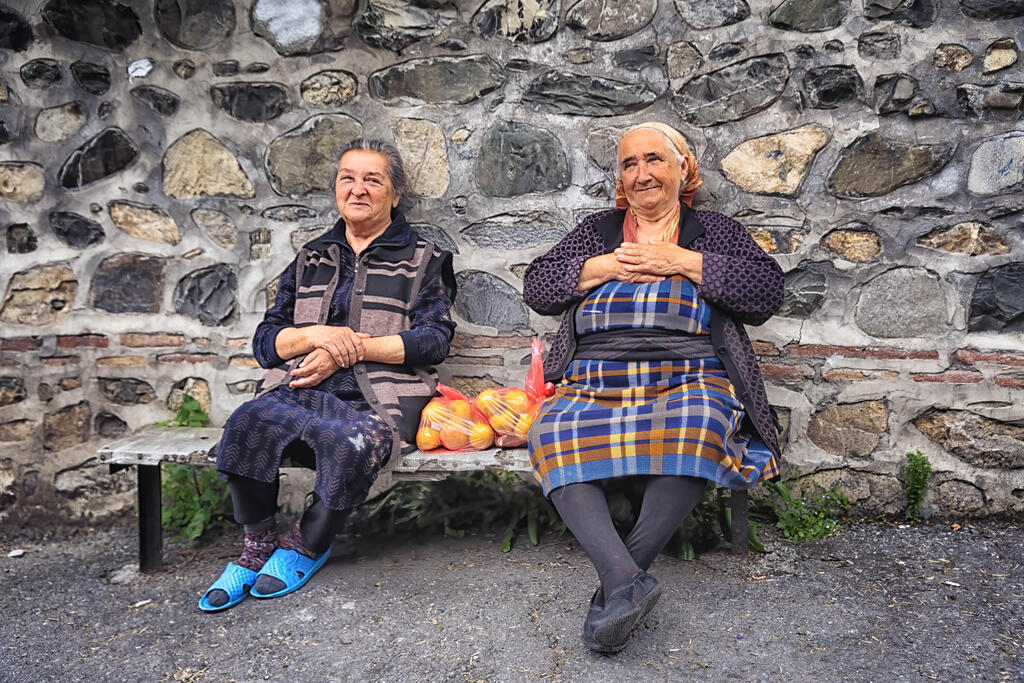
In the village of Shaki
(Photo: Tali Stein)
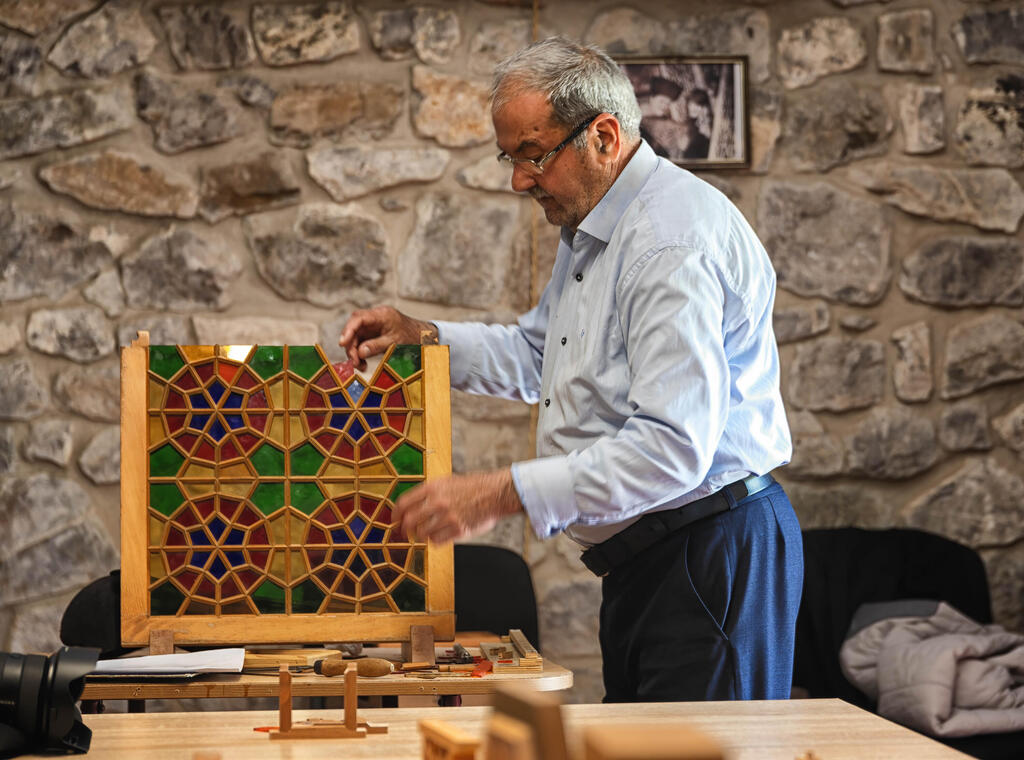
Making stained glass in Shaki
(Photo: Tali Stein)
A visit to this picturesque town, known for its rich cultural heritage and unique local cuisine, is highly recommended. We were also fortunate to meet a variety of local residents who welcomed us warmly.
And then we reached the Jewish town
Red Village (Qırmızı Qəsəbə) is the only town outside Israel and the United States populated entirely by Jews, known as Mountain Jews. The town lies on the banks of a river in the Quba region and is characterized by grand homes, active synagogues and a warm community that proudly welcomes Israeli travelers and celebrates its roots. A visit there offers an emotional full-circle experience along the history of the Jews of the Caucasus.
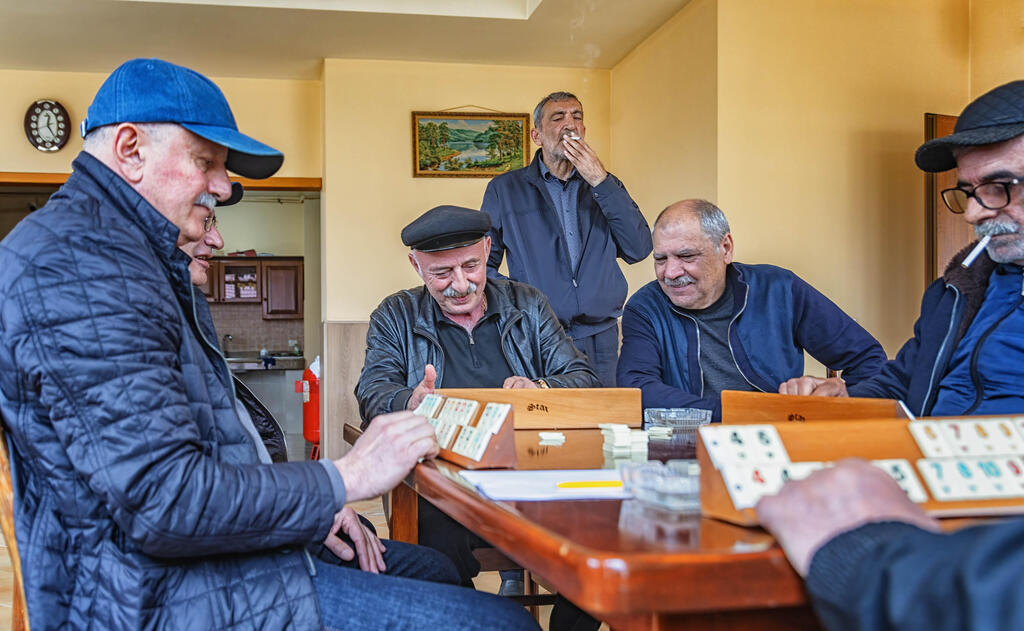
At the Jewish club in Red Village
(Photo: Tali Stein)
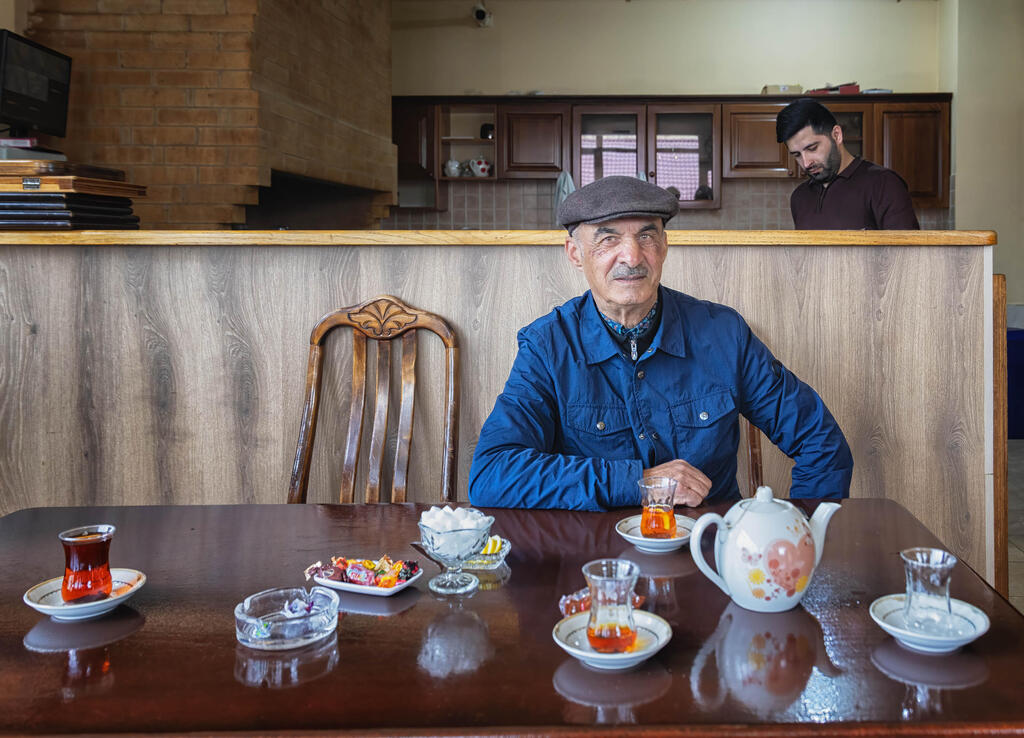
At the Jewish club in Red Village
(Photo: Tali Stein)
The local Jewish community lives in harmony and cooperation with the Muslim community. We met representatives of the Jewish community at the local club. Many of them have family ties to Israel and speak some level of Hebrew. It was moving and awe-inspiring — I highly recommend not skipping a visit.
In conclusion, Azerbaijan proved to be an exceptional, surprising and unforgettable destination. The combination of a well-maintained and futuristic capital, rich and welcoming culture, warm and friendly attitudes toward Israelis and rugged, wild nature in the form of the Caucasus Mountains makes it one of the destinations most worth considering for Israeli travelers looking for something new, fascinating and out of the ordinary.
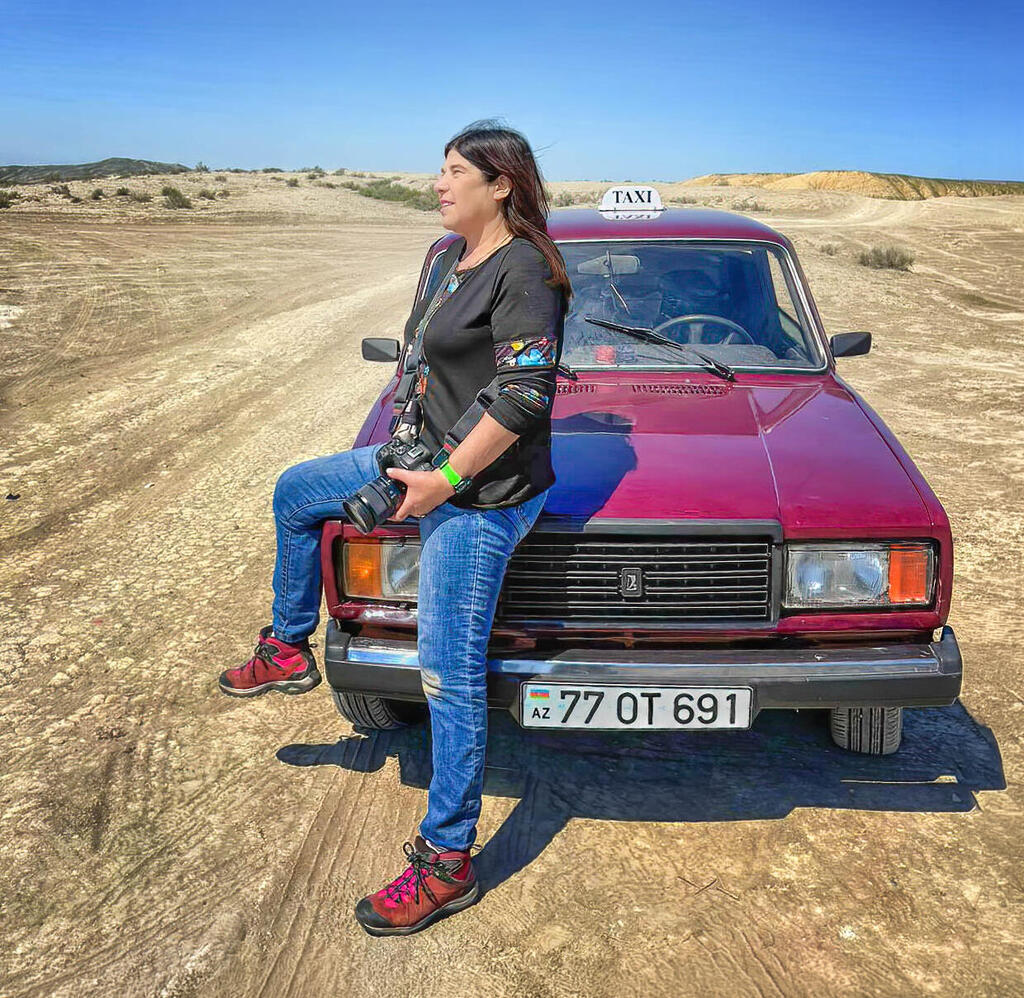
Tali Stein in the Azerbaijani desert
(Photo: Lital Bilu)
Tali Stein is a photographer specializing in cultures and landscapes. You are invited to visit her website.