

With 40 kilograms (88 pounds) of weights, a special mask covering his entire face and extensive diving experience, Ohad the Nomad descended beneath the surface of the Dead Sea.
While most visitors struggle to stay afloat and enjoy the lake's famous buoyancy, the Israeli content creator decided to do exactly the opposite. Alongside his diving partner, Uri, he descended to a depth of 10 meters to 15 meters (33 feet to 49 feet) and discovered an extraordinary underwater world: a forest of salt crystals, white pillars resembling coral and natural formations that look as though they belong on another planet.
Diving into the depths of the Dead Sea with Ohad the Nomad


There are no fish, no coral and no vegetation. Just salt, water and silence.
But this dive is far from an ordinary adventure. The Dead Sea's exceptionally high salinity, approximately 34%, nearly 10 times that of ocean water, creates enormous buoyancy, making the simple act of sinking a considerable challenge. Overcoming it requires specialized equipment and substantial additional weight.
The greater danger, however, lies in the water itself. If Dead Sea water enters the respiratory tract, it can cause severe lung damage and dangerous disturbances in the body's balance of salts and minerals. Diving in these conditions requires extensive experience, advanced skills and meticulous preparation.
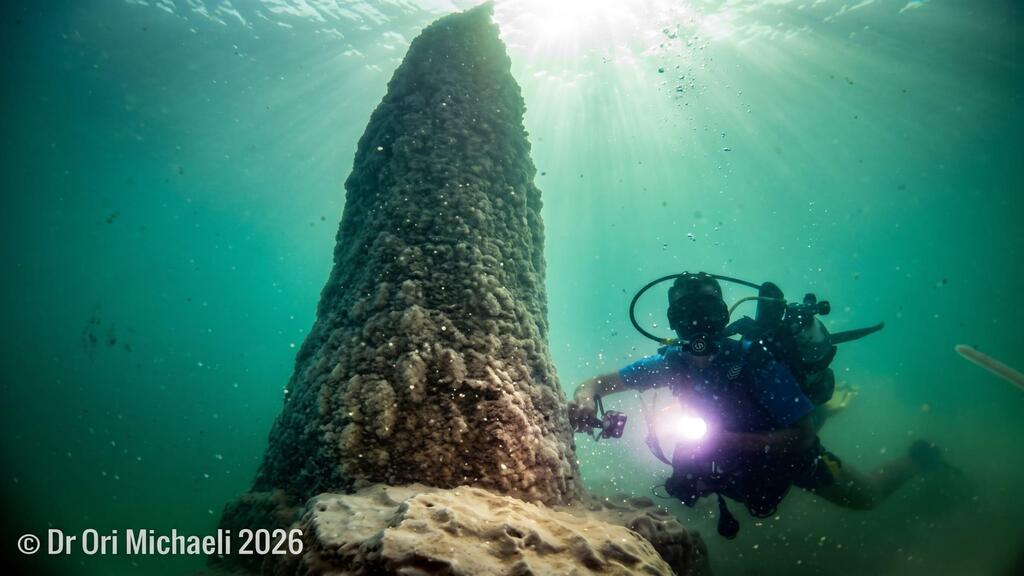
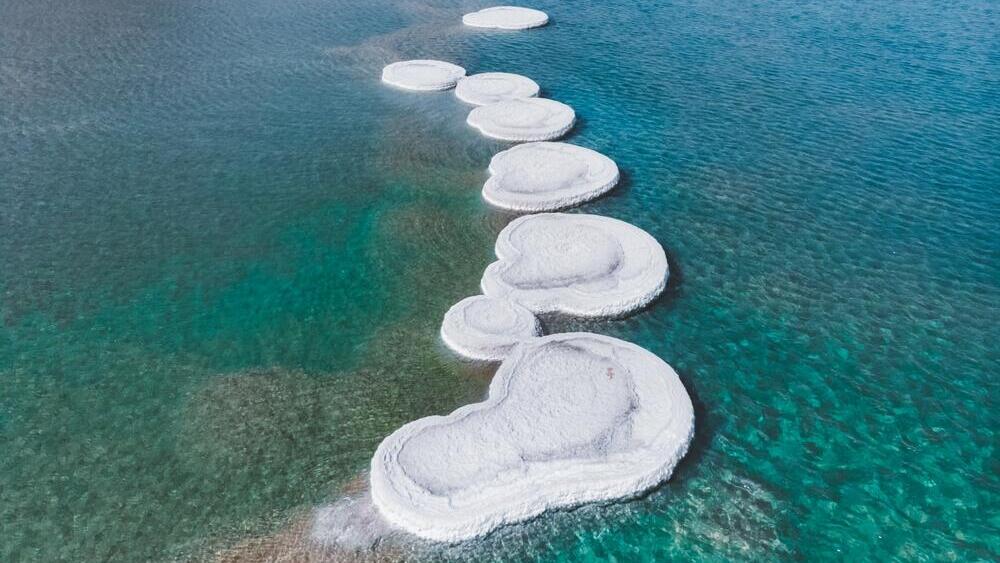
Those who manage to reach the depths discover one of Israel's most surprising natural spectacles. Rising from the Dead Sea floor are structures known as "salt chimneys," which form around freshwater springs. When the emerging groundwater meets the lake's highly saline water, salts crystallize into remarkable columns, some reaching several meters in height. In certain areas, dozens of these formations stand side by side, creating what resembles a white underwater forest.
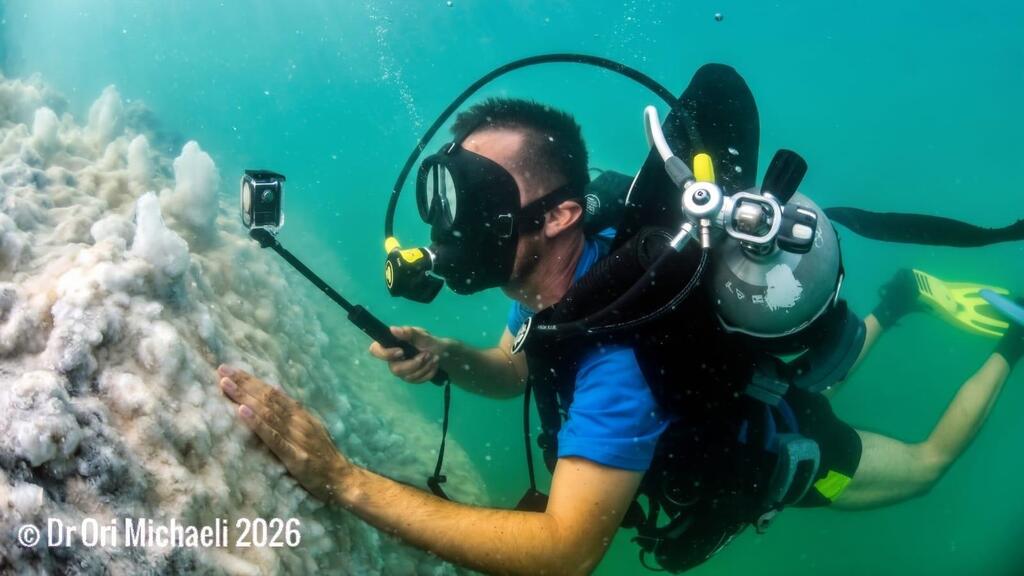
Ohad the Nomad is an Israeli travel blogger and content creator who documents unusual adventures around the world. He served five years in the Israeli Navy and says he has completed more than 1,000 dives worldwide. Even for him, however, the Dead Sea presented an exceptional challenge.
His underwater footage became a social media hit, attracting approximately 740,000 views on Instagram and another 416,000 on TikTok, more than 1.15 million views combined.
In an interview with ynet, he described the unusual preparations and the moment he found himself wondering whether he was truly willing to risk his life for the experience.
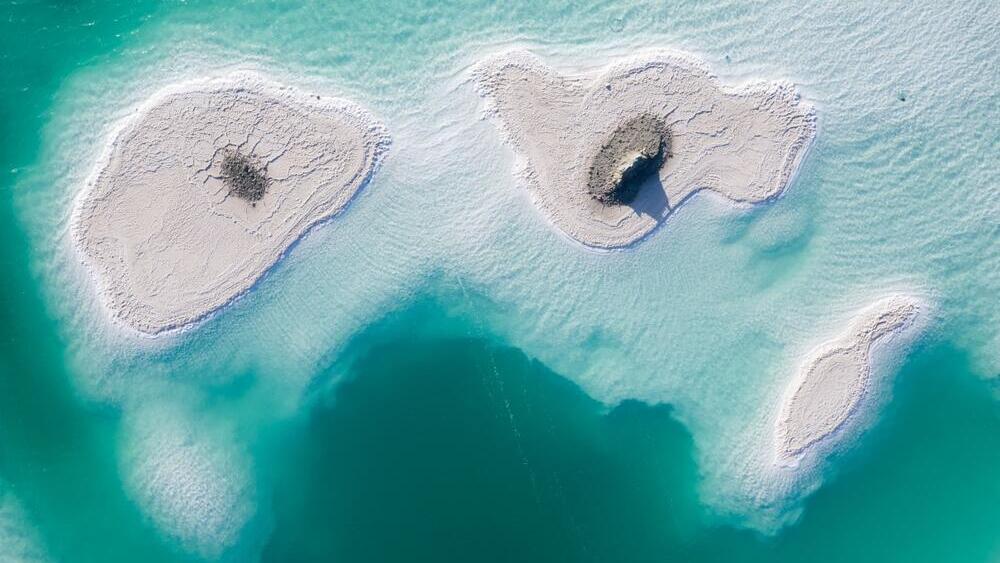
Dead Sea chimneys
(Photo: Wirestock Creators / Shutterstock)
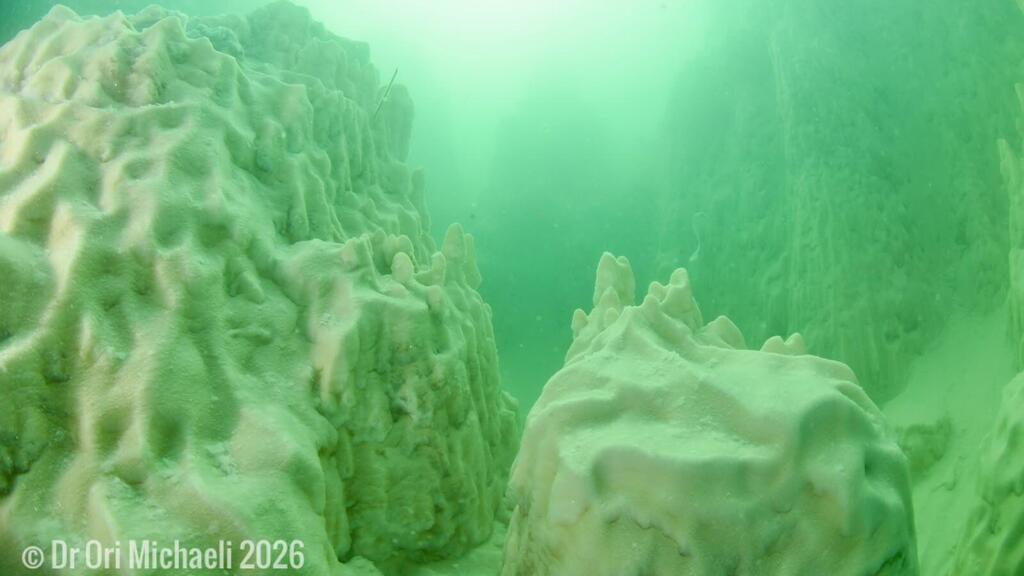
No fish, no nothing: You are the only living thing under the water there
(Photo: Ori MIchaeli)
How did you come up with the idea of diving in the Dead Sea?
"I'm very familiar with the diving world from my military service in the Navy. The Navy's diving unit regularly conducts training exercises in the Dead Sea precisely because of the challenging conditions and the difficulty of diving there. When I heard about those exercises, I always dreamed of experiencing it myself and envied those who got the opportunity. I was also a diver in the Navy, but I served in a different unit, so I never got to try it.
"When I discovered that it was possible to dive there outside the military, I decided to fulfill that dream. Uri joined me. He's a diver who lives in England and had already dived in the Dead Sea about 20 years ago. He decided to come especially to experience it again."
How do you prepare for a dive like that?
"In terms of equipment, you don't need a wetsuit, which is designed to keep your body warm, because the Dead Sea's water is warm. Besides, a wetsuit increases buoyancy, which is already exceptionally strong in the Dead Sea.
"So I dived wearing a Lycra shirt and regular swim trunks, but I had to carry no less than 40 kilograms of weights. For comparison, on a normal dive, you use about six kilograms of weights. In the Dead Sea, you need much more just to manage to sink beneath the surface."
And is there any special mental preparation? After all, it's a dangerous dive.
"I don't know whether special mental preparation is necessary, but you definitely have to be a very experienced and highly skilled diver. This isn't a dive suitable for just anyone who has completed an advanced diving course.
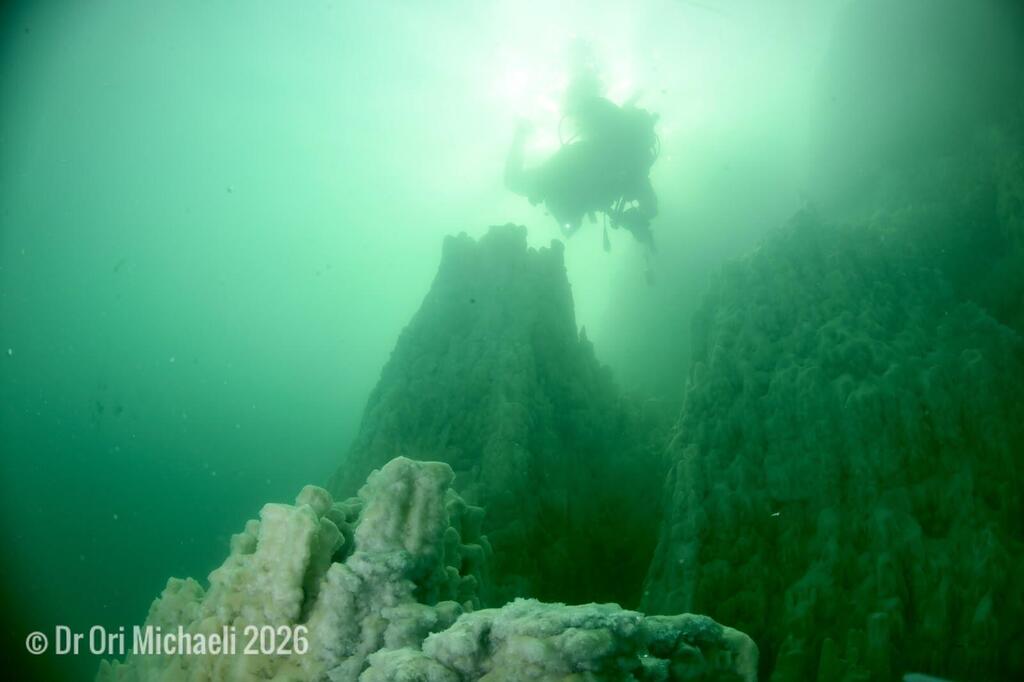
A hidden world beneath the water's surface
(Photo: Ori MIchaeli)
"Since publishing the video, I've received countless Instagram messages from people who want to try it themselves. It's important for me to emphasize that this is a dangerous dive and isn't suitable for anyone who doesn't have at least hundreds of dives behind them."
What about the special mask visible in your videos?
"We used a full-face diving mask, which looks a little like a gas mask and covers the entire face. This mask has a major advantage: It allows divers to speak to one another underwater. Masks like these are used by professionals who work underwater, as well as scientists. We were also able to communicate and talk during the dive, which was a special experience in itself."
How is this dive different from a regular dive?
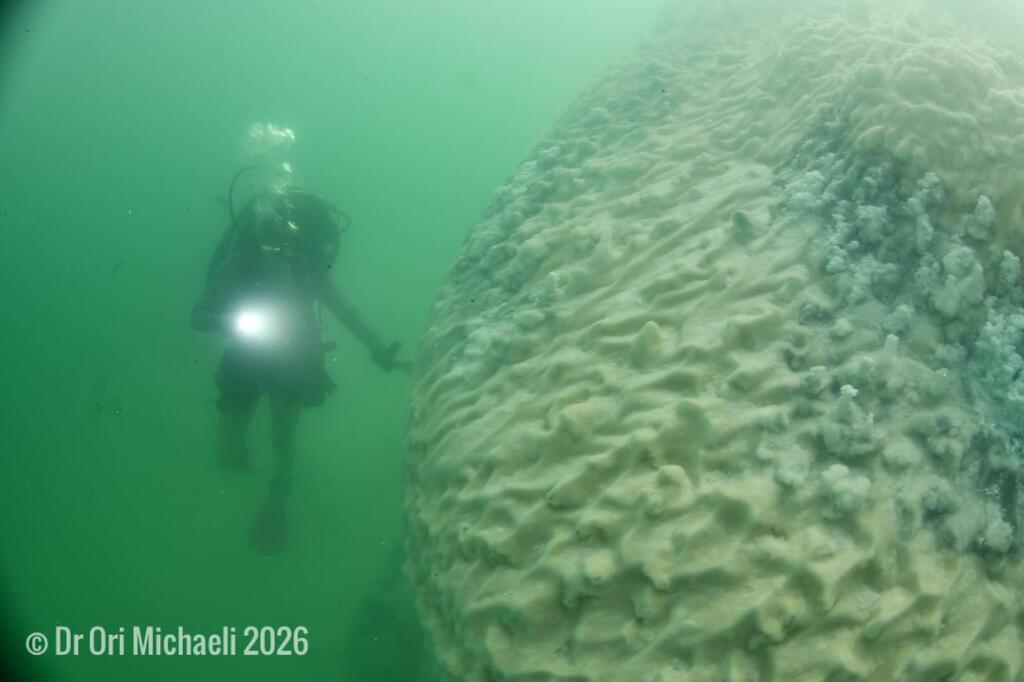
"There are no fish. It's the Dead Sea. No fish, barely any bacteria. The scenery underwater is completely different. Instead of a vibrant underwater world full of life, you encounter spectacular formations of salt crystals. Fresh groundwater emerges from the bottom of the Dead Sea, and the salt crystallizes around it, creating columns known as 'salt chimneys.' Where there are large concentrations of these chimneys, they form a kind of underwater forest of salt crystals. At first glance, you might think they're enormous rocks, but they're actually masses of salt created through a natural process.
"The beauty of this dive isn't in the colors or marine life, but in the unique natural phenomenon unfolding before your eyes. The salt creates formations resembling waves, rocks and even coral, but everything is made of salt, without anything living."
So how deep do you dive?
"The tops of the chimneys protrude above the water's surface, so you can already spot them before diving. From there, you descend alongside the chimneys toward the bottom. Some are located at depths of dozens of meters, but we dived to between 10 meters and 15 meters."
(Photo: Ori MIchaeli)
Was there a moment when you were genuinely afraid or felt that you were risking your life?
"Before the dive, we went through a briefing, and only then did I realize just how dangerous it was. When I signed up, I hadn't fully understood the risks. Suddenly, I found myself asking, 'Wait, am I really willing to risk my life for a dive like this?' In the end, I decided that I was. I'm someone who's constantly looking for adventures and challenges.
"For my previous challenge, for example, I climbed the highest glacier in Europe and jumped off it with a parachute on my back, the first time I'd ever done something like that. I tend to say 'yes' to even the craziest adventures, and when it comes to diving, I feel very comfortable underwater."
What is visibility like underwater? Can you actually see what's around you?
"Daylight penetrates the water normally, but visibility in the Dead Sea is quite limited. It's an area with a lot of wind, and combined with the minerals and sand suspended in the water, it's difficult to see very far. During the dive, we could only see about five meters ahead. The limited visibility added another element of drama because you're moving underwater without knowing exactly what's waiting for you.
Limited visibility in the depths of the Dead Sea
(Photo: Ori Michaeli)
"It was an especially thrilling experience. You can actually see freshwater emerging from the chimneys"
What was the moment you enjoyed most underwater?
"The underwater scenery is fascinating, just like a forest of salt crystals. One of the things I loved most was stopping for a moment and looking at the small details, the cuts and cracks that had formed inside the crystals. I love focusing not only on the enormous formations but also on the tiny details that make them up. You can actually see freshwater emerging from the chimneys, and it's an amazing phenomenon. The water looks like waves moving within the water surrounding it, almost like a liquid within a liquid. Watching the streams of water emerge from the tops of the chimneys is an extraordinary experience."
(Photo: Ori Michaeli)
(Photo: jonathandav / Shutterstock)
How do you reach the area where the chimneys are located?
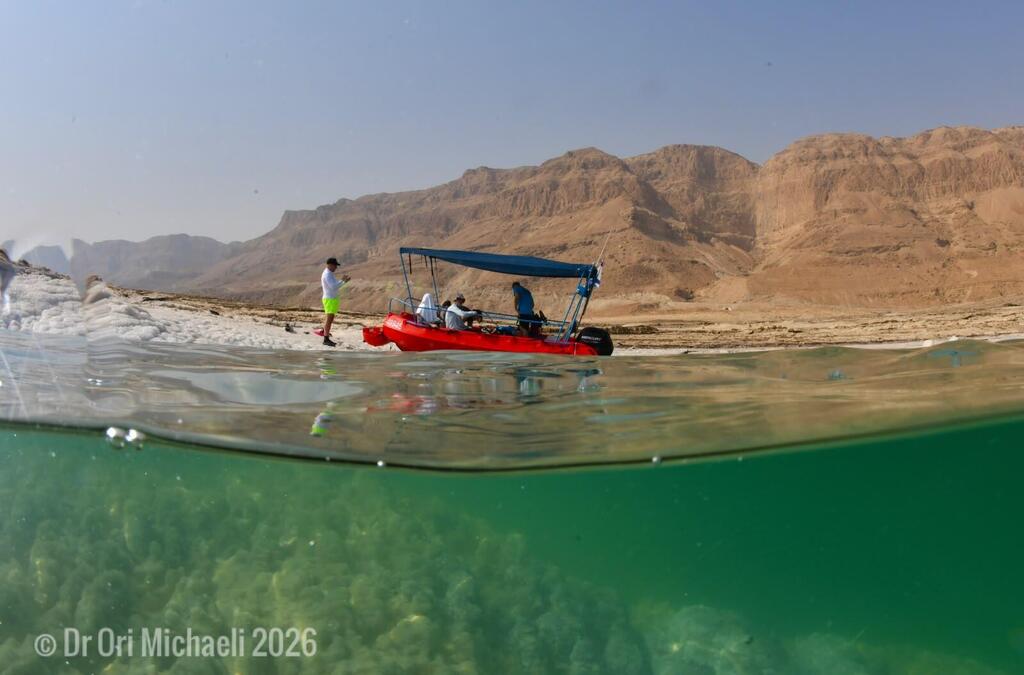
"We set out from the Mitzpe Shalem area and boarded a boat operated by Nofei Yam HaMelach, led by a guy named Jackie, who took us to an area with a large concentration of salt chimneys. The very fact that there's a boat sailing on the Dead Sea is amazing to me. The boat ride took about 10 minutes before we reached the dive site. Although you can enter the water and dive in other places, our goal was specifically to reach the salt chimneys and see this unusual phenomenon up close. It really is a spectacular sight."
After everything you've experienced, would you do this dive again?
"I would absolutely do it again. It's an experience I dream of repeating, and I believe it will happen. I was very surprised by the enormous interest the dive generated on social media. I uploaded a video to Instagram, and by the following day it had already accumulated more than 600,000 views. That's an unusually high number of views, even for me, and I definitely wasn't expecting that kind of response."