

Twenty-seven years ago, I was lucky enough to be invited to a serious party aboard a cruise ship on the Dead Sea. On the eve of the new millennium, Israel was a global party powerhouse, and every gimmick or fresh innovation on the dance floor was welcomed with open arms. Naturally, given the party’s rave-like atmosphere, only fragments of blurred memories remain, a wooden deck trembling under the force of dancers jumping in unison and the mesmerizing sight of glowing white salt formations rising from the water at sunrise.
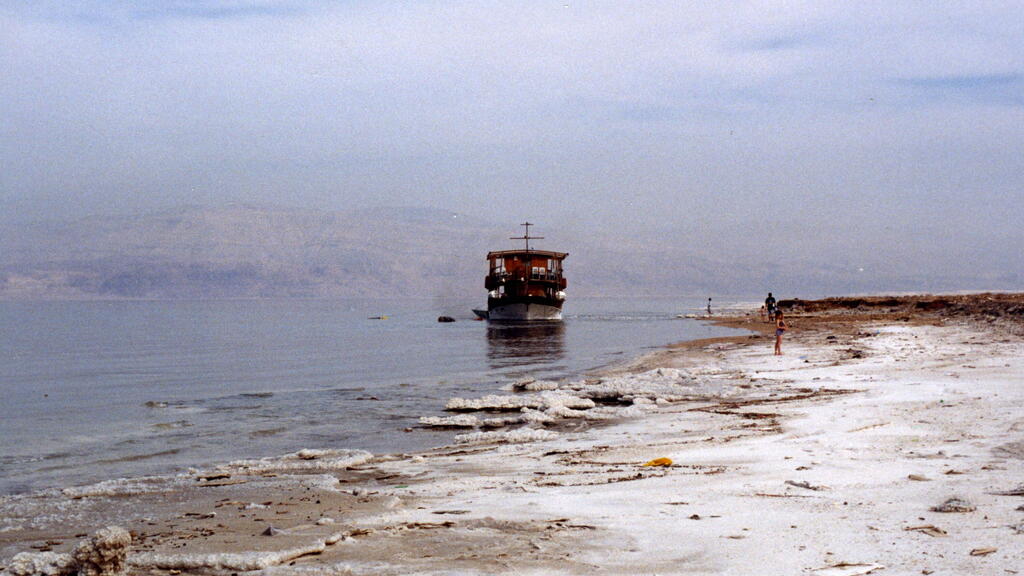
The legendary ship was called “Lot’s Wife,” and passengers boarded from a specially constructed adjustable pier at Ein Gedi Beach. In 2000, the vessel sank during a storm.

A shipwreck in the Dead Sea
(Photo: Assaf Kamar, Drone: Itay Polak)


In an effort to locate the remains of the party ship, I turned to Uriah Levuim, 49, a tour guide and member of Kibbutz Ein Gedi who once worked aboard the vessel.
“I joined the ship in my early 20s,” he recalled. “I worked as a deckhand, greeting people as they boarded and disembarked, helping the skipper with whatever was needed, selling things at the kiosk and handling maintenance.”
When the former deckhand speaks about the ship’s legendary owner, a veteran of Israel’s naval commando unit, he becomes emotional.
“Moti Gonen, may his memory be a blessing, was a man among men,” he said. “Tough, strong, entrepreneurial, decent and honest. It was wonderful to be around him. I remember one night when there was a storm, and Moti called all of us to sleep on deck to protect the boat. He had a broken leg at the time, but in the middle of the night he hobbled along the pier and deck throwing fenders overboard to protect the ship. He looked like Captain Ahab. I’ll never forget it.”
(Photo: Assaf Kamar)
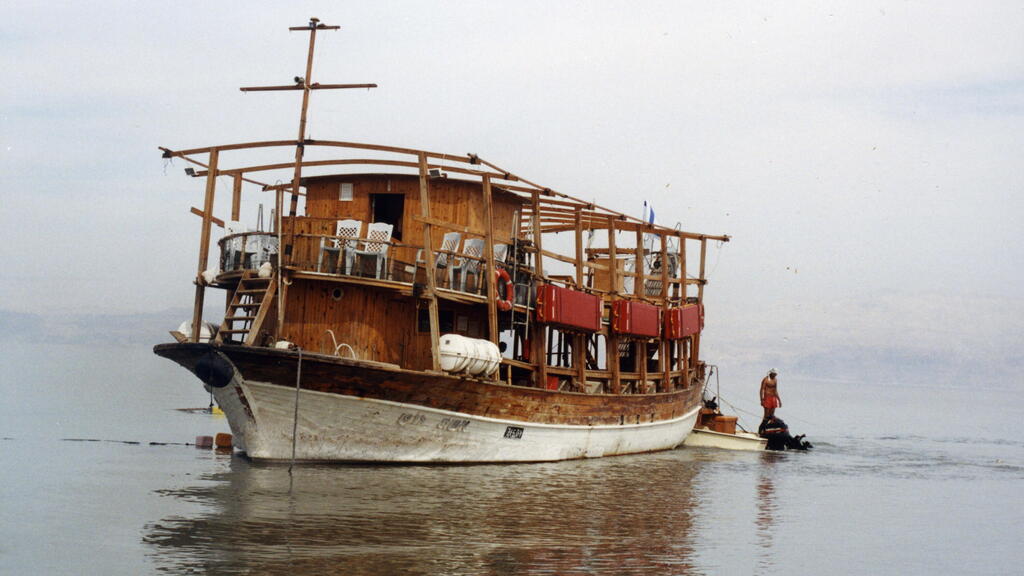
'Lot’s Wife' in better days
(Photo: Charlie, Ein Gedi Kibbutz Archives)
(Photo: Charlie, Ein Gedi Kibbutz Archives)
So how did a tourist attraction for modest pilgrim cruises become an iconic dance venue for one of Israel’s most hedonistic party scenes?
“Originally it was a sightseeing ship for cruises on the Dead Sea,” Uriah said with a laugh. “But at some point a party producer approached Moti, and that’s how it started. Once a week we’d host a party cruise, and they were incredible. Colorful, joyful, full of music and dancing. We’d pick people up at night and bring them back after sunrise. Sometimes it even carried on into the morning. There were guys, girls, drinks, music, Israelis at their best. I remember the entire deck moving to the beat of the music. People stomped their feet and everything literally shook. It was unbelievably cool.”
In 2000, the party came to an end.
“One day there was a major storm,” Uriah said. “The ship broke loose from its buoy and drifted south toward Kibbutz Ein Gedi, where it ran aground on what was then the shoreline. Over the years the sea kept receding, so I assume it’s now far inland.”

Ein Gedi Desert Camp
(Photo: Assaf Kamar)
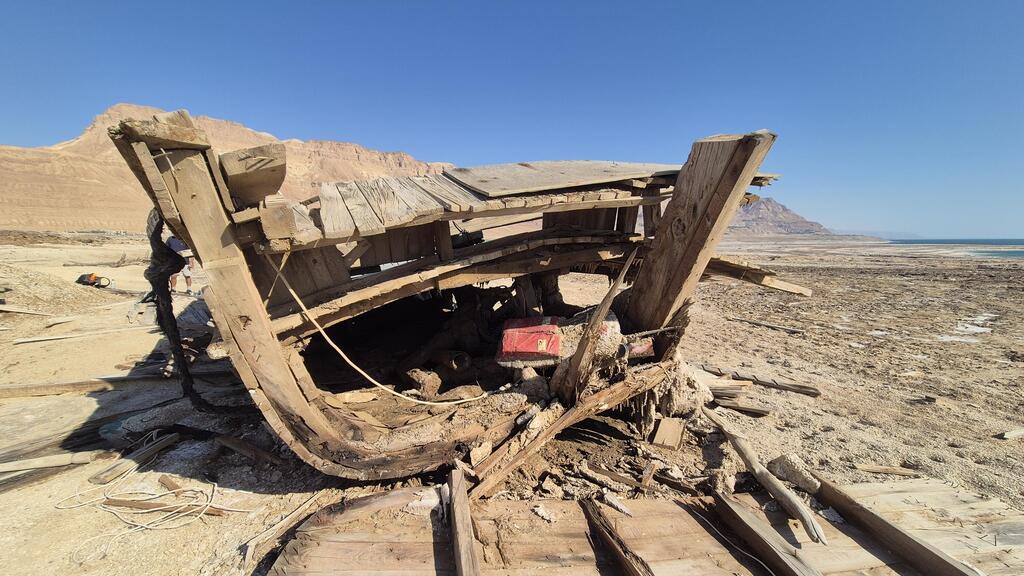
What remains of the stern
(Photo: Assaf Kamar)
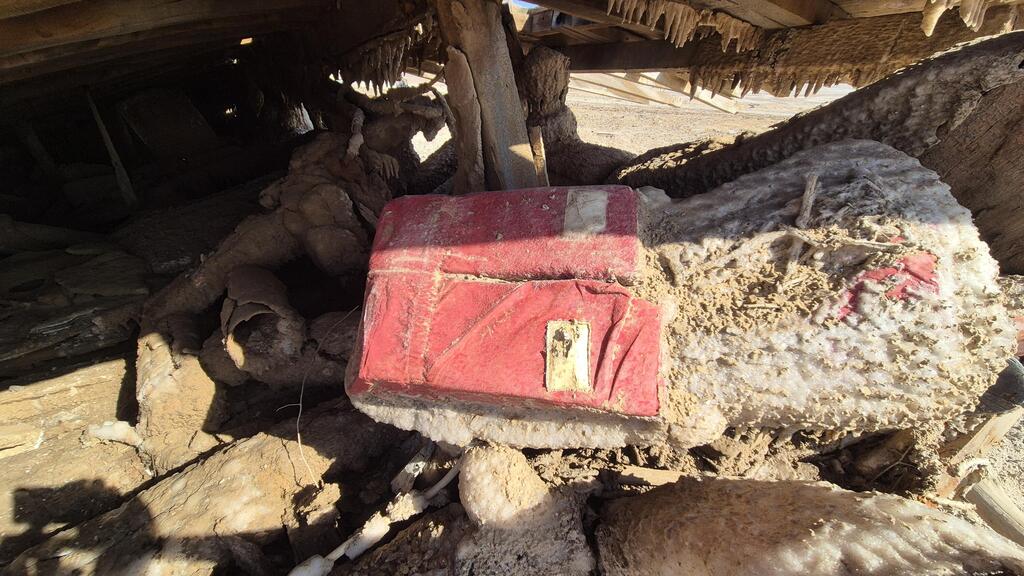
Even a forgotten life jacket
(Photo: Assaf Kamar)
Fast forward to 2026: A ynet expedition searching for the wreck of the “Lot’s Wife” party ship wakes up to a spectacular sunrise at the luxurious Ein Gedi desert camp. After cappuccinos worthy of a Tel Aviv café, we head out at first light toward the iconic Ein Gedi Spa complex, abandoned because of sinkhole activity.
And this is the moment to warn loyal readers of our “strange places” series: Hiking in the Dead Sea sinkhole region without a certified guide and valid insurance is extremely dangerous and could end in disaster. There are no marked trails, and the terrain is filled with unstable ground, pits and deep mud. Do not attempt this on your own.
We continue south on foot along the waterline on an improvised route that is not suitable for everyone. Uriah, the former deckhand, carefully guides us between deceptive mud flats and glowing salt formations. He has not seen Ein Gedi’s dream ship in 26 years and is visibly emotional about the possibility of finding it and closing a circle.
After 40 minutes of hiking through a barren, lunar landscape of brilliant white crystals, salt mushrooms and deep blue water, Uriya suddenly points excitedly at a dark, elongated shape at the edge of a salt ridge.
“There’s no doubt this is the remains of something man-made.”
Excitement grips the group. After 26 years, we are finally about to reunite with the “Lot’s Wife.”
After several minutes of decidedly reckless walking through slippery mud and over rocks, we approach the wreck with growing excitement. The sight is apocalyptic, humbling in the face of nature’s power and perhaps even faintly reminiscent of Noah’s Ark — a massive wooden hull embedded in salt and earth.
Despite the decades that have passed since that fateful stormy night, it is easy to identify the vessel as a traditional Turkish wooden gulet fitted with a modern diesel engine that has since become encased in salt.
Yiftah Argaman, 70, who joined the expedition convinced we would never actually find the remains of the “Lot’s Wife” — and made sure to remind us of that throughout the hike — discovered an original life ring and an orange life jacket turned into a solid block of salt inside the wreck.
“From a distance it looked like a pile of broken wood,” he said of the discovery. “Then suddenly these massive beams appeared, rusted metal and this long strange shape that looked like the skeleton of a whale stranded in the desert. It was a perfect moment.”
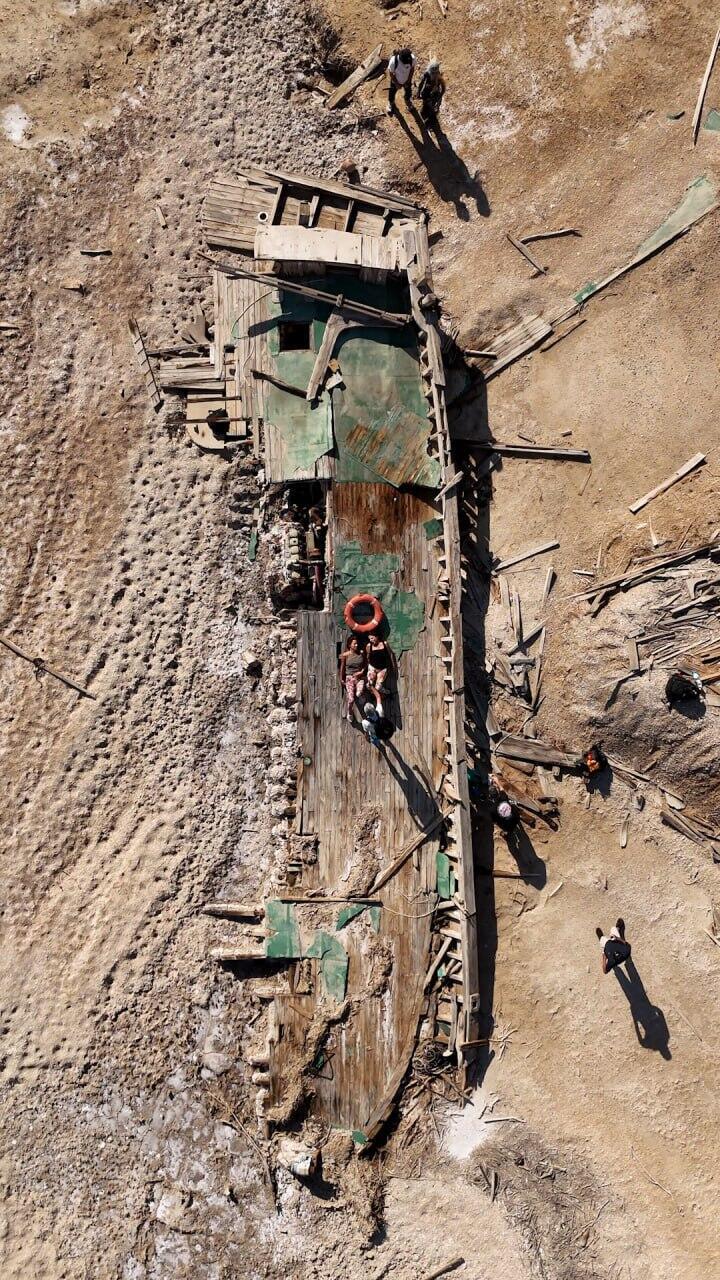
(Photo: Assaf Kamar)
The ynet expedition to Ein Gedi’s wrecked ship quickly loses composure. Cameras come out as everyone rushes to document the surreal and electrifying sight for posterity — a shipwreck in the middle of the desert.
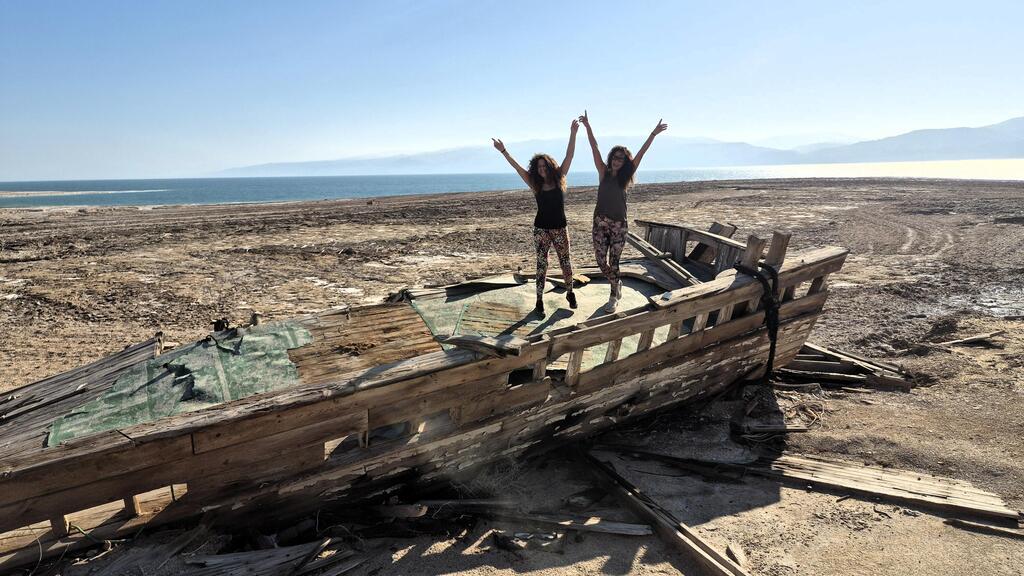
Hali Shalev, 50, a veteran partygoer who missed the Dead Sea party-boat craze during the wild 1990s, carefully climbs onto the unstable upper deck of the wreck.
“Assaf, put on some music!” she shouts from above.
“For 30 years I’ve been hearing about these parties,” she said with a laugh. “I can’t believe I never made it here. But it’s never too late, and now I’ve finally come to close the circle.”
Then, in the strangest and most fitting twist imaginable, a small impromptu party breaks out on the remains of the sunken ship. Someone plays music from a phone, and everyone dances enthusiastically in front of the rising sun, just like in “Titanic.”
In the end, the journey to the “Lot’s Wife” wreck in the Dead Sea was fascinating and thought-provoking, though certainly not for everyone. The hike is challenging and passes through extraordinary apocalyptic landscapes. At some point, whether or not we found the ship no longer seemed to matter, the scenery and salt crystals were impressive enough on their own.
But spotting the ship in the distance was an especially magical and emotional moment, and the spontaneous dancing on its iconic deck filled us with sweet nostalgia.