

A new problem has recently been added to the congestion and long lines at Ben Gurion Airport: Passengers are being forced to wait for hours inside the plane even before takeoff.
For example, on Sunday, a TUS flight to Cyprus scheduled for 9 a.m. took off after a three-hour delay. At first, passengers were told the flight was waiting for another bus carrying passengers who were late for boarding. The crew, which left the door open, could not explain the reason for the delay and handed out water and energy bars in an effort to calm the atmosphere. There were hundreds of passengers on the plane, many of them with small children, who had prepared bottles and formula for a flight of just one hour — but ultimately remained on the plane for more than four hours.
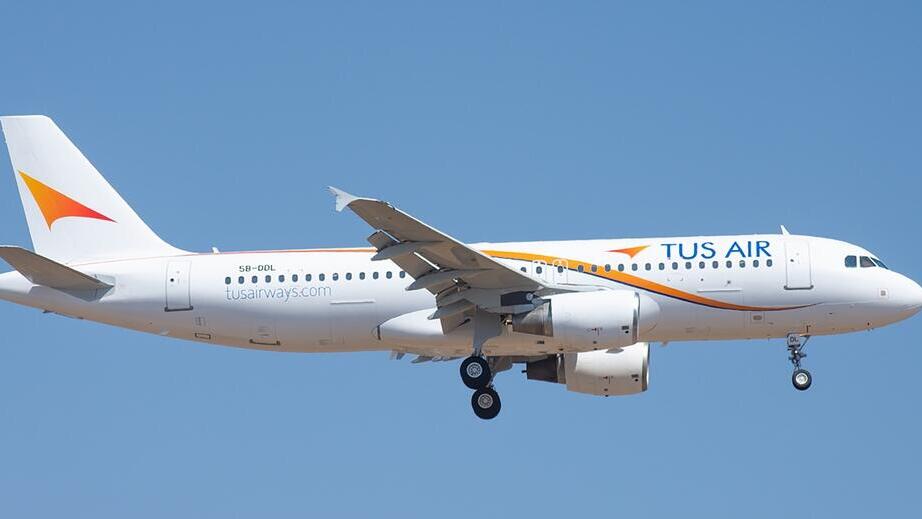
TUS airline flight
(Photo: Ronen Fefer / Shutterstock)
A similar incident occurred Monday night with a Blue Bird flight to Crete, which took off two hours after all the passengers were already seated. In that case, the crew insisted on closing the door and keeping the aircraft fully ready for takeoff, fearing that when clearance arrived, if the plane was not ready, the approval would be given to another aircraft. Angry passengers complained that the air conditioning was working on ventilation only, and only after an hour and a half, when the children’s crying grew louder than the passengers’ shouting, was the crew forced to open the door and allow fresh air into the aircraft. At one point, one of the passengers contacted the police, who forwarded a request to Ben Gurion Airport’s control tower to prioritize the flight.
The reason that airlines are doing this that they are afraid of missing the takeoff window, or slot, allocated to them, so they begin boarding as planned and keep passengers in their seats even when the flight is delayed. Because clearance to take off may be received at short notice, evacuating the aircraft could cause the company to miss its slot and face another delay, which would also affect the aircraft’s onward flights.
The result is that passengers sometimes wait for hours in a crowded plane, at times without full air conditioning and with limited food and drink supplies, instead of in the air-conditioned and spacious gate area.
These days, Ben Gurion Airport is in a complex situation: The American refueling planes parked at the airport are being given priority over passenger aircraft, even if they were not assigned a takeoff or landing slot in advance.
In addition, the flight schedule at Ben Gurion Airport is significantly affected by the situation at airports in Greece, which currently ranks third in Europe for flight delays, against the backdrop of a surge in aircraft traffic in its airspace. Over the past month, Greece was responsible for 11% of all flight delays in Europe. France ranked first with 40% of the delays, followed by Spain with 14%. The delays in Greece are mainly due to airspace capacity limits and a shortage of manpower. Athens airport alone was responsible for 7% of all flight delay time recorded in Europe, while Macedonia airport accounted for another 4% of all delays.
The congestion in Greek airspace is taking place alongside a continued rise in passenger and tourism traffic. Greece ranked seventh among the 10 busiest aviation markets in Europe, with an average of 2,842 takeoffs and landings per day. That is a 5% increase compared with the same period last year.
For Israeli passengers, the figures are dramatic, since Greece is one of Israel’s main tourist destinations. In addition, most flights from Israel to Europe pass through Greek airspace. As a result, a restriction in Greek airspace affects not only direct flights to Athens and the Greek islands, but also flights departing Israel that pass through Greek airspace on their way to other destinations.
“The aircraft were ready for takeoff on time, and all passengers were already on board," Kavei Hufsha, which owns TUS and Blue Bird, said in a statement. "The delay stemmed from unusual congestion on the air route, and the crews were waiting for clearance from the control tower in Greece, so it was impossible to know in advance how long the wait would last. It is important to emphasize that the flights were operated using aircraft from the Bulgarian airline ALK Airlines. During this period, the Kavei Hufsha Group operates about 90 legs a day to and from Israel through a variety of airlines, with a significant part of the activity serving eight destinations in Greece. During the wait, the crews did everything possible to ease the passengers’ discomfort, including distributing water, opening doors and operating ventilation, subject to safety restrictions. The planes were parked on the tarmac and not at a jet bridge in order to be ready for takeoff immediately upon receiving clearance.”