

Since October 7, Israelis have been waiting for the return of open skies, more airline competition and cheaper flights to destinations around the world. Repeated rounds of fighting with Iran left Israeli carriers with far less competition for long stretches, sending fares sharply higher.
But in summer 2026, most foreign airlines have resumed service to and from Tel Aviv, and major U.S. carriers including Delta Air Lines and United Airlines are expected to return to Ben Gurion Airport in September.
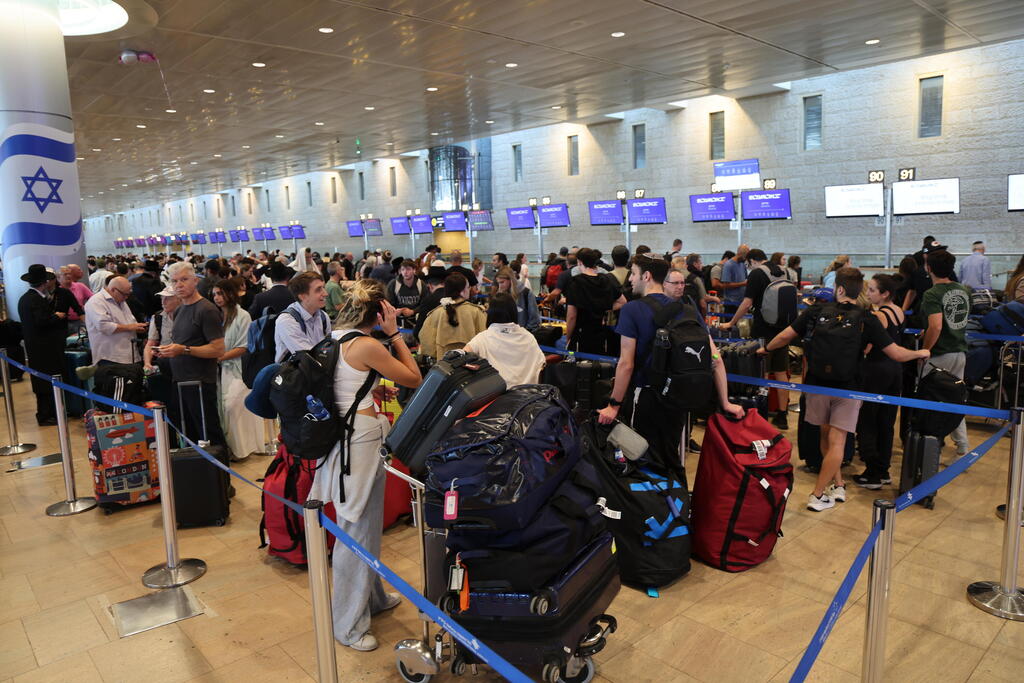
Prices are beginning to fall. At the same time, however, traffic at Israel’s main airport has surged to levels approaching those of summer 2019, before the COVID pandemic and years of regional conflict upended the aviation industry.
Ben Gurion is now handling more than 600 flights and around 100,000 passengers a day, with an estimated 2.7 million travelers expected to pass through the airport in August.
The congestion is not unique to Israel. Airports across Europe, particularly in Greece, are also struggling with heavy summer traffic. But that is little consolation to passengers facing lengthy delays, missed connections and baggage that can take hours to arrive. In Israel, the frustration often spills quickly onto social media, where delayed passengers have been documenting long waits and demanding explanations.
Congestion over Greece and Cyprus
The Israel Airports Authority rejects rumors that workers have launched a work slowdown or that the airport is suffering from a broad shortage of baggage handlers.
Officials say particularly long baggage waits, including those recorded last weekend, were caused by a large number of delayed flights converging at once, creating bottlenecks both in loading departing aircraft and unloading arriving ones.

Baggage delays at Ben Gurion Airport
(Photo: Shaul Golan)
Passengers also have little reason to arrive more than three hours before departure, officials note, because most check-in counters open only three hours before the expected flight time.
The flight data nonetheless show extensive disruption. Since the beginning of August, 8,092 flights have operated at Ben Gurion Airport. Only 28.1% arrived on time, while the average delay stood at 78.2 minutes. Airlines also canceled 232 flights, or 2.9% of the total.
For two consecutive days, Ben Gurion has also ranked among the world’s airports with the highest level of disruption. Naples, Italy, ranked first, Ben Gurion second, Chania in Crete third, Milan fourth and Tulsa, Oklahoma, fifth.
Holiday Lines Group (Kavei Hufsha), which includes Bluebird Airways, Greece’s Air Mediterranean and Cyprus-based TUS Airways, says the main cause of delays is unusually heavy congestion in Greek airspace and regional flight corridors.
Bluebird and TUS are among the most active carriers at Ben Gurion, with the group operating as many as 90 flights a day, making them particularly vulnerable to restrictions over Greece and Cyprus.
So what is causing the delays?
Passenger traffic at Ben Gurion averaged around 85,000 travelers a day in July. In August, that figure has already climbed above 100,000.
Israel's Airports Authority says it warned that the sharp increase would create pressure and says another factor is the continued presence of U.S. refueling aircraft at Ben Gurion, which are still taking off and landing around the clock.
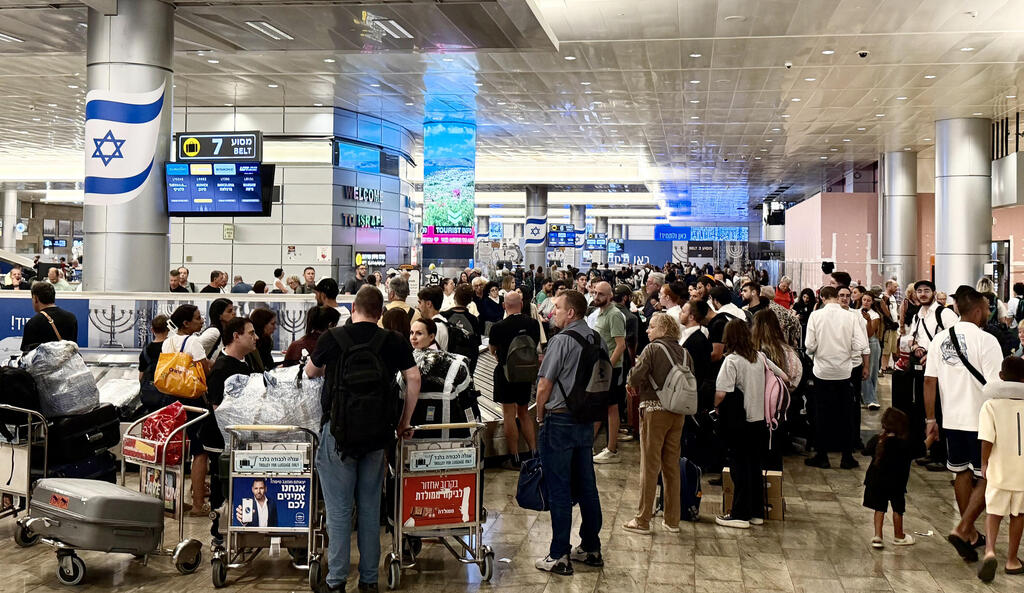
Heavy traffic at Ben Gurion Airport
The authority strongly rejects claims that the delays are primarily the result of operational failure, staffing shortages or a deliberate slowdown by baggage handlers. Senior aviation and airline executives, however, say the picture is more complicated.
They argue that even localized shortages in ground services can create a chain reaction. If baggage handlers, jet bridge operators, bus drivers or security screening personnel are absent due to illness, reserve duty or simple lateness, aircraft can quickly fall behind schedule.
Those industry officials say summer 2026 has brought not only unusually congested airspace but also a decline of 20% or more in operational performance compared with summer 2019. They argue that punctuality has deteriorated and that Ben Gurion may be operating beyond the level of traffic it can process efficiently, setting off a cascade of delays.
The first wave of morning departures is particularly sensitive. A delay of 20 to 40 minutes on an aircraft’s first flight can affect the rest of its schedule and turn into a much longer delay later in the day.
Industry officials are also calling for a closer look at Ben Gurion’s ground-handling system. Four operators currently provide services at the airport: QAS, which works with carriers including Arkia, Bluebird and TUS Airways; Laufer, which provides services to Israir; AHS; and El Al, which handles its own passengers, including check-in and baggage processing.
Executives say it is difficult to restore ground operations to full capacity immediately after a prolonged period during which foreign airlines largely stopped flying to Israel and activity at Ben Gurion fell sharply. Operating more than 600 flights a day required companies to recruit and train workers again.
At the end of July, Pinchas Idan, chairman of the Airports Authority workers’ committee, warned of severe congestion ahead of the peak summer season, saying the airport was short around 400 employees. That has created a clear dispute between the workers’ committee and the Airports Authority, which insists there is no overall labor shortage behind the disruptions.
Some aviation executives suggest that foreign workers could be recruited for baggage-handling positions, as they are at some airports abroad. At Ben Gurion, however, those roles are staffed locally because of security considerations.
The sky itself is another bottleneck
Ground operations are only part of the problem. Air traffic management and limited airspace capacity can also delay departures. When demand exceeds the number of aircraft that controllers can safely handle, flights are assigned departure windows. For passengers, that can mean waiting anywhere from 30 minutes to 90 minutes before takeoff.
The impact does not end at Ben Gurion. An aircraft that arrives late may begin its next rotation behind schedule and sometimes carry the delay into a third flight. That can spread disruption to destinations such as Frankfurt and Zurich and cause passengers to miss connecting flights, potentially triggering compensation obligations for airlines.
Airlines themselves are also caught between constraints they cannot always control, including air traffic management, ground services and airport congestion.
Some industry officials therefore argue that the airport should not schedule flights up to the maximum theoretical capacity. Instead, they say, spare capacity should be maintained to absorb disruptions, perhaps by slightly reducing the number of flights in the first morning wave or creating wider gaps between departure peaks.
The real question, they argue, is not simply how many flights Ben Gurion can handle, but how many it can handle on time.
Eurocontrol data puts Ben Gurion in focus
Recent data from Eurocontrol, the European organization responsible for coordinating air traffic management, show Ben Gurion accounting for a substantial number of delay minutes compared with European airports.
According to figures presented in the report, 4,571 minutes of daily delay were caused by restrictions on arriving traffic linked to air traffic control capacity (ATC).
Industry officials point to the figure as evidence that at least part of the disruption stems from capacity and operational constraints at Ben Gurion itself, rather than solely from congestion elsewhere in Europe.
Eurocontrol monitors takeoffs, landings, air traffic congestion and delays across Europe. But a 30-minute delay does not necessarily mean the airline is responsible. A flight may be delayed because the aircraft arrived late, Ben Gurion was congested, a departure slot was imposed, air traffic control restricted movement, weather conditions deteriorated or the destination airport was overloaded.
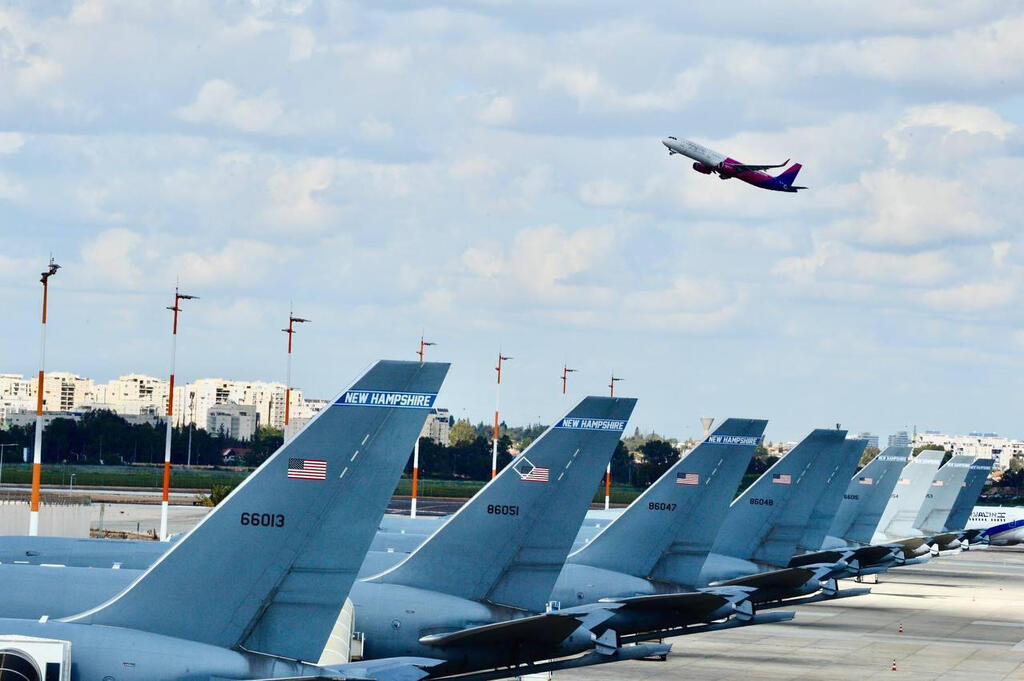
U.S. aircraft at Ben Gurion
(Photo: Kobi Kuankes)
That also raises questions about the difference between summer 2019 and summer 2026. If Ben Gurion previously handled comparable traffic volumes with better punctuality, industry officials say, passenger numbers alone cannot explain the deterioration. Operational bottlenecks and the specific causes of delays must also be examined.
What are passengers entitled to?
For passengers waiting one hour, four hours or longer at the gate, a lengthy delay does not necessarily mean they are automatically entitled to financial compensation. According to the information presented, additional rights involving an alternative flight, hotel accommodation when relevant and food generally come into play once a delay exceeds eight hours.
Ultimately, there appears to be no single culprit. Airlines blame congestion in European airspace. The Airports Authority points to peak passenger volumes and airspace restrictions. Industry executives also point to ground services and Ben Gurion’s operational capacity.
For passengers, however, the distinction between those explanations is often irrelevant. If the aircraft is still sitting on the ground, there is usually only one question that matters: When is it finally taking off?
Israel's Airports Authority: ‘We warned in advance’
The Israel Airports Authority said Ben Gurion is currently experiencing “an unprecedented peak in activity,” with around 2.6 million passengers expected to pass through the airport during August, equivalent to roughly 100,000 passengers and 600 aircraft movements per day.
“These are enormous volumes of activity after months in which aviation in Israel operated at significantly lower levels,” the authority said. “The attempt to attribute the delays at Ben Gurion primarily to a shortage of manpower does not reflect the complex operational reality of aviation at this time.”
“A significant share of the flights that departed Ben Gurion late were affected by traffic congestion and restrictions in European airspace, particularly over Greece and Cyprus. A delay to one flight creates a domino effect that affects aircraft and crew rotations throughout the day, even when operations at Ben Gurion itself are running at full capacity.
“We did not cancel flights affecting 200,000 passengers, despite having warned about the expected congestion,” the authority said. “The continued activity of U.S. refueling aircraft, which are still taking off and landing at Ben Gurion, is also affecting air traffic.
“Despite the complexity and congestion, the Israel Airports Authority has maintained continuous aviation operations and has not canceled commercial flights. That means congestion builds up at certain hours, but the priority is to allow the Israeli public to continue flying.”
“Even adding thousands of employees at Ben Gurion cannot solve air traffic restrictions in Greece, Cyprus or European airspace and cannot prevent the domino effect caused by those delays,” the authority said.
It noted that Israeli aviation had expanded dramatically within only a few months. Activity was extremely limited in March and April and relied heavily on rescue flights, while many foreign airlines still refrained from fully returning in May because of the security situation.
“Recovery began only in June, followed by a sharp jump in activity in July. In effect, we went from zero to 100 almost overnight. Accordingly, the Israel Airports Authority has been recruiting and training large numbers of employees within a very short period, a process that naturally takes time because of the training and security screening required for work at an international airport.
“Ben Gurion Airport employees and all the teams operating at the airport are working around the clock, in difficult heat and with reinforced staffing, to cope with peak activity and allow roughly 100,000 passengers a day to depart from and return to Israel. We will continue strengthening operations and reducing waiting times wherever possible, while maintaining safety, security and continuity of air service.
“According to Eurocontrol data, 66,000 minutes of delays were caused by airspace restrictions and another 23,000 minutes by airports. Of those, about 4,500 minutes were attributed to Ben Gurion Airport, representing roughly 5% of the total.”