

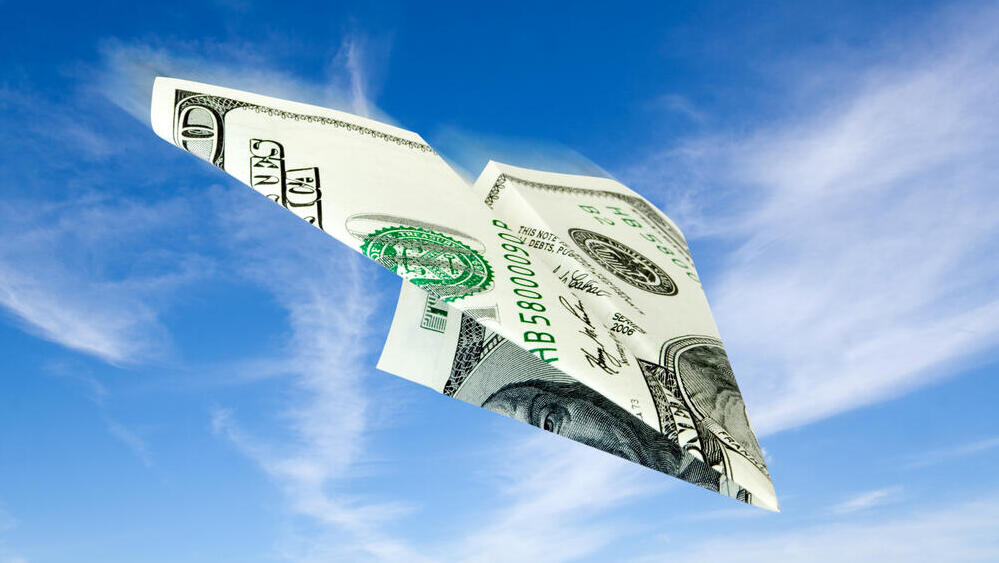
The dollar’s drop below 3 shekels for the first time in more than 30 years is creating a rare opportunity for Israelis planning vacations, but industry officials warn the window may close quickly. With flight supply still limited and demand rising ahead of summer, prices are expected to climb as peak season approaches.
According to Shirley Cohen Orkaby, vice president of Eshet Tours, “a rare opportunity has emerged to book summer vacations while the dollar is low and prices are reasonable, but a bottleneck is likely to form.” She noted that supply remains constrained as not all foreign airlines have resumed operations at Ben Gurion Airport, while demand is expected to surge closer to summer. “Once a permanent agreement is reached with Iran, we expect a wave of bookings that will drive sharp price increases, and the dollar may not remain at its current low level,” she added.
The impact of the weak dollar is especially evident in long-haul destinations and organized tours. For example, a nine-day guided trip to Japan priced at $3,799 today translates to about 11,360 shekels, compared to roughly 14,056 shekels at April 2025 exchange rates — a gap of nearly 3,000 shekels per person driven entirely by currency changes.
Price checks also show significant differences within the same month. A flight to Athens costs about $190 at the start of June, compared to around $315 at the end of the month — a gap of roughly 65%. A similar pattern is seen for Rome, with fares rising from about $170 to $250, an increase of around 47%. The takeaway: choosing travel dates carefully can cut costs by tens of percentage points.
The trend is reinforced by comparisons to last year. In summer 2025, limited flight supply and high demand drove sharp price increases. According to data from lastminute.co.il, June fares rose by more than 33% on average compared to the previous year, with some destinations seeing increases of over 100%. Prices remained high in July and August as demand continued to outpace available seats.
Industry analysts say similar conditions are forming now: only a partial return of foreign airlines alongside strong Israeli demand. As peak season approaches, prices are expected to rise, widening the gap between early bookings and last-minute purchases.
Asaf Greenberg, vice president of marketing at lastminute.co.il, said the data reflects a market with high demand and limited supply. “In such conditions, short-term prices rise quickly, and the gap compared to peak summer prices is expected to grow,” he said. He added that booking early not only secures current prices but also provides certainty and reduces exposure to further increases, especially given the low dollar.
Recent data from the site shows a clear advantage to early booking: travelers reserving flights now for June-July can save about 15% to 20% compared to peak-season prices. For example, flights to Athens currently average about $238 versus $280 in summer; Rome $222 versus $265; and Budapest $332 versus $388. Prices are per passenger and exclude baggage.
On the ground, current deals remain relatively attractive but already reflect rising prices as summer nears. For example, a three-night stay in Prague at a four-star hotel starts at $599 per person in May, rising to $629 in July and $799 in September. Similar trends are seen in packages to Burgas and Tbilisi.

Some good news for a change
(Photo: Ultraskrip / shutterstock)
Flight deals show the same pattern. Prices vary and often climb closer to departure dates, with examples including Paphos from $398, Sicily from $613, Rome from $534, Mykonos from $785, Seychelles from $1,958 and New York from around $1,600–$1,700.
Overall, the combination of a relatively weak dollar and prices that have not yet reached peak-season levels is creating a temporary opportunity for travelers. But across the industry, the outlook is consistent: as summer approaches, demand is expected to rise — and prices along with it.