


Syrian President Ahmad al-Sharaa said Saturday that recent events in Sweida marked a dangerous turning point for the country, blaming Israel for reigniting tensions and pushing Syria into a critical phase threatening its stability. He accused armed groups in Sweida of carrying out revenge attacks against Bedouins after government troop withdrawals and emphasized Syria’s commitment to protecting all citizens from Druze to Bedouins.
Earlier this week, the Syrian regime mistakenly believed it had received tacit approval from Israel and the United States to deploy forces into Sweida, the Druze stronghold in southern Syria, according to multiple sources familiar with the matter. This miscalculation led Damascus to send troops into the region, sparking violent clashes that have left hundreds dead. Reuters reported late Friday that eight informed sources confirmed the regime’s interpretation of silence as a “green light” for military action.
Clashes in Swedia


Meanwhile, the Syrian Observatory for Human Rights reported the death toll from clashes and airstrikes in southern Syria has risen to at least 718. Among the fatalities, 226 were from Sweida province, including 80 civilians—four children and four women. Another 305 deaths involved Syrian defense and general security forces, including 18 Bedouins. Israeli airstrikes killed 15 Syrian security personnel as well as three others—including a woman and two unidentified individuals—in an attack on the Syrian Defense Ministry in Damascus. One journalist was also reported killed. Regime forces reportedly executed 165 people, including women, children and an elderly man, while Druze militants killed three Bedouins, including a woman and child.
Syrian officials based their calculations on recent security talks, including a meeting last week in Azerbaijan, and on public and private statements by U.S. envoy Thomas Barrack, who called for a united Syria without autonomous regions. Damascus believed Israel would not intervene, especially after Washington did not respond to prior notifications of planned troop movements. Instead, Israel struck Syrian forces in southern Syria and Damascus, surprising both the Syrian government and U.S. officials, including American diplomats present in the Syrian capital at the time.
A Western diplomat said Damascus’s confidence in controlling Sweida was "excessive, based on American messages that proved disconnected from reality." A senior Gulf official added that Syria’s actions provided Israel with justification for an unusually forceful response.
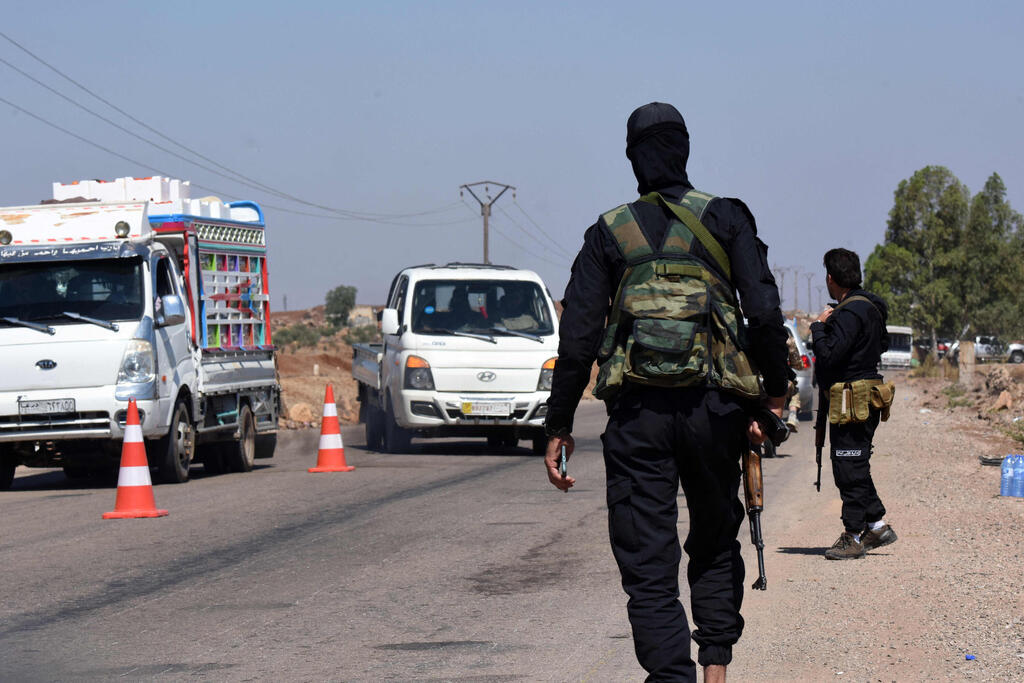
Regime forces in Sweida
(Photo: Sam HARIRI / AFP)
In a surprising development, senior executives from three American energy companies met with Syria’s finance minister in Damascus just hours before Israeli airstrikes hit the city. These officials had been assured by Washington that violence would not spread to the capital, but Israeli attacks struck while they were inside government buildings.
Following days of bloodshed, Syria’s presidency announced a comprehensive ceasefire late Friday, urging all parties to respect it immediately. The Interior Ministry confirmed that internal security forces began deploying in Sweida, initially limited to the western rural areas.
Get the Ynetnews app on your smartphone: Google Play: https://bit.ly/4eJ37pE | Apple App Store: https://bit.ly/3ZL7iNv
Despite the ceasefire, violence spilled over the Israel-Syria border near Majdal Shams, where hundreds of Druze crossed into Syrian territory, some under the influence, pushing Israeli soldiers and engaging in violent behavior. Israeli forces, supported by police and local Druze leaders, dispersed the crowds. The Israeli military said it views such violence seriously and warned that unauthorized crossing into Syria is a criminal offense that endangers civilians and soldiers alike. Efforts are ongoing to safely return those who crossed.
Sweida’s central hospital, barely functional before the crisis, is overwhelmed. Medical staff report that more than 400 bodies, including women, children and elderly, have arrived since Monday. Dr. Omar Obeid told AFP, “There is no more space. Bodies are lying in the streets. This is no longer a hospital—it’s a mass grave.” The deteriorating situation has prompted urgent calls for international aid as basic services like water, electricity and medicines run low amid ongoing violence.
First published: 10:23, 07.19.25