

U.S. President Donald Trump had hoped an Israeli effort to help trigger internal unrest in Iran would hasten the end of the war, but weeks into the fighting, that scenario has yet to unfold.
Ahead of the conflict, Mossad chief David Barnea presented Prime Minister Benjamin Netanyahu with an assessment that Israel could quickly help stir opposition inside Iran, potentially leading to widespread unrest and even the collapse of the government, according to U.S. officials cited by The New York Times. Barnea also discussed the idea with senior Trump administration officials during a visit to Washington in January. Netanyahu backed the approach.
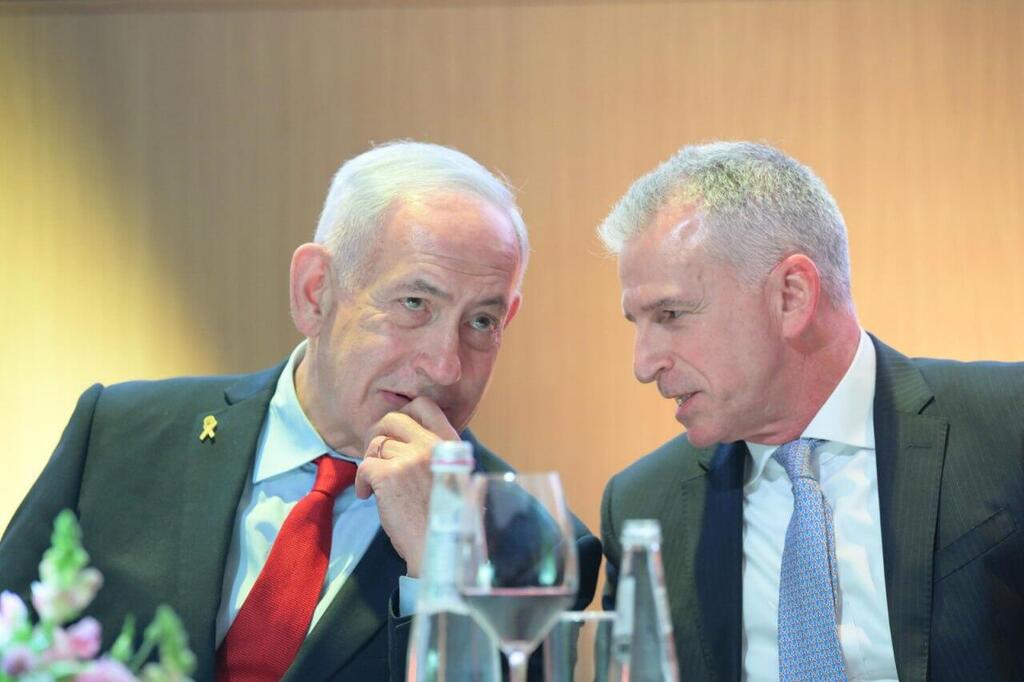
Despite doubts among some American officials and Israeli intelligence analysts, both Trump and Netanyahu publicly projected confidence that a combination of military strikes and covert efforts could destabilize Iran’s leadership. The expectation was that targeting senior Iranian figures alongside efforts to encourage dissent could spark broader protests.
“Take over your government: It will be yours to take,” Trump said in remarks directed at Iranians at the outset of the war, after urging civilians to seek shelter.
So far, however, intelligence assessments in both Washington and Jerusalem indicate that Iran’s leadership remains in control, even as it faces mounting pressure. Officials say fear of the country’s security forces has discouraged large-scale protests, while the likelihood of armed groups entering Iran from neighboring areas remains low for now.
Instead of weakening internally, Iran’s government has responded by intensifying military actions across the region, including strikes involving military targets, civilian areas, shipping routes and energy infrastructure.
The New York Times report is based on interviews with more than a dozen officials from the United States, Israel and other countries, many of whom spoke anonymously due to the sensitivity of the issue.
While U.S. officials have largely stopped publicly emphasizing the prospect of an internal uprising, some still view it as a possibility. Netanyahu has also indicated that airstrikes alone will not determine the outcome of the conflict.
“You can’t do revolutions from the air,” Netanyahu said Thursday, adding that any such effort would require a ground component.
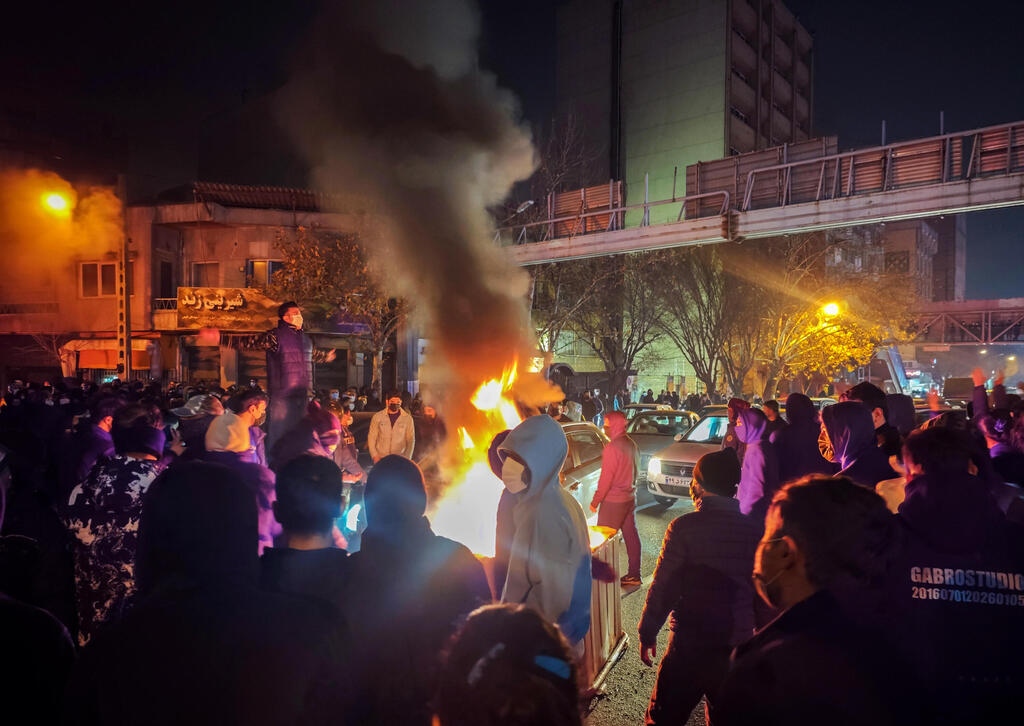
Protesters in Iran earlier this year
(Photo: Anonymous/Getty Images)
At the same time, he said it remains unclear whether Iranians will act against their government under current conditions, even as Israel seeks to shape those conditions.
Privately, Netanyahu has voiced frustration that early expectations of unrest have not materialized. According to officials, he told colleagues in the early days of the war that time may be limited if Trump chooses to end the conflict before such efforts produce results.
U.S. and Israeli officials said Netanyahu pointed to the possibility of internal upheaval in discussions with Trump before the war as part of the case that Iran’s leadership could be brought down. However, many American officials, along with analysts in Israel’s military intelligence, questioned that assumption, arguing that civilians were unlikely to rise up while under sustained attack.
Assessments reviewed by officials suggested that even if tensions emerge within Iran’s leadership, they would more likely reflect internal power struggles rather than a broader popular movement. The prevailing view was that the current system would likely endure, led by hard-line elements.
The Kurdish option
Part of the broader discussion included the possibility of involving Iranian Kurdish groups based in northern Iraq. Israel has long maintained ties with Kurdish factions, and U.S. officials say both the CIA and Mossad have provided support to such groups over time.
Early in the war, Israeli strikes focused in part on northwestern Iran, an area seen as strategically relevant to any potential Kurdish involvement.
However, U.S. officials have since pulled back from the idea of relying on Kurdish forces, a shift that has contributed to friction with Israel.
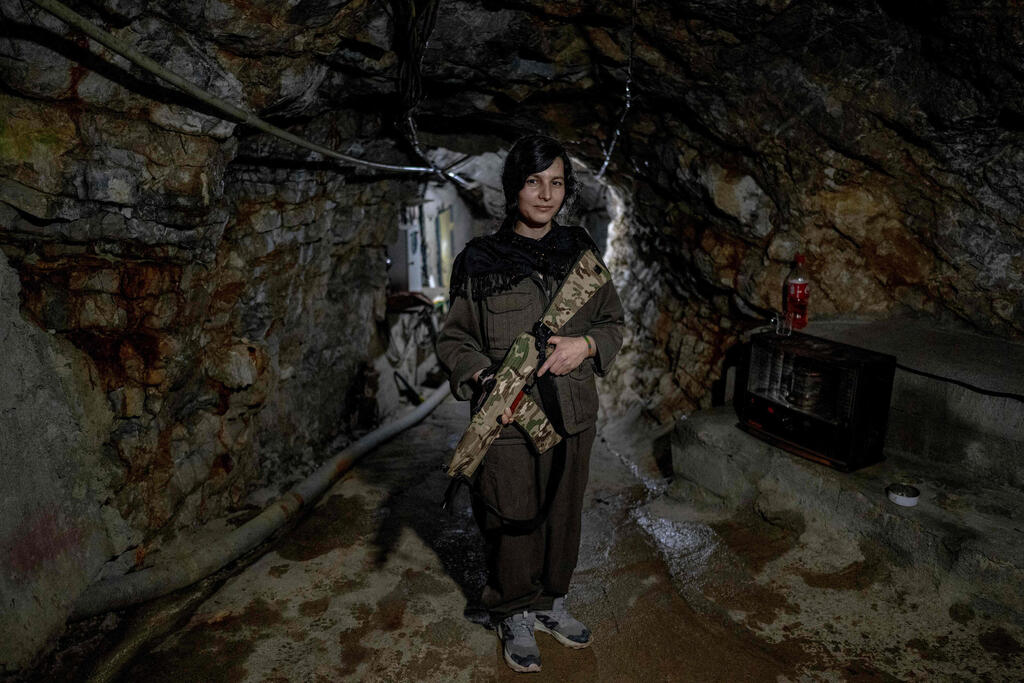
Kurdish fighter
(Photo: AFP)
Trump said in early March that he had advised Kurdish leaders against entering Iran. “I don’t want the Kurds going in,” he said, warning of the risks involved.
Kurdish leaders have also expressed caution, suggesting such a move could strengthen Iranian unity rather than weaken it.
Turkey, which opposes Kurdish armed groups, has also warned Washington against supporting any such effort, according to a Turkish diplomat.
An uprising that has yet to materialize
Before the war, U.S. intelligence agencies examined a range of possible outcomes inside Iran, generally viewing the collapse of the government as unlikely. Previous protests, even when widespread, were contained by the authorities.
Some scenarios envisioned internal fractures within Iran’s leadership or even violent power struggles. But officials said these dynamics were not expected to translate into a broad-based democratic movement.
Israeli intelligence agencies had also examined the idea of trying to spark unrest in Iran in the past, but had largely set it aside. Former Mossad chief Yossi Cohen concluded that such efforts were unlikely to succeed and shifted focus toward weakening Iran through economic pressure and targeted operations.
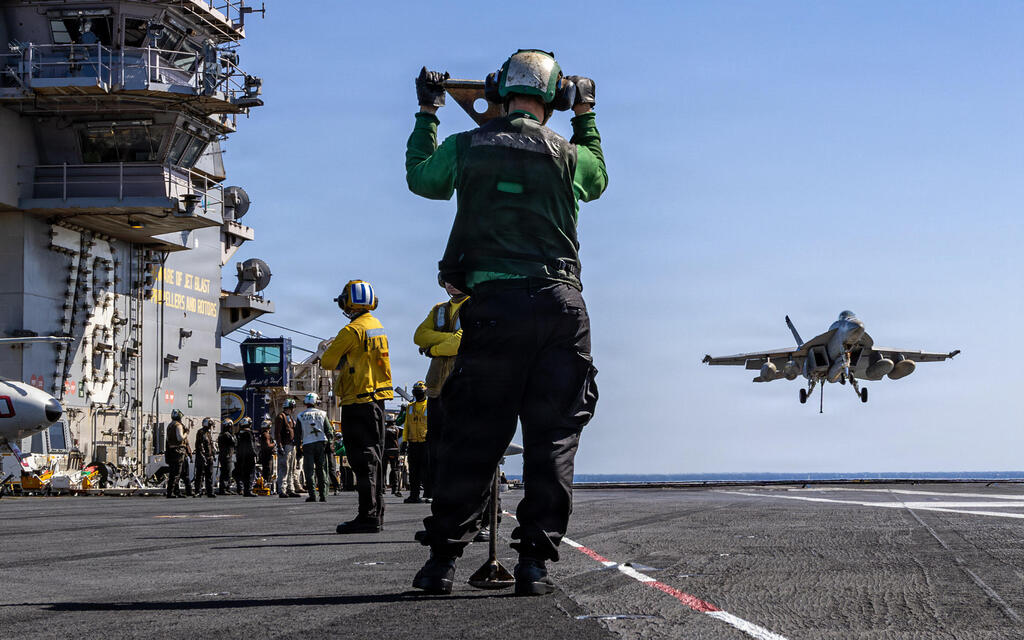
(Photo: AFP PHOTO / US CENTRAL COMMAND)
In recent months, as the likelihood of war increased, Barnea revisited the idea and directed resources toward efforts that could destabilize Iran during a conflict. Officials said he believed unrest could follow sustained airstrikes and the targeting of senior Iranian figures.
For now, that outcome has not been realized, though Israeli officials say they have not ruled it out.
“I think that we need boots on the ground, but they’ve got to be Iranian boots,” Israel’s ambassador to the United States, Yechiel Leiter, told CNN. “And I think they’re coming.”