

American convicted murderer Christa Pike, who survived two lethal injections in a rare botched execution last month, issued her first public statement over the weekend, saying she is in constant pain, struggles to speak and spends most of her time isolated in the prison infirmary.
"I don't know why I survived that night. I don't know what comes next. Some days, finding hope is harder than others," Pike said in a statement dictated to her legal team from prison.
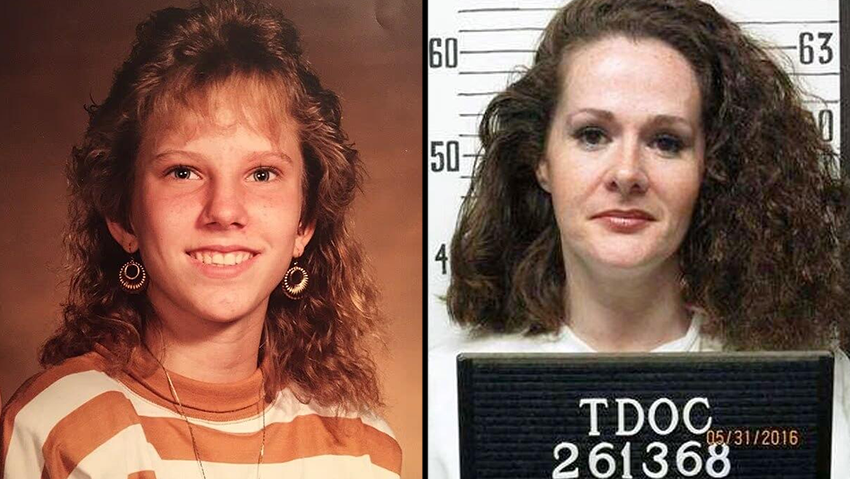
Pike, whose case has drawn extensive international media coverage in recent weeks, was just 18 when she murdered fellow student Colleen Slemmer on Jan. 12, 1995. Slemmer was enrolled alongside Pike and Pike's boyfriend, Tadaryl Shipp, in a vocational training program in Knoxville, Tennessee.
According to prosecutors, Pike feared that Slemmer was romantically interested in Shipp. In a fit of jealousy and rage, she lured Slemmer to a secluded area of the University of Tennessee campus, where she and Shipp brutally tortured and murdered her.
Among other acts, Pike slashed Slemmer more than 100 times with a box cutter and struck her with a large piece of asphalt. Shipp carved a pentagram, a star-shaped symbol associated with Satan, into her body. Evidence found at the crime scene sparked widespread concern at the time amid the "Satanic panic" of the 1980s and 1990s in the United States, when rumors circulated about satanic cults abducting people, including children, and subjecting them to ritual abuse.
The death sentence imposed on Pike in 1996 made her one of the youngest women ever sent to death row in the United States. In subsequent years, however, her attorneys and supporters argued that capital punishment was excessive given her young age at the time of the crime and her untreated mental illness. They also pointed to a childhood marked by neglect and severe sexual abuse, including rapes she suffered at ages 11 and 17. She was later diagnosed with bipolar disorder and post-traumatic stress disorder.
Pike's current attorney, Stephen Ferrell, emphasized that her defense lawyers failed to present the jury with crucial information about her past during the sentencing phase of her trial and did not argue that her young age should be taken into account.
Ferrell noted that much more is now known about adolescent brain development and argued that Pike's death sentence is highly unusual. He also pointed out that Shipp, who was 17 at the time of the murder, received a life sentence with the possibility of parole because of his young age.
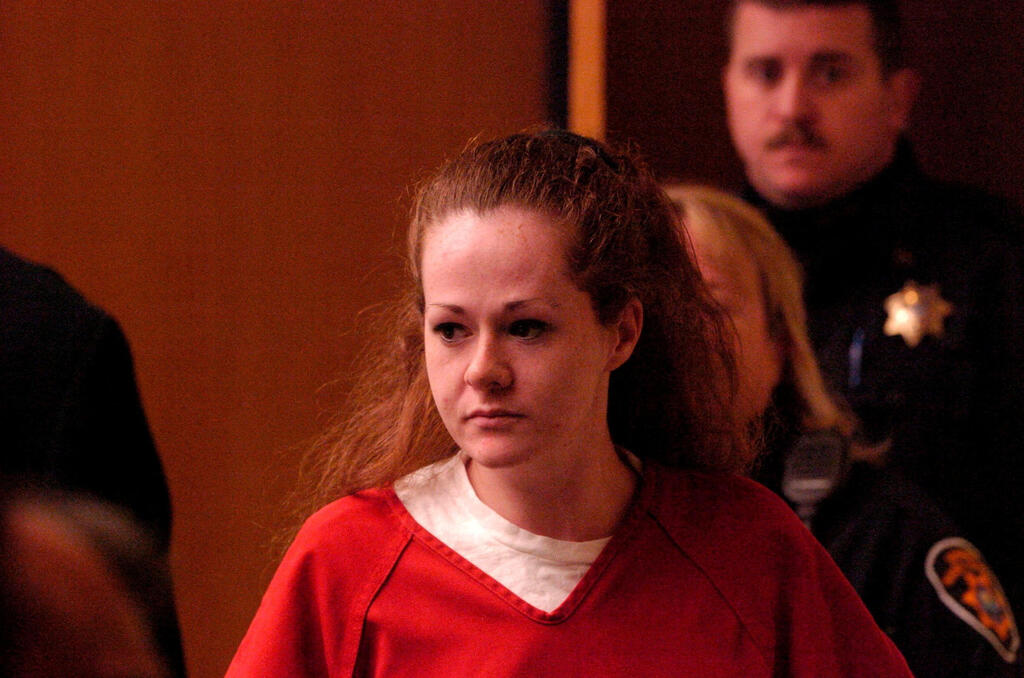
Pike was set to become only the 19th woman executed in US history
(Photo: J. Miles Cary/ Knoxville News Sentinel/USA TODAY NETWORK via REUTERS)
In late September, Tennessee Gov. Bill Lee rejected Pike's request for clemency, and the Supreme Court also denied a petition to delay her execution. Just one hour before the scheduled execution, another court unexpectedly issued a stay to review several of Pike's arguments. Hours later, however, the court authorized the execution to proceed.
Pike was therefore set to become the first woman executed in Tennessee in more than 200 years and only the 19th woman ever executed in the United States.
During the execution procedure, the execution team initially administered a dose of pentobarbital, the drug intended to kill her. When the drug failed to render her unconscious, the team administered a second dose, as required by protocol. But Pike survived that injection as well.
Witnesses who attended the execution, along with Pike's attorneys, said she declared during the procedure, “I feel like my arm is going to explode.” At another point, she asked: “Is it supposed to happen like this?”
According to the witnesses, Pike could be heard crying, whimpering and breathing heavily throughout the procedure. Even when they were escorted out of the viewing room, more than two hours after entering, they could still hear her snoring loudly behind the closed curtains.
Pike was taken to a hospital unconscious, with her arms swollen and covered in blisters from the injected drug, but still alive. She was intubated and placed on a ventilator.
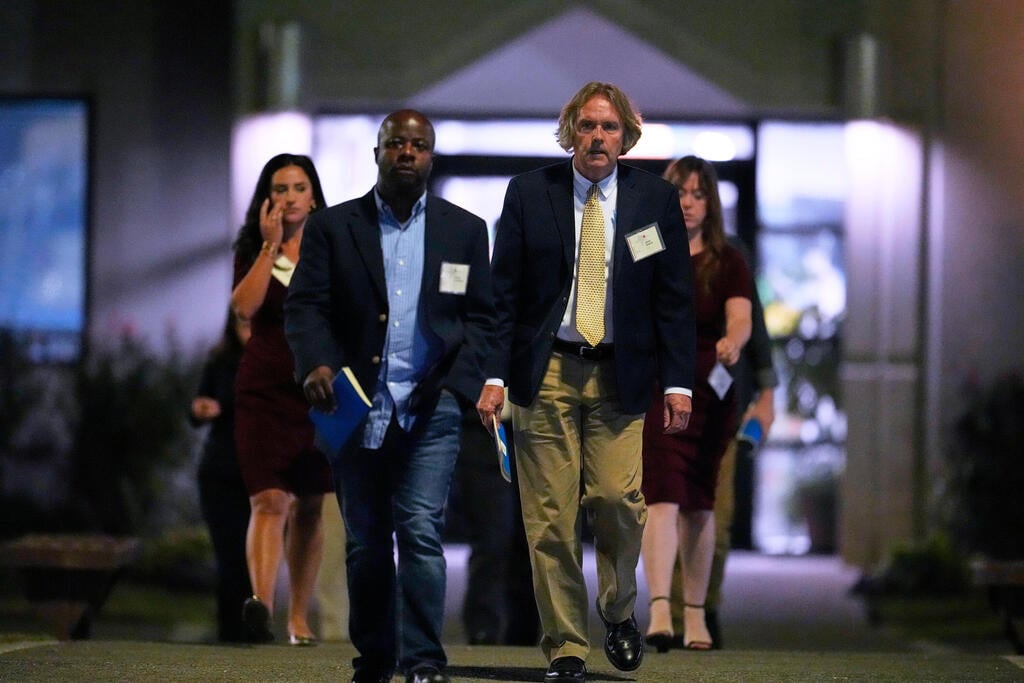
Media witnesses leave the prison in Nashville after the botched execution. 'I feel like my arm is going to explode'
(Photo: AP Photo/George Walker IV)
Pike's attorneys said they believe problems with the intravenous lines caused the pentobarbital to flow into her body tissue rather than her bloodstream.
"Apparently at no point did any member of the execution team realize that the IV lines were not correctly placed or that the veins had blown and that the pentobarbital was, in whole or in part, entering Ms. Pike’s body,” they wrote in the court filing.
The filing stressed that Pike had previously challenged her execution on the grounds that it would constitute cruel and unusual punishment because of her particular medical conditions, including thrombocytosis, a disorder involving an abnormally high platelet count, post-traumatic stress disorder (PTSD) and small veins.
In a statement released Friday after her return to prison, Pike said she was "deeply hurt by the incompetence that has put so many people in this terrible position."
She added, ""I continue to think about my victim's family and the terrible pain and loss they have endured."
Describing her ordeal since the failed execution, Pike said: "There hasn't been a moment since that night when I haven't been in pain. My body hurts. My arms hurt. My hands hurt. My throat hurts. I still struggle to speak. And the pain isn't just physical. There is pain in my mind and in my soul."
Pike said she had made peace with her impending death but instead woke up alone and confused in a hospital several days later. She added that she was "searching for meaning in what happened to me."
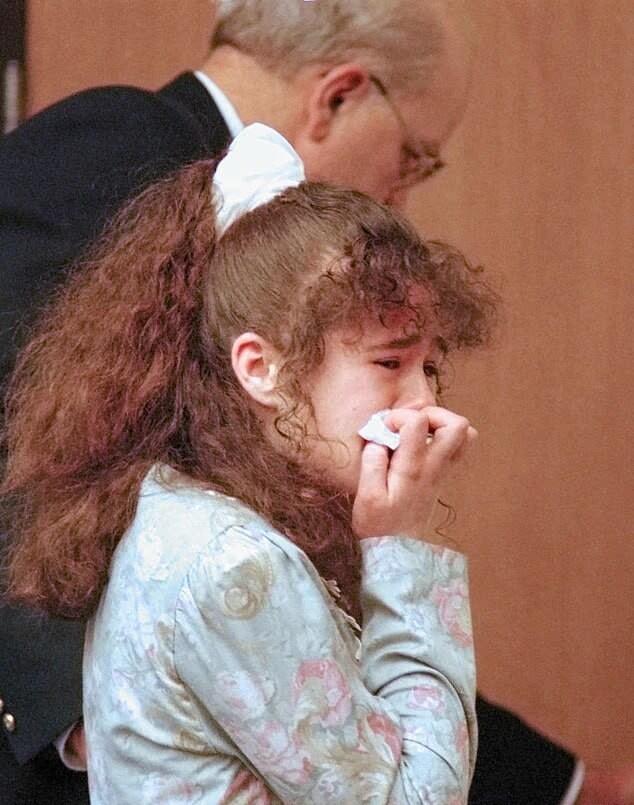
Pike as a young woman after learning she had been sentenced to death
Pike's death sentence remains in effect, and her attorneys are asking Tennessee's Republican governor, Bill Lee, to commute it to life imprisonment in light of the suffering she endured.
Lee, however, told reporters Wednesday: "I suspect her sentence will be the same as before unless determined otherwise by the courts."
Following the failed execution, the governor appointed a former federal prosecutor to conduct an independent investigation into what went wrong. He also postponed another execution by lethal injection that had been scheduled to take place in Tennessee later this year.
Meanwhile, Pike's attorneys asked a federal judge Friday to allow her to interact with other female inmates rather than remain isolated in the prison infirmary.
They argued that her isolation violates a 2024 agreement that ended a prolonged period during which she had been held in near-total solitary confinement. Under that agreement, she was allowed to work, eat, exercise and socialize with other women.
"Her renewed isolation has caused, and will continue to cause, significant psychological harm and trauma," Pike's legal team wrote.