

In a historic vote, the Knesset plenum on Monday approved in second and third readings a law enabling the prosecution of Nukhba terrorists, passing 93-0.
The law establishes a legal framework for unprecedented trials, expected to be the largest and most significant in Israel since the 1961 trial of Nazi war criminal Adolf Eichmann.

The legislation was initiated by Constitution, Law and Justice Committee Chairman Simcha Rothman and lawmaker Yulia Malinovsky. It was formulated through cooperation between Justice Minister Yariv Levin and Attorney General Gali Baharav-Miara.
The legal framework was led by former Military Advocate General Sharon Afek, now deputy attorney general for management and special roles.
The law defines acts committed between Oct. 7 and Oct. 10, 2023, as crimes against the Jewish people, crimes against humanity and war crimes, including murder, rape, kidnapping and looting. It also applies to offenses committed after those dates against hostages held in Gaza, including those killed in captivity.
More than 400 suspects to be charged
One of the law’s key provisions allows courts to impose the death penalty not only for the killing of 1,164 civilians and soldiers on Oct. 7, but also for other severe crimes such as rape, under existing statutes including the Genocide Prevention Law and the Counterterrorism Law.
The law also stipulates that those sentenced to death, or charged with capital offenses, will not be eligible for release in future prisoner exchange deals.
A special military court will be established in Jerusalem. Indictments are expected against more than 400 suspects, with the final number dependent on ongoing investigations by the Shin Bet and the IDF in Gaza.
Trials will be organized by geographic locations, such as the attacks in Be’eri, Nir Oz and the Nova music festival.
Each panel will include three judges, at least one of whom must be a military court president or a district court judge serving in reserve duty. Convicted defendants will receive an automatic right of appeal, with a retired Supreme Court justice presiding over the appellate panel.
Extensive evidence gathered
Following the law’s approval, prosecutors — led by the Southern District Attorney’s Office — are expected to begin filing indictments based on extensive evidence collected during and after the attacks.
The evidence includes forensic findings from attack sites, interrogation transcripts of captured Nukhba terrorists and hundreds of videos documenting the atrocities. Much of the material was gathered during combat operations in Gaza by the IDF and Shin Bet.
In most hearings, defendants will not be physically present in the courtroom but will participate via video from detention facilities. Families of victims will be able to follow proceedings from a separate hall or through digital broadcasts.
Legislation delayed over security concerns
The legal process is expected to be lengthy and complex. Efforts to collect and prepare admissible evidence have been underway for more than two and a half years.
Legislation was delayed due to security considerations and concerns for the safety of hostages. Legal officials estimate that the trials, which are expected to be broadcast internationally, could last several years due to the number of defendants, witnesses and the scope of evidence.
Distinction from separate death penalty proposal
The law differs from a separate proposal promoted by National Security Minister Itamar Ben-Gvir regarding the death penalty for terrorists.
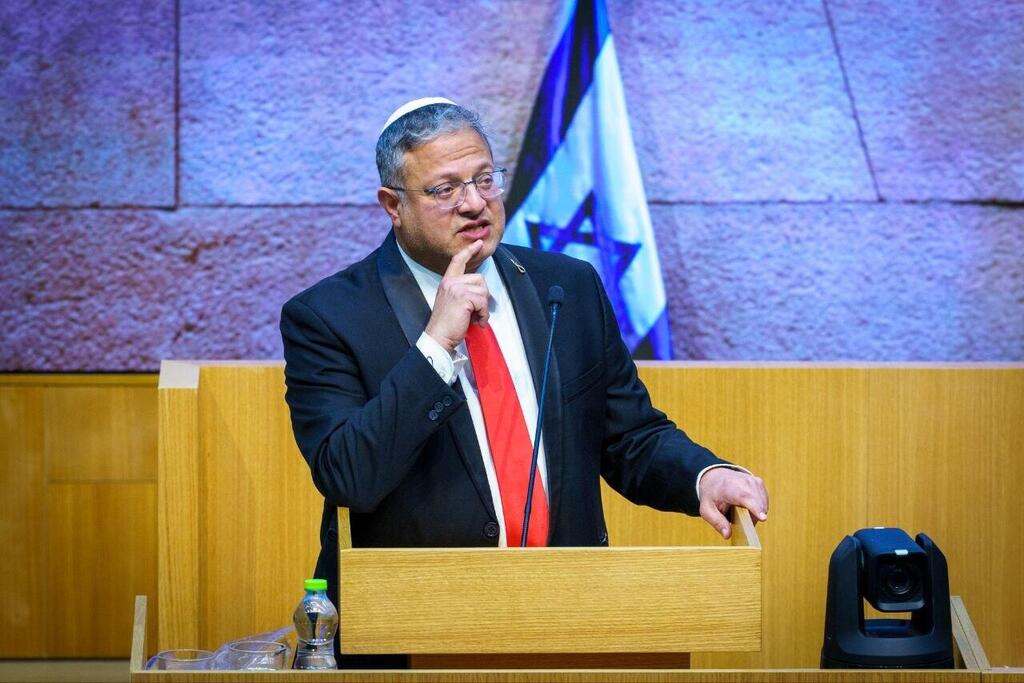
National Security Minister Itamar Ben-Gvir
(Photo: Shalev Shalom)
Unlike the newly approved law, which legal experts say could enable capital punishment for Nukhba terrorists, Ben-Gvir’s proposal focuses on future cases and includes language that legal experts describe as too vague for practical application.
According to legal analysts, the requirement to prove intent “to negate the existence of the State of Israel” sets a high evidentiary bar, making convictions under that provision unlikely.
Officials respond
“This law ensures not only justice but also historical documentation,” Levin said. “This is not a routine moment. It is one of the most important moments of this Knesset.”
Rothman called the legislation “a historic framework intended to bring to justice those responsible for the most horrific massacre in the state’s history.”
Malinovsky said, “Israel is a state governed by law. These terrorists will be tried in court according to legal standards, and judges will determine their sentences. These trials will be documented and broadcast and will become part of history.”