

Israel has been bombing parts of western Iran to support Iranian Kurdish militias hoping to exploit the U.S.-Israeli war with Iran to seize towns near the border, according to three sources familiar with Israel’s contacts with the factions.
The idea of an offensive by Iranian Kurdish forces based in Iraq gained attention Friday when U.S. President Donald Trump told Reuters it would be “wonderful” if they crossed the border.
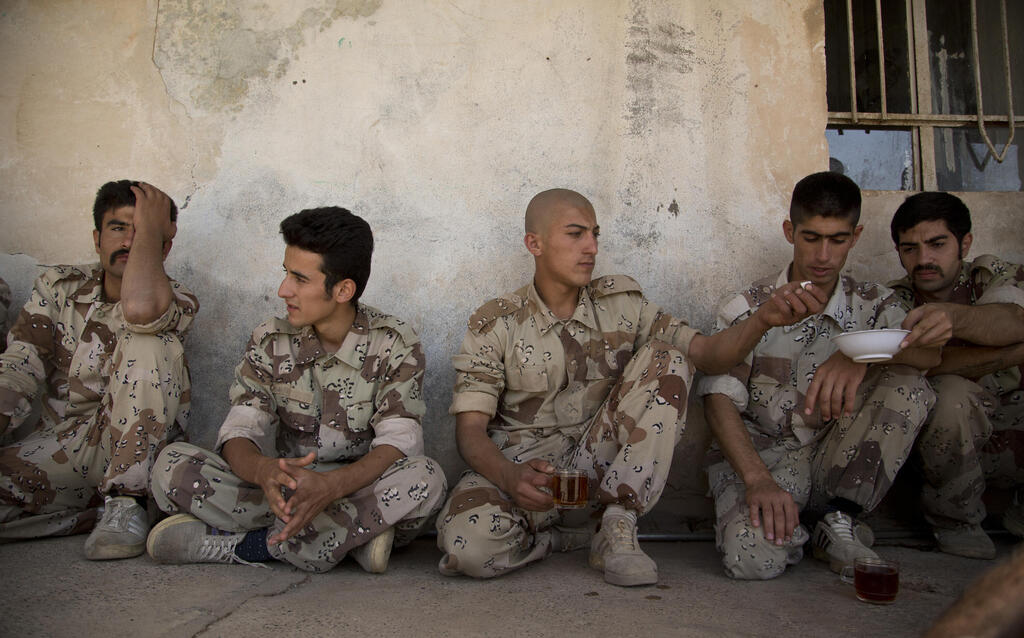
A Kurdish insurgency could have serious consequences for Iran as it defends itself against the air campaign. The militias have also consulted with the United States about how and whether to attack Iran’s security forces, Reuters previously reported.
Israeli talks with Iranian Kurds stretch back a year
Israel has been holding talks with Iranian Kurdish insurgent groups based in the semi-autonomous Kurdistan region of Iraq for about a year, two Iranian Kurdish sources said. An Israeli source said the contacts had been “long-term.”
The two Kurdish sources have direct knowledge of the armed dissident groups, while the Israeli source has direct knowledge of Israel’s engagement with them. All spoke on condition of anonymity.
Israel’s government and the IDF did not immediately respond to requests for comment, and Israel has not publicly commented on such contacts during the current war.
An initial goal for the Kurdish factions would be seizing Iranian territory along the border, the three sources said. One Kurdish source said the objective included capturing the towns of Oshnavieh and Piranshahr.
According to the sources, thousands of fighters are gathering on the Iraqi side of the border and preparing to launch an offensive within a week, although Reuters was not able to independently confirm that.
Independent estimates place the militias’ combined strength at about 5,000 to 8,000 fighters.
They are equipped mainly with light weapons, according to the Kurdish sources. While they may lack the firepower to mount a major bid for autonomy, with U.S. and Israeli support they could pose a significant challenge along the border.
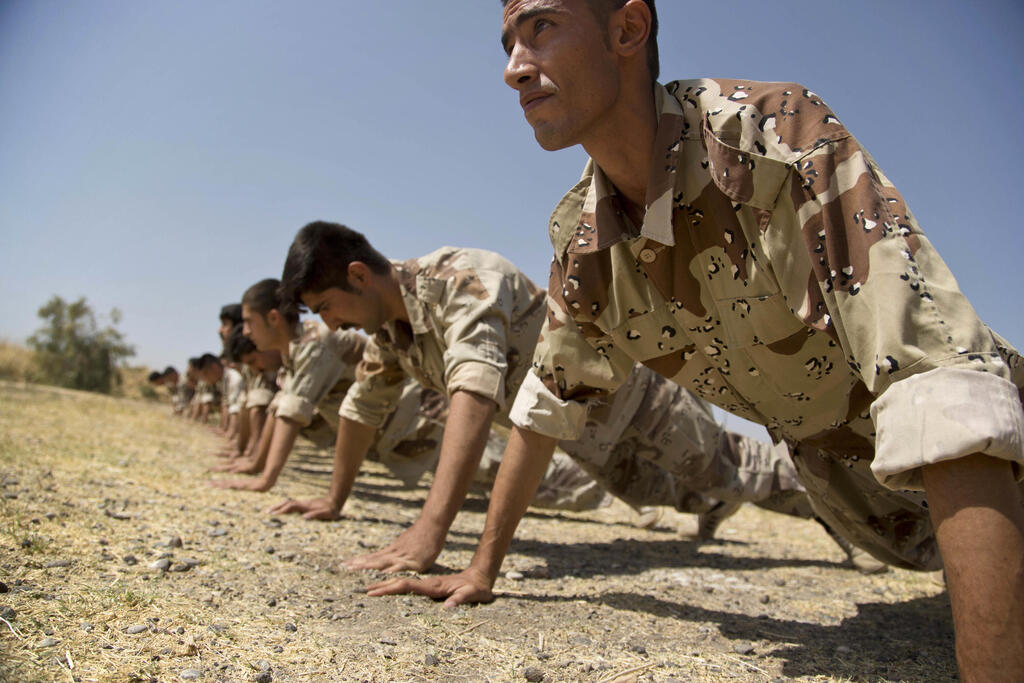
(Photo: AP Photo/Maya Alleruzzo)
The Israeli source said Israel does not expect the groups to overthrow the Iranian government but believes backing them could weaken Tehran’s control over its peripheral regions and distract the Islamic Revolutionary Guard Corps.
Five long-standing Iranian dissident groups announced a new alliance late last month.
The alliance includes the Kurdistan Free Life Party (PJAK), the Democratic Party of Iranian Kurdistan (PDKI) and the Kurdistan Freedom Party (PAK), all of which have participated in insurgencies and maintain fighters in Iraq.
It remains unclear whether they will receive support from Iraqi Kurdish authorities. Political leaders in Iraqi Kurdistan have publicly denied any plan to send fighters or become involved in Iran despite reports of outside pressure.
The Israeli source said there had been pushback from Iraqi Kurdish officials and that without their practical support it would be difficult for Iranian Kurdish factions to mobilize. Trump’s uncertainty about how long the war might last has also contributed to hesitation.
Iran has been striking Kurdish armed groups inside Iraq along with U.S. bases in the region. On Friday Tehran warned Iraqi Kurdistan that it would retaliate if hostile forces were deployed along the frontier.
Iranian Kurds ‘providing target information’
The three sources said Kurds inside Iran have been providing intelligence on border targets to the United States and Israel.
Israeli analyst Jonathan Spyer said Israel was seeking to “destroy the regime by any means available.”
But Danny Citrinowicz, an Iran expert and former Israeli intelligence officer, said an insurgency lacks broad support among Iraqi and Iranian Kurds.
“I think they’re all waiting to see if the regime will hold on or not,” he said.
Officials in Turkey and Iraq — both wary of encouraging separatism among Kurdish populations spread across Iraq, Turkey, Syria and Iran — have also expressed reservations about any insurgency in Iran.
Citrinowicz warned that backing an uprising could backfire for the United States and Israel by fueling Iranian nationalism.
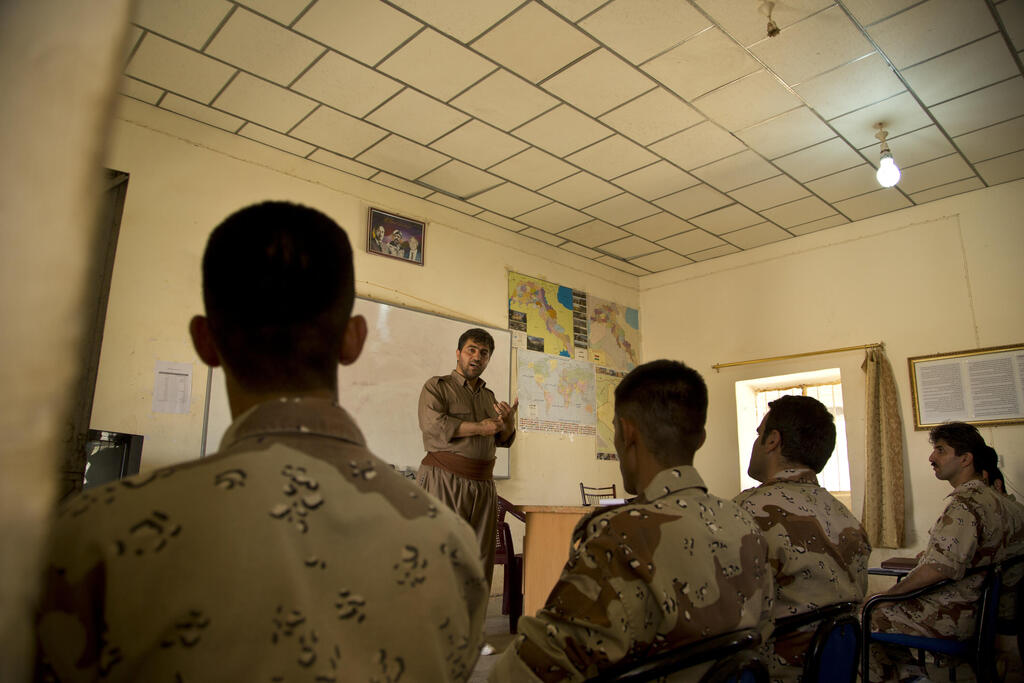
(Photo: AP Photo/Maya Alleruzzo)
Israel has maintained discreet military, intelligence and business ties with Kurdish groups since the 1960s, viewing them as a strategic counterweight to common adversaries.
The two Kurdish sources said the factions were coordinating more closely with the United States than with Israel but that any cross-border offensive would require air support from both.
One of the sources said the groups had not yet received weapons but would seek air defense systems, drones, small arms and artillery support.
Kurdish groups have long cooperated with the United States, though recent events have strained relations.
One Iranian Kurdish source said Kurdish leaders remain concerned about being “betrayed,” citing Kurdish forces in northern Syria that lost territory after serving as key U.S. partners in the fight against the Islamic State.
The source said Iranian Kurdish leaders have requested guarantees from Washington but did not specify what those guarantees would entail.
Both Kurdish sources said the factions’ ultimate goal would be establishing a semi-autonomous Kurdish region within a federal Iranian state, similar to the Kurdish region in Iraq.