

Saudi Arabia may be allowed to enrich uranium on its own soil under a proposed nuclear agreement with the United States, according to U.S. congressional documents and arms control experts who warn of proliferation risks as Washington negotiates with Iran and considers possible military action against it. Riyadh did not respond to questions from The Associated Press on the matter.
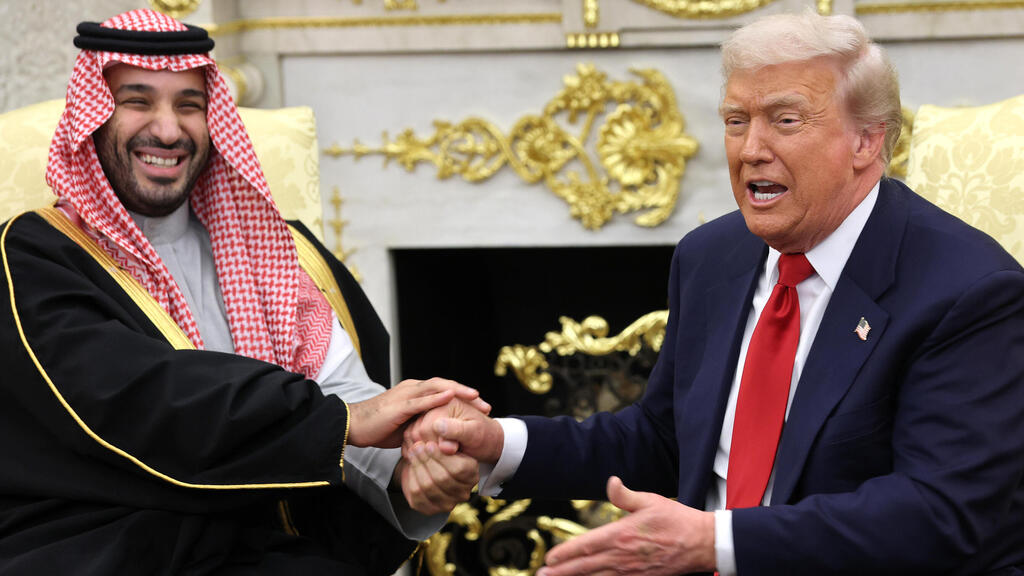
Trump and bin Salman
(Photo: Win McNamee/Getty Images)
President Donald Trump and his predecessor Joe Biden have previously sought to reach a nuclear agreement with Saudi Arabia to share American technology. Nuclear nonproliferation experts caution that any centrifuge spinning in the kingdom could open the door to a weapons of mass destruction program, an issue Crown Prince Mohammed bin Salman has previously suggested he would pursue if Iran were to obtain a nuclear bomb.
Saudi Arabia and nuclear-armed Pakistan signed a mutual defense agreement last year following an Israeli strike on senior Hamas officials in Qatar. Pakistan’s defense minister said at the time that his country’s nuclear program would be “made available” to Saudi Arabia if necessary. The remarks were widely interpreted as a warning to Israel, which according to foreign reports is considered the only Middle Eastern country possessing nuclear weapons.
“Nuclear cooperation can be a positive mechanism for maintaining nonproliferation norms and increasing transparency, but the devil is in the details,” wrote Kelsey Davenport, director for nonproliferation policy at the Washington-based Arms Control Association. The documents raise “concerns that the Trump administration has not carefully considered the proliferation risks posed by its proposed nuclear cooperation agreement with Saudi Arabia or the precedent that such an agreement could create,” she wrote.
US competition with rival powers
A congressional document, also reviewed by AP, indicates that the Trump administration aims to secure 20 nuclear deals with countries worldwide, including Saudi Arabia. It notes that an agreement with Riyadh could generate billions of dollars. Reaching a deal with Saudi Arabia would “advance the national security interests of the United States and break from the failed policy of inaction and indecision that our competitors have exploited to undermine the American industry and the global standing of the United States in this field,” the document states. China, France, Russia and South Korea are among the leading exporters of nuclear power plant technology.
According to the documents, the draft agreement would include the signing of safeguards agreements with the United Nations’ International Atomic Energy Agency. The deal would provide oversight of “the most sensitive areas for potential nuclear weapons proliferation.” The IAEA did not respond to AP’s questions. Saudi Arabia, which is a member of the agency, also did not comment on the report.
“This indicates that once the bilateral safeguards agreement enters into force, it would open the door for Saudi Arabia to acquire uranium enrichment technology or capabilities, even from the United States,” Davenport wrote. “Even with various restrictions, it appears quite likely that Saudi Arabia would have a pathway to some form of uranium enrichment or access to enrichment knowledge.”