

Iran is prepared to consider compromises in order to reach a nuclear agreement with the United States, provided that Washington is willing to discuss lifting sanctions, a senior Iranian official told the BBC.
In an interview from Tehran, Majid Takht-Ravanchi, Iran’s deputy foreign minister, said that the ball was "in America's court to prove that they want to do a deal. If they are sincere, I'm sure we will be on the road to an agreement.”
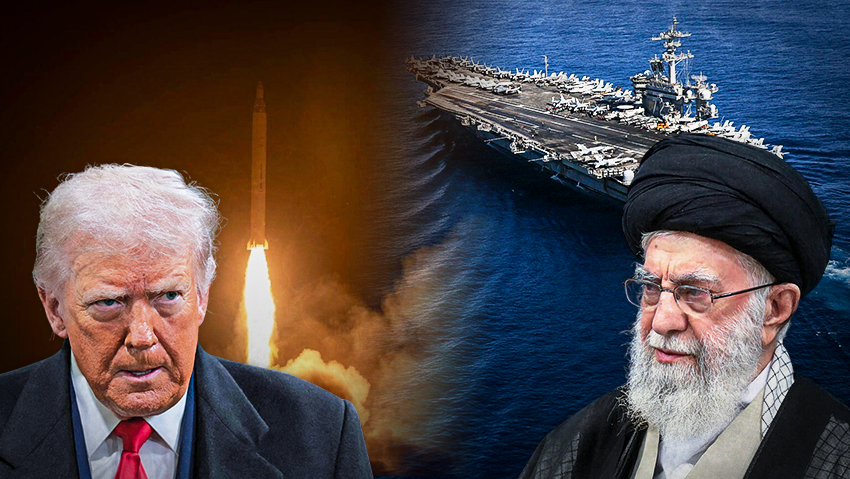
Iran says a nuclear deal can be reached if US is 'sincere'
(Photo: Anna Moneymaker/AFP, KHAMENEI.IR/AFP)
He confirmed that a second round of talks, following an initial meeting in Oman, is scheduled to take place Tuesday in Geneva. So far, he said, the discussions have been “more or less in a positive direction but it is too early to judge.”
Takht-Ravanchi pointed to Tehran’s proposal to dilute uranium enriched to 60% as evidence of its willingness to compromise. However, that enrichment level is close to weapons-grade and has deepened suspicions that Iran is advancing toward nuclear weapons capability—an accusation it consistently denies. “We are ready to discuss this and other issues related to our programme if they are ready to talk about sanctions,” he told the BBC.
Asked whether Iran would agree to remove its stockpile of more than 400 kilograms of enriched uranium from its territory, as it did under the 2015 nuclear deal, Takht-Ravanchi replied, “It was too early to say what will happen in the course of negotiations.”
One of Iran’s key demands has been that the talks focus solely on the nuclear issue. The Islamic Republic has stressed that Washington’s demand for zero enrichment is an obstacle to any agreement. “Our understanding is that they have come to the conclusion that if you want to have a deal you have to focus on the nuclear issue,” the deputy foreign minister said. According to him, “issue of zero enrichment is not an issue anymore and as far as Iran is concerned, it is not on the table anymore.”
He underscored Tehran’s refusal to discuss its ballistic missile program with the Americans, a central demand of Israel. “When we were attacked by Israelis and Americans, our missiles came to our rescue so how can we accept depriving ourselves of our defensive capabilities?” he said.
Trump: It looks like regime change in Iran might be the best thing
(Video: FOX NEWS)


Takht-Ravanchi warned that another war would be “traumatic, bad for everybody... everybody will suffer, particularly those who have initiated this aggression. If we feel this is an existential threat, we will respond accordingly.” Asked whether Iran would view a U.S. military campaign as a battle for its survival, he replied: “It is not wise to even think about such a very dangerous scenario because the whole region will be in a mess.”
Negotiations between Iran and the United States are expected to resume Tuesday in Geneva. Although Israeli officials assess that the chances of reaching an agreement are not high—given Tehran’s refusal thus far to accept Washington’s conditions—the understanding is that U.S. President Donald Trump wants to exhaust the diplomatic track and is giving it several weeks to a month. During the Geneva talks, Washington is expected to seek clear answers from Iran regarding demands raised in Oman.
Trump has stated that there is a deadline for the talks, and in the meantime the United States continues to build up forces in the Middle East. Secretary of State Marco Rubio addressed the recent reinforcement of U.S. forces near Iran, explaining that it was undertaken in part because “Iran has shown the willingness and the capability to lash and strike out at the United States’ presence in the region.” Therefore, he said, “sufficient firepower in the region to ensure that they don’t make a mistake and come after us and trigger something larger.”
Rubio reiterated that President Donald Trump prefers to reach an agreement with Tehran, even though it is “very hard to do,” and that envoys Steve Witkoff and Jared Kushner are expected to hold additional meetings soon to explore the possibility of progress.
“The president has said that his preference is to reach a deal with Iran,” Rubio said. “That’s very hard to do, but he’s going to try. And that’s what we’re trying to do right now.” He added that “ Iran will never be allowed to have a nuclear weapon, that that poses a threat not just to the United States, to Europe, to world security, and to the region.”