


As U.S. President Donald Trump considers a “massive attack, bigger than ever before” against Iran, and Western intelligence agencies assess that the Islamic Republic may strike Israel first, Jerusalem is confronting one central question: Will Israel be drawn into the conflict, or can it remain outside the fighting?
“The Islamic Republic of Iran, we’re doing extremely well,” Trump said Thursday evening. “They would like to do something, but I say they’re not ready yet. They need more of the same. They’re not ready yet. They have some evil intentions.”
President Trump on the fighting with Iran
(Video: Reuters)


“We cannot let them have a nuclear weapon,” he continued. “If we did all this that I’m talking about, about your data centers, isn’t that important when they start blowing away communities one by one? We cannot let them ever even think about having a nuclear weapon, and that’s exactly what’s happening.”
“They’ll never have a nuclear weapon under the Trump administration,” he said.
Trump argued that the issue should have been addressed decades ago by previous U.S. presidents or other countries.
“This should have been done for 50 years by other American presidents or other countries. It didn’t have to be us, but it seems that if we don’t do it, nobody else is. But I will, and nobody else has the capability to do it either.”
“We built in my first term the greatest military anywhere in the world, and we’re using it a little more than I thought, but that’s all right,” Trump added.
Referring to American casualties, he said: “I had a very sad day yesterday. I went to Dover. Four great American patriots killed. That’s 18 in two wars, and one is too many.”
“The wars all lasted for years, and we want to get it over with, and we want to do it right,” he continued. “But we have to do what we came to do, and we can’t let these people, very violent people, have what they want, which is nuclear weapons.”
Israel, meanwhile, is maintaining maximum readiness ahead of possible escalation over the weekend. Prime Minister Benjamin Netanyahu is expected to convene the inner security cabinet on Friday, followed by a meeting of the broader security cabinet on Sunday.
Israeli officials say the region appears to be moving toward escalation as Washington intensifies pressure on Tehran to return to negotiations or face a major attack.
Could Iran strike first?
Western intelligence agencies assess that Iran may try to draw Israel into the conflict and could even decide to strike first.
The assessment is based on Jerusalem’s apparent reluctance to resume war, as well as strains in Israel-US relations that Tehran may seek to exploit.
Iran is also believed to be attempting to create a strategic surprise, part of an ongoing effort that was partially exposed on Thursday, while seeking revenge for the death of Supreme Leader Ali Khamenei. Tehran also views the November U.S. elections as a possible constraint on Washington's response. Israeli officials believe Iranian planners also see direct Israeli involvement as a way to embarrass the U.S. administration and shape international perceptions of the conflict.Defense Minister Israel Katz said after a security consultation with IDF Chief of Staff Lt. Gen. Eyal Zamir and senior defense officials that Israel was preparing for every possibility.
“If Iran attacks Israel, it will suffer a crushing blow,” Katz said.
Senior Israeli officials assess that Jerusalem would enter the fighting if Iran attacks Israel. In that event, they said, Israel would go “all in” and deliver a severe blow to the Islamic Republic.
“We are preparing for escalation because Trump is escalating, and we are waiting to see what he wants and what he decides,” Israeli officials said. “We are at maximum alert and maximum readiness.”
Home Front Command instructions remain unchanged, and no order has been issued to open public shelters.
The US attacks and Tehran fires at Israel
Another scenario is a major American attack that leads Iran to retaliate against Israel.
Israeli officials also believe that if Trump follows through on his threat to strike the Houthis, Tehran could choose to attack Israel as part of what it views as its regional deterrence equation.
If Washington expands its strikes, Tehran could decide to abandon restraint and resume missile fire toward Israeli territory.
“If the Iranians attack us, that is something else,” Israeli officials said. “It is much easier from every perspective, because then you enter the fighting.”
A combined US-Israeli attack
A joint Israeli-American operation is also possible.
The United States could ask Israel to participate, although Washington does not currently appear to be seeking direct Israeli involvement. Trump could nevertheless use the prospect of Israeli participation as leverage against Tehran.
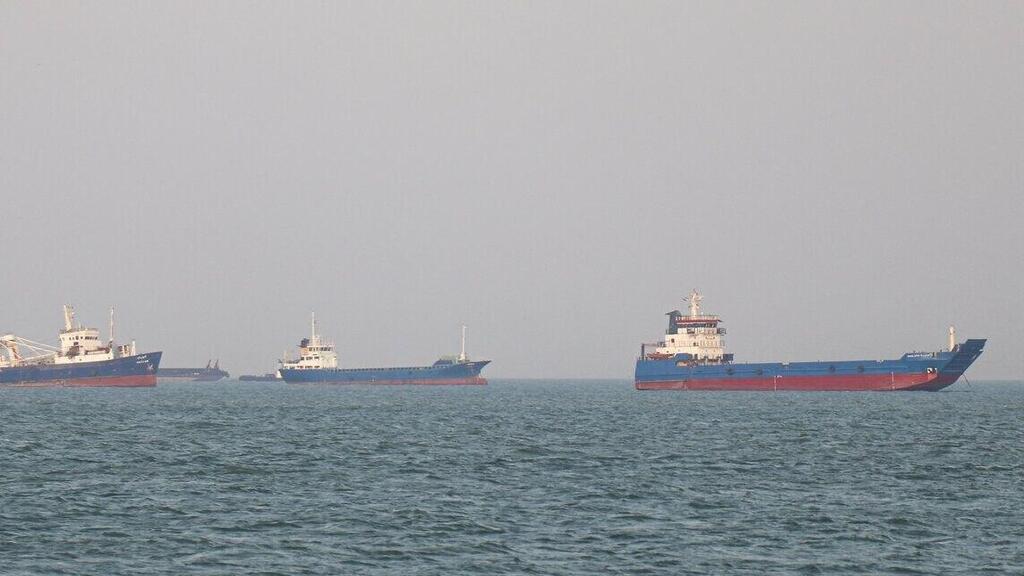
Markets feel the cost of the blockade as oil trades near $100 a barrel. The Strait of Hormuz
Earlier Thursday, he told Axios that Israel “would join in two minutes if I ask them to,” while stressing: “We don’t need anybody.”
He also warned that Israeli participation would carry “consequences,” apparently referring to Iranian retaliation.
Could Israel stay out of the war?
One scenario would leave Israel outside the current confrontation.
Under that possibility, the United States would continue attacking Iran, while Tehran would retaliate against Gulf states and Jordan rather than Israel.
The fighting would remain within the pattern seen over the past 12 days, and Jerusalem would not enter the exchange of fire.
Tensions between Washington and Tehran remain at their highest level in recent months. According to Israeli assessments, the United States has been striking Iranian targets for 12 consecutive nights, while Iran has continued launching attacks toward regional countries and disrupting maritime traffic in the Strait of Hormuz. The U.S. has also intensified pressure by preventing vessels from entering or leaving Iranian ports, while oil prices have climbed to around $100 per barrel amid fears of a broader regional conflict.
Another possibility is that the mutual threats remain part of psychological warfare and that sustained U.S. pressure ultimately pushes Iran back toward negotiations. Iran's Health Ministry said 55 people have been killed and 629 wounded in U.S. strikes since June 27.
Until Trump decides whether and when to launch a broader attack, all options remain on the table, from continued threats to a regional escalation that could pull Israel into the fighting.
First published: 22:39, 07.23.26