

Deposed Venezuelan President Nicolás Maduro pleaded not guilty Monday in a New York federal court to narco-terrorism and drug trafficking charges, declaring to the judge, “I am a decent man, the president of my country,” as his unprecedented capture by U.S. forces reverberated across the globe.
Maduro, 63, and his wife, Cilia Flores, both pleaded not guilty during their initial court appearance to charges that include narco-terrorism conspiracy, cocaine importation and weapons offenses. Prosecutors say the couple worked with drug cartels and armed groups to flood the United States with cocaine. If convicted, they could face life in prison.
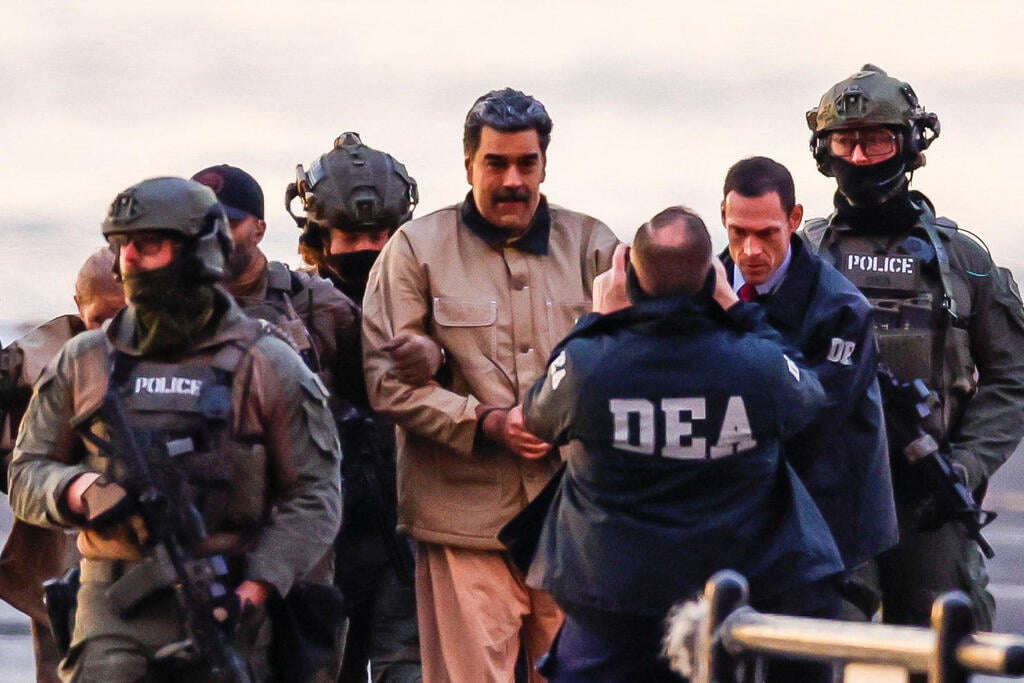
Maduro was led into the Manhattan courtroom shortly after noon wearing a blue prison uniform, his hands previously zip-tied, and took a seat beside his lawyer. Flores entered moments later. Both used headsets to follow the proceedings through an interpreter.
U.S. District Judge Alvin K. Hellerstein, who said it was his responsibility to ensure a fair trial, read a summary of the charges, including what he described as a “narco-terrorism conspiracy.” No cameras were permitted inside the courtroom, though members of the public and media watched from overflow rooms.
Maduro’s attorneys are expected to challenge the legality of his arrest, arguing that he is immune from prosecution as a sitting head of state. The United States, however, does not recognize Maduro as Venezuela’s legitimate president, citing widespread irregularities in his disputed reelection.
Prosecutors allege Maduro oversaw a cocaine-trafficking network stretching back to his early political career, partnering with Mexico’s Sinaloa and Zetas cartels, Colombia’s FARC rebels and Venezuela’s Tren de Aragua gang. U.S. authorities first indicted Maduro in 2020. An updated indictment unsealed Saturday added new allegations and defendants, including Flores.
Maduro’s capture over the weekend marked the most dramatic U.S. intervention in Latin America since the 1989 invasion of Panama. U.S. special forces flew into Caracas by helicopter, breached Maduro’s security perimeter and detained him near a safe room, U.S. officials said.
The operation triggered an emergency meeting of the U.N. Security Council, where Russia, China and several left-leaning governments condemned the raid as illegal. U.N. Secretary-General António Guterres said he was “deeply concerned” the U.S. action may have violated international law and warned it could set a dangerous precedent.
U.S. Ambassador to the United Nations Mike Waltz defended the operation as a “surgical law enforcement action,” questioning whether the world body should confer legitimacy on what he called an “illegitimate narco-terrorist.”
In Venezuela, authorities issued an emergency order directing police to detain anyone who supported the U.S. operation. At the same time, senior officials remained in power, signaling both defiance and possible openness to cooperation with Washington.
Acting President Delcy Rodríguez, a longtime Maduro ally who assumed leadership after his capture, initially denounced the operation as a kidnapping and an oil grab. She later softened her tone, calling for dialogue with the Trump administration.
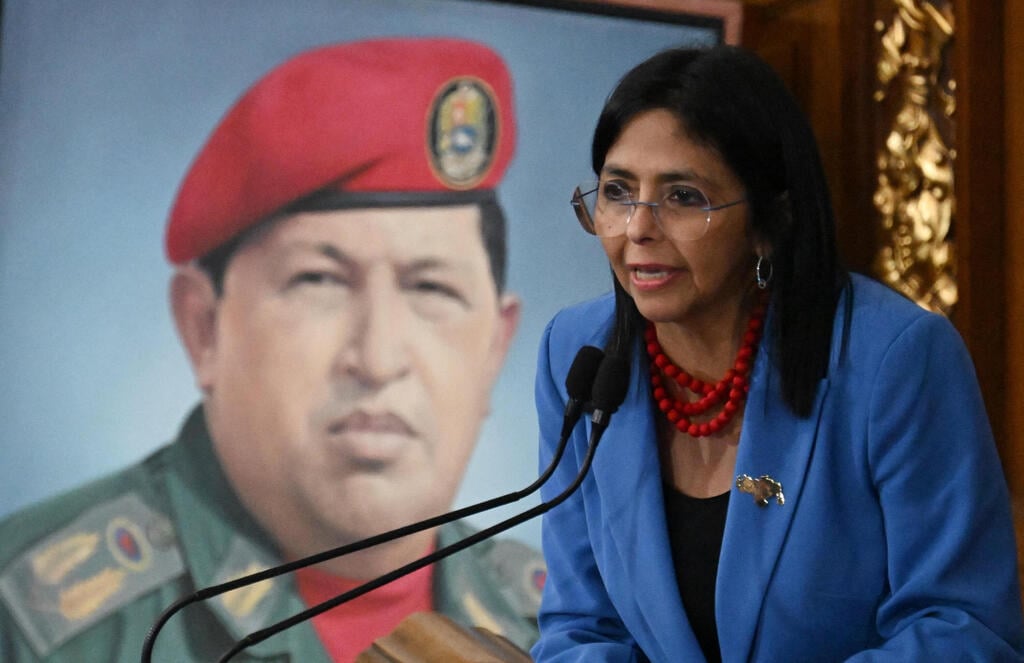
(Photo: JUAN BARRETO / AFP)
“We invite the U.S. government to work together on an agenda of cooperation,” Rodríguez said. “Our peoples and our region deserve peace and dialogue, not war.”
President Donald Trump has made no secret of his interest in Venezuela’s vast oil reserves, the largest in the world at roughly 303 billion barrels. Speaking aboard Air Force One, Trump said U.S. companies would return to Venezuela and rebuild its oil sector.
“We’re taking back what they stole,” Trump said. “We’re in charge.”
Markets reacted swiftly. U.S. crude prices rose, and shares of major American oil companies jumped amid speculation that sanctions could ease and access to Venezuelan oil could expand.
Global reaction was mixed. U.S. allies urged restraint and adherence to international law. Hungary’s prime minister welcomed the prospect of Venezuelan oil returning to world markets. Mexico and Colombia condemned the intervention, warning it could destabilize the region.
In Caracas, Maduro’s son, lawmaker Nicolás Maduro Guerra, warned the arrest set a dangerous global precedent.
“If we normalize the kidnapping of a head of state, no country is safe,” he told Venezuela’s parliament.
Despite Maduro’s detention, his political allies retain control of key institutions, and there has been no visible break within the military. Opposition figures have largely refrained from celebration as uncertainty grips the country.
Maduro will remain in U.S. custody as his case proceeds. Judge Hellerstein scheduled further hearings as what is expected to be a lengthy legal battle gets underway.