



The humanitarian crisis in Gaza continues to draw global attention, prompting Israel to take significant steps to address the situation amid a visit to Israel by U.S. special envoy Steve Witkoff, who focuses on aid distribution and plans to inspect centers managed by the American Gaza Humanitarian Foundation (GHF).
A detailed New York Times report published Thursday highlighted skyrocketing prices for basic goods in Gaza, where the U.S. fund distributes food, with 150 aid packages airdropped since Saturday.
Footage of looting of aid inside Gaza


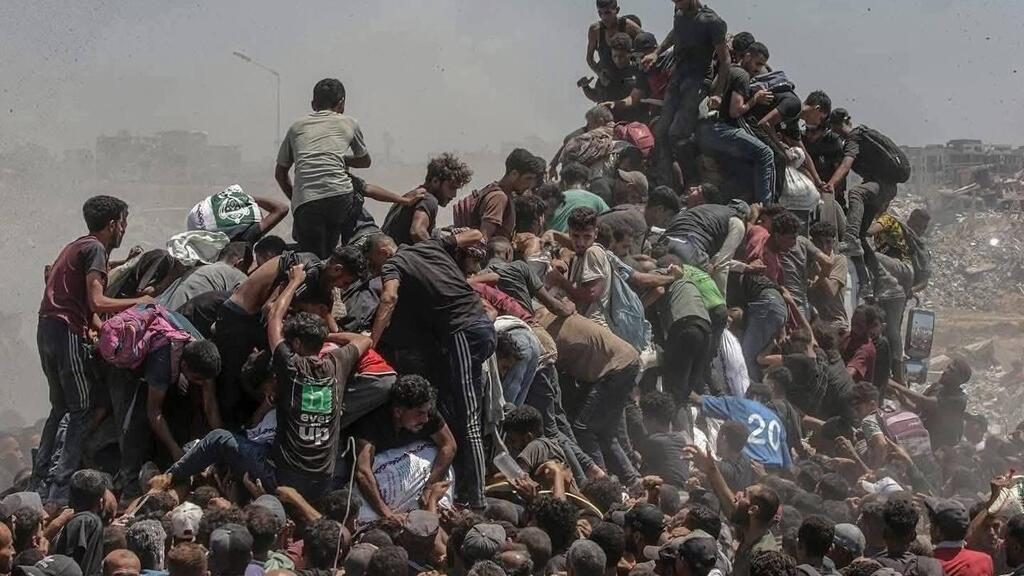

Aid airdropped to Gaza
(Photo: AP Photo/Abdel Kareem Hana)

(Photo: BASHAR TALEB / AFP, BASHAR TALEB / AFP)
Chaos in Gaza prevents many residents from accessing aid, leaving markets as the only alternative, but astronomical prices render them unaffordable for most. The New York Times attributed this partly to Israel’s restrictions on aid entry.
Until March, prices fell due to a ceasefire and hundreds of daily aid trucks. However, Israel halted humanitarian aid two weeks before the ceasefire collapsed, resuming limited deliveries in May, which fueled shortages, price surges and disorder.
Arif Husain, chief economist for the UN’s World Food Program, described the scale as unprecedented. “Have I ever seen this anywhere else to this extent? Absolutely not,” he told the outlet.
The New York Times cited Gaza’s Chamber of Commerce and Industry data, showing stark price increases: a kilogram (2.2 pounds) of sugar now costs $106, up from 89 cents pre-war; a kilogram (2.2 pounds) of flour is $12, compared to 42 cents; a 25-kilogram (55-pound) sack of flour is $305, up from $10; and a kilogram (2.2 pounds) of tomatoes costs $30, compared to 59 cents.

(Photo: AP Photo/Abdel Kareem Hana)
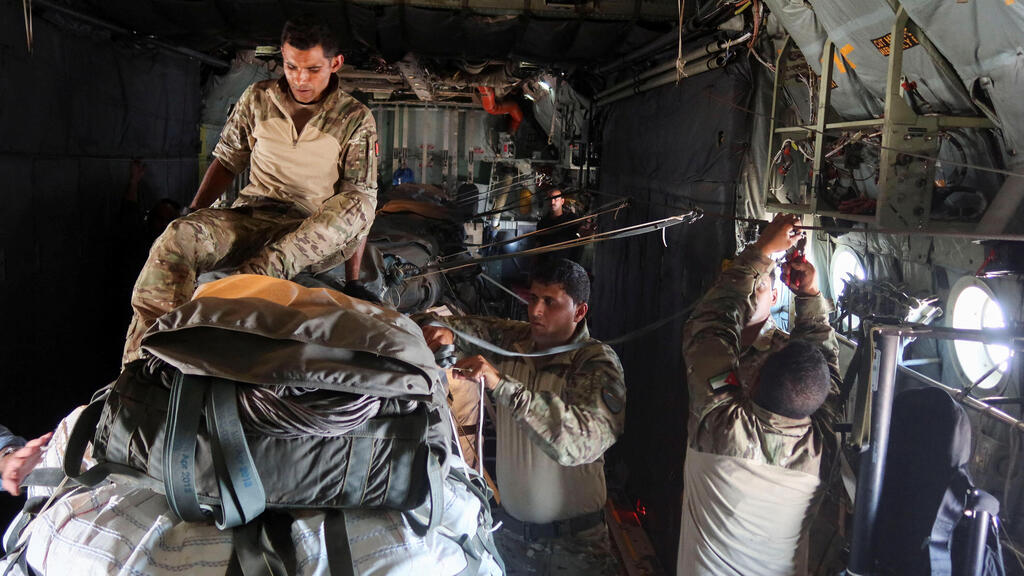
Jodranian military dropping aid to Gaza
(Photo: רויטרס/REUTERS/Jehad Shelbak)
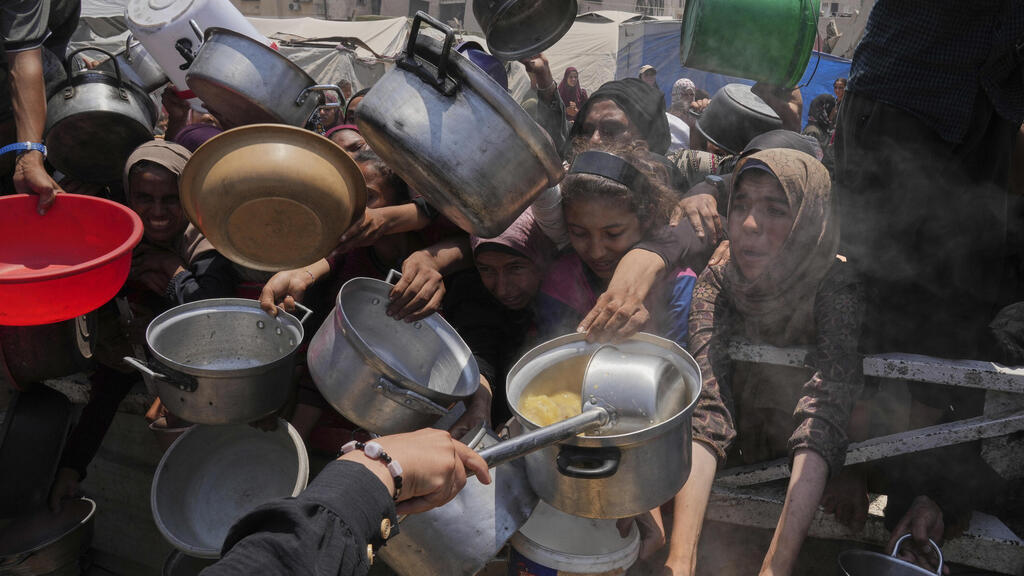
Food distribution in Gaza
(Photo: AP Photo/Abdel Kareem Hana)
Non-food items also surged: a bar of soap is $10, up from 59 cents; a pack of 40 diapers is $149, compared to $8.61; a liter (0.26 gallons) of diesel is $36, up from $1.87; and 400 grams (14 ounces) of baby food is $51, compared to $7.43.
Get the Ynetnews app on your smartphone: Google Play: https://bit.ly/4eJ37pE | Apple App Store: https://bit.ly/3ZL7iNv
Mohammed Fares, a 24-year-old Gaza City resident, told The New York Times that prices are “totally insane.” Living with relatives after his home was destroyed, he lost 22 kilograms (48 pounds) due to food shortages.
He avoids aid distribution sites, calling them “death traps” due to alleged IDF shootings, a claim Israel counters as “warning shots” against perceived threats. Fares’ family survives on savings to buy small amounts of flour and lentils, but vegetables and fruits are out of reach.
Aiyid Abu-Ramadan, head of Gaza’s Chamber of Commerce and Industry, linked price fluctuations to Israel’s aid restrictions, noting declines during the ceasefire and spikes during the March-to-May blockade. “We’re not just facing a war in terms of bombs — we’re facing a war in terms of prices, hunger and thirst, too,” he said.
Aid being airdropped to Gaza

(Photo: AP Photo/Jehad Alshrafi)

(Photo: AP Photo/Abdel Kareem Hana)

(Photo: IDF Spokesperson's Unit)
Access to cash is another hurdle, available only on the black market with 50% commissions due to destroyed banks and ATMs. “There’s suffering built into every aspect of life,” Fares said. Despite IDF claims of no hunger in Gaza, Israel airdropped aid on Saturday for the first time since October 7, introducing “humanitarian pauses,” a power line for a desalination plant, and “humanitarian corridors.”
Jordan, the UAE, Egypt and others joined the airdrops, with Bahrain seeking approval and Morocco authorized for land-based aid. Since Saturday, 150 aid packages, including seven pallets of sugar, flour and canned goods from the IDF, have been delivered.
Prime Minister Benjamin Netanyahu urged global participation, writing on X, “Hamas stole food from its own people. Israel acted. We airdropped aid to Gazan civilians and we called on other nations to join us. Some have already done so.”